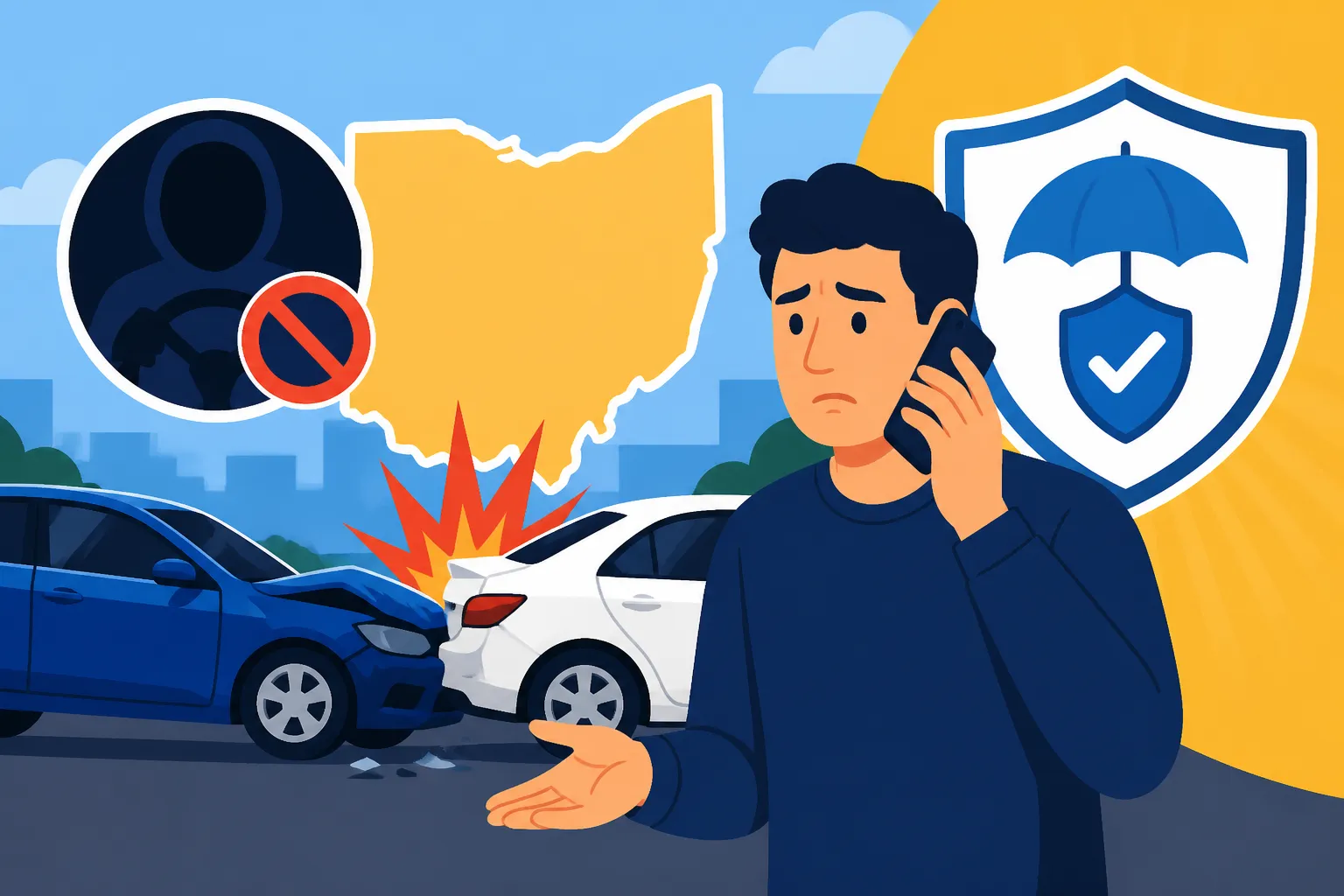
What to Do If Hit by an Uninsured Driver in Ohio
Getting into a car accident is jarring enough, but the feeling of dread only intensifies when you realize the other driver doesn't have insurance. It's a frustrating, panic-inducing scenario many Ohio drivers unfortunately encounter, leaving them wondering how they'll cover damages and medical bills. This comprehensive guide is here to walk you through the essential steps and specific considerations if you've been hit by an uninsured driver in the Buckeye State, helping you navigate the confusing aftermath.
Immediate Steps After the Collision
When the unthinkable happens, your immediate actions are crucial, especially when an uninsured driver is involved. The moments right after an accident can feel chaotic, but taking control of these initial steps can significantly impact your ability to recover later.
Prioritizing Safety and Calling Authorities
First and foremost, your safety and the safety of anyone involved is paramount. Move your vehicle to a safe location if it's possible and safe to do so, out of the flow of traffic. Check yourself and your passengers for injuries. Even if you feel fine, adrenaline can mask pain, so it's always best to be thorough.
Next, call the police. This isn't just a suggestion; it's a critical step. In Ohio, you are required to report accidents that result in injury, death, or property damage exceeding certain thresholds. For an uninsured driver situation, a police report is invaluable. It creates an official record of the accident, identifies the parties involved, and often includes the officer's initial assessment of fault. Without this official documentation, proving what happened and that the other driver was indeed uninsured can become much more challenging when dealing with insurance companies. Don't let anyone talk you out of calling the police, even if they claim it was a minor fender bender. Remember that a police report doesn't determine who pays, but it provides crucial evidence.
Documenting the Scene Thoroughly
After ensuring safety and calling the authorities, turn your attention to gathering as much information as possible. This is where your inner detective comes out. Whip out your smartphone and start taking pictures and videos. Get wide shots of the accident scene, showing the positions of both vehicles and any surrounding landmarks or traffic signs. Then, move in for close-ups: damage to both cars, skid marks on the road, shattered glass, and any visible injuries you or your passengers may have sustained. If you have visible injuries, like cuts or bruises, make sure to photograph those clearly.
Beyond visuals, write down everything you can remember about the incident itself. The time of day, weather conditions, road conditions, and how the accident occurred from your perspective are all important details. If there were any witnesses, ask for their names and contact information. Their testimony can be incredibly powerful in corroborating your account. A detailed account of the scene will prove invaluable later on, helping to How to Document a Car Accident Scene and strengthen your claim.
Exchanging Information (Or Lack Thereof) with an Uninsured Driver
Even if the other driver admits they don't have insurance, you still need to collect as much information from them as possible. Get their full name, address, phone number, and driver's license number. Ask for their vehicle's make, model, year, and license plate number. If they are driving someone else's car, get the owner's information too. If they hesitate or refuse to provide details, do your best to capture their license plate number with your phone camera.
It's tempting to engage in a heated discussion or confront them about their lack of insurance, but try to remain calm and avoid arguments. You don't want to say anything that could be construed as What Is an Admission of Fault and How to Avoid It. Just collect the facts. If they claim to have insurance but can't produce proof, record that information as well. Sometimes, people are simply mistaken or their policy may have lapsed. The police officer will typically verify insurance information during their investigation, which is another reason why involving law enforcement is so important.
Understanding Ohio's Uninsured Motorist Landscape
Navigating a car accident claim is complex, but it becomes even more daunting when the at-fault driver lacks insurance. Understanding Ohio's specific laws and your own policy options is crucial for protecting yourself.
Ohio's At-Fault System and Minimum Coverage Requirements
Ohio operates under an "at-fault" or "tort" insurance system. This means that the person who is determined to be at fault for the accident is responsible for the damages and injuries sustained by the other parties. In a perfect world, the at-fault driver's liability insurance would cover these costs. However, as you've discovered, we don't live in a perfect world.
Every driver in Ohio is legally required to carry minimum liability insurance coverage. As of the latest updates, this typically includes:
- $25,000 for bodily injury liability per person
- $50,000 for total bodily injury liability per accident
- $25,000 for property damage liability per accident
This is often referred to as 25/50/25 coverage. While these are the minimums, many drivers opt for higher limits to better protect themselves. The problem arises when a driver doesn't even carry these minimums, or any insurance at all. This lack of coverage directly impacts your ability to recover compensation from them, pushing the burden onto your own policy or other avenues.
The Lifeline of Uninsured/Underinsured Motorist UM/UIM Coverage
This is where Uninsured Motorist (UM) and Underinsured Motorist (UIM) coverage truly shine. While not mandatory in Ohio, insurance companies must offer this coverage to you, and you typically have to reject it in writing if you don't want it. If you've prudently chosen to include UM/UIM on your policy, it acts as a crucial safety net in situations like being hit by an uninsured driver.
- Uninsured Motorist (UM) coverage kicks in when the at-fault driver has no insurance at all, or if you're involved in a hit-and-run accident where the other driver isn't identified. It typically covers your medical expenses, lost wages, and pain and suffering up to your policy limits.
- Underinsured Motorist (UIM) coverage applies when the at-fault driver has some insurance, but their policy limits aren't enough to cover the full extent of your damages. In such cases, your UIM coverage would make up the difference, again, up to your policy limits.
Having UM/UIM coverage is highly recommended for all Ohio drivers, given the number of uninsured motorists on the road. It ensures that even when the other party can't pay, you still have a path to recovery for your bodily injuries and, in some cases, property damage. This coverage is often your first and best line of defense in these frustrating situations. It essentially steps into the shoes of the uninsured driver's nonexistent policy.
The Role of MedPay and PIP
In Ohio, being an at-fault state, Personal Injury Protection (PIP) coverage, which is common in no-fault states like Florida or New York, is not a mandatory component of auto insurance policies. Instead, some insurers offer Medical Payments (MedPay) coverage as an optional add-on.
MedPay is a no-fault coverage that pays for reasonable and necessary medical expenses for you and your passengers, regardless of who was at fault for the accident. It typically has lower limits than UM/UIM bodily injury coverage, but it can be a quick way to get immediate medical bills paid without waiting for fault to be fully determined or for an uninsured motorist claim to process. If you have MedPay, it can cover things like ambulance fees, hospital visits, and doctor appointments up to your policy limit. This can be particularly helpful if you need immediate medical attention and are worried about accumulating medical debt while your uninsured motorist claim is being investigated. It’s a good option for addressing initial medical costs.
Navigating the Uninsured Motorist Claim Process in Ohio
Even with the right coverage, filing a claim with your own insurance company after being hit by an uninsured driver can feel like a labyrinth. Knowing what to expect and what to provide can ease the process considerably.
Notifying Your Own Insurance Company
The moment you realize the other driver is uninsured (or suspect it), your next crucial step is to contact your own insurance company. Do this as soon as possible after the accident, ideally within a day or two. Delaying notification could potentially jeopardize your claim, as most policies have specific timelines for reporting accidents. When you call, be prepared to provide all the details you collected at the scene, including the police report number if you have it.
You'll be filing a "first-party claim" under your own policy's Uninsured Motorist (UM) coverage, if you have it. This differs from a "third-party claim" where you would normally seek compensation from the at-fault driver's insurance. Your insurer will open a claim and assign an adjuster to your case. This adjuster's role is to investigate the accident, determine fault, and evaluate your damages. Be prepared to be thorough and provide detailed information, as your own insurance company will act somewhat like the other driver's insurer would, investigating the details to ensure the claim is valid. You can learn more about How Car Accident Insurance Claims Work in general.
Gathering Essential Evidence for Your Claim
To support your uninsured motorist claim, you'll need to present a compelling case to your own insurance company. The evidence you gathered at the scene will be invaluable, but the process extends beyond that initial collection.
Here's a checklist of documents and information you should compile:
- Police Report: This is paramount. It provides an objective, official account of the accident, often includes the officer's assessment of fault, and records the other driver's information (or lack of insurance).
- Medical Records and Bills: Any medical treatment you receive, from emergency room visits to physical therapy, needs to be thoroughly documented. Keep all bills, statements, and records. These prove the extent of your injuries and the costs associated with your treatment. Remember, injuries, especially whiplash or back pain, can have Delayed Injury Symptoms After a Car Accident.
- Vehicle Repair Estimates: Get detailed estimates for the damage to your vehicle. If your car was totaled, documentation of its actual cash value will be needed.
- Proof of Lost Wages: If your injuries prevented you from working, gather documentation from your employer confirming missed workdays and your average earnings.
- Witness Statements: If anyone saw the accident, their contact information and statements can provide crucial corroboration.
- Communication Log: Keep a detailed log of all communications with your insurance company, including dates, times, names of adjusters or representatives, and a summary of what was discussed.
The more detailed and organized your evidence, the smoother the claims process will be. Your goal is to clearly demonstrate how the uninsured driver caused the accident and the full extent of your damages.
Dealing with Your Insurance Adjuster
Dealing with insurance adjusters, even from your own company, requires careful consideration. While your adjuster is there to help process your claim, they also represent the financial interests of the insurance company. They will investigate to determine if the other driver was truly uninsured and at fault, and to assess the validity and value of your damages.
Here are some tips for interacting with your adjuster:
- Be Honest and Factual: Always stick to the facts of the accident and your injuries. Avoid speculation or exaggeration.
- Don't Give a Recorded Statement Immediately: While you should promptly report the accident, you are generally not obligated to give a recorded statement until you've had a chance to fully understand your injuries and gather all facts. If they press you, politely state you'd prefer to provide a written statement or discuss it further with an attorney. You can read more about Do You Have to Give a Recorded Statement.
- Provide Documentation: Offer all the evidence you've collected proactively. This helps speed up their investigation.
- Keep Records: Continue to document all your medical treatments, expenses, and any pain and suffering you're experiencing. This will be crucial when they begin to calculate How Much Is My Car Accident Settlement Worth.
- Understand Your Policy: Familiarize yourself with the terms and limits of your UM/UIM coverage. This will help you understand what you are entitled to.
- Don't Settle Too Quickly: If your injuries are still being evaluated, or you're undergoing ongoing treatment, do not accept a quick settlement offer. Make sure you understand the full extent of your damages before agreeing to a final amount.
Ultimately, your adjuster will evaluate your claim based on the evidence, Ohio's laws, and your policy terms. The goal is to reach a fair settlement that covers your losses.
When to Consider Legal Counsel and Other Avenues
Even with robust UM/UIM coverage, navigating an accident with an uninsured driver can be incredibly stressful and complex. Knowing when to seek professional legal help is a game-changer.
The Benefits of an Attorney When Dealing with Uninsured Claims
While you might assume that since you're dealing with your own insurance company, you don't need a lawyer, that's often not the case. Your insurance company, like any business, has its bottom line, and they may not offer you the full value of your claim without a push. An experienced Ohio car accident attorney can be an invaluable asset in these situations.
Here’s how an attorney can help:
- Expert Navigation: They understand the nuances of Ohio's insurance laws and how Fault in an Uninsured Motorist Accident is typically determined. They can ensure your claim is filed correctly and on time.
- Dealing with Adjusters: Lawyers are skilled at Dealing With Insurance Adjusters After a Car Accident. They can handle all communications, preventing you from inadvertently saying something that could harm your claim and ensuring you don't accept a lowball offer.
- Valuating Your Claim: An attorney can accurately assess the true value of your damages, including medical expenses, lost wages, pain and suffering, and future costs. They understand how these are calculated and can push for a fair settlement.
- Negotiation Power: If your insurance company tries to undervalue your claim, a lawyer can aggressively negotiate on your behalf. They have the experience and leverage to challenge unfair offers and take your case to arbitration or even court if necessary.
- Peace of Mind: Dealing with injuries and vehicle damage is enough. Having a legal professional manage the complex claims process allows you to focus on your recovery without the added stress.
Deciding Do You Need a Lawyer for a Car Accident isn't always easy, but if your injuries are serious, your insurance company is denying your claim, or you simply feel overwhelmed, consulting with an attorney is often the wisest choice.
Understanding the Statute of Limitations in Ohio
Even though you're filing a claim with your own insurance company under your UM/UIM coverage, the statute of limitations is still a critical factor in Ohio. This refers to the legal deadline by which you must file a lawsuit, if that becomes necessary.
In Ohio, the general statute of limitations for personal injury claims, which would include bodily injury suffered in a car accident with an uninsured driver, is two years from the date of the accident. For property damage claims, it is also typically two years. This means that if you cannot settle your claim with your insurance company, or if you need to pursue other avenues, you generally have a two-year window to file a lawsuit.
It's vital not to miss this deadline. Once the statute of limitations expires, you lose your legal right to seek compensation for your injuries and damages, regardless of how strong your case might be. While you'll be dealing with your insurance company first, understanding this deadline helps you gauge the urgency and know when to escalate matters if negotiations stall. An attorney will be acutely aware of this timeline and ensure all necessary actions are taken promptly.
What If You Don't Have UM/UIM Coverage?
This is the scenario everyone dreads: you've been hit by an uninsured driver in Ohio, and you don't have UM/UIM coverage on your own policy. While challenging, it's not always a completely lost cause, though your options become significantly more limited.
Here are some potential avenues, though they often come with their own difficulties:
- Health Insurance: Your primary health insurance will be your first line of defense for medical expenses. Keep in mind, however, that health insurance won't cover vehicle damage, lost wages, or pain and suffering. They may also seek reimbursement from any third-party recovery you achieve (known as subrogation).
- Collision Coverage: If you have collision coverage on your auto policy, it will pay for the damage to your own vehicle, regardless of fault. You will likely have to pay your deductible, but your insurance company might attempt to recover that deductible from the at-fault driver (a process called subrogation).
- Lawsuit Against the At-Fault Driver: You technically can file a personal injury lawsuit directly against the uninsured driver to recover your damages. However, this is often a difficult path. If the driver doesn't have insurance, it's highly probable they also lack significant assets to pay a judgment. You might win the lawsuit, but collecting the money could be nearly impossible, leaving you with a "paper judgment."
- Small Claims Court: For property damage or minor injury claims below a certain monetary threshold (which varies by county in Ohio, often up to $6,000-$10,000), you could pursue a claim in small claims court. Again, collecting any judgment might be problematic.
This table summarizes the different insurance coverages and what they typically cover in an uninsured motorist accident in Ohio:
| Insurance Type | What It Covers | Key Considerations |
|---|---|---|
| Uninsured Motorist (UM) Bodily Injury | Your medical bills, lost wages, pain & suffering (if at-fault driver is uninsured) | Most effective if you have it; mirrors other driver's liability for your injuries |
| Underinsured Motorist (UIM) Bodily Injury | Medical bills, lost wages, pain & suffering (if at-fault driver has too little insurance) | Kicks in when other driver's policy is insufficient; supplements their coverage |
| Medical Payments (MedPay) | Medical expenses for you & passengers, regardless of fault | Lower limits; good for immediate medical costs; optional coverage |
| Collision Coverage | Damage to your own vehicle, regardless of fault | Requires a deductible; insurer may try to recover from at-fault driver (subrogation) |
| Health Insurance | Your medical expenses | Won't cover vehicle damage, lost wages, or pain & suffering; may seek subrogation |
Being hit by an uninsured driver when you lack UM/UIM coverage is a tough spot, emphasizing why this coverage is so vital for every driver in Ohio. It's a small investment that offers substantial protection against a common and costly problem.
Disclaimer
Please remember that this article provides general information and guidance only. Car accident claims are complex and depend heavily on the specific facts of each case and current Ohio laws. This content is not a substitute for professional legal or insurance advice. Always consult with a qualified attorney or your insurance provider to discuss your individual situation.