How Long Do You Have to File a Car Accident Claim in Maryland?
Getting into a car accident is a truly overwhelming experience, leaving you shaken, often injured, and facing a mountain of questions. One of the biggest worries, after ensuring everyone's safety and dealing with initial shock, is figuring out the financial and legal aftermath. Many people understandably wonder, "How long do I actually have to file a car accident claim?" This isn't just a casual question; there are strict deadlines that, if missed, can jeopardize your ability to recover compensation. This guide will walk you through the specifics of filing a car accident claim in Maryland, ensuring you understand these critical timelines and what they mean for you.
Understanding Maryland's Statute of Limitations for Car Accidents
When we talk about how long you have to file a claim after a car accident, we're really talking about something called the "statute of limitations." This isn't just some legal jargon; it's a critical legal deadline set by state law that dictates how long you have to formally file a lawsuit in court. Miss this deadline, and generally, you lose your right to pursue compensation through the legal system, no matter how strong your case might have been. It's a harsh reality, but an important one to understand.
What is the Statute of Limitations?
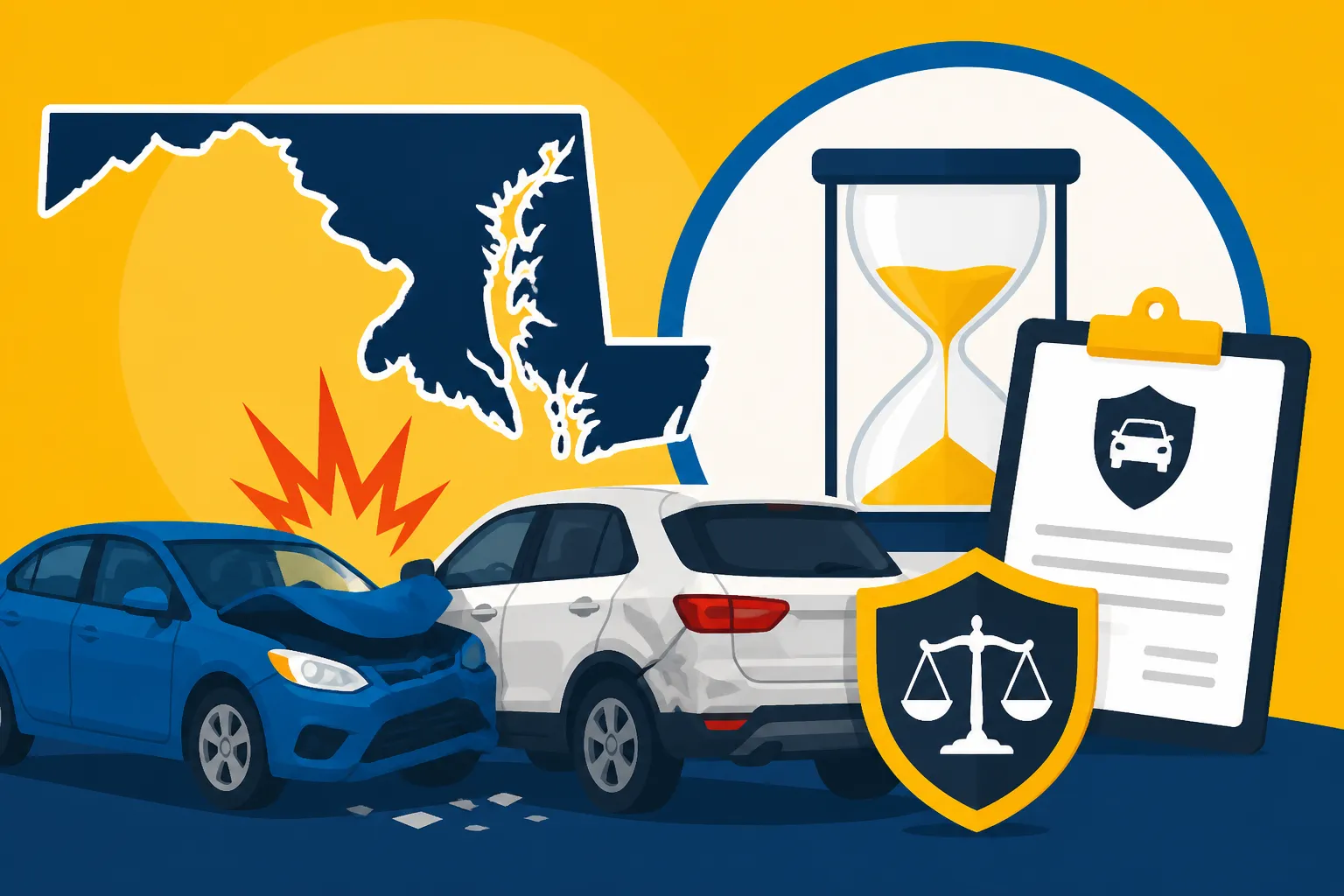
In plain language, the statute of limitations is a legal time limit. For car accidents in Maryland, this time limit is generally three years. This three-year window applies to most personal injury and property damage claims arising from a car accident. This means that from the date of the accident, you typically have three years to either settle your claim with the at-fault driver's insurance company or, if a settlement can't be reached, to file a lawsuit in a Maryland court. It's a firm deadline, and judges rarely make exceptions for simple forgetfulness or delay.
The purpose of these statutes is to ensure fairness in the legal system. It prevents people from bringing old, stale claims where evidence might have disappeared, memories have faded, and witnesses are no longer available. It also provides a sense of finality, so people aren't living under the constant threat of a lawsuit from an incident that happened many years ago. For you, as someone potentially impacted by an accident, it means you need to be proactive and understand this clock is ticking from day one.
Personal Injury Claims Timeline
For any injuries you sustained in a car accident in Maryland, whether it's whiplash, a broken bone, or something more severe like a traumatic brain injury, the general rule is that you have three years from the date of the accident to file a personal injury lawsuit. This doesn't mean you have three years to simply report the accident to your insurance, but rather to take formal legal action if necessary.
Let's say you were involved in a fender bender on the Baltimore Beltway near Towson on January 15, 2024. Your three-year clock for filing a personal injury lawsuit would run out on January 15, 2027. If you try to file a lawsuit on January 16, 2027, it's almost certainly going to be dismissed, regardless of your injuries or the at-fault driver's clear negligence. This is why it's so crucial to seek medical attention promptly and understand your legal options right away. Detailed information on How to Prove Injuries in a Car Accident Claim can help you build a strong case.
Property Damage Claims Timeline
Just like with personal injury claims, if your vehicle was damaged in a car accident, you also typically have three years from the date of the accident to file a property damage lawsuit in Maryland. This covers the cost of repairs to your car, or its fair market value if it's deemed a total loss.
Imagine you were driving through Annapolis and someone backed into your parked car, causing significant damage to the bumper and fender. Even if you weren't physically injured, you'd still have that three-year window to pursue a claim for the damage to your vehicle. Often, personal injury and property damage claims stem from the same incident, and both are subject to this general three-year statute of limitations. It's important to keep in mind that while your insurance company might handle the immediate repairs, if there's a dispute over fault or the value of your car, the ultimate deadline for a lawsuit still applies. This can become especially complex when considering How Insurance Companies Determine Who Is at Fault.
Here's a quick overview of the main statute of limitations for car accident claims in Maryland:
| Type of Claim | Statute of Limitations | Starting Point of Clock | Notes |
|---|---|---|---|
| Personal Injury | 3 Years | Date of Accident | For physical injuries, pain and suffering, lost wages. |
| Property Damage | 3 Years | Date of Accident | For vehicle repair costs or total loss value. |
| Wrongful Death | 3 Years | Date of Death | May differ from the accident date if death occurs later. |
| Claims Against Govt. | Shorter; Varies | Date of Accident (or disc.) | Often requires notice within 180 days to 1 year before filing suit. Specific entities vary. |
| Minors/Incapacitated | Tolled | Date of Accident | Clock may pause until legal age or capacity regained. |
Exceptions and Nuances to the Maryland Timeline
While the general three-year rule is a good baseline, legal matters are rarely simple. There are specific situations that can alter this timeline in Maryland, either extending it or, in some cases, significantly shortening it. Understanding these nuances is vital because they can drastically affect your ability to seek justice and compensation. It's never a one-size-fits-all situation, and that's where the frustration often sets in for accident victims.
Claims Involving Minors or Incapacitated Individuals
One significant exception to the three-year rule involves claimants who are minors or individuals deemed legally incapacitated. In these cases, Maryland law recognizes that these individuals might not be able to assert their legal rights effectively right after an accident. So, the statute of limitations can be "tolled," meaning the clock is essentially paused.
For a minor involved in a car accident, the three-year statute of limitations for their personal injury claim generally doesn't begin to run until they turn 18 years old. So, if a 10-year-old is injured in a crash, they would technically have until their 21st birthday (18 + 3 years) to file a lawsuit. However, their parents or guardians can (and often should) file a claim on their behalf much sooner. Similarly, for someone who is mentally incapacitated, the clock might not start until they regain capacity or a legal guardian is appointed to act on their behalf. This is a complex area, and it underscores why seeking prompt legal advice is so important, especially in these sensitive situations.
The Discovery Rule
What if you don't realize you're injured right away? This is a common and incredibly frustrating scenario for accident victims. You might feel fine in the immediate aftermath, only for symptoms to emerge days, weeks, or even months later. This is where Maryland's "discovery rule" can come into play. For certain types of injuries, particularly those that aren't immediately apparent, the statute of limitations might not begin to run until the date you discovered the injury, or the date you reasonably should have discovered it. This rule is most frequently applied to complex medical conditions or injuries that have a delayed onset, like certain types of back pain, nerve damage, or even some concussions.
However, relying on the discovery rule can be tricky. You bear the burden of proving to the court that you genuinely couldn't have discovered the injury earlier. Simply saying, "I didn't feel anything until six months later" might not be enough if a reasonable person in your situation should have sought medical attention that would have revealed the injury sooner. This is why doctors always advise getting checked out even after a minor accident, and why delaying medical care after an accident can complicate your claim, as discussed in Delayed Injury Symptoms After a Car Accident.
Government Entity Claims
If the at-fault driver was an employee of a government entity – whether it's a state vehicle, a city bus, or a county maintenance truck – the timelines for filing a claim are typically much, much shorter and have additional requirements. Maryland, like many states, has specific laws that protect government agencies from lawsuits unless very strict procedures are followed.
For instance, under the Maryland Tort Claims Act, you might have as little as one year (or even less, sometimes 180 days depending on the entity) to provide written notice of your claim to the appropriate government agency before you can even think about filing a lawsuit. This notice is not the lawsuit itself but a preliminary step. Missing this notice deadline can completely bar your claim, even if you are still within the general three-year statute of limitations for personal injury. It's a procedural trap that catches many people off guard. This is a situation where knowing When to Hire a Car Accident Lawyer is absolutely critical, as these claims are notoriously complex.
Wrongful Death Claims
In the tragic event that a car accident results in a fatality, a different type of claim arises: a wrongful death claim. For these cases in Maryland, the statute of limitations is generally three years from the date of the person's death. It's crucial to note that this "date of death" might not always be the same as the "date of the accident." If someone succumbs to their injuries weeks or months after the initial crash, the three-year clock for a wrongful death claim would start from the day they passed away, not the accident date. These claims are brought by the deceased's family members or estate to recover damages for their loss, including funeral expenses, loss of income, and emotional suffering.
Why Acting Quickly Matters Beyond the Deadline
While understanding the statute of limitations is paramount, waiting until the last minute is almost always a bad idea. Beyond the strict legal deadlines, there are numerous practical reasons why taking swift action after a car accident is beneficial, and even necessary, for the strength and success of your claim. Procrastination in these matters doesn't just reduce your chances; it actively harms them.
Evidence Preservation
Think about it: immediately after an accident, the scene is fresh. Tire marks are visible, debris is on the road, traffic camera footage might still be available, and witnesses' memories are sharp. As days and weeks pass, all this crucial evidence begins to fade or disappear entirely. Skid marks get washed away by rain, accident debris is cleared, and surveillance footage is often overwritten within a few days or weeks.
Prompt action allows you to:
- Take photos and videos: Documenting the scene, vehicle damage, and any visible injuries right away provides invaluable visual evidence.
- Gather witness statements: People move on, their memories become less precise, or they might become harder to locate. Getting their contact information and a brief statement at the scene or shortly after is crucial. For guidance, see What Information to Exchange After a Car Accident.
- Obtain police reports: A police report, while not always definitive on fault, documents the basic facts of the accident, vehicle positions, and sometimes initial statements. Filing a police report, even for a minor accident, is a good idea. Information on Police Reports and Car Accident Fault is very helpful.
- Preserve vehicle data: Newer vehicles often have event data recorders (EDRs), or "black boxes," that record pre-crash data. This data can be time-sensitive and requires expert retrieval.
Delays make it incredibly difficult to reconstruct the accident accurately and prove the other driver's fault, which is fundamental to any successful claim.
Medical Treatment and Documentation
Your health is, of course, the number one priority after an accident. But from a claims perspective, prompt medical attention is also critical for establishing a clear, undeniable link between the accident and your injuries. If you wait weeks or months to see a doctor after a car accident, the at-fault driver's insurance company will almost certainly argue that your injuries weren't caused by the crash, or that you exacerbated them by delaying treatment. They might suggest your injuries are due to a pre-existing condition or an unrelated incident.
Visiting a doctor immediately, even if you feel okay, creates an official record of your physical state post-accident. This documentation forms the backbone of your personal injury claim and helps in calculating your settlement value. Regular follow-up appointments and adherence to your doctor's treatment plan also demonstrate the severity of your injuries and your commitment to recovery. Medical records are tangible proof, and without them, it's just your word against theirs. Understanding How Medical Records Prove Your Injuries is essential for claimants.
Insurance Company Communications
Dealing with insurance companies can be incredibly stressful and confusing, especially when you're hurt and trying to heal. The other driver's insurance company is not on your side; their primary goal is to minimize their payout. When you report an accident promptly, it sets the stage for timely communication and investigation. Delays can give them an excuse to deny or devalue your claim.
Insurance adjusters are trained professionals, and they know how to gather information that can hurt your case. They might ask for recorded statements or try to get you to admit partial fault. It's often advisable to consult with a legal professional before giving detailed statements to the other party's insurer. Furthermore, knowing How to File a Car Accident Insurance Claim promptly is key to initiating the process correctly. Timeliness demonstrates that the incident was significant and not something you're casually pursuing.
What Happens If You Miss the Deadline?
Missing the statute of limitations deadline for your car accident claim in Maryland is a serious issue with potentially devastating consequences. It's not like missing a bill payment where you can simply catch up later. In the legal world, deadlines are often absolute.
Loss of Legal Rights
The most significant consequence of missing the statute of limitations is the loss of your right to file a lawsuit in court. Once the deadline passes, the at-fault party's lawyer can file a motion to dismiss your case based solely on the fact that the statute of limitations has expired. This motion is almost always granted, and your case will be thrown out, regardless of how severe your injuries were, how clear the other driver's fault was, or how much financial hardship you've endured.
This means you lose your primary legal leverage. Without the ability to sue, you have very little power to compel the insurance company to offer a fair settlement. They know that if you can't take them to court, you have no recourse, and they have no incentive to pay you anything. This is why organizations like the Maryland State Bar Association and reputable personal injury law firms constantly advise prompt action.
Limited Options for Recovery
If you miss the deadline to file a lawsuit, your options for recovering compensation become severely limited, if not entirely nonexistent.
- Direct Negotiation Becomes Difficult: While you can still try to negotiate directly with the insurance company, they will be aware that you can no longer file a lawsuit. This strips you of your most powerful bargaining chip. Without the threat of litigation, their incentive to offer a fair settlement disappears, and they are likely to offer a minuscule amount, or simply deny your claim outright.
- Personal Insurance: In some cases, if you have certain types of your own insurance coverage (like uninsured/underinsured motorist coverage or MedPay), you might still be able to file a claim with your own insurance company, subject to their policy deadlines. However, these are separate from claims against the at-fault driver, and they might not cover all your damages. For specific information, you might look into Fault in an Uninsured Motorist Accident.
- No Recourse for Pain and Suffering: Without a lawsuit, it becomes almost impossible to recover "non-economic damages" like pain and suffering, emotional distress, or loss of enjoyment of life, which often make up a significant portion of a car accident settlement.
The bottom line is that while it may seem daunting to initiate a claim while you're recovering, the alternative of missing the deadline is far worse.
Importance of Professional Advice
Given the strict deadlines and the complex nuances of Maryland law, the most crucial takeaway is this: consult with a car accident lawyer as soon as possible after an accident. Even if you're unsure whether you have a case or how severe your injuries are, a free consultation can provide invaluable guidance. A lawyer can assess your situation, explain the specific deadlines that apply to your claim, help you gather necessary evidence, and communicate with insurance companies on your behalf. This significantly reduces your stress and increases your chances of a successful outcome.
Many personal injury attorneys in Maryland work on a contingency fee basis, meaning you don't pay anything upfront, and they only get paid if they win your case. This removes the financial barrier to seeking legal help when you need it most. They can ensure you don't miss any critical deadlines, including the statute of limitations, and help navigate the often-confusing world of insurance claims and legal procedures. You might be surprised to learn Do You Need a Lawyer for a Car Accident? (2027) is a common question, and the answer is often yes.
Disclaimer
Please remember that this guide provides general information about car accident claims in Maryland and should not be considered legal advice. Every accident and claim is unique, and the specific facts of your case will dictate the applicable laws and deadlines. It is always recommended to consult with a qualified Maryland car accident attorney to discuss your individual situation and ensure your rights are protected.