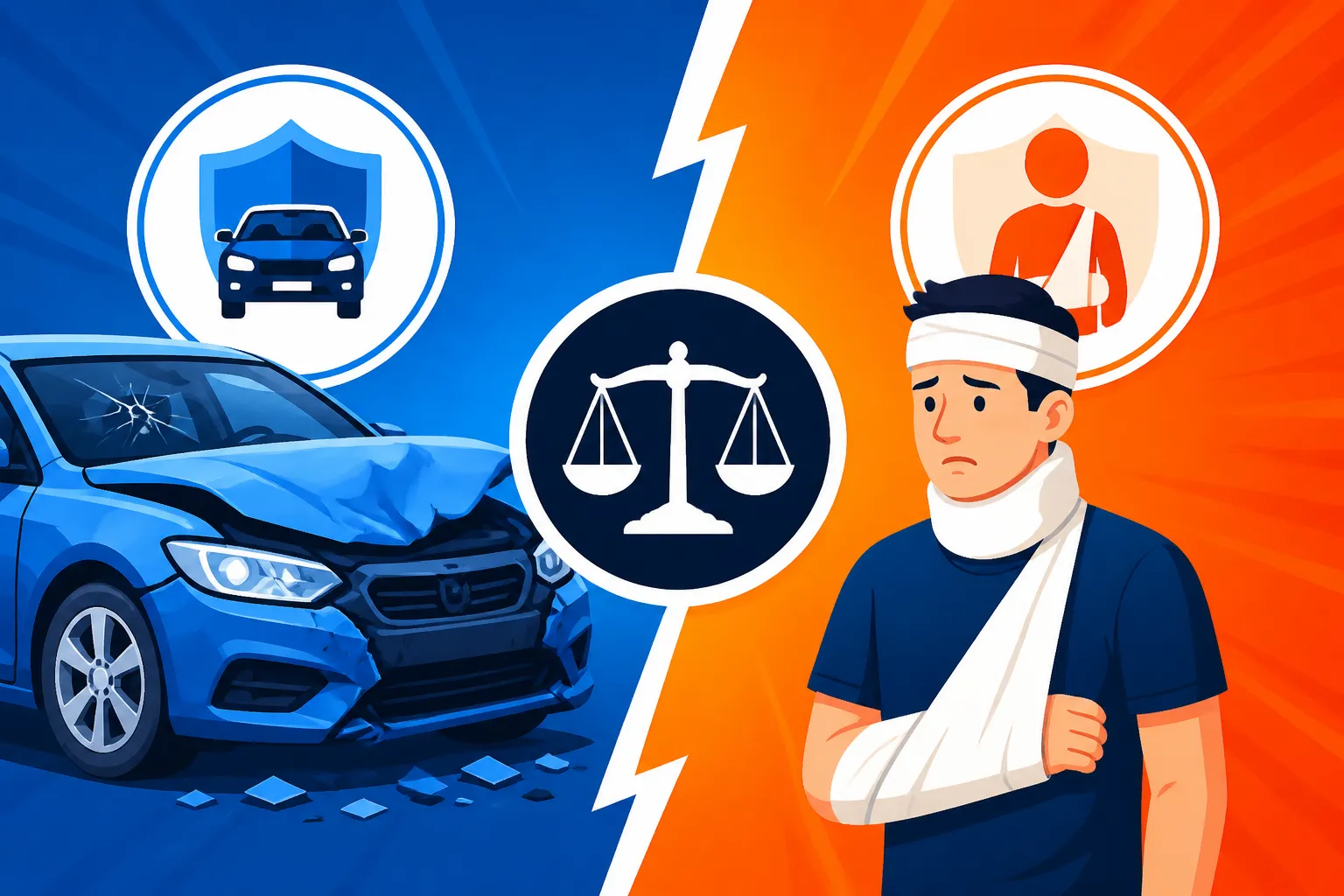
Property Damage vs Bodily Injury Claims
Dealing with the aftermath of a car accident can feel like navigating a maze blindfolded, and one of the most confusing aspects for many people is understanding the different types of claims they might need to make. It's not just about getting your car fixed; there are often hidden injuries and complexities that require a separate approach. This comprehensive guide will meticulously break down the crucial distinctions between property damage claims and bodily injury claims, helping you understand what each entails and how to manage them effectively after a crash.
Understanding the Immediate Aftermath of a Car Accident
The moments right after a car accident are often chaotic and stressful. Your adrenaline is pumping, you might be shaken up, and it's incredibly difficult to think clearly about what needs to happen next. However, the steps you take (or don't take) in these initial minutes and hours can significantly impact both your property damage and any potential bodily injury claims down the line. It's about protecting yourself, your passengers, and your future interests.
Initial Steps and Information Gathering
First and foremost, your safety and the safety of others are paramount. If you're able, move your vehicle to a safe location out of the flow of traffic, if it's safe to do so. If not, turn on your hazard lights. Check on everyone involved in your vehicle and the other vehicles. Even if someone says they're "fine," it's crucial to assess the situation for visible injuries. After ensuring immediate safety, the next critical step is to document everything and gather information. This includes taking photos of vehicle damage from multiple angles, skid marks, road conditions, and any relevant traffic signs or signals. If there were any witnesses, collect their contact information.
It’s also incredibly important to call the police, even for what seems like a minor fender bender. A police report provides an objective, official account of the accident, including details like the date, time, location, vehicles involved, and often a preliminary determination of fault. This report becomes invaluable evidence for both property damage and bodily injury claims. When exchanging information with the other driver, collect their name, contact information, insurance details, and vehicle make, model, and license plate number. Remember, at this stage, you should never admit fault, apologize, or make any statements that could be construed as taking responsibility for the accident. Stick to the facts.
The Role of Your Insurance Company
After the immediate scene is secured and you've gathered essential information, one of your very next calls should be to your own insurance provider. Many people hesitate to do this if they believe the accident wasn't their fault, worrying about their premiums. However, reporting the accident to your insurer promptly is often a requirement of your policy. Even if the other driver is clearly at fault, your insurance company can guide you through the initial steps, explain your policy coverages, and sometimes even begin the process of repairing your vehicle or arranging for a rental car.
Understanding the difference between reporting an accident and filing a claim is also key. You might report an accident to your insurer just to notify them, but a formal claim initiates the process of seeking compensation for damages. Your insurance company will likely want to open a claim to begin their investigation, whether it's a first-party claim (using your own insurance) or assisting you with a third-party claim (filing against the other driver's insurance). This distinction is vital in navigating the post-accident process, as explored in detail in our guide on First-Party vs Third-Party Car Insurance Claims
What Exactly is a Property Damage Claim?
When you’re involved in a car accident, the most immediate and visible concern is usually the damage to your vehicle. This is where a property damage claim comes into play. It's generally the more straightforward of the two claim types, though it can still present its own set of challenges and frustrations. Think of it as dealing with the tangible, repairable, or replaceable assets that were harmed in the incident.
Defining Property Damage
A property damage claim specifically addresses the physical damage sustained by your vehicle, or any other property that was impacted by the collision. The most common type of property damage, of course, is to your car itself—dents, shattered glass, bent frames, engine issues, and so on. This can range from a minor scratch that barely breaks the paint to a vehicle that's utterly destroyed and beyond repair. But property damage isn't limited to just your car. It can also cover personal items that were inside your vehicle at the time of the crash, such as a laptop, a designer handbag, or even a child's car seat.
Beyond your own vehicle and its contents, a property damage claim might also extend to other types of property damaged in the accident. Imagine a scenario where, after a collision, your car careens into a fence, a lamppost, or even a building. The repairs or replacement costs for these items would also fall under a property damage claim. For instance, if you were involved in a parking lot mishap and accidentally scraped a shopping cart return kiosk, that kiosk's damage would be covered by a property damage claim. It's all about the physical stuff that got broken, bent, or otherwise messed up.
The Property Damage Claim Process
Once you’ve reported the accident, your insurance company, or the at-fault driver's insurer, will initiate the property damage claim process. This typically involves several steps. First, you'll need to report the damage, providing details and often photos or videos you took at the scene. Next, the insurance company will arrange for an inspection of your vehicle. This might be done by an adjuster visiting your car, or you might be asked to take it to an approved body shop for an estimate. It's always a good idea to get multiple estimates from different reputable repair shops, as this can give you leverage in negotiations and ensure you're getting a fair price for the necessary repairs.
If the damage is extensive, the insurance company might determine that your vehicle is a "total loss." This means the cost of repairs exceeds a certain percentage of the vehicle's actual cash value (ACV), making it uneconomical to fix. Our guide, Total Loss Explained: What Happens When Your Car Is Totaled provides an in-depth look at this often frustrating scenario. Once the repair estimates are approved or a total loss is declared, the insurer will proceed with payment. If your car is repairable, they'll cover the cost of repairs, minus any deductible you might owe. During this time, you may also be entitled to a rental car. Many policies include provisions for Rental Car Reimbursement After an Accident Another aspect to consider, especially with newer or luxury vehicles, is "diminished value." This refers to the reduction in a car's market value after an accident, even if it's perfectly repaired, simply because it now has an accident history. It's often overlooked but can be a significant part of your claim, as detailed in What Is Diminished Value and How to Claim It
Key Considerations for Property Damage
There are a few key things to keep in mind when dealing with property damage claims. Firstly, your deductible. This is the amount you agree to pay out-of-pocket before your insurance coverage kicks in. If you are found not to be at fault, you may be reimbursed for your deductible by the at-fault driver's insurance company. Secondly, understanding the difference between actual cash value (ACV) and replacement cost is crucial, especially if your car is totaled. Most standard auto insurance policies for property damage cover ACV, which accounts for depreciation. This means the payout will reflect the car's value just before the accident, not the cost to buy a brand-new equivalent. Our article, How Insurance Companies Calculate Total Loss (ACV) dives deeper into this calculation.
The negotiation process is also a significant part of a property damage claim. Insurance adjusters are trained negotiators, and their initial offers might not always cover all your losses, especially when it comes to repair costs or diminished value. It's important to be prepared with your own research—repair estimates, market values for your vehicle, and documentation of any personal property damaged. Don't be afraid to push back if you feel the offer is unfair. If you have comprehensive coverage, your own insurer will typically handle the property damage regardless of fault, then subrogate against the at-fault driver’s insurance to recover their costs.
Diving Deep into Bodily Injury Claims
While property damage claims address the physical harm to your car and other items, bodily injury claims focus entirely on the physical, mental, and emotional harm suffered by individuals due to the accident. This type of claim is often far more complex, takes longer to resolve, and requires extensive documentation of medical treatment and its impact on your life.
What Constitutes Bodily Injury?
Bodily injury, in the context of a car accident claim, refers to any physical harm, illness, disease, or even death that results from the collision. This can encompass a wide spectrum of injuries, from seemingly minor issues like whiplash or soft tissue strains to severe, life-altering conditions such as broken bones, spinal cord damage, concussions, or even traumatic brain injuries (TBIs). The nature and severity of these injuries will directly influence the value and complexity of your claim. For instance, a simple sprain might heal relatively quickly, but a herniated disc could require months of physical therapy, injections, or even surgery, leading to significant medical bills and lost time from work.
It's also important to remember that not all injuries are immediately apparent. Many people experience Delayed Injury Symptoms After a Car Accident, such as pain, stiffness, or headaches, hours or even days after the crash. This is why medical evaluation after an accident is always recommended, regardless of how you feel at the scene. Furthermore, bodily injury claims aren't solely about physical pain. They can also include the psychological and emotional toll an accident takes. Conditions like anxiety, depression, post-traumatic stress disorder (PTSD), and other forms of emotional distress can be significant components of a bodily injury claim. The trauma of a serious accident can linger long after physical wounds have healed, impacting daily life, sleep, and even relationships.
Navigating the Bodily Injury Claim Process
The process for a bodily injury claim typically begins with seeking immediate medical attention. As mentioned, even if you feel okay, getting checked by a doctor is crucial. This not only ensures you receive proper care but also creates an official medical record linking your injuries to the accident. Without this initial documentation, it can be incredibly difficult to prove that your injuries were directly caused by the collision, especially if you experience delayed symptoms. Follow all your doctor's recommendations, attend all appointments, and keep a meticulous record of every medical visit, prescription, therapy session, and any out-of-pocket medical expenses.
As you progress through treatment, you'll need to document everything. This includes medical records, bills from hospitals, doctors, and specialists, receipts for medications, and records of any lost wages if your injuries prevented you from working. Keep a detailed journal of your pain levels, limitations, and how the injuries impact your daily life, your hobbies, and your ability to care for your family. When interacting with insurance adjusters regarding your bodily injury claim, be cautious. They are often looking for information that could minimize the value of your claim. It's generally advisable to consult with a legal professional before giving any recorded statements or signing any medical authorizations, beyond what's necessary for your own doctors to treat you. Your attorney can help manage communication and protect your interests throughout this sensitive process.
Types of Damages in a Bodily Injury Claim
The compensation you can seek in a bodily injury claim is broadly categorized into two types: economic and non-economic damages. Our guide on Economic vs Non-Economic Damages Explained, covers these in detail, but let's touch upon them here. Economic damages are the quantifiable financial losses you've incurred. This includes all your medical expenses, both those you've already paid and those you anticipate needing in the future (like long-term physical therapy or potential surgeries). It also covers lost wages, which is the income you've lost due to being unable to work because of your injuries. Calculating How Lost Wages Are Calculated in a Settlement, can be complex, especially for self-employed individuals or those with fluctuating income. Additionally, economic damages can include the cost of household services you can no longer perform, transportation costs for medical appointments, and any modifications needed for your home or vehicle due to a permanent disability.
Non-economic damages, on the other hand, are less tangible but equally important. These compensate you for subjective losses like pain and suffering. This doesn't just mean physical pain; it includes emotional distress, mental anguish, loss of enjoyment of life, inconvenience, and the overall impact the injury has had on your quality of life. Assigning a monetary value to something like "pain and suffering" is incredibly challenging and often relies on complex formulas and negotiation. Our guide on Pain and Suffering: How It's Calculated, offers insight into how these values are typically determined. In severe cases, where injuries are permanent or catastrophic, damages might also include loss of consortium for spouses or punitive damages if the at-fault driver's actions were particularly reckless or malicious.
| Feature | Property Damage Claim | Bodily Injury Claim |
|---|---|---|
| What it Covers | Damage to vehicles, personal property, other physical assets | Physical injuries, psychological trauma, medical bills, lost wages |
| Typical Timeline | Generally faster, often resolved in weeks to a few months | Can be much longer, months to years, due to medical treatment and recovery |
| Complexity | Relatively straightforward, values based on repair estimates or ACV | Highly complex, valuation involves medical records, future care, subjective pain |
| Key Documentation | Repair estimates, photos of damage, police report, vehicle titles | Medical records, bills, treatment plans, lost wage statements, personal journals |
| Primary Goal | Restore property to pre-accident condition or compensate for loss | Compensate for all injury-related losses, including medical, financial, and emotional |
| Required Proof | Proof of physical damage and cost of repair/replacement | Proof of injury, causation by accident, and impact on life |
The Crucial Differences Between These Two Claim Types
While both property damage and bodily injury claims stem from the same event—a car accident—they operate under very different rules, timelines, and valuation methods. Understanding these distinctions is paramount for anyone navigating the post-accident process, as mistaking one for the other or mishandling either can significantly impact your recovery.
Legal and Timeframe Distinctions
One of the most significant differences between property damage and bodily injury claims lies in their legal frameworks and the time limits imposed for filing them. Property damage claims are often resolved much faster. The damage to a vehicle is usually evident quickly, estimates can be obtained, and repairs can begin. While there's a statute of limitations for property damage as well, it's typically less pressing than for bodily injury, as the value is usually easier to determine and doesn't rely on a long, uncertain recovery period. Many insurance companies prefer to resolve property damage claims quickly to get a damaged vehicle off their books.
Bodily injury claims, however, almost always take significantly longer. This is primarily because personal injuries, especially those affecting soft tissue or the brain, can take months, or even years, to fully manifest and stabilize. Doctors need time to assess the extent of injuries, provide treatment, and determine a prognosis. It's generally not advisable to settle a bodily injury claim until you have reached what's called Maximum Medical Improvement (MMI), meaning your condition is as good as it's going to get. This extended recovery period means the statute of limitations for bodily injury claims is a critical deadline, but it also provides necessary time to understand the full scope of your losses, including future medical expenses and long-term disability. Our guide, How Long Do You Have to File a Car Accident Claim?, outlines these critical timelines, which vary by state. Missing this deadline can permanently bar you from seeking compensation for your injuries.
Valuation and Complexity
The process of valuing a property damage claim is generally more objective and straightforward. For vehicle damage, the value is typically based on repair estimates from licensed body shops or the actual cash value (ACV) of the vehicle if it's totaled. While there can be disputes over repair quality or ACV, the numbers are usually derived from industry standards, market data, and expert assessments. For other property like a fence or mailbox, replacement costs are often easily determined. This makes it a more concrete, less subjective negotiation process.
Bodily injury claims, however, are far more complex to value. Quantifying human pain, suffering, and the long-term impact of an injury on a person's life is inherently subjective. While economic damages like medical bills and lost wages are concrete, non-economic damages like pain and suffering require a nuanced approach. Factors like the severity of the injury, the duration of recovery, the impact on daily activities, and even the emotional distress caused by the accident all contribute to this valuation. Insurance companies often use formulas or multipliers to calculate pain and suffering, but these are merely starting points for negotiation. The final settlement amount in a bodily injury claim is heavily influenced by detailed medical evidence, expert opinions, and strong advocacy, making the process much more intricate than property damage claims. If you're wondering How Much Is My Car Accident Settlement Worth?, it involves a deep dive into these complex calculations.
Impact on Insurance Premiums
Another significant difference lies in how these claims might affect your insurance premiums. Generally, if you file a property damage claim using your own collision coverage, your rates might increase, especially if you are found to be at fault. However, if the other driver is clearly at fault and their insurance pays for your vehicle's damage, your own rates are less likely to be negatively impacted, although some insurers might still consider you a higher risk simply for having been involved in an accident.
For bodily injury claims, the situation is similar but often carries more weight due to the potentially higher financial payouts involved. If you are found to be at fault and your liability coverage pays out for the other party's injuries, a significant rate increase is highly probable. If you're claiming bodily injury against the at-fault driver's insurance, it shouldn't directly impact your own premiums. However, if you live in a no-fault state, your own Personal Injury Protection (PIP) coverage might cover your initial medical expenses regardless of fault. Understanding Will Your Insurance Rates Go Up After a Claim?, depends heavily on the specific circumstances of the accident, who was at fault, and the laws of your state.
The Interplay of Fault and Liability
Fault and liability are the bedrock upon which all car accident claims are built. Who caused the accident directly impacts who is financially responsible for both property damage and bodily injury. This determination can be a contentious process, and the specific laws in your state can significantly influence your ability to recover damages.
How Fault Influences Claims
The concept of fault is central to both property damage and bodily injury claims in most states. In an "at-fault" or "tort" state, the party deemed responsible for causing the accident is generally liable for all resulting damages and injuries. This means their insurance company will typically be on the hook for compensating the injured parties. Determining Who Is at Fault in a Car Accident? Complete Guide (2027), involves reviewing police reports, witness statements, accident reconstruction, and physical evidence. For example, if a driver runs a red light and T-bones your vehicle, they would typically be found at fault for both your vehicle's damage and any injuries you sustained.
However, not all states operate this way. In "no-fault" states, each driver's insurance policy, specifically their Personal Injury Protection (PIP) coverage, pays for their own medical expenses and lost wages, regardless of who caused the accident, up to certain limits. Property damage, however, is still typically handled under the traditional "at-fault" system. Understanding What Is a No-Fault State? And Which States Are No-Fault, is crucial, as it fundamentally changes how bodily injury claims are processed, at least initially. In these states, you can only pursue a bodily injury claim against the at-fault driver's insurance for more severe injuries that meet a certain threshold, often defined by medical costs or the seriousness of the injury itself. This dual system can be particularly confusing for accident victims.
Comparative and Contributory Negligence
The determination of fault isn't always black and white, especially in complex accidents. Sometimes, more than one driver shares responsibility. This is where the concepts of comparative and contributory negligence come into play, and they have a direct impact on how both property damage and bodily injury claims are settled. Our article, Comparative vs Contributory Negligence Explained, delves into the legal nuances.
In a pure contributory negligence state (very few remain, like Maryland, Alabama, North Carolina, and Virginia), if you are found even 1% at fault for the accident, you are completely barred from recovering any damages from the other party. This harsh rule means that if you contribute to the accident in any way, you receive nothing. Most states, however, follow some form of comparative negligence. This system allows you to recover damages even if you are partially at fault, but your compensation will be reduced by your percentage of fault. For example, if you sustained $10,000 in damages (both property and injury) but were found to be 20% at fault, you would only be able to recover $8,000. Some states use a "modified comparative negligence" rule, often referred to as the "50% rule" or "51% rule." Under these rules, you can only recover if your fault is less than (or not greater than) the other driver's fault. If your fault meets or exceeds the threshold (e.g., 50% or 51%), you are barred from recovery. This highlights why it's so important to prove the other driver's liability, because What Happens If You're Partially at Fault?, can lead to a significantly reduced settlement. The impact of shared fault on your potential compensation can be quite substantial, effectively reducing How Fault Affects Your Insurance Claim, by your assigned percentage.
Practical Steps for Managing Both Claims Effectively
Successfully navigating both property damage and bodily injury claims requires a proactive and organized approach. The insurance companies, whether yours or the at-fault driver's, will be looking to resolve these claims in the most cost-effective way for them. Therefore, it's up to you to diligently gather information, maintain clear records, and understand your rights to ensure you receive fair compensation for all your losses.
Documentation is Your Best Friend
In any car accident claim, whether it’s for a dinged bumper or a debilitating injury, documentation is absolutely critical. Think of yourself as a meticulous record-keeper from the moment the accident happens. For property damage, this means extensive photographs of your vehicle's damage from multiple angles, the accident scene itself, and any other property involved. Keep all repair estimates, invoices for parts and labor, and receipts for any temporary transportation you needed, like a rental car or rideshares. If your car is declared a total loss, gather documentation of its pre-accident condition, mileage, and any upgrades, as well as comparable sales from your area to support its market value.
For bodily injury claims, the documentation becomes even more detailed and personal. Maintain a comprehensive file of all your medical records, including initial diagnostic tests, doctor's notes, specialist referrals, physical therapy records, and all corresponding bills and payment receipts. Keep a meticulous record of all prescription medications and over-the-counter aids you purchase. Beyond official documents, start a daily "pain journal." In this journal, record your daily pain levels, how your injuries impact your ability to perform daily tasks (like sleeping, showering, working, or playing with your kids), and any emotional distress you experience. These personal notes, when combined with medical records, provide a powerful narrative of your suffering and reinforce the impact the accident has had on your life. Don't forget copies of the police report, witness statements, and any communication with insurance companies.
Communicating with Insurance Companies
Interacting with insurance adjusters can be intimidating, but it’s a necessary part of the claims process. It’s crucial to understand that adjusters work for the insurance company, and their primary goal is to settle claims for the least amount possible. For property damage claims, you can generally be more direct, providing factual information about the damage and repair costs. However, avoid admitting fault or speculating about how the accident happened. Stick to what you know for sure.
When it comes to bodily injury claims, your communication needs to be much more guarded. Never give a recorded statement to the other driver's insurance company without first consulting an attorney. A recorded statement can be used against you later to undermine your claim, even if you think you're just being helpful. Be careful about what you say, especially regarding the extent of your injuries or how you're feeling. Phrases like "I'm fine" or "I'm doing okay" in casual conversation can be twisted to suggest your injuries aren't serious. It's often best to state that you are receiving medical treatment and that your attorney will handle all further communications. Remember, avoiding an What Is an Admission of Fault (and How to Avoid It)?, is paramount, and a lawyer can greatly assist in Dealing With Insurance Adjusters After a Car Accident.
When to Seek Professional Help
Deciding whether to hire an attorney is a common dilemma for accident victims. While you can certainly manage minor property damage claims on your own, especially if fault is clear and injuries are non-existent, bodily injury claims are a different beast entirely. Insurance companies have vast resources and experienced adjusters and lawyers on their side. Trying to navigate complex medical billing, future care projections, and the subjective valuation of pain and suffering on your own can be overwhelming and often leads to significantly lower settlements.
If you've suffered anything more than very minor injuries, or if there's any dispute over fault, hiring a car accident lawyer is almost always in your best interest. An attorney can handle all communications with the insurance companies, gather necessary evidence, negotiate on your behalf, and ensure all legal deadlines are met. They understand the intricacies of injury valuation and can fight for the full compensation you deserve. For example, if you're dealing with a denial of coverage or believe the settlement offer is too low, an attorney can help you appeal a denial or negotiate a fair amount. Our guide, Do You Need a Lawyer for a Car Accident? (2027), provides detailed scenarios where legal representation is highly beneficial. They can also help you understand what to do if an insurance company denies your claim, guiding you through the appeal process or even litigation if necessary.
Disclaimer
Please remember that the information provided in this article is intended for general informational purposes only and does not constitute legal advice. Car accident claims are complex and highly dependent on the specific facts of your case and the laws of your state. It is always recommended to consult with a qualified legal professional for advice tailored to your individual situation.