How to File a Claim With the Other Driver’s Insurance
Getting into a car accident is already a jarring experience, but the confusion and stress often pile up when you're trying to figure out how to get your car fixed and your medical bills covered, especially when it wasn't your fault. Trying to navigate the other driver's insurance company can feel like walking into a maze without a map. This comprehensive guide is here to help you understand exactly how to file a claim with the at-fault driver's insurance, step-by-step, so you can feel more in control during a really overwhelming time.
Immediate Steps After an Accident Before Calling Anyone
Before you even think about calling an insurance company, there are crucial steps you need to take right at the scene and immediately afterward. These initial actions are incredibly important because they lay the groundwork for your entire claim and can significantly impact its success. Rushing or skipping these steps can leave you vulnerable later on.
Prioritizing Safety and Seeking Medical Attention
Your safety and well-being should always be the absolute top priority after any car accident. Even if you feel fine in the immediate aftermath, adrenaline can mask pain and serious injuries. It's not uncommon for symptoms of injuries like whiplash or a concussion to manifest hours, or even days, after the incident. So, first things first, move to a safe location if your vehicle allows and assess yourself and your passengers for any immediate injuries. If anyone is seriously hurt, call 911 immediately.
Beyond the immediate crisis, seeking medical attention promptly is non-negotiable. Don't try to "tough it out" or assume minor aches will just disappear. Get checked out by a doctor as soon as possible, ideally within 24-72 hours. This isn't just for your health; it's also critical for your claim. Medical records serve as concrete proof of your injuries and link them directly to the accident. If there's a significant delay between the accident and your first medical visit, the at-fault driver's insurance company might argue that your injuries weren't caused by their insured's negligence, severely undermining your ability to claim compensation. Remember, your health is paramount, and these records are vital in proving your damages down the line.
Gathering Crucial Information at the Scene
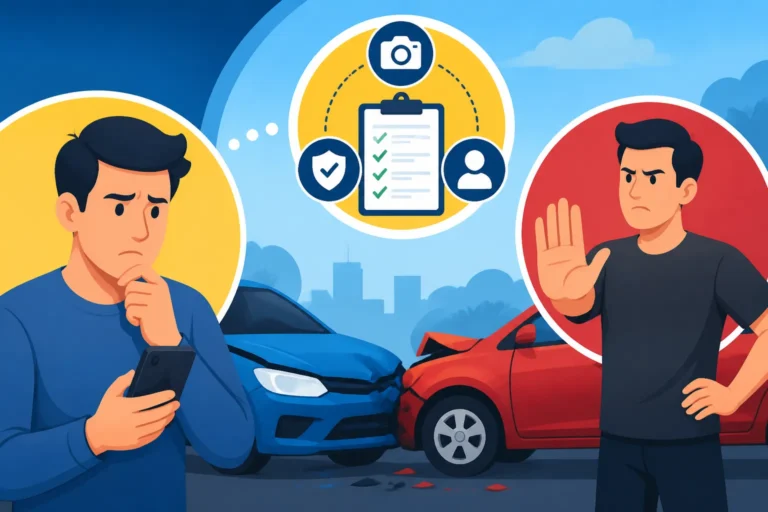
The accident scene might be chaotic, but it's a critical moment to collect as much information as you possibly can. Think of yourself as an investigative journalist for a few minutes. You'll need more than just the other driver's name; detailed information is your best friend when dealing with insurance companies. Start by exchanging basic contact and insurance information with the other driver. Get their full name, phone number, email, vehicle make, model, year, license plate number, and, most importantly, their insurance company's name and policy number. Don't just jot down the name of the company; try to get a snapshot of their insurance card.
Beyond the other driver, look for any witnesses. Independent witnesses can provide invaluable unbiased accounts of what happened. Get their names and contact information too. Note the exact location of the accident – street names, cross streets, mile markers, and any distinguishing landmarks. If a police officer responds, ensure a police report is filed. Even if it's a minor fender bender, a police report can be incredibly helpful for your claim, as it often includes an initial assessment of how fault is determined in a car accident. This thorough information gathering will save you a lot of headaches later on when you initiate your claim.
Documenting the Scene with Evidence
In today's world, your smartphone is one of your most powerful tools after an accident. Use it! Take numerous photos and videos of everything related to the accident. This means documenting the damage to all vehicles involved from multiple angles, the position of the cars, any skid marks on the road, debris, traffic signs or signals, and the general condition of the road (e.g., wet, icy, dry). Don't forget to capture any visible injuries you or your passengers sustained.
The more visual evidence you have, the stronger your case will be. Photos and videos can show the severity of the impact, confirm what you observed, and often speak louder than words when recounting the event to an insurance adjuster. It's a tangible way to provide evidence and bolster your account. This documentation also protects you if the other driver's story changes later, which, unfortunately, sometimes happens. Remember, evidence collected at the scene is often the freshest and most accurate, making it indispensable for your claim.
Understanding the Other Driver's Insurance Role
When you're involved in an accident that wasn't your fault, the at-fault driver's insurance company becomes your primary point of contact for recovering your losses. This process is generally referred to as a "third-party claim." It’s important to understand this dynamic because it dictates how you interact with the insurance companies involved.
Third-Party Claims Explained
A third-party claim is essentially a claim you, the injured party (the "third party"), file directly against the insurance policy of the at-fault driver. Unlike a first-party claim, where you'd be dealing with your own insurance company for damages under your policy, in a third-party claim, you're seeking compensation from someone else's insurer. Their responsibility is to cover the damages caused by their policyholder, up to the limits of that policy. This includes property damage to your vehicle, medical expenses for your injuries, lost wages if you couldn't work, and even pain and suffering.
It's a common misconception that your own insurance company should handle everything regardless of fault. While your insurer might offer to help you coordinate repairs or medical payments, especially if you have collision or MedPay coverage, the ultimate financial responsibility lies with the at-fault driver's insurance. Understanding this distinction is crucial because it sets your expectations for who you'll be negotiating with and what kind of information they will require from you. For a deeper dive into these different claim types, you might want to read our guide on how car accident insurance claims work.
Why Their Insurance Might Be Your First Call
After an accident where the other driver is clearly at fault, many people wonder whether to call their own insurance company first or the other driver's. While it's often wise to inform your own insurer about the accident, even if you don't plan to file a claim with them, directly contacting the at-fault driver's insurance is typically the most straightforward path to recovering your damages without affecting your own policy. By filing directly with the at-fault party's insurer, you aim to leverage their policy to cover your expenses, ideally without having to pay your own deductible or risk a potential increase in your premiums.
This approach bypasses your own coverage for collision or medical payments, which would likely require you to pay a deductible that you'd then have to seek reimbursement for from the other party's insurer. Furthermore, by dealing directly with the at-fault party's insurance, you're putting the onus on them from the start to address their client's liability. This is particularly relevant when you're confident that the other driver was entirely responsible for the collision and you have sufficient evidence to support that.
The Difference Between No-Fault and At-Fault States
The rules governing who pays after an accident can vary dramatically depending on whether you live in an "at-fault" (or "tort") state or a "no-fault" state. This is a critical distinction that impacts your claim strategy. In an at-fault state, the driver who caused the accident is responsible for all damages, and their insurance company pays for your property damage and bodily injuries. This means you directly pursue a third-party claim against their insurer, as this guide details. Most states operate under an at-fault system.
However, in a no-fault state, your own insurance typically pays for your medical expenses and a portion of lost wages, regardless of who caused the accident, up to a certain limit (known as Personal Injury Protection, or PIP). You would only be able to sue the at-fault driver for significant injuries if your medical expenses or injuries meet a certain threshold defined by state law. For property damage, no-fault rules usually don't apply, so you would still pursue a claim against the at-fault driver's insurer for vehicle repairs. Understanding whether you're in an at-fault or no-fault state is paramount, as it directly influences how you file your claim and what you can recover. Our guide, What Is a No-Fault State? (And Which States Are No-Fault), can provide more specific details on your state's laws.
Initiating Your Claim with Their Insurer
Once you've taken care of safety and gathered your initial evidence, it's time to officially initiate your claim with the other driver's insurance company. This first contact is crucial, and knowing what to say – and what not to say – can make a significant difference in how smoothly your claim progresses.
Making the First Contact and What to Say
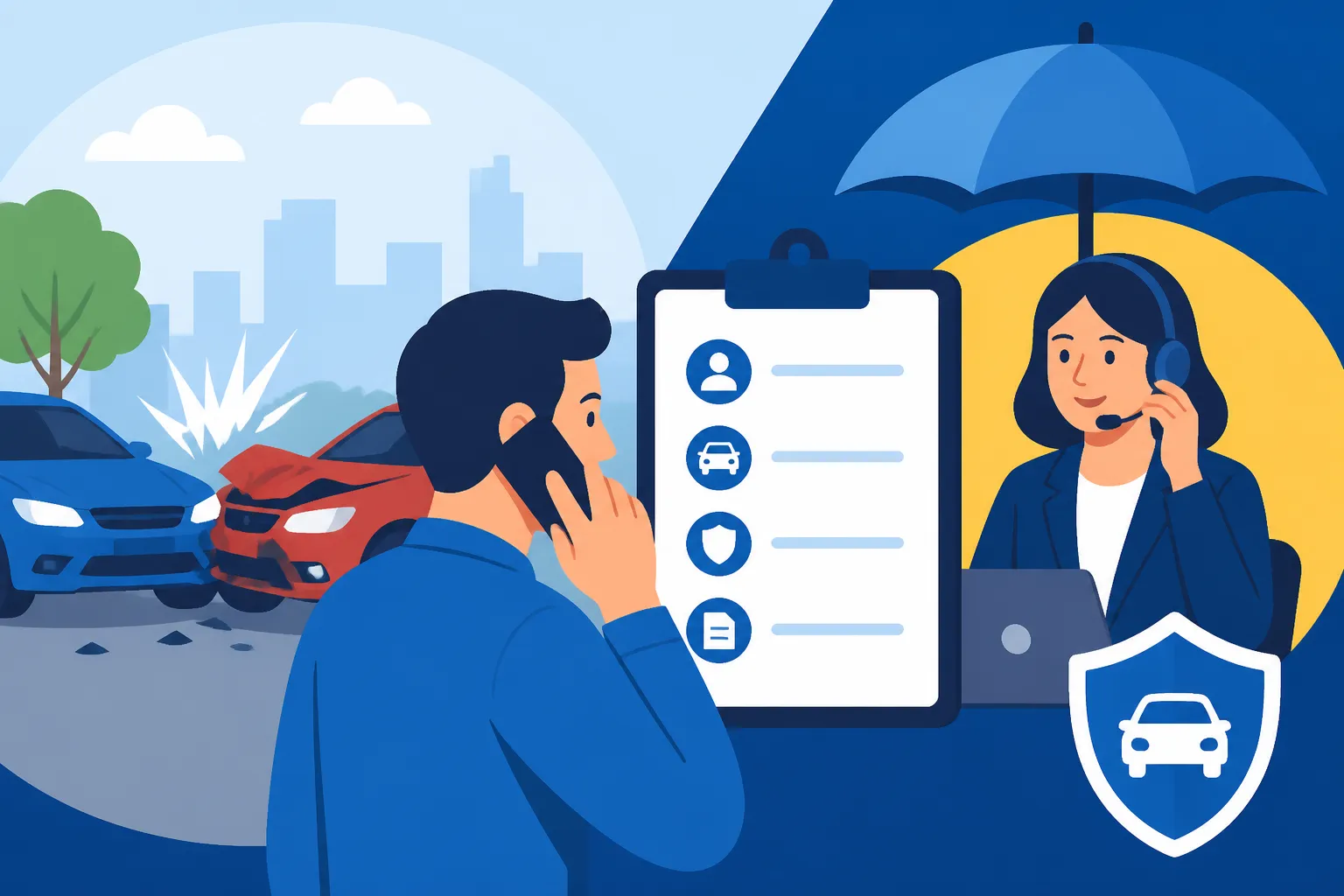
When you're ready to make that call, find the at-fault driver's insurance company's claim reporting line. This number is usually on their insurance card or easily found online. When you speak to a representative, state clearly that you were involved in an accident with one of their policyholders, and you wish to file a third-party claim for damages. Provide your name, the date and location of the accident, and the policyholder's name (the other driver). Keep your description of the accident brief, factual, and objective. Stick to the observable facts: "My vehicle was struck by your policyholder's vehicle at X intersection on Y date. I sustained damage to my vehicle and have received medical attention for injuries."
It's tempting to recount every detail, but at this initial stage, less is often more. Avoid making any statements about fault, even if you feel it's obvious. You are providing information about the incident, not making a legal declaration. Do not admit any fault yourself, even indirectly. Phrases like "I think…" or "I feel…" should be avoided. Just stick to what happened. Remember, anything you say can be used by the insurance company to potentially minimize their payout. This initial conversation is just about opening the claim and establishing the facts of the accident.
Providing Initial Details and Documentation
After you've initiated the claim, the insurance company will ask you for more specific details. This is where all that information you gathered at the scene comes into play. Be prepared to provide the date, time, and exact location of the accident, the other driver's contact and vehicle information, and your own vehicle details. You'll also need to describe the damage to your vehicle and any injuries you sustained. They may ask for a police report number if one was filed.
At this stage, you might also be asked to submit photos or videos you took at the scene. Send these over digitally if possible, ensuring you keep original copies. It's important to provide truthful and accurate information, but always remember you don't have to give a recorded statement right away, nor should you feel pressured to. A recorded statement is often used by insurance companies to lock you into a version of events that may be incomplete or later prove to be slightly inaccurate due to initial shock or confusion. It's often best to consult with an attorney before providing such a statement.
Understanding the Claim Number and Adjuster Assignment
Once you've officially filed your claim, the insurance company will assign it a unique claim number. This number is incredibly important, as it will be your reference for all future communications. Make sure to write it down and keep it handy. Every time you call or send an email, you'll need this number. This helps the insurance company quickly locate your file and ensures your inquiries are routed correctly.
Shortly after your claim is filed, an insurance adjuster will be assigned to your case. This adjuster is the person responsible for investigating the accident, determining liability (who is at fault), assessing damages, and ultimately negotiating a settlement. They will be your main point of contact. The adjuster's job is to protect the insurance company's interests, which often means minimizing the payout. So, while it's important to be cooperative and provide necessary information, always approach interactions with an understanding of their role. Knowing this dynamic from the start can help you navigate the process more effectively.
Navigating the Investigation and Information Exchange
After you've initiated your claim, the real work of investigation begins. The insurance adjuster will be a central figure in this process, and knowing how to interact with them and what information to share is crucial for protecting your interests. This stage involves a lot of back-and-forth, so patience and careful documentation are key.
The Role of the Insurance Adjuster
The insurance adjuster assigned to your case is the company's designated representative tasked with evaluating your claim. Their primary responsibilities include gathering all relevant facts, interviewing parties and witnesses, reviewing police reports, examining vehicle damage, and assessing the extent of any injuries and associated medical costs. They will also look at how to prove the other driver was at fault based on the evidence collected. Ultimately, they will determine the insurance company's liability for the accident and propose a settlement amount.
It's vital to remember that the adjuster works for the insurance company, not for you. While they might sound friendly and empathetic, their goal is to resolve the claim for the lowest possible cost to their employer. This doesn't mean they are inherently adversarial, but it does mean you should be strategic in your communications. Be polite, professional, and provide facts, but avoid speculation or excessive detail. This is where understanding your rights and what information you are legally obligated to provide versus what you can withhold becomes extremely important.
What Information to Share (and What to Hold Back)
When dealing with the other driver's insurance adjuster, you need to strike a balance between providing enough information to support your claim and inadvertently undermining it. You should always provide basic factual information about the accident: date, time, location, the parties involved, and a general description of the incident. You should also share details about your vehicle damage and your medical treatment. This includes providing copies of repair estimates and medical bills.
However, be cautious about certain types of information. As mentioned earlier, giving a recorded statement is usually not advisable without legal counsel. Also, avoid discussing your injuries in great detail beyond what's in your medical records, or speculating about their long-term impact. Never give them access to your full medical history or sign any medical release forms that are too broad in scope. They are only entitled to records directly relevant to the injuries sustained in this accident. Discussing your pre-existing conditions or personal life can open doors for the insurance company to argue that your injuries are not solely due to the accident. Your communication should be focused, factual, and limited to the scope of the accident and its immediate consequences. If you feel overwhelmed, consider reading our guide on Dealing With Insurance Adjusters After a Car Accident.
Vehicle Inspections and Repair Estimates
A critical part of your property damage claim will be the inspection of your vehicle and the generation of repair estimates. The at-fault driver's insurance company will typically want to send an adjuster or a third-party appraiser to inspect your damaged car. This is a standard procedure to assess the extent of the damage and determine the cost of repairs. You have the right to get your own independent repair estimates from trusted body shops. It's often a good idea to get at least two estimates to ensure a fair assessment.
Once the insurance company's estimate is ready, compare it with your own. Discrepancies are common. Their estimate might be lower, failing to account for certain damages or using cheaper aftermarket parts. If your car is deemed a total loss, the adjuster will determine its actual cash value (ACV) before the accident. It's essential to understand how insurance companies calculate total loss (ACV) and be prepared to negotiate if their valuation seems too low. Always ensure that the repair facility you choose is reputable and that they will use genuine parts if specified by your vehicle's warranty or your preference. Do not authorize repairs until you have an agreement in writing from the insurance company about the covered costs.
Potential Challenges and How to Overcome Them
Navigating a claim with another driver's insurance can be fraught with challenges. From disputes over who caused the crash to dealing with frustrating delays, it's rare for a claim to proceed without at least a minor hitch. Knowing what difficulties to anticipate and how to address them can save you a lot of stress and protect your right to fair compensation.
Dealing with Disputed Fault
One of the most common and frustrating challenges is when the other driver's insurance company disputes fault, even if you believe the negligence was clear-cut. This can happen if their policyholder provides a different account of the accident, or if the adjuster finds ambiguity in the police report or evidence. For example, if you were in a Left-Turn Accident Fault Rules situation, the other driver might claim you sped up, even if you had a green arrow. In these scenarios, the insurance company might deny your claim entirely or assign you a percentage of fault.
If fault is disputed, this is where all your meticulously gathered evidence becomes paramount. Present your photos, videos, witness statements, and the police report to the adjuster. Clearly articulate your version of events, backing it up with facts. If you believe the evidence overwhelmingly supports your claim of no fault, but the insurance company still pushes back, it might be time to consider consulting with an attorney. They can help you present your case more strongly and negotiate on your behalf, often leveraging legal precedents or additional investigation methods to challenge the insurer's position. This situation often necessitates a deeper understanding of How Fault Is Determined in a Car Accident.
Handling Lowball Offers and Delays
Another common tactic by insurance companies is to offer a settlement that seems far too low for your damages, or to drag out the claims process, hoping you'll become frustrated and accept a lesser amount. It's a tactic designed to protect their bottom line. A lowball offer might not fully cover your medical bills, lost wages, vehicle repairs, or adequately compensate you for your pain and suffering. Delays can manifest as adjusters not returning calls, requests for repetitive information, or taking an unusually long time to process documentation.
When faced with a lowball offer, do not accept it immediately. You have the right to negotiate. Respond with a well-documented counter-offer that outlines all your damages, including medical expenses, future medical needs, lost income, and a reasonable amount for pain and suffering. Back up each component of your offer with evidence like medical bills, pay stubs, and repair estimates. If delays occur, keep a detailed log of all communications, including dates, times, and summaries of conversations. Follow up politely but persistently. If the delays become excessive or the lowball offers continue without reasonable justification, this is a strong indicator that you might need professional assistance. Our article on How to Deal With a Lowball Insurance Offer offers more detailed strategies.
What If the Other Driver Has No Insurance or Won't Cooperate?
Unfortunately, not every at-fault driver carries adequate insurance, or any insurance at all. This situation can complicate things significantly. If you discover What to Do If the Other Driver Has No Insurance, your options usually shift. You may have to rely on your own uninsured/underinsured motorist (UM/UIM) coverage, if you have it. This coverage is designed specifically for these scenarios and would then become your primary avenue for recovering damages. You'd file a claim with your own insurance company, and they would step into the shoes of the absent at-fault driver's insurer.
Similarly, if What to Do If the At-Fault Driver Won't Cooperate by providing their information, or simply disappears after the accident, it creates a major hurdle. In such cases, the police report becomes even more crucial, as it should contain their contact and insurance details. If you still can't get the information, your own UM/UIM coverage is again your likely fallback. It's also important to note that many states have specific reporting requirements for hit-and-run accidents or accidents involving uninsured drivers. In these difficult situations, seeking legal advice early on is highly recommended, as an attorney can investigate, try to locate the driver, or guide you through the process of filing a claim under your own policy effectively.
What to Expect Post-Claim Filing
After you've filed your claim and the initial investigation is underway, you enter a phase of waiting, negotiating, and working towards a resolution. This often involves discussions about settlement offers and ensuring your medical expenses and other damages are properly addressed. Understanding this final stretch of the process is key to a successful outcome.
Settlement Offers and Negotiations
Eventually, the at-fault driver's insurance company will present you with a settlement offer. As discussed, this initial offer might be lower than what you believe your claim is worth. This is where negotiation comes into play. Your goal is to reach a fair settlement that fully compensates you for all your losses. To prepare for this, you should have a clear understanding of all your damages: economic damages like medical bills, lost wages, and vehicle repair costs, as well as non-economic damages like pain and suffering.
You should never feel pressured to accept the first offer. It's a starting point for discussion. Present your case clearly, explaining why you believe their offer is insufficient and backing it up with all the evidence you've collected. This could include itemized medical bills, receipts for expenses, a doctor's prognosis, and even a log of how your injuries have impacted your daily life. If you're not comfortable negotiating on your own, or if the gap between your demands and their offers is significant, this is a strong sign that you might need a lawyer to handle the negotiations on your behalf. They are experienced in understanding How Much Is My Car Accident Settlement Worth? (2026) and can advocate for your best interests.
Medical Bills and Injury Claims
One of the most complex aspects of any car accident claim, especially one involving injuries, is dealing with medical bills. The sheer volume of paperwork, understanding billing codes, and coordinating payments can be overwhelming. In an at-fault state, the at-fault driver's insurance is ultimately responsible for your accident-related medical expenses. However, they typically won't pay these bills as they come in. Instead, they will usually reimburse you as part of a final settlement.
This means you might need to use your own health insurance or Personal Injury Protection (PIP) coverage (if available) to cover immediate medical costs. It's crucial to keep meticulous records of all medical appointments, treatments, prescriptions, and any out-of-pocket expenses. Once you reach Maximum Medical Improvement (MMI), meaning your condition has stabilized, you'll have a clearer picture of your total medical damages. All these records will be presented to the at-fault driver's insurance as part of your injury claim. A detailed understanding of How Medical Bills Are Paid From a Settlement can further guide you.
When to Consider Legal Counsel
While it's entirely possible to navigate a straightforward car accident claim on your own, there are many situations where hiring a car accident lawyer becomes not just beneficial, but crucial. If your injuries are significant, if fault is disputed, if the insurance company is offering a lowball settlement, or if they are delaying the process excessively, legal counsel can be invaluable. An attorney can protect your rights, handle all communications with the insurance company, conduct independent investigations, and negotiate for a fair settlement.
They understand the nuances of personal injury law, the calculation of damages including pain and suffering, and the strategies insurance companies employ. If your case needs to go to court, a lawyer will represent you through the How a Car Accident Lawsuit Works (If You Don't Settle) process. Most personal injury lawyers work on a contingency fee basis, meaning you don't pay upfront fees; they only get paid if you win your case. Knowing Do You Need a Lawyer for a Car Accident? (2027) can alleviate a lot of the pressure and often results in a significantly better outcome than going it alone, especially in complex cases.
| Information to Gather After an Accident | Purpose for Your Claim | Where to Find It |
|---|---|---|
| Other Driver's Contact Info (Name, Phone, Email) | To contact them/their insurer | Exchange at scene |
| Other Driver's Insurance Info (Company, Policy #) | To file your claim | Other driver's insurance card |
| Vehicle Info (Make, Model, License Plate) | Identifies vehicles involved | Exchange at scene, police report |
| Accident Date, Time, Location | Establishes claim details | Your memory, police report |
| Police Report Number | Official record of the incident | Officer at scene, police department |
| Witness Contact Info (Name, Phone, Email) | Provides unbiased accounts | Ask witnesses at scene |
| Photos/Videos of Damage & Scene | Visual evidence of impact, fault | Your smartphone |
| Medical Records & Bills | Proof of injuries and expenses | Doctor's office, hospital |
| Lost Wage Documentation (Pay stubs, employer letter) | Proof of income loss | Employer, personal records |
Disclaimer
Please remember that this article provides general information and should not be considered legal advice. Car accident claims are complex and specific laws vary by state. It is always best to consult with a qualified attorney or insurance professional for advice tailored to your specific situation.