Car Accident Reporting Requirements in Pennsylvania
Getting into a car accident, even a minor one, can be incredibly disorienting and stressful. Your mind races with questions: Is everyone okay? How bad is the damage? And perhaps most confusingly, do I even need to report this? The feeling of uncertainty about legal obligations, especially regarding something as critical as official accident reports, is a common frustration for drivers in Pennsylvania. This guide is here to untangle the specific reporting requirements in the Keystone State, ensuring you know exactly what steps to take to protect yourself and your potential claim.
Understanding Pennsylvania's Reporting Mandates
Navigating the aftermath of a car accident often feels like stepping into a legal maze, especially when it comes to official reporting. In Pennsylvania, there are very specific circumstances that dictate when you must report an accident to the authorities, and when you, as a driver, have additional obligations. Ignoring these mandates can lead to significant headaches down the line, affecting everything from your insurance claim to potential legal repercussions.
When a Police Report is Absolutely Required
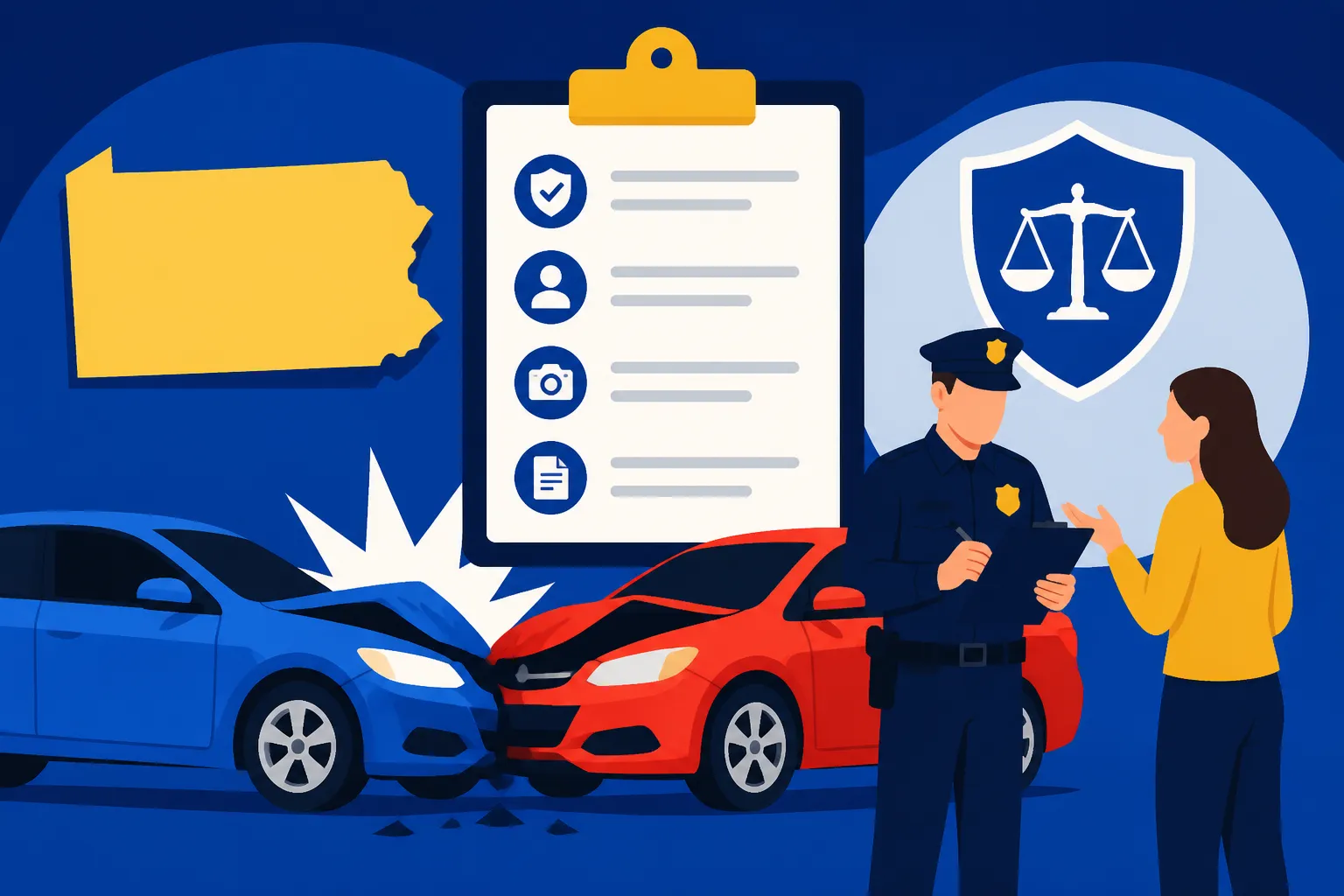
Pennsylvania law is quite clear about when a police report becomes a mandatory part of the accident process. You're not just encouraged to call 911; you are legally obligated to do so under specific conditions. The primary triggers for a mandatory police report in Pennsylvania revolve around the severity of the incident.
Firstly, if the accident results in any injury or death to any person involved, calling the police is non-negotiable. This isn't just about severe, visible injuries; even a seemingly minor bump that causes whiplash or other soft tissue injuries warrants police involvement. Imagine you're rear-ended on I-76 near Philadelphia. At first, you feel fine, but a few hours later, your neck stiffens up dramatically. That delayed symptom, if serious enough to seek medical attention, means the accident should have been reported to the police at the scene. This reporting creates an official record, which is vital for proving your injuries later on. Secondly, if the accident involves damage to any vehicle that renders it inoperable to the extent that it cannot be safely driven from the scene under its own power, a police report is required. This means if your bumper is hanging off, a tire is blown, or your engine is smoking, and your car can't safely make it home or to a shop, you need to call the police. Lastly, if the crash causes damage to public or private property to an apparent extent of $2,000 or more, you must report it. This includes things like guardrails, streetlights, or a fence in someone's yard. The keyword here is "apparent" damage. While you might not be an expert estimator, if it looks like the repair bill will easily exceed that threshold, make the call. Always err on the side of caution if you're unsure about the extent of the damage or injuries, as failure to report a qualifying accident can lead to fines and even points on your driving record. A police report is often the first, most critical piece of evidence in determining who is at fault in a car accident.
The Role of the Driver's Accident Report (Form AA-600)
Beyond the police report, Pennsylvania has another layer of reporting that drivers need to be aware of: the Driver's Accident Report, also known as Form AA-600. This form is often misunderstood, but it serves a crucial purpose, particularly when law enforcement doesn't respond to the scene.
Here's the rundown: if the police do not investigate your accident – perhaps because it didn't meet the mandatory reporting thresholds (no injuries, cars drivable, property damage under $2,000) – you, as a driver, are still obligated to file a report with the Pennsylvania Department of Transportation (PennDOT) if the accident resulted in injury or death or if the total property damage to any vehicle or property involved exceeds $2,000. Yes, you read that right. Even if the police didn't come because your car was drivable, if the combined damage looks like it's over $2,000, you still have to send in this form within five days of the accident. This is where many people get tripped up. They think, "No police, no report," but that's often not the case for PennDOT's requirements. The AA-600 form acts as an official notification to the state about the incident. It captures basic details like the date, time, location, parties involved, vehicle information, and a brief description of the accident. You can find this form on the PennDOT website, usually under "Forms and Publications" or "Motor Vehicle Crash Forms." While it might seem like an extra bureaucratic step, filing the AA-600 ensures that the accident is on record with the state, which can be essential for various administrative purposes, including insurance companies trying to understand How Insurance Companies Determine Who Is at Fault when a police report isn't available. Remember, this form is your responsibility if the police don't investigate, so don't overlook it.
Why Reporting Matters Beyond Legal Requirements
You might think, "Well, if it's a minor fender bender and no one's hurt, why bother with all this paperwork?" This is a common, understandable sentiment, but it overlooks the crucial role reporting plays in protecting your interests, especially when dealing with the aftermath of an accident in Pennsylvania. It's not just about avoiding a fine; it's about safeguarding your future.
Protecting Your Insurance Claim
One of the most immediate and significant reasons to report a car accident, even a seemingly minor one, is to protect your insurance claim. Without an official record, whether it's a police report or your own diligently filed AA-600, you leave yourself vulnerable to disputes with insurance companies. Imagine you're involved in a collision in Pittsburgh, and the other driver seems friendly and agrees to exchange information. You decide not to call the police because the damage looks minimal, and everyone appears unharmed. A week later, you receive a call from the other driver's insurance company, denying their client's fault entirely, or worse, accusing you of being at fault. What do you have to back up your version of events? Your word against theirs.
An official report provides an unbiased, third-party account of the incident. It documents key details like the date, time, location, weather conditions, involved parties, and sometimes even initial statements from drivers and witnesses. This information is invaluable when you need to How to File a Car Accident Insurance Claim. Insurance adjusters rely heavily on these reports to understand the circumstances of the crash and determine liability. Without one, the process becomes much more complicated, often leading to delays, lower settlement offers, or even outright denials. Companies like State Farm, Geico, or Progressive all have specific procedures for handling claims, and an official report significantly streamlines their investigation. Even if you're thinking about handling the claim yourself, having this foundational document is paramount.
Documenting Injuries and Damages
It's a frustrating reality that not all injuries manifest immediately after an accident. You might feel perfectly fine at the scene, only to wake up the next morning with severe neck pain, a throbbing headache, or back stiffness. These Delayed Injury Symptoms After a Car Accident are incredibly common, especially conditions like whiplash or concussions. If you didn't report the accident at the scene, how do you prove that your new injury is directly related to that collision?
Official reports serve as critical documentation linking your physical injuries and vehicle damage directly to the accident event. When you seek medical treatment, your doctor will ask how the injury occurred. Having a police report or a filed AA-600 to reference immediately validates the timeline and cause. This is crucial for any potential personal injury claim. Without this formal link, an insurance company might argue that your injuries stem from another incident or a pre-existing condition, significantly jeopardizing your ability to receive compensation for medical bills, lost wages, and pain and suffering. The report also details the initial assessment of vehicle damage, providing a baseline for your property damage claim. Even if the visible damage seems minor, structural issues can be hidden. Documenting the accident officially ensures that all potential damages, both to your body and your vehicle, have a clear starting point for your claim. This is especially true for more serious conditions like a Herniated Disc From a Car Accident or Traumatic Brain Injury TBI From a Car Accident, where the initial diagnosis might not capture the full extent of the long-term impact.
Avoiding Future Legal Headaches
Beyond insurance claims, official accident reports can prevent a host of legal complications down the road. Without a clear record of what happened, you could find yourself entangled in civil lawsuits, facing accusations of hit-and-run, or dealing with other unexpected legal challenges.
Consider a scenario where you're involved in a collision, exchange information, and decide not to call the police. Weeks later, you receive a letter from an attorney representing the other driver, claiming extensive injuries and property damage far beyond what you observed, and accusing you of negligence. If no police report exists, you lack an independent record to counter these inflated claims or false accusations. An officer's impartial assessment and the details captured in a police report, or even your carefully completed AA-600, can act as a shield against unwarranted legal action. These reports help establish facts early on, minimizing ambiguity and reducing the likelihood of prolonged disputes. They can also provide a solid foundation if you ever need to prove How to Prove the Other Driver Was at Fault in court. Moreover, in the unfortunate event of a hit-and-run, having reported the incident immediately provides a starting point for law enforcement investigation, even if the other driver fled the scene. Essentially, an official report acts as your reliable witness, providing a factual anchor in a situation often characterized by chaos and conflicting memories. It's a small administrative step that offers immense protection against potentially much larger legal and financial burdens.
Step-by-Step Reporting Process in Pennsylvania
When the unexpected happens and you find yourself in a car accident in Pennsylvania, knowing the exact steps to report it can make a world of difference. It helps maintain order in a chaotic situation and ensures you fulfill your legal obligations. Let's walk through the practical steps you need to take.
Calling 911 or Local Police
The very first action after ensuring everyone's immediate safety and moving vehicles to a safe location (if possible and safe to do so) is to contact emergency services. In Pennsylvania, this usually means calling 911 or your local non-emergency police number, depending on the severity.
As soon as the accident occurs, and you've assessed the scene for immediate dangers, dial 911 if there are any injuries, fatalities, or if the vehicles involved are blocking traffic and cannot be moved. For less severe accidents where no one is hurt, cars are drivable, and damage appears minimal (though still possibly over the $2,000 threshold), you might call the local police department's non-emergency line. This is particularly relevant in smaller towns or suburban areas where a direct emergency call might feel excessive for a minor fender bender, but you still need official documentation. When you make the call, be prepared to provide crucial information: the exact location of the accident (street names, cross streets, mile markers, landmarks), the number of vehicles involved, whether there are any injuries, and if the road is obstructed. Dispatchers need these details to send the appropriate resources – police, fire, or EMS. Once an officer arrives, they will investigate, gather statements, and if the accident meets the criteria mentioned earlier (injury, un-drivable vehicle, or significant property damage), they will file a police accident report. This official police report is often the most comprehensive record of the incident and will be invaluable for your Car Accident Claim Timeline: What to Expect and any subsequent insurance discussions. Always cooperate fully with the investigating officer and provide accurate information, but remember not to admit fault at the scene.
Filing the AA-600 Form
What happens if you call the police, but they inform you they won't be responding to the scene because the accident doesn't meet their response criteria (e.g., no apparent injuries, vehicles are drivable, and damage is minimal)? This is precisely when Pennsylvania's Driver's Accident Report (Form AA-600) comes into play.
Even if law enforcement doesn't respond, if your accident resulted in injury or death, or if the total property damage to any vehicle or property involved exceeds $2,000, you are still legally required to file this form with PennDOT. The deadline for submitting the AA-600 form is within five days of the accident. You can typically download the form directly from the Pennsylvania Department of Transportation (PennDOT) website. It's a relatively straightforward form, requiring details such as:
- Date, time, and exact location of the accident
- Your personal information and driver's license number
- Information for all other drivers and vehicles involved (names, addresses, insurance info, license plate numbers)
- A diagram or brief description of how the accident occurred
- Details about any injuries or property damage
Filling out the AA-600 correctly is critical. Double-check all information for accuracy. Make sure you get the full names, contact details, and insurance policy numbers of all parties involved. This information is key for any insurance claims you might pursue. Once completed, mail the form to the address specified on the document, which is typically a PennDOT address in Harrisburg. While the AA-600 doesn't carry the same investigative weight as a police report, it ensures state record-keeping compliance and is often the only official record available if the police didn't attend the scene. This form is a crucial step in What to Do After a Car Accident: Step-by-Step (2027) when a police report isn't generated.
What to Include in Your Report
Whether it's the information you provide to the police officer at the scene or the details you meticulously record on your AA-600 form, comprehensive and accurate reporting is paramount. The more specific and detailed you are, the stronger your position will be for any subsequent insurance claims or legal proceedings.
Here’s a breakdown of the essential information you should strive to include in any accident report:
- Date, Time, and Location: Be precise. Note the day of the week, the exact time, and the specific street, intersection, or mile marker. If you were on a highway like the Pennsylvania Turnpike, note the direction of travel and nearest exit.
- Parties Involved: This means full names, addresses, phone numbers, and driver's license numbers for all drivers. Don't forget passenger names and contact information, if available.
- Vehicle Information: Get the make, model, year, color, and license plate number for all vehicles involved. Also, note down the Vehicle Identification Number (VIN) if you can locate it, though it's less critical than plate numbers.
- Insurance Information: Crucially, obtain the insurance company name and policy number for every vehicle involved. This is perhaps the most important detail for starting any claim.
- Description of Damage: Be specific about where each vehicle was hit and the apparent extent of the damage. For example, "front bumper on driver's side crumpled," "rear passenger door dented," etc.
- Witness Information: If anyone saw the accident, get their names and contact information. Independent witnesses are incredibly valuable for corroborating your story.
- Weather and Road Conditions: Note if it was raining, snowing, foggy, or clear. Mention if the road was wet, icy, or dry, and if there were any road hazards like potholes or debris.
- Diagram and Narrative: Sketch a simple diagram showing the positions of the vehicles before, during, and after impact. Write a concise, factual narrative of what happened, sticking to observable facts rather than assumptions about fault. For example, instead of "He cut me off," write "Vehicle B merged into my lane without signaling, striking my front passenger side."
Collecting this information can feel overwhelming right after an accident, but being prepared and methodical will serve you well. Many people keep a small accident kit in their glove box with a pen, paper, and a camera (your phone will do) to help with How to Document a Car Accident Scene. Remember, the more information you gather and report accurately, the better equipped you'll be to navigate the complex world of insurance claims and potential litigation.
| Reporting Requirement | Criteria in Pennsylvania | Who Files | Deadline | Importance |
|---|---|---|---|---|
| Police Report | Injury/Death to any person; OR Vehicle inoperable; OR Property damage (public/private) of $2,000+ | Police Officer | At Scene (Investigation) | Crucial for fault determination, evidence for claims, legal record |
| Driver's Accident Report (Form AA-600) | Police do not investigate; AND Injury/Death to any person; OR Total property damage of $2,000+ | Driver | Within 5 days of accident | State record, backup for insurance claim if no police report |
Common Misconceptions and Nuances
The aftermath of a car accident is fertile ground for misunderstandings, especially concerning reporting requirements. Many drivers, even seasoned ones in Pennsylvania, operate under incorrect assumptions that can later jeopardize their claims or expose them to legal liabilities. Let's clear up some of these common pitfalls.
"Minor Fender Bender" Fallacy
One of the most dangerous misconceptions is believing that if an accident is just a "minor fender bender," it doesn't need to be reported to the police or documented officially. The thought process often goes, "No real damage, no injuries, let's just exchange info and go our separate ways." This casual approach is a recipe for regret.
While it's true that not every scrape on a bumper mandates a police report in Pennsylvania, foregoing any official documentation is risky. For starters, what appears to be minor damage on the surface can often hide significant underlying structural issues that are far more expensive to repair than initially thought. A seemingly small dent could indicate frame damage or issues with sensors behind the bumper, especially in modern vehicles. Secondly, and perhaps more critically, injuries are not always immediately apparent. Many common car accident injuries, such as Whiplash Symptoms After a Car Accident, concussions, or even back strains, can have delayed onset, with symptoms appearing hours or even days after the collision. If you've only exchanged contact information and there's no official report, you'll find it incredibly difficult to link those delayed injuries to the specific accident when you try to file a claim. The other driver's insurance company could easily deny your claim, arguing that the injury happened sometime after the incident. Always consider the potential for hidden damage and delayed injuries. When in doubt, call the police or at minimum, file the PennDOT AA-600 form if it meets the damage thresholds. Your future self (and your wallet) will thank you.
Reporting Without Police Involvement
It's a frustrating but common scenario: you've been in an accident, you call the police, and they tell you they won't dispatch an officer because it doesn't meet their emergency response criteria. This doesn't mean you're off the hook for reporting. Far from it. This is a crucial nuance in Pennsylvania's reporting system.
If the police don't investigate the accident scene, you are then personally responsible for reporting the accident to PennDOT by filing the AA-600 Driver's Accident Report, provided the accident still meets the damage or injury thresholds ($2,000+ in total property damage or any injury/death). Many drivers mistakenly believe that if the police don't come, no report is necessary at all. This is simply incorrect. Failing to file the AA-600 form when required can lead to fines, suspension of your driving privileges, and significantly complicate any future insurance claims. Imagine you're in a parking lot accident near King of Prussia mall. A driver backs into your parked car, causing a sizable dent. No one is hurt, and both cars are drivable. The police say they won't respond to parking lot incidents. You still need to file the AA-600 if the damage appears to exceed $2,000. Additionally, regardless of police involvement, you absolutely must notify your own insurance company of the accident as soon as reasonably possible. Even if you're not planning to file a claim through your own policy, your policy likely has clauses requiring you to report all accidents. Your insurance company will then initiate their own internal reporting process, which might involve asking you to provide a recorded statement or fill out their specific accident forms. So, What If There Was No Police Report? doesn't mean no reporting; it means your reporting obligations shift to you directly with PennDOT and your insurer.
What if the Other Driver Doesn't Want to Report?
It's a familiar refrain after a collision: "Let's just settle this between ourselves, no need to get insurance or police involved." This might sound tempting in the heat of the moment, especially if you're worried about your insurance premiums going up. However, agreeing to such an arrangement is almost always a bad idea, and it can put you in a very precarious legal and financial position in Pennsylvania.
If the accident meets any of Pennsylvania's mandatory reporting criteria (injury, un-drivable vehicle, or property damage over $2,000), you have a legal obligation to report it, regardless of the other driver's wishes. Yielding to their request to keep it quiet could mean you're in violation of state law. Beyond the legal aspect, agreeing not to report leaves you completely exposed. What if the other driver later claims injuries they didn't mention at the scene, or the damage to their vehicle is far worse than initially estimated? What if they accuse you of causing the accident and suddenly refuse to pay for repairs? Without an official police report or your filed AA-600, you have no formal record to dispute these claims. Your ability to receive fair compensation for your vehicle damage or medical expenses will be severely hampered. Always insist on following proper procedure. If the accident warrants a police report, call them. If it doesn't, but still meets the AA-600 thresholds, make it clear you'll be filing that form. Politely but firmly explain that it's important for both parties to have an official record for insurance purposes. You might even consider discussing What Is an Admission of Fault and How to Avoid It with the other driver, reminding them that neither of you should admit fault at the scene. Your priority should be protecting your rights and ensuring accurate documentation, not appeasing an uncooperative or financially motivated other driver.
Disclaimer
The information provided in this article is for general informational purposes only and does not constitute legal advice. Car accident laws and reporting requirements can be complex and are subject to change. It is essential to consult with a qualified legal professional or your insurance provider for advice tailored to your specific situation in Pennsylvania.