Car Accident Reporting Requirements in Michigan
Getting into a car accident is one of those incredibly jarring, disorienting experiences that leaves you feeling shaken, confused, and sometimes even a little lost. The immediate aftermath is a blur of adrenaline and questions: Is everyone okay? What about my car? And then, the big one that often brings a wave of anxiety: "What am I supposed to do now?" Especially here in Michigan, where our unique no-fault laws add another layer of complexity, understanding the specific car accident reporting requirements isn't just a good idea – it's absolutely crucial for protecting yourself, your passengers, and your financial future. This guide is here to walk you through exactly what you need to report and when, dispelling the confusion so you can navigate this stressful time with a bit more confidence.
When a Police Report Is a Must in Michigan
One of the most common questions after a fender bender or even a more serious crash is whether you have to call the police. It's not always clear-cut, especially if the damage seems minor. However, Michigan law is quite specific about when a formal police report is required, and missing this crucial step can lead to significant headaches down the road. This isn't just about a good-faith effort; it's a legal obligation that carries real consequences if ignored.
Understanding the Thresholds for Reporting
In Michigan, you are legally required to report a car accident to the police if it results in injury, death, or property damage exceeding certain financial thresholds. Specifically, if the accident involves property damage of $1,000 or more to any one person's property, or if anyone involved is injured or killed, you must notify the nearest police agency. This means if your vehicle alone sustains $1,000 or more in damage, or if the other driver's vehicle sustains that much, a police report is mandatory. It's not about the combined total of damages, which is a common misconception, but rather the damage to an individual's property.
Let's imagine a scenario: You're driving down Woodward Avenue in Royal Oak and have a low-speed rear-end collision. Initially, it looks like just a scratch on your bumper and a small dent on theirs. You exchange information, and everyone seems fine. But a few days later, you notice a strange squeak in your car, or the other driver calls to say their trunk lid isn't closing properly, and the repair estimate is $1,200. If you didn't call the police at the scene because you thought the damage was minimal, you might now be in a difficult spot. It's always better to err on the side of caution. Even if the damage looks minor, it often costs more to fix than you'd expect, especially with today's complex vehicle designs involving sensors and cameras.
The Role of the UD-10 Form
When police respond to an accident in Michigan, they will typically complete a form known as the UD-10, or "Uniform Crash Report." This official document captures all the essential details of the incident: the date, time, and location; names and contact information of all parties involved; vehicle descriptions; insurance information; and, crucially, a narrative description of how the accident occurred. It also includes details about any observed injuries, vehicle damage, and whether any citations were issued.
This UD-10 report becomes an incredibly important piece of evidence. It's often the first, most objective record of the event. When you later file your insurance claim, adjusters will almost always request a copy of this report to help them understand the circumstances and determine who is at fault in a car accident. Without it, you're relying solely on witness statements, photographs, and potentially conflicting accounts, which can significantly complicate your claim. While a police report doesn't definitively determine who pays, it provides a crucial factual foundation for subsequent investigations.
Why Reporting to Your Insurance Company is Non-Negotiable
Beyond the legal requirement to report to the police under certain circumstances, you have a separate, contractual obligation to report any accident to your own insurance company. This is a critical step, regardless of who you believe was at fault or how minor the incident may seem. Failing to notify your insurer promptly can jeopardize your coverage and ability to claim benefits, even if the other driver was clearly in the wrong.
The Contractual Obligation to Report
Every auto insurance policy includes clauses that require you to notify the company of an accident within a reasonable timeframe. "Reasonable timeframe" isn't always explicitly defined, but generally, it means as soon as practically possible after the incident, once you've addressed immediate safety and medical concerns. This isn't just a suggestion; it's part of the agreement you made when you purchased the policy.
Even if the accident seems like a minor ding and you think you can handle it out of pocket, or if the other driver promises to pay cash, you should still inform your insurer. Why? Because injuries, particularly things like whiplash or a herniated disc, can have delayed injury symptoms after a car accident, sometimes not appearing for days or even weeks. What began as a "minor" incident could evolve into a significant personal injury claim. If you haven't reported it, your insurance company might deny coverage, citing your failure to meet your contractual obligations. It's always better for them to be aware, even if you initially state that you don't plan to file a claim. You can always change your mind if new information or injuries come to light.
Navigating Michigan's No-Fault System
Michigan operates under a "no-fault" insurance system, which means that generally, your own insurance company pays for your medical expenses and lost wages if you're injured in a car accident, regardless of who caused the crash. This is primarily covered by what's called Personal Injury Protection (PIP) benefits. However, this doesn't mean fault is irrelevant; it still matters for property damage and certain severe injury claims. Understanding this system is vital when you're filing a claim.
When you report an accident to your insurer, they'll open a claim, often called a "first-party claim" because you're claiming benefits from your own policy. They'll ask you to provide details about the accident, any injuries you sustained, and any medical treatment you're receiving. This is where the police report, if one was made, can be very helpful. Remember, even in a no-fault state, you need to understand how car accident insurance claims work. You might still have to deal with the other driver's insurance if your vehicle sustains damage or if you suffer serious injuries that meet certain thresholds, allowing you to sue for "excess" economic damages or non-economic damages like pain and suffering.
Here's a quick overview of how reporting intertwines with Michigan's no-fault system:
| Aspect | Police Report (UD-10) | Insurance Report (Your Insurer) |
|---|---|---|
| Legal Requirement | Yes, if injury/death or >$1,000 damage to any one person's property. | Contractual, typically required for all accidents. |
| Primary Purpose | Official documentation of the crash, fact-finding, potential citations. | Initiates your claim for PIP benefits (medical, lost wages) and property damage. |
| Who Files? | Law enforcement (at the scene). | You, the policyholder. |
| Timeline | Immediate (at the scene or shortly after). | As soon as possible, "within a reasonable time." |
| Impact on Claim | Provides objective evidence for all parties, aids fault determination. | Activates your coverage, ensures access to benefits. |
| Consequences of Not Filing | Potential fines, inability to prove fault for property damage, insurance issues. | Claim denial, loss of benefits, out-of-pocket expenses. |
Reporting to both entities, when necessary, ensures all your bases are covered.
What to Do at the Scene: Gathering Information for Reports
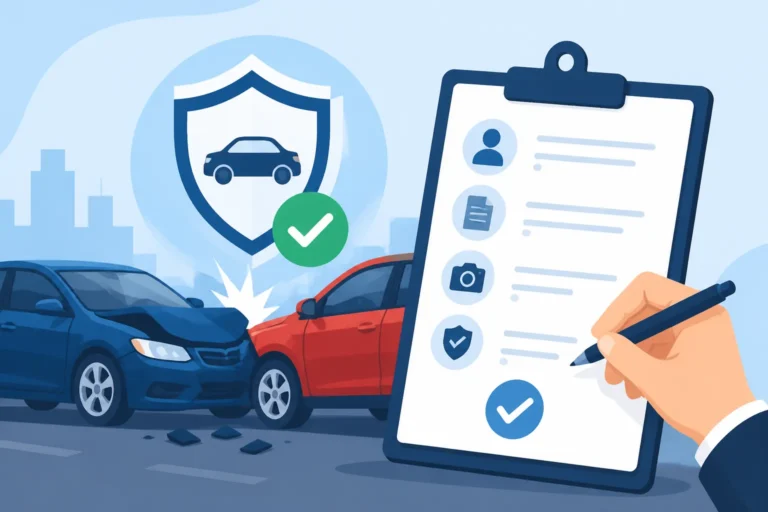
The moments immediately following an accident can be chaotic and stressful, but they are also crucial for gathering the information you'll need for both police reports and your insurance claim. Think of yourself as a diligent detective; the more details you collect right then and there, the smoother the reporting and claims process will be. This proactive approach can make a world of difference when it comes to proving fault and ensuring you receive fair compensation.
Essential Details to Collect
Once you've ensured everyone's safety and moved vehicles to a safe location if possible, it's time to start collecting information. This is where your smartphone can be your best friend. Take clear, well-lit photographs from multiple angles. Capture the overall scene, close-ups of damage to both vehicles, skid marks, road conditions, traffic signs, and any relevant debris. The more visual evidence, the better.
Beyond photos, make sure to get specific details from the other driver(s):
- Full name and contact information: Phone number, email address.
- Driver's license number: And the state that issued it.
- Insurance company and policy number: Take a picture of their insurance card.
- Vehicle information: Make, model, year, license plate number, and Vehicle Identification Number (VIN).
- Witness information: If anyone saw the accident, get their name, phone number, and a brief statement if they're willing to provide one. These independent accounts can be invaluable.
- Date, time, and exact location of the accident.
Remember, the police will gather much of this for the UD-10, but it’s always a good idea to have your own record. This comprehensive collection of data will be essential when you need to provide details to your insurer or potentially when discussing who is at fault when both drivers are to blame. If you're unsure about what information to exchange after a car accident, keeping a checklist in your glove compartment can be really helpful.
The Importance of Medical Documentation
Even if you feel fine at the scene, it's incredibly important to seek medical attention if you experience any pain or discomfort. As mentioned earlier, many serious injuries, like concussions or soft tissue injuries, including whiplash, can have delayed symptoms. By seeing a doctor promptly, you create an official medical record that links your injuries directly to the accident. This documentation is absolutely vital for any personal injury claim you might pursue. Without it, insurance companies might argue that your injuries were pre-existing or unrelated to the crash.
Remember, under Michigan's no-fault system, your own insurance company's PIP benefits are designed to cover reasonable and necessary medical expenses. Don't delay treatment out of fear of costs. Your health is paramount. For a deeper dive into what to expect regarding injuries, check out our guide on Common Car Accident Injuries: Complete Guide (2026). The sooner you start documenting everything, from initial symptoms to ongoing treatment, the stronger your case will be.
Common Reporting Pitfalls and How to Avoid Them
Even with the best intentions, it's easy to make mistakes in the stressful aftermath of a car accident. Knowing the common pitfalls can help you avoid them and ensure your reports and claims proceed as smoothly as possible. From admitting fault to delaying reports, a misstep here can severely impact your ability to recover damages or benefits.
Avoiding Admissions of Fault
One of the most critical pieces of advice after an accident is to never admit fault at the scene. Even an innocent-sounding apology like, "Oh, I'm so sorry, I didn't see you!" can be misconstrued and used against you later by insurance companies. Emotions run high after a crash, and it's natural to feel sympathetic, but stick to the facts when speaking with the other driver and even the police. Describe what happened, not whose fault it was. Let the police and insurance adjusters determine fault based on the evidence.
If you find yourself being blamed unfairly by the other driver or their insurance company, having a clear, factual account from the police report and your own documentation becomes even more crucial. You might feel pressured to take responsibility, especially if you're shaken up, but it's vital to protect your legal position. For more on this, you might want to read about What Is an Admission of Fault (and How to Avoid It)?.
What If There Was No Police Report?
It's a common scenario: you have a minor fender bender, damage is minimal (or seems to be), and everyone agrees to handle it "privately" without involving the police. Or perhaps the damage threshold for police involvement wasn't met. However, as we discussed, injuries can appear later, or repair costs can skyrocket. So, what happens if you later realize you need to file a claim, but there's no official UD-10 report?
While a police report greatly strengthens your case, its absence doesn't automatically mean you're out of luck. You'll need to rely heavily on your own documentation: photos, witness statements, detailed notes about the accident, and immediate medical records if applicable. For property damage, you might still file a claim with your own insurance, or a third-party claim with the other driver's insurer, especially if you have collision coverage. The insurance companies will then conduct their own investigations, potentially relying on damage appraisals, statements from both drivers, and any other available evidence. It becomes a more challenging process, often requiring more active participation from you to prove your case. If you're in this situation, our guide on What If There Was No Police Report? can offer more specific steps to take.
The Importance of Timely Reporting
Beyond the immediate reporting at the scene, there are strict timelines you need to be aware of when dealing with your insurance company and potentially the legal system. In Michigan, the general statute of limitations for personal injury claims is three years from the date of the accident. For property damage claims, it can vary. While three years might seem like a long time, delaying your insurance report or medical treatment can severely undermine your claim. Insurance companies are often skeptical of claims where there's a significant gap between the accident and the report of injuries or damage. They might argue that the injuries or damage couldn't possibly be related to the original incident.
This is why, after ensuring safety and gathering initial details, one of your very next steps should be to call your insurance company. Don't wait until your car is repaired or your doctor gives you a final diagnosis. Just let them know an accident occurred. This starts the clock on their end and documents your compliance with your policy. For a full understanding of these time constraints, consider reviewing our comprehensive guide on How Long Do You Have to File a Car Accident Claim?. Staying on top of these deadlines is essential for a successful claim.
Navigating the Claims Process After Reporting
Once you've reported the accident to the police (if required) and your insurance company, you've initiated the often-complex claims process. This phase involves communication with adjusters, potentially medical evaluations, and ultimately, negotiations for a settlement. Understanding what to expect and how to handle these interactions will be key to protecting your interests.
Dealing with Insurance Adjusters
After you've filed your claim, you'll be assigned an insurance adjuster. This individual's job is to investigate the accident, assess the damages, and ultimately determine how much the insurance company will pay. It's important to remember that while adjusters are professionals, their primary loyalty is to their employer – the insurance company. They are not necessarily looking out for your best financial interests.
When speaking with adjusters, remain polite but firm. Provide factual information, but avoid speculating or offering opinions about fault. They may ask for a recorded statement; while you generally must cooperate with your own insurer, you should consider consulting with an attorney before providing a recorded statement to the other driver's insurance company. Be prepared to provide copies of your medical records, repair estimates, and any documentation of lost wages. For more detailed advice on how to handle these conversations, our article on Dealing With Insurance Adjusters After a Car Accident is a fantastic resource.
The Path to Resolution: Settlement or Lawsuit
Most car accident claims are resolved through a settlement, where you and the insurance company agree on a compensation amount. This can cover medical bills, lost wages, vehicle repair or replacement, and potentially pain and suffering, depending on the severity of your injuries and the specifics of Michigan law. The police report and your thorough documentation of injuries and damages will be central to these negotiations.
If a fair settlement cannot be reached, especially in cases involving serious injuries or complex liability disputes, you might consider filing a car accident lawsuit. This is a more formal legal process where a court will ultimately decide the outcome. In such instances, having an experienced car accident lawyer by your side is almost always beneficial. They can guide you through the legal complexities, help you gather additional evidence, and represent your interests in court. Even for seemingly minor accidents, knowing when to bring in legal help can make a huge difference in the outcome. Our guide on Do You Need a Lawyer for a Car Accident? (2026) offers insights into when professional legal assistance is most warranted.
Keeping Your Records Organized
Throughout the entire claims process, maintaining meticulous records is paramount. Create a dedicated folder, either physical or digital, where you store copies of everything: the police report, your insurance claim number, contact details for all parties and adjusters, medical bills, prescription receipts, repair estimates, rental car agreements, and any correspondence related to your accident. Even small details, like mileage to doctor's appointments, can add up and become part of your claim.
This organized approach not only helps you stay on top of your case but also provides irrefutable proof when dealing with insurance companies or legal proceedings. A well-documented claim is a strong claim. You'll be grateful for your diligence when you need to quickly reference a specific detail or provide evidence to back up your assertions.
Disclaimer
Please remember that this article provides general information and guidance regarding car accident reporting requirements in Michigan. It is not intended as legal advice. Laws can change, and every accident scenario is unique. For specific legal advice tailored to your situation, it is always recommended to consult with a qualified Michigan attorney.