How Long Do You Have to File a Car Accident Claim in Oklahoma?
Getting into a car accident is jarring enough, but then you're immediately faced with a whirlwind of questions: Is everyone okay? What about the damage to my car? And perhaps the most anxiety-inducing question of all – how long do I even have to figure this all out and pursue a claim? This uncertainty is especially stressful when you're dealing with injuries or significant property damage, and it can feel like the clock is ticking without you even knowing the actual deadline. For those navigating the aftermath of a collision in the Sooner State, understanding the specific timeline for filing a car accident claim in Oklahoma is absolutely critical to protect your rights and ensure you can seek the compensation you deserve.
Understanding Oklahoma's Statute of Limitations for Car Accidents
Oklahoma, like every other state, has specific laws that dictate how long you have to take legal action after an incident. These time limits are known as "statutes of limitations," and they apply directly to car accident claims. It's not just a suggestion; these are hard deadlines that, if missed, can permanently bar you from recovering damages.
Personal Injury Claims
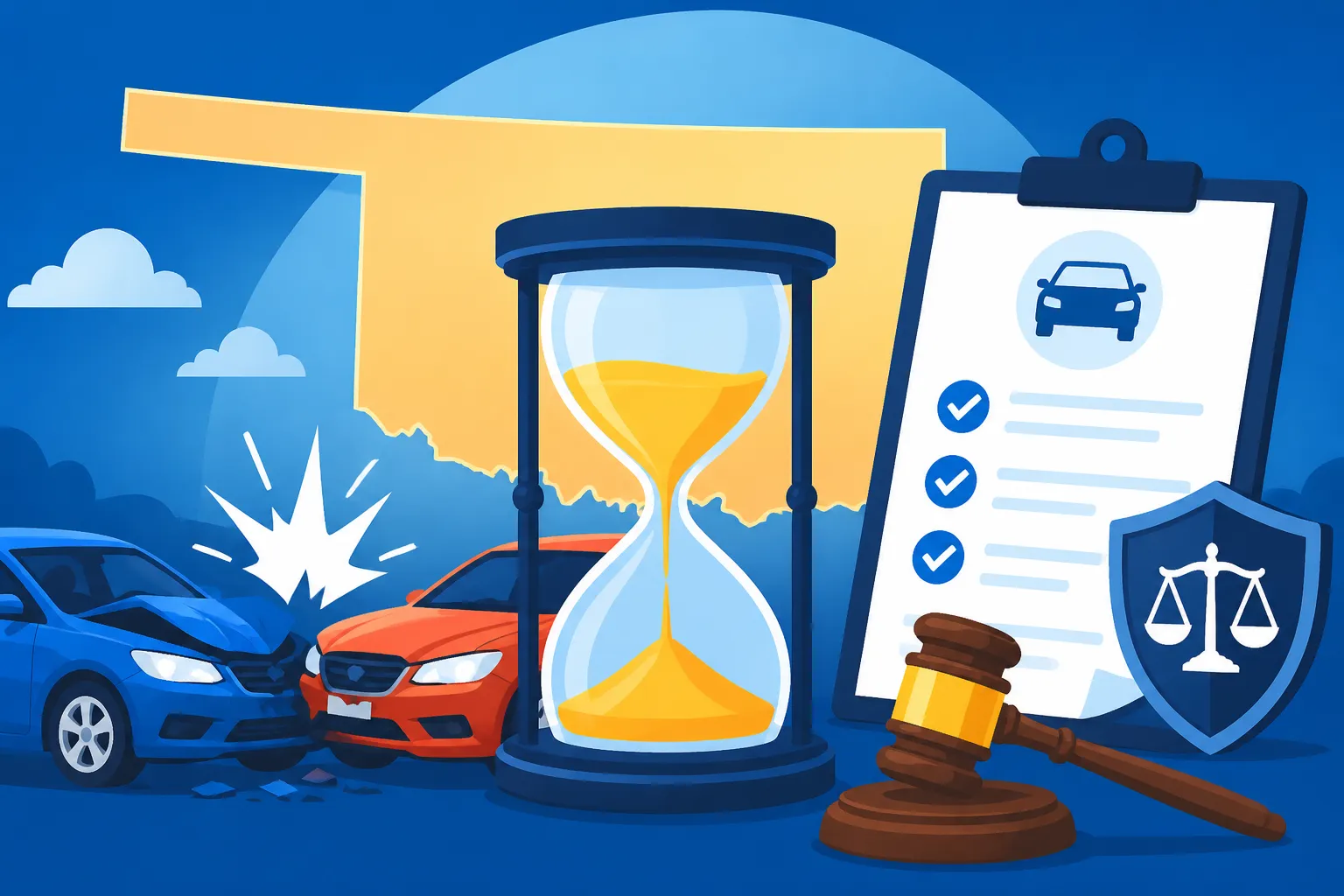
When a car accident leaves you with injuries, whether it's whiplash, a broken bone, or something more serious, the clock starts ticking for your personal injury claim. In Oklahoma, the general rule for personal injury claims stemming from a car accident is two years from the date of the accident. This means if you were involved in a collision on January 1, 2024, you would generally have until January 1, 2026, to either settle your claim or file a lawsuit in court.
This two-year window covers all the aspects of your physical and emotional suffering. This includes your medical expenses, both current and future, for things like emergency room visits, physical therapy, prescriptions, and specialist consultations. It also encompasses lost wages if your injuries kept you from working, and perhaps most importantly, your pain and suffering. Trying to negotiate with an insurance company for these types of damages requires a clear understanding of the law. If you let this deadline pass without filing a formal lawsuit, the at-fault driver's insurance company will almost certainly deny your claim outright, knowing you've lost your legal standing.
Property Damage Claims
Beyond the physical toll, car accidents often leave you with a damaged or even totaled vehicle. The financial strain of repairs or replacing your car can be substantial. Fortunately, Oklahoma's statute of limitations also covers the damage to your property. Similar to personal injury claims, you typically have two years from the date of the accident to file a claim for property damage.
This property damage claim isn't just for your car; it could also extend to other personal items that were damaged in the crash, such as a laptop in your backseat or a motorcycle helmet that was destroyed. It's crucial to document all damage thoroughly, obtain repair estimates, and keep detailed records of any rental car expenses you incur while your vehicle is being fixed or replaced. Even if your injuries seem minor, don't let the property damage aspect of your claim slip through the cracks. The process of getting your car repaired or compensated for a total loss can often move faster than a bodily injury claim, but the two-year deadline still looms large for any formal legal action.
Wrongful Death Claims
Tragically, some car accidents result in fatalities. When a life is lost due to someone else's negligence in an Oklahoma car accident, the surviving family members or the deceased's estate may have grounds for a wrongful death claim. This type of claim seeks compensation for the profound losses experienced, including funeral and burial expenses, medical bills incurred before death, loss of financial support, loss of companionship, and pain and suffering experienced by the deceased and their family.
For wrongful death claims in Oklahoma, the statute of limitations is also two years from the date of the individual's death. It's important to note that this clock starts ticking from the date of death, which might not always be the same as the date of the accident, especially if the individual succumbed to their injuries days or weeks later. These cases are particularly complex and emotionally challenging, making it even more imperative to understand and adhere to the strict legal deadlines. Seeking legal guidance quickly in such tragic circumstances is absolutely paramount.
Important Exceptions and Nuances to the General Rule
While the two-year rule is the standard for car accident claims in Oklahoma, there are some critical exceptions and specific situations that can alter this timeline. Ignoring these nuances could prove detrimental to your ability to seek justice and compensation.
Claims Involving Minors
Imagine a scenario where a child is injured in a car accident. Since minors are not legally considered adults, the usual statute of limitations might not apply to them in the same way. In Oklahoma, if the injured party is a minor (under 18 years old) at the time of the accident, the two-year statute of limitations for their personal injury claim often doesn't begin until they turn 18. This means a child injured at age 10 could potentially have until their 20th birthday to file a lawsuit.
However, this "tolling" of the statute of limitations for minors typically only applies to the personal injury aspect of the claim. Any property damage claim still follows the standard two-year rule from the date of the accident, regardless of who owns the property. Furthermore, while the minor's clock is delayed, a parent or guardian often has the right to file a claim on their behalf much sooner. It’s a complex area, and one where prompt legal advice can prevent serious missteps.
Discovery Rule
What if you're involved in an accident, feel fine initially, but then weeks or months later, a serious injury manifests? This isn't uncommon, especially with conditions like herniated discs or certain types of nerve damage. In some limited circumstances, Oklahoma law may apply a "discovery rule," which means the statute of limitations might not begin until the date the injury was (or reasonably should have been) discovered, rather than the date of the accident itself.
However, relying on the discovery rule can be incredibly challenging. You would need to provide clear and convincing evidence that you genuinely couldn't have known about your injury earlier. Insurance companies are often skeptical of delayed injury claims and will look for reasons to deny them. This rule is more typically applied in medical malpractice cases or situations where the injury's connection to the accident wasn't immediately obvious. It's never a good idea to wait to see if an injury develops. Always seek medical attention promptly after an accident, even if you feel okay, and report all symptoms, no matter how minor. This creates a clear medical record that can prove invaluable if you have to file a claim for Delayed Injury Symptoms After a Car Accident.
Claims Against Government Entities
Being involved in an accident with a city, county, or state vehicle, or on property maintained by a government agency, introduces an entirely different set of rules. Claims against government entities, whether it's a city bus, a police car, or a state highway patrol vehicle, are subject to a special set of procedures and much shorter deadlines under the Oklahoma Governmental Tort Claims Act.
Under this Act, you typically have only one year from the date of the loss to provide written notice of your claim to the appropriate government entity. Missing this initial notice period can completely bar you from ever pursuing compensation, regardless of the two-year general statute of limitations for filing a lawsuit. After the notice is given, the government entity has a period to investigate, and only then, if the claim is denied or not acted upon, can a lawsuit be filed within a subsequent, typically shorter, timeframe. These cases are notoriously complex and require immediate action and specific legal expertise to navigate successfully.
Out-of-State Drivers and Residency
Sometimes, an accident involves a driver from another state. This can add a layer of complexity, but generally, if the accident occurred in Oklahoma, Oklahoma's statute of limitations applies. This is because the laws of the state where the incident occurred, known as the "lex loci delicti," typically govern personal injury claims.
However, there can be rare exceptions, particularly if both parties are from another state and have significant ties there, or if the case involves specific contractual issues. For example, if you're a resident of Dallas, Texas, and you get into an accident with another Texas resident while both of you are on vacation in Tulsa, Oklahoma's laws for the accident itself would likely apply. But the procedural aspects of filing a lawsuit might involve considering jurisdictional issues. For the vast majority of car accidents occurring within Oklahoma's borders, the two-year rule for personal injury and property damage, along with any relevant exceptions, will be the prevailing law. Understanding the nuances of Who Is at Fault in a Car Accident? Complete Guide can become even more critical in these situations.
What Happens If You Miss the Deadline?
It's one thing to know about the statute of limitations; it's another to understand the severe consequences of failing to adhere to it. When it comes to car accident claims in Oklahoma, missing the legal deadline is not a minor oversight – it’s a game-changer that can cost you everything.
The Harsh Reality of a Missed Deadline
Let's be blunt: if you miss the two-year statute of limitations for filing a personal injury or property damage lawsuit in Oklahoma, your claim is almost certainly dead in the water. Once that deadline passes, the at-fault party and their insurance company gain a powerful legal defense. If you attempt to file a lawsuit after the two-year mark, the defendant will simply file a motion to dismiss your case based on the statute of limitations, and the court will almost certainly grant it.
There are very few, and highly specific, exceptions to this rule, such as the minor exception mentioned earlier or in rare instances of fraudulent concealment by the at-fault party that prevented you from filing. However, these exceptions are narrow and rarely apply to typical car accident scenarios. The harsh reality is that the courts are there to enforce these deadlines, and they will, even if you had a perfectly valid claim with significant damages. This is why understanding How Long Do You Have to File a Car Accident Claim? is so important from the very beginning.
The Insurance Company's Stance
Insurance companies, as you might imagine, are not in the business of paying out claims unnecessarily. They are keenly aware of the statute of limitations and will use it to their full advantage. If you've been in communication with an insurance adjuster, and the two-year mark is approaching, they are under no obligation to remind you of the deadline. In fact, some might even implicitly or explicitly delay discussions, hoping the deadline passes, knowing it will save them from having to pay.
Once the statute of limitations has expired, an insurance adjuster will typically issue a formal denial of your claim, citing the missed deadline. At that point, any leverage you had in negotiating a fair settlement vanishes. You can plead your case, explain delays, or talk about your severe injuries, but without the ability to take legal action, the insurance company simply has no incentive to offer you anything. This highlights the critical importance of actively managing your claim or, better yet, having legal counsel do it for you.
No Legal Recourse
The most devastating consequence of missing the statute of limitations is the complete loss of your legal recourse. You lose the right to sue the at-fault driver, to compel their insurance company to negotiate fairly, and to present your case to a judge or jury. All the evidence you've gathered, all the medical bills, all the lost wages – they become irrelevant in the eyes of the law once the deadline is past.
This means you will likely be personally responsible for all your medical bills, vehicle repair costs, and any other financial losses incurred as a result of the accident. It's a bitter pill to swallow, especially if your injuries were severe and caused by someone else's negligence. This is precisely why early action and awareness are not just good ideas, but absolute necessities. Don't let the stress and confusion of an accident lead you to miss this critical legal window.
Practical Steps to Take After an Oklahoma Car Accident
Navigating the aftermath of a car accident is never easy, but taking the right steps can make a monumental difference in protecting your potential claim within Oklahoma's legal timeframes. Even if you're shaken up, these practical actions are crucial.
Prioritize Your Health and Document Everything
The absolute first priority after any car accident, regardless of who was at fault, is your health and safety. Seek immediate medical attention, even if you don't feel seriously injured. Some of the most debilitating injuries, like whiplash or concussions, have delayed symptoms. A medical professional can diagnose injuries you might not even realize you have and create a vital record linking your injuries to the accident. This medical documentation is paramount for proving your injuries in a claim. For more detailed guidance, see Common Car Accident Injuries: Complete Guide (2027).
Once your immediate safety and medical needs are addressed, start documenting everything you can. This includes:
- Photos and Videos: Capture the accident scene, vehicle damage, skid marks, road conditions, traffic signs, and any visible injuries.
- Witness Information: Get names, phone numbers, and email addresses of anyone who saw the crash.
- Police Report: Call the police to the scene, especially if there are injuries or significant damage. A police report can be incredibly helpful in establishing fault and documenting key details. You can learn more about this in Police Reports and Car Accident Fault.
- Medical Records: Keep track of all doctor visits, diagnoses, treatments, prescriptions, and therapist appointments.
- Financial Records: Maintain records of all medical bills, repair estimates, rental car receipts, and any documentation of lost wages.
The more comprehensive your documentation, the stronger your claim will be when it comes time to deal with insurance companies or pursue legal action.
Notify Your Insurance Company Promptly
Even if the accident wasn't your fault, you should notify your own insurance company as soon as reasonably possible. Most insurance policies have clauses that require prompt notification of an accident. Delaying this notification could potentially jeopardize your coverage for certain aspects, like rental car reimbursement or uninsured motorist benefits, even if it's not directly tied to the two-year statute of limitations for filing a lawsuit against the at-fault driver.
Your insurance company can guide you on initial steps, explain your policy's coverages, and initiate the claims process. They will likely open a first-party claim for you and may then pursue a third-party claim against the at-fault driver's insurance on your behalf. For a deeper dive into this process, check out How to File a Car Accident Insurance Claim. Remember, while they are there to help, they are still a business, so always be truthful but careful about what you say, especially regarding fault or your injuries.
Consider Legal Counsel Early
This might be the most important piece of advice: don't wait to consult with an experienced car accident attorney in Oklahoma. You might think you can handle a claim yourself, especially for a minor fender-bender, but even seemingly simple cases can quickly become complicated. An attorney can ensure you don't miss any critical deadlines, including the overarching two-year statute of limitations, and any shorter deadlines for specific circumstances like claims against government entities or uninsured motorist claims. They can also explain whether you need a lawyer for a car accident.
An attorney can:
- Investigate the accident: Gather evidence, interview witnesses, and reconstruct the scene.
- Navigate legal complexities: Understand Oklahoma's comparative negligence laws and how they might affect your claim.
- Communicate with insurance companies: Shield you from confusing or coercive tactics used by adjusters.
- Value your claim accurately: Ensure all damages, including future medical costs and pain and suffering, are accounted for in How Much Is My Car Accident Settlement Worth? (2026).
- File necessary paperwork: Handle all legal filings to ensure deadlines are met and your rights are protected.
A free initial consultation can give you a clear understanding of your options and the precise deadlines applicable to your specific situation. Don't underestimate the benefit of having a legal expert in your corner from the outset.
| Claim Type | General Statute of Limitations in Oklahoma | Special Considerations |
|---|---|---|
| Personal Injury | 2 Years from the date of the accident | Minors (under 18) may have deadline extended until age 20. |
| Property Damage | 2 Years from the date of the accident | Applies to vehicle repairs/replacement and other damaged items. |
| Wrongful Death | 2 Years from the date of death | Clock starts from death date, not necessarily accident date. |
| Government Entity | 1 Year (Notice of Claim) | Shorter notice period to government entity; specific procedures. |
Disclaimer
Please remember that this information is intended for general guidance and informational purposes only, and does not constitute legal advice. Every car accident case is unique, and the laws surrounding personal injury claims can be complex and subject to change. For advice specific to your situation and to ensure you meet all legal deadlines, you should consult directly with a qualified personal injury attorney in Oklahoma.