How Much Is My Car Accident Settlement Worth? (2026)
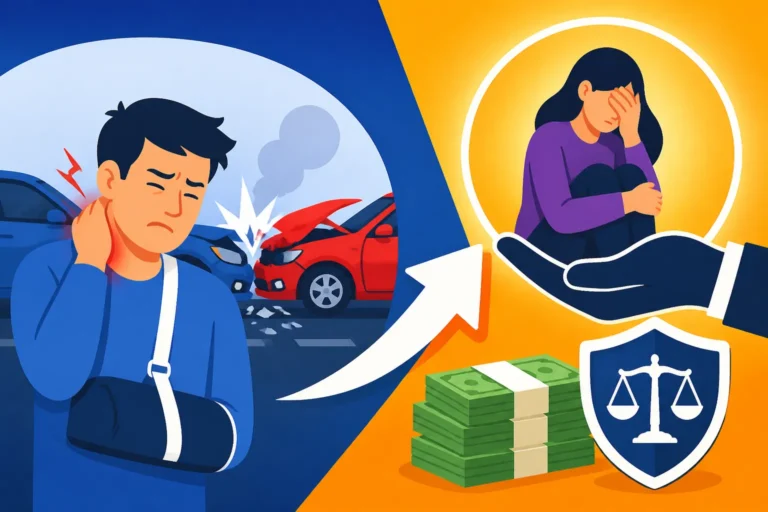
Getting into a car accident is jarring enough, but the aftermath can be even more confusing, especially when you start wondering, "How much is my car accident settlement actually worth?" It's a question that weighs heavily on the minds of countless people dealing with medical bills, lost wages, and the sheer inconvenience of it all. This comprehensive guide is here to demystify the process, breaking down all the factors that determine your potential payout.
Understanding the Core Components of Your Settlement
When you're dealing with the fallout from a car accident, it's easy to feel overwhelmed by the paperwork, the phone calls, and the uncertainty of it all. But understanding what goes into a settlement can bring a little clarity. Essentially, a car accident settlement is designed to compensate you for all the ways the accident has negatively impacted your life, both financially and personally. These compensable losses, often called "damages," fall into distinct categories.
Economic Damages: The Tangible Losses
These are the most straightforward types of damages because they come with a clear monetary value – receipts, bills, pay stubs, and estimates. Think of them as the quantifiable financial hit you've taken directly because of the accident.
Every doctor's visit, every physical therapy session, and every prescription adds up. When you're injured in a car accident, your past medical bills are a significant part of your claim. This includes everything from the ambulance ride and emergency room visit right after the crash to specialist consultations, diagnostic tests like X-rays or MRIs, and any initial surgeries. Keeping meticulous records of all these expenses is absolutely crucial. You’ll need every invoice, every statement, and every bill to prove these costs.
Beyond what you’ve already spent, if your injuries require ongoing treatment, future medical expenses become a critical component. This might include anticipated surgeries, long-term physical therapy, specialized equipment, medication, or even in-home care. Estimating these future costs often requires expert medical opinions, especially for severe injuries like spinal cord damage or traumatic brain injuries. Insurance companies will scrutinize these projections closely, so having a detailed care plan from your doctors is vital to justify the requested amount.
If your injuries prevent you from working, even for a short period, your lost wages are a direct economic damage. This includes not just your base salary, but also any bonuses, commissions, or benefits you would have received. For those with more severe or permanent injuries, the concept extends to "loss of earning capacity." This means if your injuries prevent you from performing your job duties at the same level as before, or force you into a lower-paying field, you can claim the difference in your potential lifetime earnings. Calculating this often involves vocational experts and economists who can project your future income loss over the course of your career.
Of course, your vehicle itself is often a major casualty. Property damage covers the cost to repair your car or, if it's deemed a total loss, its fair market value before the accident. This also extends to other personal property damaged in the crash, such as a cell phone, laptop, or car seat. The cost of a rental car while yours is being repaired or replaced is also a common economic damage. Don't forget smaller, often overlooked expenses like towing fees, storage fees, or even the cost of replacing damaged personal items like prescription glasses or a favorite jacket that was in the car.
Non-Economic Damages: The Intangible Toll
These damages are far more subjective and, consequently, often harder to quantify. They represent the non-financial losses that profoundly impact your quality of life after an accident. While they don't come with a receipt, they are a very real part of your suffering.
This is often the largest component of non-economic damages. Pain and suffering encompasses the physical pain you endure from your injuries, the discomfort of recovery, and the mental anguish that comes with it. This isn't just about the initial sharp pain but also the chronic aches, stiffness, and limitations that might persist for months or even years. Imagine the frustration of not being able to pick up your child, enjoy a long walk, or even sleep comfortably through the night. These daily struggles are all part of your pain and suffering.
Beyond physical pain, a car accident can leave deep emotional scars. Emotional distress can manifest as anxiety, fear of driving, depression, anger, or even post-traumatic stress disorder (PTSD). It's the psychological burden that accompanies the physical trauma, making it difficult to return to your normal routine or enjoy activities you once loved. This can be especially true after a severe accident or one where you witnessed significant trauma. PTSD and Emotional Distress After a Car Accident is a very real concern for many accident victims.
When an injury prevents you from participating in hobbies, social activities, or daily routines that once brought you joy, that's a loss of enjoyment of life. Perhaps you can no longer play golf, garden, hike, or even cook for your family. This isn't just about missed fun; it's about a diminished quality of life that can be deeply impactful. If you were an active person before the crash and now find yourself largely sedentary due to your injuries, this is a significant loss that deserves compensation.
In some severe accidents, injuries can lead to permanent scarring, disfigurement, or physical impairment. This can have profound psychological effects, impacting self-esteem and social interactions. For example, severe facial injuries or the loss of a limb are devastating and lead to significant non-economic damages. Even less visible issues, like a permanent limp or nerve damage that causes constant tingling, can fall under this category.
Punitive Damages: When Misconduct Occurs
While less common, punitive damages are a crucial aspect of some car accident claims. Unlike economic and non-economic damages, which are meant to compensate the victim, punitive damages are designed to punish the at-fault party for particularly egregious behavior and to deter similar conduct in the future.
These damages are reserved for cases where the at-fault driver's actions demonstrate gross negligence, recklessness, or malicious intent. We're talking about situations far beyond a simple mistake, such as extreme drunk driving, drag racing, or intentionally running someone off the road. For instance, if a driver was severely intoxicated with a blood alcohol content (BAC) far exceeding the legal limit and caused a crash, a court might award punitive damages.
The purpose of punitive damages isn't to make you "whole" financially. Instead, it's about sending a strong message. They serve as a legal deterrent, reminding others that certain dangerous behaviors will be severely penalized. Because they are meant as punishment, the bar for proving the need for punitive damages is much higher, and they are typically only awarded by a jury in a lawsuit, not as part of an insurance settlement.
Factors That Heavily Influence Your Settlement Value
Determining the worth of a car accident settlement isn't like looking up a price tag. It's a complex equation with many variables. Some factors carry more weight than others, fundamentally shaping the potential value of your claim.
Severity and Type of Injuries
Let's be real: a fender bender with no injuries is going to result in a vastly different settlement than a multi-car pileup that leaves someone with a permanent disability. The nature and severity of your injuries are, without a doubt, the most significant drivers of your settlement value.
Minor injuries, like soft tissue damage such as whiplash or a sprained wrist, are common. While painful and disruptive, they typically resolve within weeks or a few months with conservative treatment. These claims will focus on covering medical bills, a limited amount of lost wages, and a reasonable sum for pain and suffering during the recovery period. On the other hand, a broken bone, especially if it requires surgery and casts, immediately elevates the claim's value due to higher medical costs, longer recovery, and more intense pain.
Catastrophic injuries, such as traumatic brain injuries (TBI), spinal cord injuries leading to paralysis, or severe burns, are life-altering. These types of injuries demand extensive, often lifelong, medical care, rehabilitation, and may prevent the individual from ever working again. Settlements for these injuries will reflect not only past and future medical expenses and lost earning capacity, but also substantial compensation for pain, suffering, and the profound loss of enjoyment of life. The average settlement for a TBI from a car accident can be very high, reflecting the devastating impact on a person's life. The need for surgery is a major indicator of a serious injury. A back injury requiring spinal fusion, for example, will lead to a much larger settlement than a back strain treated with physical therapy. The projected need for long-term care, modifications to your home, or specialized medical equipment also dramatically increases the settlement value.
Clear Proof of Fault and Liability
You could have the most severe injuries imaginable, but if you can't prove that someone else was primarily responsible for causing the accident, your claim's value will be severely diminished, or even non-existent. Proving fault is absolutely foundational to any successful car accident claim.
Immediately after an accident, gathering solid evidence is paramount. This includes a detailed police report, which often outlines initial findings on who was at fault. Photos and videos of the accident scene, vehicle damage, and any visible injuries are incredibly valuable. Witness statements from anyone who saw the crash can corroborate your version of events. Even seemingly small details, like skid marks or debris patterns, can help reconstruct the accident. Knowing How Fault Is Determined in a Car Accident is key, as insurance companies will conduct their own investigations. If you're unsure about this, it's worth reviewing a comprehensive guide on Who Is at Fault in a Car Accident? Complete Guide (2026).
In some accidents, especially multi-car collisions or complex intersection scenarios, fault isn't always 100% clear. This is where state laws on comparative or contributory negligence come into play, which can significantly reduce your payout if you are found to be partially responsible. For example, in a state like California, which follows pure comparative negligence, if you're found 20% at fault for an accident, your total settlement will be reduced by 20%. Understanding these rules is critical, as they directly impact the net amount you receive.
Medical Treatment and Documentation
It’s not enough to be injured; you need to prove your injuries and their direct connection to the accident. Your medical treatment and the documentation that comes with it are the backbone of your injury claim.
Don't delay seeking medical attention after an accident, even if you feel okay at first. Some serious injuries, like concussions or whiplash, can have Delayed Injury Symptoms After a Car Accident. Waiting too long can give the insurance company an opening to argue that your injuries weren't caused by the crash, but by something that happened afterward. The sooner you see a doctor, the clearer the link between the accident and your injuries.
Once you start treatment, follow your doctor's orders meticulously. Attend all appointments, take prescribed medications, and complete any recommended physical therapy or rehabilitation. Gaps in treatment can be a red flag for insurance adjusters, who might claim you weren't seriously injured or that you failed to mitigate your damages. Consistency demonstrates the severity and ongoing nature of your injuries. Your medical records, including diagnostic tests, treatment plans, and doctor's notes, serve as irrefutable evidence of your injuries and their progression. These documents are vital to How to Prove Injuries in a Car Accident Claim. They outline diagnoses, prognosis, limitations, and the necessity of your treatment, all of which are used to build the monetary value of your claim.
The Role of Insurance Policies and Limits
Even with clear fault and severe injuries, the amount of money available for your settlement often comes down to the insurance policies involved. There's a cap on what you can recover, and that cap is usually defined by policy limits.
Your Own Coverage (First-Party Claims)
While the at-fault driver's insurance is typically the primary source of compensation, your own insurance can play a critical role, especially in certain situations or states.
Many states, especially those with no-fault laws like Florida or New York, require Personal Injury Protection (PIP) or Medical Payments (MedPay) coverage. These cover your initial medical expenses and sometimes lost wages, regardless of who was at fault. This is often the first layer of coverage accessed for your medical treatment. In a no-fault state, your own insurance is meant to cover your initial medical bills, up to your policy limits.
One of the most crucial coverages you can carry is Uninsured/Underinsured Motorist (UM/UIM) coverage. This steps in when the at-fault driver either has no insurance at all (uninsured) or doesn't have enough insurance to cover your damages (underinsured). This coverage on your policy can literally be a lifesaver if you're seriously injured by a driver with minimal or no liability coverage. If you're wondering What to Do If the Other Driver Has No Insurance, your UM coverage is often the answer. It ensures that you have a source of recovery even if the responsible party cannot pay.
The At-Fault Driver's Coverage (Third-Party Claims)
This is the coverage that typically pays for your damages when another driver is at fault. However, there's a significant caveat: the limits of their policy.
Every state mandates minimum liability coverage for drivers. For example, in Texas, the minimum liability limits are 30/60/25 ($30,000 for bodily injury per person, $60,000 for bodily injury per accident, and $25,000 for property damage). In California, the minimums are 15/30/5. These minimums can be shockingly low, especially if you sustain serious injuries. If your damages exceed these limits, you might hit what's known as "the policy limits," meaning the insurance company won't pay a penny more.
When your damages, especially for severe injuries, far exceed the at-fault driver's liability limits, you face a challenge. You can pursue the at-fault driver personally for the difference, but if they don't have substantial personal assets, collecting that money can be incredibly difficult, if not impossible. This is precisely why your own UM/UIM coverage is so important. It acts as a safety net when the responsible party is underinsured.
Understanding Policy Stacking and Umbrella Policies
Sometimes, there are ways to access more coverage than initially apparent, which can significantly impact your potential settlement, especially in cases of severe injury.
In some states and under specific policy conditions, you might be able to "stack" multiple insurance policies. This could involve combining the limits of two or more vehicles on a single policy (intra-policy stacking) or combining policies from different sources (inter-policy stacking), such as your personal policy and a separate policy from a company vehicle. The rules for stacking vary wildly by state and policy language, so it's a complex area where legal advice is often essential.
Beyond standard auto insurance, some individuals carry umbrella insurance policies. These are additional liability policies that provide an extra layer of coverage above and beyond the limits of their auto and homeowners insurance. If the at-fault driver has a large umbrella policy, it can significantly increase the total pool of money available for your settlement, offering protection against catastrophic claims that exceed typical auto liability limits. This is often an unknown avenue for many accident victims, but it can be a game-changer in a high-value claim.
Calculating Pain and Suffering and Other Intangibles
Economic damages are relatively easy to tally, but putting a price tag on non-economic damages like pain and suffering is much trickier. There are a few methods commonly used by insurance companies and legal professionals to arrive at a fair figure.
The Multiplier Method
This is perhaps the most widely recognized method for calculating non-economic damages, particularly pain and suffering. It's not an exact science, but it provides a framework.
Under the multiplier method, your total economic damages (medical bills, lost wages, etc.) are multiplied by a number, typically ranging from 1.5 to 5. The specific multiplier chosen depends on the severity and impact of your injuries. For example, a minor injury with a quick recovery might warrant a 1.5 or 2 multiplier, while a severe, long-lasting injury with significant pain and disruption to your life might justify a 4 or 5. If your economic damages total $10,000 and your pain and suffering multiplier is 3, your non-economic damages would be $30,000. For more detail, you can read about How the Pain and Suffering Multiplier Works (1.5x–5x).
The key to a higher multiplier lies in demonstrating the full impact of your injuries. Factors that increase the multiplier include:
- Severity of injuries: Permanent injuries, disfigurement, or those requiring extensive surgery.
- Duration of recovery: Long-term or lifelong pain and disability.
- Impact on daily life: Inability to work, perform household tasks, or enjoy hobbies.
- Medical treatment: Invasive procedures, prolonged physical therapy.
- Emotional distress: Documented anxiety, depression, or PTSD.
- Clear liability: When the other driver is clearly at fault.
- Credibility: The victim's and witnesses' ability to articulate the suffering convincingly.
The Per Diem Method
Another method, less frequently used for long-term injuries but sometimes applied in certain contexts, is the "per diem" method.
"Per diem" means "by the day." This method assigns a specific dollar amount for each day you experienced pain and suffering from the date of the accident until you reach Maximum Medical Improvement (MMI) – the point where your condition is not expected to improve further. For example, if you assign a value of $100 per day and your recovery period was 90 days, your pain and suffering would be $9,000. This method is explored further in Per Diem Method for Pain and Suffering.
The challenge with the per diem method is determining a fair daily rate. Often, this rate is tied to your daily earnings, suggesting that the pain of being unable to work is equivalent to your lost income. However, for severe or long-lasting injuries, this method can quickly become inadequate, as the cumulative effect of constant pain often outweighs a simple daily calculation. It's generally less favored for serious, prolonged injuries because it doesn't adequately account for the long-term impact and cumulative suffering.
Documenting Your Pain and Suffering
Regardless of the calculation method, effectively proving your pain and suffering is crucial. Since these are intangible, solid evidence and clear articulation are essential.
Keeping a daily pain journal or diary is one of the most powerful tools. In it, you should record your pain levels (e.g., on a scale of 1-10), what activities you struggled with, how your injuries affected your sleep, mood, and daily routine. Note how you couldn't lift your child, struggled to tie your shoes, or had to miss a beloved family event. This creates a detailed, chronological record of your struggles.
Your personal narrative is incredibly important. A written statement detailing how the accident and your injuries have impacted every aspect of your life – your work, hobbies, family relationships, and emotional well-being – can be very compelling. Testimonies from family members, friends, or co-workers who can speak to the changes they've observed in you can also add weight to your claim, illustrating the real-world consequences of your injuries.
How Comparative Fault Laws Affect Your Payout
One of the most frustrating realities of car accident claims is that even if the other driver was mostly at fault, your settlement can still be reduced if you're found to bear some responsibility for the crash. This is where comparative (or contributory) negligence laws come into play, and they vary significantly from state to state.
Pure Comparative Negligence
This system, which is arguably the fairest to accident victims, allows you to recover damages even if you are mostly at fault, but your recovery is always reduced by your percentage of fault.
States like California, Florida, and New York operate under pure comparative negligence. In these states, if you are found to be 90% at fault for an accident, you can still recover 10% of your total damages from the other driver. For instance, if your total damages are $100,000, and you are deemed 10% at fault, your recoverable amount would be $90,000. If you were 60% at fault, you would still recover $40,000. This system ensures that even a partially responsible party can get some compensation for their injuries. You can learn more by reading about Pure Comparative Negligence States Explained.
The benefit of pure comparative negligence is that it rarely completely bars an injured party from recovery. However, it means that even minor contributions to an accident could chip away at your final settlement amount. It makes proving fault, or mitigating your own fault, a critical part of the negotiation process.
Modified Comparative Negligence (50% or 51% Bar Rule)
This is the most common system in the United States and strikes a middle ground between pure comparative and pure contributory negligence.
Most states, including Texas, Colorado, and Kentucky, follow a modified comparative negligence rule. There are two primary versions:
- 50% Bar Rule: You can recover damages only if you are found to be 50% or less at fault. If you are 51% or more at fault, you cannot recover any damages.
- 51% Bar Rule: You can recover damages only if you are found to be 50% or less at fault. If you are 51% or more at fault, you cannot recover any damages.
For a detailed breakdown, see Modified Comparative Negligence (50% vs 51% Bar). The difference between the 50% and 51% rule is subtle but critical. In a "50% bar" state, if you are equally at fault (50%), you can recover. In a "51% bar" state, if you are 50% at fault, you can recover; if you are 51% at fault, you get nothing. This small percentage point can be the difference between a significant settlement and no recovery at all.
This system can be quite harsh. Imagine you have $100,000 in damages. If a jury finds you 49% at fault in a 51% bar state, you could recover $51,000. But if they find you 51% at fault, you get nothing. This means that proving fault is not just about reducing the other side's liability, but also about ensuring your own percentage of fault stays below the critical threshold. It significantly raises the stakes in disputing fault. Understanding What Happens If You're Partially at Fault? is vital if you're in one of these states.
Contributory Negligence
This is the most unforgiving system, and it is thankfully only in effect in a handful of states and the District of Columbia.
Under pure contributory negligence, if you are found to be even 1% at fault for an accident, you are completely barred from recovering any damages, regardless of how severe your injuries or how negligent the other driver was. States like Maryland, North Carolina, and Virginia still adhere to this strict rule. This creates a very high bar for plaintiffs, as any contribution to the accident, no matter how minor, can derail an entire claim. If you were hit by a drunk driver but failed to signal a lane change and contributed 1% to the crash, you might get nothing. Learn more about Contributory Negligence States (Where 1% Fault Bars Recovery).
This system makes it incredibly challenging for injured parties, as even a minor mistake on their part can result in a total loss of their claim. It places immense pressure on proving absolute zero fault, which is often difficult in complex accident scenarios. For adjusters and defense attorneys in these states, even a sliver of fault on the plaintiff's part is enough to completely dismiss a claim.
The Claims Process and Negotiation Strategies
Knowing the theoretical value of your claim is one thing; actually getting that money is another. The claims process itself is a negotiation, and how you navigate it can dramatically impact your final settlement.
Initial Steps and Information Gathering
The moments immediately following an accident are chaotic, but the actions you take then lay the groundwork for any future claim.
Your top priority after an accident, once safety is established, should be seeking medical attention, no matter how minor your injuries seem. Then, documenting the scene is critical: take photos of vehicle damage, the surrounding area, road conditions, and any visible injuries. Exchange information with the other driver and gather contact details for any witnesses. Filing a police report, even for minor accidents, provides an official record. For a comprehensive checklist, refer to What to Do After a Car Accident: Step-by-Step (2027). All this information will be crucial when you How to File a Car Accident Insurance Claim.
The more evidence you have to support your version of events and the extent of your damages, the stronger your position will be. This includes not just accident scene photos but also medical records, bills, receipts for expenses like rental cars or prescriptions, and records of lost wages. Thorough documentation provides tangible proof for every element of your claim.
Dealing with Insurance Adjusters
It's important to remember that insurance adjusters, even those who seem friendly, are working for the insurance company, not for you. Their primary goal is to minimize the payout on claims.
Adjusters are trained to gather information that can be used to reduce or deny your claim. They will likely call you soon after the accident, seemingly just to check in. While you should report the accident to your own insurer promptly, be cautious when speaking with the at-fault driver's insurance company. Avoid speculating about fault, minimizing your injuries, or giving a recorded statement without first consulting with legal counsel. Saying "I'm fine" right after an accident, before delayed symptoms appear, can be used against you later. Get more advice on Dealing With Insurance Adjusters After a Car Accident.
Remember, you are not obligated to provide a recorded statement to the at-fault driver's insurance company. These statements are often used to find inconsistencies in your story or to elicit admissions of fault. If you are asked, politely decline and state that you will cooperate through your attorney if you have one. Providing too much information too soon can inadvertently harm your claim.
Negotiating Your Settlement
Once you have completed medical treatment and reached Maximum Medical Improvement (MMI), you will have a clearer picture of your total damages. This is when formal negotiations typically begin.
The process usually starts with you (or your attorney) sending a demand letter to the insurance company. This letter details the accident, your injuries, medical treatment, lost wages, and a comprehensive calculation of all economic and non-economic damages, along with a demand for a specific settlement amount. The insurance company will then respond, often with a much lower counter-offer. For help constructing one, you can review What Is a Demand Letter (and How to Write One)?.
Negotiation is a back-and-forth process. You'll need to be prepared to justify your demands with documentation and evidence. Insurance companies are notorious for offering low initial settlements, hoping you'll accept out of desperation. Understanding Should You Accept the First Settlement Offer? is crucial. Rarely is the first offer fair. Be prepared to counter their offer, highlighting specific aspects of your damages that they might be underestimating. Knowing How to Negotiate a Car Accident Settlement involves understanding their tactics and being ready to articulate the full impact of your injuries. If you receive a lowball offer, there are specific strategies to How to Counter a Low Settlement Offer effectively.
Legal Representation and Its Impact
Navigating the complexities of car accident claims, especially when injuries are involved, can feel like a full-time job. This is where legal representation can be invaluable, often making a significant difference in the outcome of your claim.
When a Lawyer Becomes Crucial
While some minor fender-benders might be handled directly with insurance, there are clear signs that you need professional legal help.
If your injuries are severe, require extensive medical treatment, or involve a long recovery period, a lawyer is almost always beneficial. They understand how to accurately calculate the full scope of your damages, including future medical costs and lost earning capacity, which can be easily underestimated by individuals. When injuries are serious, the stakes are simply too high to go it alone. This question of Do You Need a Lawyer for a Car Accident? (2026) is often met with a resounding "yes" for serious injury cases.
Disputes over who was at fault can quickly complicate a claim. If the insurance company is blaming you, even partially, or if there are multiple parties involved, a lawyer can investigate, gather evidence, and present a compelling case to prove the other party's liability. Similarly, if the insurance company is refusing to cooperate, delaying your claim, or offering an insultingly low settlement, an attorney can apply pressure and negotiate more effectively. Knowing When to Hire a Car Accident Lawyer can save you a lot of headache and potentially a lot of money.
How Lawyers Maximize Your Claim
Attorneys specializing in personal injury law bring a wealth of knowledge and resources that can significantly enhance your chances of a fair settlement.
Experienced car accident lawyers have a deep understanding of personal injury law, insurance practices, and settlement values for various injuries. They know how to accurately value your claim, ensuring that all economic and non-economic damages are accounted for. They also understand the nuances of comparative negligence laws in your specific state. They know the tactics insurance companies use to minimize payouts and can effectively counter them. A good attorney's experience alone can be worth more than their fee.
A lawyer can handle all communication with insurance companies, gather all necessary medical records and police reports, interview witnesses, and even bring in expert witnesses (like accident reconstructionists or vocational experts) if needed. They will build a strong case on your behalf, meticulously documenting every aspect of your damages and preparing for the possibility of a lawsuit if a fair settlement cannot be reached. In essence, What Does a Car Accident Lawyer Actually Do? is to manage the entire legal and administrative burden, allowing you to focus on your recovery.
Understanding Contingency Fees
Many people worry about the cost of hiring a lawyer, especially when facing mounting medical bills. This is where contingency fees come into play, making legal representation accessible to everyone.
The vast majority of personal injury lawyers work on a contingency fee basis. This means you don't pay any upfront fees or hourly rates. Instead, the lawyer's fee is a percentage of the final settlement or court award. If they don't win your case, you typically don't pay them anything. This model aligns the lawyer's incentives with yours, as they only get paid if you do. This makes getting legal help much less daunting for accident victims. How Car Accident Lawyer Contingency Fees Work ensures that you can pursue justice without financial risk.
While the percentage can vary, a typical contingency fee ranges from 33% to 40% of the gross settlement amount. If a lawsuit is filed, the percentage might increase slightly to account for the additional work involved. It's crucial to have a clear understanding of the fee agreement, including how costs (like filing fees, expert witness fees, and medical record retrieval) are handled. These costs are usually deducted from the settlement before the lawyer's percentage is calculated.
Common Injuries and Their Potential Settlement Ranges
It's impossible to give an exact figure for your specific settlement, as every case is unique. However, understanding general ranges associated with common injuries can provide a useful benchmark. These ranges represent typical payouts and can vary widely based on all the factors discussed above, including state laws, liability, and policy limits.
Minor Injuries
These are the most common injuries sustained in car accidents, often leading to less complex and smaller settlements compared to more severe trauma.
Whiplash, a neck injury due to forceful, rapid back-and-forth movement, is a classic example of a minor injury. Symptoms often include neck pain, stiffness, headaches, and dizziness. While it can be very painful and disruptive for weeks or months, most whiplash cases resolve without long-term complications. Settlements for whiplash typically range from a few thousand dollars up to $20,000-$30,000, depending on the severity, length of treatment, and impact on daily life. For more specific insights, you can review Average Settlement for Whiplash. Sprains and strains in other areas, like the back or shoulders, fall into a similar category, focusing on reimbursement for physical therapy, pain medication, and a limited amount of non-economic damages.
For these types of injuries, the settlement will primarily cover the cost of medical treatment, which might include urgent care visits, chiropractic care, physical therapy, and prescription medications. Lost wages for a few days or weeks might also be included. Non-economic damages for pain and suffering are typically calculated using a lower multiplier due to the less severe and often temporary nature of the injury. The focus here is on ensuring all out-of-pocket expenses are covered, along with a reasonable amount for the temporary discomfort and inconvenience.
Moderate Injuries
These injuries often involve more extensive medical intervention, longer recovery periods, and a more significant impact on the victim's life, leading to higher settlement values.
Broken bones (fractures), especially those requiring casts, surgery, or prolonged rehabilitation, are considered moderate injuries. A herniated disc, where the soft cushion between your vertebrae ruptures, can cause severe pain, numbness, and weakness, often requiring injections, extensive physical therapy, or even surgery. Concussions, a type of traumatic brain injury, can lead to headaches, dizziness, cognitive issues, and mood changes that linger for months. These injuries involve higher medical costs, more significant lost wages, and a greater amount of pain and suffering. The Average Settlement for a Herniated Disc or Average Settlement for a Concussion / TBI will reflect these increased damages, often ranging from $25,000 to $100,000 or more, depending on specifics.
For moderate injuries, the scope of damages expands considerably. Medical bills often include specialist consultations, surgery costs, extended physical therapy, and sometimes even a period of inpatient rehabilitation. Lost wages can span weeks or months, and there might be a claim for temporary loss of earning capacity. Pain and suffering will be calculated with a higher multiplier, reflecting the more intense and prolonged physical discomfort, emotional distress, and disruption to daily life. These claims are more likely to necessitate skilled negotiation or even litigation to secure a fair amount.
Severe/Catastrophic Injuries
These are the most devastating injuries, permanently altering a person's life and resulting in the highest settlement amounts.
Catastrophic injuries encompass conditions like severe traumatic brain injury (TBI), spinal cord injuries leading to paralysis (quadriplegia or paraplegia), severe burns, loss of limbs, or permanent organ damage. These injuries don't just affect the victim; they impact their entire family, requiring lifelong care, extensive rehabilitation, and profound adjustments to daily living. The Average Car Accident Settlement Amounts by Injury for these types of cases can easily reach hundreds of thousands, if not millions, of dollars.
For these life-altering injuries, the settlement calculation is incredibly complex and comprehensive. It includes all past and future medical expenses, which can be staggering and span decades. Lost earning capacity will be a major component, often requiring expert economists to project lifetime income loss. Non-economic damages for pain, suffering, emotional distress, and loss of enjoyment of life will be substantial, reflecting the permanent changes to the victim's physical and mental well-being. These cases almost always require the expertise of a personal injury attorney to ensure all potential damages are accurately valued and aggressively pursued.
Here's a simplified table illustrating how various factors might influence a settlement:
| Factor | Minor Injury (e.g., Whiplash) | Moderate Injury (e.g., Broken Bone) | Severe Injury (e.g., TBI, Paralysis) |
|---|---|---|---|
| Medical Expenses | Low ($1k – $10k) | Medium ($10k – $50k+) | Very High ($100k – millions) |
| Lost Wages/Earning Capacity | Minimal (days to weeks) | Moderate (weeks to months) | Substantial (years to lifetime) |
| Pain and Suffering Multiplier | 1.5x – 2.5x | 2.5x – 4x | 4x – 5x+ |
| Recovery Timeline | Weeks to a few months | Several months to a year+ | Lifelong care & adaptation |
| Impact on Quality of Life | Temporary disruption | Significant, often prolonged | Permanent, life-altering |
| Need for Legal Counsel | Often helpful | Highly recommended | Absolutely essential |
| Typical Settlement Range | $5,000 – $30,000 | $25,000 – $150,000+ | $250,000 – millions |
Disclaimer
Please remember that this article provides general information and is not legal advice. The value of any car accident claim depends heavily on the specific facts and circumstances of the case, as well as the laws of the jurisdiction where the accident occurred. It is always recommended to consult with a qualified personal injury attorney to discuss your individual situation and get personalized advice.