How Much Is a Torn Rotator Cuff Settlement Worth in California?
Getting into a car accident is a jarring experience, but the physical injuries that follow, like a torn rotator cuff, can turn your life upside down, making simple daily tasks excruciating. It's completely understandable to feel overwhelmed and frustrated, wondering not only about your recovery but also how you'll manage the mounting medical bills and lost income. This guide is here to shed light on what a torn rotator cuff settlement might be worth in California after a car accident, helping you understand the factors involved in valuing such a complex injury claim.
Understanding Torn Rotator Cuff Injuries from Car Accidents
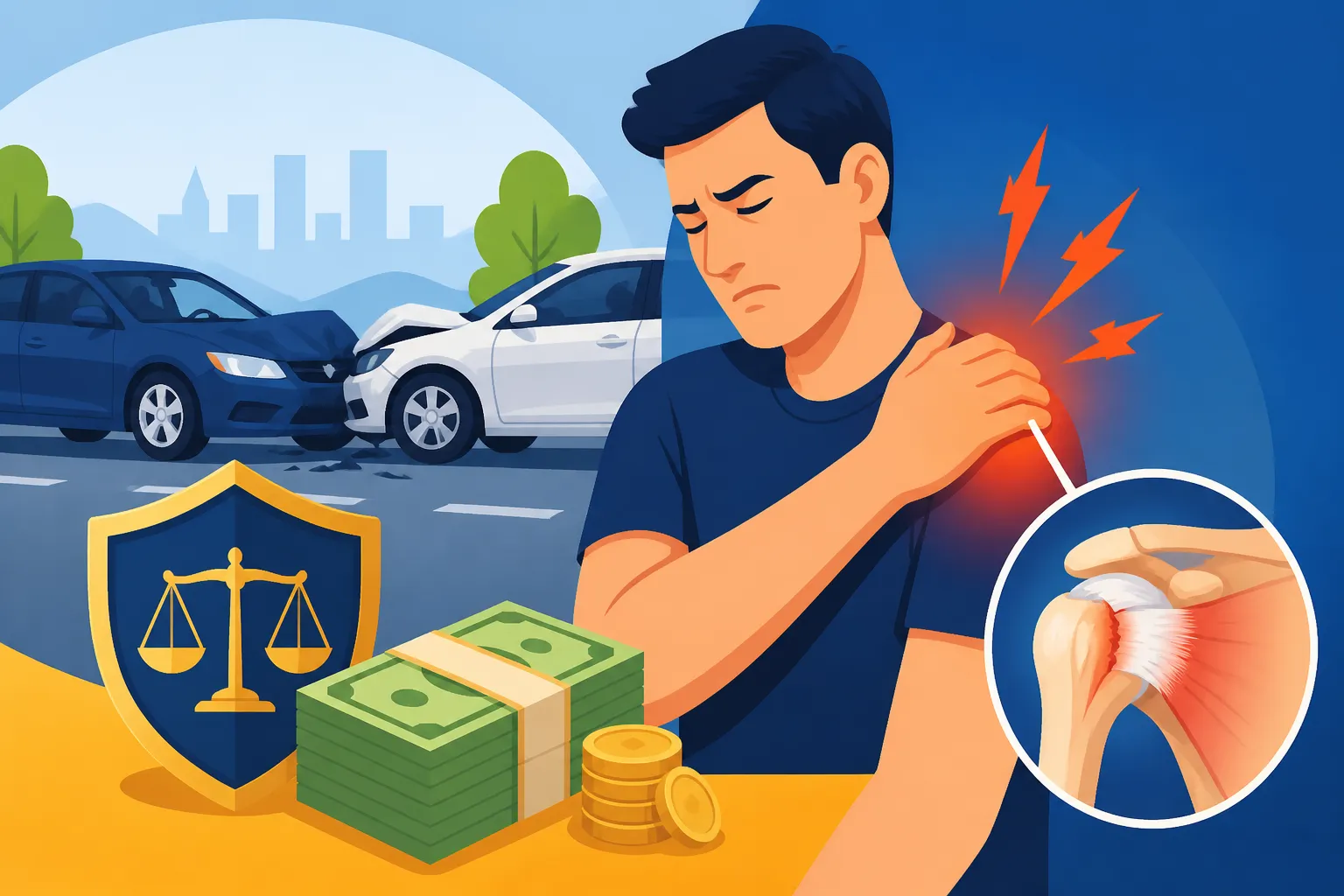
A torn rotator cuff is a common, yet often debilitating, injury sustained in various car accidents. It involves damage to one or more of the four muscles and their tendons that surround the shoulder joint, providing stability and allowing for a wide range of motion. When these tissues are torn, the pain can be intense, and the impact on your ability to work, perform household chores, or even sleep comfortably can be significant.
How Car Accidents Cause Rotator Cuff Tears
The sudden, forceful impact of a car accident can twist, pull, or hyperextend your arm and shoulder in unnatural ways, leading to a rotator cuff tear. For instance, in a T-bone accident, the side impact can violently jostle your upper body, causing your shoulder to slam against the door or seatbelt, or your arm to be thrown outwards. Similarly, a rear-end collision, even if seemingly minor, can create a whiplash effect that extends beyond the neck, stressing the shoulder joint as your body is propelled forward and then abruptly stopped.
Even bracing for impact, a natural reaction, can cause injury. If you tightly grip the steering wheel or brace your arm against the dashboard, the force of the collision can travel up your arm into your shoulder, leading to a tear. Occupants can also suffer rotator cuff injuries if their arms are outstretched or if their seatbelt restrains their torso while their arm continues to move, causing a violent yank on the shoulder joint. Understanding How Fault Is Determined in a Car Accident is crucial here, as it lays the groundwork for seeking compensation for these injuries.
Recognizing the Symptoms and Diagnosis
Immediately after a car accident, the adrenaline might mask the pain of a rotator cuff tear. However, as the initial shock wears off, you might start noticing symptoms such as persistent, dull ache deep in the shoulder, especially when lying on the injured side. Weakness in the arm, difficulty lifting or rotating your arm, and a crackling sensation when moving your shoulder are all red flags. Some people also experience radiating pain down the arm.
If you suspect a rotator cuff injury, it's vital to see a doctor promptly. They will perform a physical examination, testing your range of motion and strength. While X-rays can rule out fractures, an MRI (Magnetic Resonance Imaging) scan is usually necessary to visualize the soft tissues and confirm a rotator cuff tear. Early diagnosis is key not only for proper treatment but also for documenting your injuries, which is critical for any potential car accident claim. Remember, Delayed Injury Symptoms After a Car Accident are common, so don't wait if pain develops.
Treatment Options and Recovery Timeline
Treatment for a torn rotator cuff can range from conservative approaches to surgical intervention, depending on the severity of the tear, your age, and activity level. Initially, your doctor might recommend rest, ice, anti-inflammatory medications, and physical therapy to strengthen the surrounding muscles and improve range of motion. Corticosteroid injections can also provide temporary pain relief, though they don't heal the tear itself.
For more severe or full tears, especially if conservative treatments fail, surgery might be necessary to reattach the tendon to the bone. The recovery period after rotator cuff surgery is often extensive, involving several weeks in a sling, followed by months of rigorous physical therapy. It's not uncommon for a full recovery to take anywhere from six months to a year, or even longer for complex cases. This extended recovery can significantly impact your life, making the process of understanding Common Car Accident Injuries: Complete Guide (2027) and pursuing a settlement even more daunting.
Key Factors Influencing Your Settlement Value in California
When it comes to figuring out How Much Is My Car Accident Settlement Worth? (2026) for a torn rotator cuff in California, there's no one-size-fits-all answer. Each case is unique, and the final settlement value is influenced by a multitude of factors. It’s not just about the injury itself, but how that injury impacts your life and what evidence you have to support your claim.
The Severity of Your Torn Rotator Cuff Injury
The extent of your rotator cuff tear is arguably the most significant factor in determining settlement value. A minor, partial tear that heals with physical therapy will naturally result in a lower settlement than a complete tear requiring surgery and an extensive recovery period. Doctors often categorize tears, and insurance companies will scrutinize these classifications:
- Partial Tear: The tendon is damaged but not completely severed. These often respond to conservative treatment but can still be quite painful and limit function.
- Full Thickness Tear: The tendon is completely detached from the bone. These almost always require surgery and involve a much longer, more intensive recovery.
- Massive Tear: Involves multiple tendons or a large retraction of the torn tendon, making surgical repair more complex and recovery potentially less complete.
The more invasive the treatment and the longer the recovery, the higher the medical expenses and the greater the impact on your daily life, all of which drive up the potential settlement value.
Medical Expenses and Future Care
One of the most straightforward components of a car accident settlement is your economic damages, particularly medical expenses. This includes everything from your initial emergency room visit, diagnostic imaging (like X-rays and MRIs), doctor's appointments, physical therapy sessions, medications, and any surgical procedures. In California, you can claim both past and future medical expenses.
If your doctor indicates that you will need ongoing physical therapy, future injections, or even potential revision surgery years down the line, these projected costs are factored into your settlement. A detailed prognosis from your treating physician, outlining the long-term impact of the injury and any recommended future treatments, is crucial. It helps paint a clear picture of the full financial burden the injury places on you, both now and in the future.
Lost Wages and Earning Capacity
A torn rotator cuff can make it impossible to perform your job, especially if your work involves physical labor, lifting, or repetitive arm movements. This loss of income, both past and present, is a recoverable economic damage. You’ll need documentation like pay stubs, employment records, and a doctor's note detailing your inability to work.
Beyond immediate lost wages, a severe rotator cuff tear can also impact your future earning capacity. If your injury results in a permanent disability or limits your ability to perform your previous job duties, you might be entitled to compensation for this long-term reduction in your ability to earn a living. For example, a carpenter with a severe tear might have to retrain for a less physically demanding, and potentially lower-paying, job. Expert vocational rehabilitation specialists and economists are often brought in to calculate these complex figures, projecting your potential lost earnings over your lifetime.
Pain, Suffering, and Emotional Distress
Unlike medical bills or lost wages, pain and suffering are non-economic damages, meaning they don't have a direct monetary value. However, they are a very real and often substantial part of a car accident claim. A torn rotator cuff can cause excruciating physical pain, sleepless nights, limitations on hobbies, and a significant decrease in your quality of life.
In California, these damages are calculated using methods like the multiplier method, where your total economic damages (medical bills + lost wages) are multiplied by a factor (usually 1.5 to 5, depending on the severity and permanence of the injury). Emotional distress, such as anxiety, depression, and PTSD resulting from the accident and your injury, also falls under this category. Documenting your daily struggles, keeping a pain journal, and seeking mental health support can help How to Document Pain and Suffering and strengthen your claim for these damages.
Calculating a Potential Torn Rotator Cuff Settlement in California
Determining the exact value of a torn rotator cuff settlement in California is a complex process, not just a simple calculation. It involves a detailed assessment of all your damages, combined with an understanding of California's specific legal framework, particularly its pure comparative negligence rules. Insurance companies will always try to minimize payouts, so having a clear understanding of how these figures are approached is critical.
Economic vs. Non-Economic Damages
As we touched on earlier, car accident damages are broadly categorized into economic and non-economic.
- Economic Damages: These are your tangible, verifiable losses. For a torn rotator cuff, this includes all past and future medical expenses (hospital bills, doctor visits, physical therapy, medications, surgeries), lost wages from time off work, and any loss of future earning capacity. Keep meticulous records of all receipts, bills, and pay stubs.
- Non-Economic Damages: These are the intangible losses that significantly impact your quality of life. This includes physical pain and suffering, emotional distress, mental anguish, loss of enjoyment of life, and inconvenience. Because these are subjective, they are often the most contentious part of settlement negotiations. In California, there isn't a cap on non-economic damages in personal injury cases, which can lead to higher settlements for severe, life-altering injuries. Understanding the difference between Economic vs Non-Economic Damages Explained is key to a robust claim.
The Role of Comparative Negligence
California operates under a system of "pure comparative negligence." This means that even if you are partially at fault for the car accident, you can still recover damages from the other party, but your settlement will be reduced by your percentage of fault. For example, if your torn rotator cuff injury is valued at $100,000, but you are found to be 20% at fault for the accident (perhaps you were slightly distracted), your recoverable settlement would be reduced to $80,000.
This aspect is a significant point of contention in negotiations, as the at-fault driver's insurance company will often try to assign as much fault as possible to you to reduce their payout. This is where strong evidence and skilled negotiation become absolutely vital. Learning more about Pure Comparative Negligence States Explained can provide further clarity on how this system works.
Average Settlement Ranges (and Why They Vary)
Given the variability of injuries, medical costs, and individual circumstances, providing an "average" settlement for a torn rotator cuff is challenging, but we can talk about ranges. For mild to moderate rotator cuff tears that resolve with conservative treatment (physical therapy, injections), settlements might range from $25,000 to $75,000. These typically involve lower medical bills and less impact on long-term earning capacity.
However, for severe tears requiring surgery, extensive physical therapy, and resulting in significant lost wages, permanent impairment, or a substantial impact on daily life, settlements can range from $75,000 to $500,000 or even higher. Cases involving multiple surgeries, very high lost earning capacity, or catastrophic pain and suffering can push settlements well into the mid-six figures. The key takeaway is that the "average" settlement is deeply personal and depends entirely on the specific details of your unique situation. This is why it's so important to have a clear understanding of How Car Accident Settlements Are Calculated and to gather all relevant documentation.
Steps to Maximize Your California Rotator Cuff Settlement
Facing a torn rotator cuff after a car accident is tough enough without having to navigate the complex world of insurance claims and legal jargon. However, taking proactive steps can significantly increase your chances of securing a fair settlement in California that truly reflects the impact of your injury.
Documenting Your Injuries and Medical Journey
From the moment of the accident, documentation is your best friend. Start by ensuring you get immediate medical attention, even if your pain feels minor initially. Some injuries, like certain rotator cuff tears, can have Delayed Injury Symptoms After a Car Accident. Follow all your doctor's recommendations diligently, attend every physical therapy session, and keep a detailed record of every medical appointment, treatment, and medication.
It's also crucial to maintain a personal journal detailing your pain levels, limitations, and how the injury affects your daily activities, hobbies, and work. This "pain journal" provides a real-time account of your suffering and can be powerful evidence for your non-economic damages. Keep all medical bills, receipts for prescription medications, and records of any out-of-pocket expenses related to your injury. This comprehensive record will be essential for How to Prove Injuries in a Car Accident Claim.
Gathering Evidence of Fault
In California, your ability to recover compensation depends on proving that the other driver was at fault for the accident. This requires gathering compelling evidence. Immediately after the crash, if you are able, take photos and videos of the accident scene, vehicle damage, road conditions, and any visible injuries. Collect contact and insurance information from all involved parties and any witnesses.
A police report is also a valuable piece of evidence, as it often includes an officer's assessment of fault, though it's not the final word. If you didn't call the police at the scene, consider filing a report later if required by law or if the damage is substantial. Witness statements, traffic camera footage, and even your own detailed account of the events leading up to the crash can help establish the other driver's negligence. This evidence directly supports your claim and helps counter any attempts by the insurance company to assign you partial fault.
The Value of Legal Representation
While you can technically file a car accident claim on your own, especially for minor incidents, a torn rotator cuff is a serious injury with long-term implications. This is precisely when Do You Need a Lawyer for a Car Accident? (2027) becomes a resounding yes. An experienced personal injury attorney in California will understand the nuances of rotator cuff injury claims, the local court system, and how to effectively negotiate with insurance companies.
A lawyer can help you:
- Properly calculate your full damages: They will ensure all economic and non-economic damages, including future medical costs and lost earning capacity, are accurately accounted for.
- Navigate comparative negligence: They can protect you from unfair accusations of fault, ensuring your settlement isn't unduly reduced.
- Handle communications: They will take over all communication with insurance adjusters, who are often trained to minimize payouts.
- Gather expert testimony: If necessary, they can bring in medical experts, vocational specialists, or accident reconstructionists to strengthen your case.
- Negotiate a fair settlement: They know How to Negotiate a Car Accident Settlement and will fight to get you the maximum compensation you deserve.
Their expertise can often lead to a significantly higher settlement than you might achieve on your own, even after their contingency fees. When considering When to Hire a Car Accident Lawyer, a rotator cuff injury definitely falls into the category of "sooner rather than later."
Here's a quick overview of the key factors influencing your torn rotator cuff settlement in California:
| Factor | Description | Impact on Settlement Value |
|---|---|---|
| Injury Severity | Partial tear vs. full thickness tear, massive tear. | Minor tears = lower value; Surgical repairs, permanent damage = significantly higher value. |
| Medical Expenses | Past, present, and projected future costs for diagnosis, treatment, physical therapy, medications, and potential surgeries. | Higher medical costs (especially surgery) lead to higher economic damages. |
| Lost Wages | Income lost due to inability to work, both in the past and projected future loss of earning capacity. | Significant time off work or career change due to injury leads to higher economic damages. |
| Pain and Suffering | Physical pain, emotional distress, mental anguish, loss of enjoyment of life, inconvenience. | Severe, chronic pain or substantial impact on quality of life increases non-economic damages (often using a multiplier). |
| Comparative Negligence | Your percentage of fault in causing the accident. | Your total settlement will be reduced by your percentage of fault (e.g., 20% fault = 20% reduction). |
| Insurance Policy Limits | The maximum amount the at-fault driver's insurance policy will pay. | Can limit the potential payout, even if your damages are higher. Uninsured/underinsured motorist coverage can help. |
| Quality of Evidence | Thorough medical records, accident reports, photos, witness statements, documentation of impact on life. | Strong, clear evidence supports higher claims; weak evidence can lead to lower offers. |
| Legal Representation | Having an experienced personal injury attorney. | Often leads to better outcomes and higher settlements due to expertise in negotiation and litigation. |
Disclaimer
Please remember that this article provides general information and insights into torn rotator cuff car accident settlements in California. It is not legal advice. Every accident and injury claim is unique, and the value of your specific case will depend on its particular facts and circumstances. Consulting with a qualified personal injury attorney in California is strongly recommended to discuss your situation and understand your legal options.