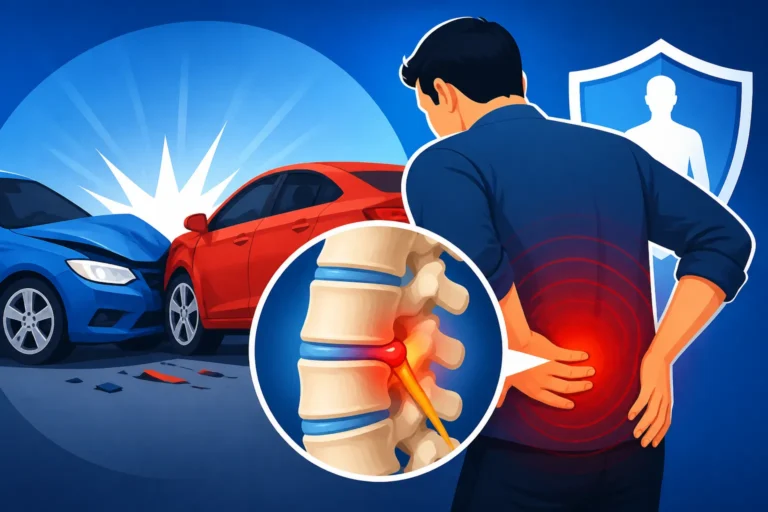
Claiming Compensation for Traumatic Brain Injury in Florida
Experiencing a traumatic brain injury (TBI) after a car accident is absolutely devastating. It's not just about the physical pain; it's the invisible struggle with memory, focus, and personality changes that can turn your whole life upside down, often leaving you feeling isolated and overwhelmed by medical bills and an uncertain future. This comprehensive guide is here to walk you through the complex process of claiming the compensation you desperately need and deserve for a TBI in Florida.
Understanding Traumatic Brain Injury After a Car Accident
When you're involved in a car accident, especially one with a sudden impact or jolt, your brain can be violently shaken inside your skull, leading to a traumatic brain injury. This isn't just a bump on the head; it's a serious medical condition that can range from a mild concussion to a severe, life-altering injury. Many people don't realize the full extent of their TBI right away, which makes the claims process even trickier.
The Spectrum of TBI: From Mild to Severe
It's common for people to think of TBI only in terms of extreme cases, like a coma, but the reality is much broader. A "mild" TBI, often referred to as a concussion, can still have significant and lasting effects on your life. Imagine hitting your head in a rear-end collision, feeling a bit foggy, and then weeks later still struggling with headaches, dizziness, and memory lapses. This is precisely why it's so important to seek medical attention immediately after any car accident, even if you think your injuries are minor. The true impact of a brain injury might not manifest until days or even weeks later, a phenomenon known as Delayed Injury Symptoms After a Car Accident.
On the other end of the spectrum, severe TBIs can involve skull fractures, intracranial hemorrhages, and prolonged unconsciousness, leading to permanent cognitive impairments, physical disabilities, and personality changes. The financial burden of long-term care, specialized therapies, and adaptive equipment can be astronomical, completely overwhelming a family that is already grappling with the emotional toll. These injuries often mean a complete re-evaluation of one's ability to work, socialize, and simply live an independent life, making the compensation claim a critical lifeline.
Common Causes and Mechanisms of TBI in Collisions
In a car accident, several factors can contribute to a TBI. The most common mechanism is the sudden acceleration and deceleration of the head, causing the brain to strike the inside of the skull. This is often seen in high-speed crashes or even seemingly minor fender-benders where the head whips back and forth violently. Imagine a sudden stop at a red light, only to be slammed from behind by a distracted driver; your head snaps forward, then back, and the shearing forces can damage brain tissue, even without direct impact to the head itself.
Another common cause is direct impact, where your head strikes a hard surface inside the vehicle, such as the dashboard, steering wheel, or window. This can happen if you're not properly restrained or if the force of the collision is so severe that your body is thrown despite seatbelt use. Even the deployment of airbags, while designed to save lives, can sometimes contribute to head trauma, especially if you're too close to the airbag when it deploys. Understanding these mechanisms is crucial not only for medical diagnosis but also for establishing how the accident directly led to your injury. Each type of collision, be it a Rear-End Collision Fault: Who Is Responsible? or a Who Is at Fault in a T-Bone Accident?, carries specific injury risks, including various forms of head trauma.
The Unique Challenges of TBI Claims in Florida
Florida's unique car insurance laws, particularly its no-fault system, introduce significant complexities when you're trying to claim compensation for a TBI. It's not as straightforward as just pointing to the other driver; you have to navigate specific rules that govern when and how you can pursue a claim beyond your own insurance. This can be incredibly frustrating when you're already dealing with the overwhelming reality of a brain injury.
Florida's No-Fault System and Its Impact on TBI
Here in Florida, we operate under a "no-fault" car insurance system. What does that mean for you? Well, it means that after an accident, your initial medical bills and a portion of your lost wages are typically covered by your own Personal Injury Protection (PIP) insurance, regardless of who was actually at fault for the crash. This sounds simple enough, but the reality for a TBI victim is far more nuanced. PIP coverage in Florida is capped, usually at $10,000, and it only covers 80% of your medical expenses and 60% of your lost wages. For serious injuries like a TBI, this $10,000 limit is almost always woefully inadequate. You can blow through that in a matter of days or weeks with specialist visits, diagnostic tests, and rehabilitation.
The real challenge arises when your TBI medical expenses and lost income quickly exceed that paltry $10,000 PIP limit. To seek compensation beyond PIP, meaning to pursue the at-fault driver for additional economic damages and crucial non-economic damages like pain and suffering, your TBI must meet Florida's "serious injury threshold." This threshold generally requires a permanent injury within a reasonable degree of medical probability, significant and permanent scarring or disfigurement, or death. Given the nature of a TBI, especially one with lasting cognitive or physical effects, it almost certainly meets this threshold, but proving it medically can be an uphill battle that requires extensive documentation and expert medical opinions. For more on this, you might want to read What Is a No-Fault State? (And Which States Are No-Fault).
Proving a Permanent Injury for TBI Compensation
Meeting Florida's serious injury threshold for a TBI means demonstrating that your injury is "permanent." This isn't just a temporary setback; it means your doctor has determined that you have reached Maximum Medical Improvement (MMI) – the point where your condition is not expected to improve further – and you still suffer from a permanent impairment directly caused by the accident. For a TBI, this can involve demonstrating lasting cognitive deficits (memory loss, concentration issues), neurological problems (chronic headaches, dizziness), or emotional/behavioral changes.
This proof relies heavily on comprehensive medical records, including initial emergency room visits, ongoing treatment from neurologists, neuropsychologists, physical therapists, occupational therapists, and even psychiatrists. You'll need consistent documentation that details your symptoms, diagnoses, treatment plans, and how the TBI has impacted your daily life, work, and relationships. Often, an expert medical witness will be required to provide testimony stating that your TBI is indeed a permanent injury resulting from the accident. This meticulous documentation is key to successfully claiming damages beyond what your PIP insurance provides, and it's a process where thoroughness can make all the difference.
Calculating Your TBI Compensation in Florida
Determining the true value of a TBI claim is incredibly complex because these injuries affect every aspect of a person's life, often for years or even permanently. It's not just about adding up current medical bills; it's about projecting future costs, accounting for lost earning potential, and assigning a monetary value to the immense suffering and loss of enjoyment of life.
Economic Damages: The Tangible Costs of TBI
Economic damages are the calculable, out-of-pocket expenses you incur due to your TBI. These are often the easiest to quantify, though for a TBI, they can be substantial and extend far into the future.
- Medical Expenses: This includes everything from emergency room visits, ambulance rides, and initial hospitalization to long-term rehabilitation, physical therapy, occupational therapy, speech therapy, and specialized neurological care. Think about the cost of repeated MRI or CT scans, medications, and consultations with multiple specialists over months or even years. For a severe TBI, these costs can quickly reach hundreds of thousands, if not millions, of dollars over a lifetime. It’s crucial to keep every single bill and record.
- Lost Wages and Earning Capacity: If your TBI prevents you from working, even temporarily, you can claim lost wages. This includes not just the income you've already missed but also future lost earning capacity. If your TBI means you can't return to your previous job, or if your cognitive impairments reduce your ability to earn at the same level as before, that financial impact is a significant component of your claim. For instance, a software engineer who now struggles with complex problem-solving due to a TBI might never earn their previous salary again. This requires expert testimony from vocational rehabilitation specialists and economists to project future losses.
- Other Out-of-Pocket Expenses: This category covers a wide range of costs, such as travel expenses for medical appointments, home modifications to accommodate new disabilities (e.g., ramps, accessible bathrooms), assistive devices (wheelchairs, specialized communication tools), and even the cost of hiring help for household chores or childcare if your TBI prevents you from performing these tasks yourself. Every expense directly related to managing your TBI should be documented and included.
Non-Economic Damages: The Intangible Toll of TBI
Non-economic damages address the more intangible losses that a TBI inflicts, often the most challenging but vitally important part of any claim, especially with Florida's serious injury threshold. These damages aim to compensate you for the profound impact the injury has had on your quality of life.
- Pain and Suffering: This refers to the physical pain and emotional distress caused by your TBI. For a brain injury, this can manifest as chronic headaches, debilitating fatigue, constant dizziness, and the immense emotional anguish of dealing with cognitive decline or personality changes. It’s the daily struggle that often goes unseen by others.
- Mental Anguish: The psychological impact of a TBI is profound. Victims often experience anxiety, depression, mood swings, irritability, and even PTSD as a direct result of the injury and the trauma of the accident. This mental anguish can be as debilitating as the physical symptoms, affecting relationships and overall well-being.
- Loss of Enjoyment of Life: Imagine not being able to pursue your favorite hobbies anymore – whether it's playing a sport, reading a book, enjoying music, or simply spending quality time with family. A TBI can rob you of these simple pleasures, fundamentally changing your ability to engage with life as you once did. This loss of enjoyment is a critical component of non-economic damages.
- Loss of Consortium: If the TBI has significantly impacted your relationship with your spouse, they may be able to claim loss of consortium, which compensates for the loss of companionship, affection, comfort, and sexual relations due to your injury. This acknowledges the ripple effect a severe TBI has on the entire family unit.
Calculating these damages often involves using a "multiplier" method, where economic damages are multiplied by a factor (usually 1.5 to 5, depending on the severity and permanence of the injury) to arrive at a value for pain and suffering. However, for severe TBIs, this can be even more nuanced, often requiring detailed testimony about the profound changes to your life. Understanding How Car Accident Settlements Are Calculated and Pain and Suffering: How It's Calculated can provide more insights into this critical aspect.
Here's a simplified table illustrating different types of damages you might claim:
| Damage Category | Description | Examples |
|---|---|---|
| Economic Damages | Quantifiable financial losses incurred due to the TBI | Medical bills (past/future), lost wages (past/future), property damage, therapy costs |
| Non-Economic Damages | Non-monetary losses, subjective and harder to quantify, but very real | Physical pain, emotional suffering, mental anguish, loss of enjoyment of life, disfigurement |
| Punitive Damages | Awarded in rare cases to punish extreme negligence or intentional wrongdoing | Only in cases of gross negligence, like drunk driving causing a severe TBI |
Navigating the Claims Process for TBI in Florida
Dealing with the aftermath of a TBI is incredibly challenging, and adding the stress of a complex legal and insurance claims process can feel impossible. However, understanding the steps involved and what to expect can empower you to protect your rights and pursue the compensation you need.
Initial Steps After a Car Accident with Suspected TBI
The moments immediately following an accident where you suspect a TBI are crucial. First and foremost, prioritize your health. Even if you feel okay, get immediate medical attention. Remember, many TBI symptoms are delayed. Calling 911, reporting the accident to the police, and exchanging information with the other driver are essential steps. For a comprehensive guide, refer to What to Do After a Car Accident: Step-by-Step (2027).
Once immediate safety and medical needs are addressed, you'll need to report the accident to your insurance company. In Florida, your PIP coverage will kick in first, covering a portion of your initial medical expenses. Be honest about your symptoms, no matter how minor they seem, and describe the impact to your head or any disorientation you felt. This initial documentation is vital. As you undergo medical evaluations, ensure that doctors are documenting every symptom, diagnosis, and treatment plan related to your suspected TBI. This meticulous record-keeping will form the backbone of your claim, proving the link between the accident and your injuries.
Gathering Evidence to Support Your TBI Claim
Building a strong TBI claim in Florida requires a mountain of evidence. This isn't just about showing up in court; it's about systematically documenting every aspect of your injury and its impact.
- Medical Records and Bills: This is the bedrock of your claim. Collect everything: emergency room reports, diagnostic imaging (CT scans, MRIs), neurologist reports, neuropsychological evaluations, therapy notes (physical, occupational, speech), medication lists, and all corresponding bills. These documents prove the existence and severity of your TBI, the necessity of your treatments, and the financial burden incurred.
- Accident Report and Witness Statements: The official police report provides an objective account of the accident, often detailing fault, road conditions, and any citations issued. Witness statements, if available, can corroborate your version of events and provide additional details that might be critical to establishing fault.
- Personal Journal and Photos/Videos: Keep a detailed journal describing your daily symptoms, pain levels, emotional struggles, and how your TBI affects your ability to perform daily tasks, work, and engage in hobbies. This personal account can be incredibly powerful in illustrating the non-economic damages. Photos or videos of the accident scene, vehicle damage, and any visible injuries are also valuable.
- Expert Testimony: For TBI claims, especially severe ones, expert testimony is almost always necessary. This can include neurologists, neuropsychologists, vocational rehabilitation specialists, and economists who can testify about the nature and permanence of your injury, its impact on your cognitive abilities and earning capacity, and the projected costs of your future medical care and rehabilitation. Proving the severity and permanence of your TBI will be crucial for How to Prove Injuries in a Car Accident Claim.
Negotiating with Insurance Companies and Potential Lawsuits
After you've reached Maximum Medical Improvement (MMI) and all your damages have been compiled, your attorney will typically send a demand letter to the at-fault driver's insurance company. This letter outlines the facts of the case, the extent of your TBI, and the total compensation you are seeking. Be prepared: insurance companies, even those known for their extensive network like GEICO or Progressive, are businesses first and foremost. They will likely try to minimize your injuries or offer a lowball settlement initially. This is where the real negotiation begins.
Your attorney will handle these negotiations, leveraging the evidence you've gathered to advocate for a fair settlement. If negotiations fail, or if the insurance company denies your claim outright, your next step may be to file a lawsuit. This initiates a more formal legal process that can involve discovery (exchanging information and evidence with the other side), depositions (sworn testimonies), and potentially a trial. It’s a lengthy process, and while most TBI claims settle before going to court, being prepared for litigation is essential. Due to the high stakes and complexities of TBI claims, having an experienced personal injury attorney is almost always recommended to navigate these intricate steps and protect your rights. For critical advice, consider reading Do You Need a Lawyer for a Car Accident? (2026).
Disclaimer
Please remember that this article provides general information and is not a substitute for professional legal advice. Car accident laws and insurance policies are complex and vary by individual circumstances and state. You should consult with a qualified attorney to discuss the specific details of your case and receive advice tailored to your situation.