How Long Do You Have to Sue After a Car Accident in Maryland?
Getting into a car accident in Maryland is jarring enough, but then you're hit with a mountain of questions about what to do next. One of the biggest stressors is often the uncertainty around how much time you actually have to pursue a claim. It feels like there's a ticking clock, and no one tells you exactly when it's going to run out. This guide is here to clear up that confusion, specifically addressing the critical deadlines for suing after a car accident in Maryland, so you can navigate the process with a bit more confidence.
Understanding Maryland's Statute of Limitations for Car Accidents
When we talk about how long you have to sue after a car accident, we're really talking about something called the "statute of limitations." This isn't just a suggestion; it's a hard legal deadline set by the state. If you miss it, you usually lose your right to pursue compensation for your injuries and damages, no matter how strong your case might have been. It's a tough reality, and it's why understanding these timelines is so incredibly important.
The General Rule for Personal Injury Claims
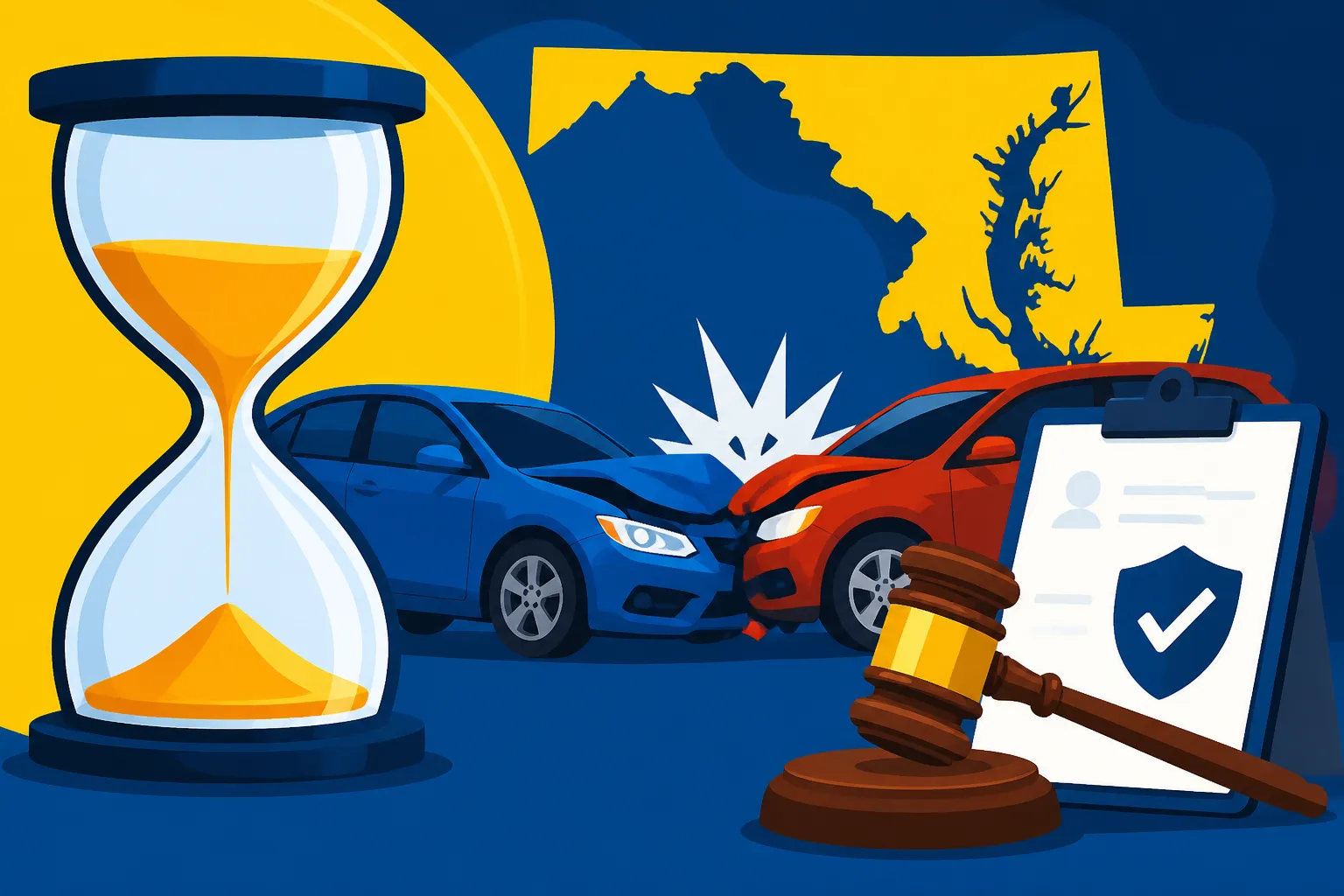
In Maryland, the general rule for personal injury claims stemming from a car accident is quite straightforward: you typically have three years from the date of the accident to file a lawsuit in civil court. This applies to most claims involving injuries, pain and suffering, lost wages, and medical bills. So, if you were involved in a fender bender on October 15, 2023, you would generally have until October 15, 2026, to initiate legal action.
Now, three years might sound like a long time, but believe me, it flies by, especially when you're dealing with injuries, recovery, and the general chaos that follows an accident. Many people make the mistake of thinking they can just handle things with the insurance company indefinitely, only to realize too late that the legal window has closed. It's a common and devastating pitfall that can leave you without recourse.
What the Clock Starts Ticking From
For most car accident claims in Maryland, the three-year clock starts ticking on the date of the accident itself. This is usually pretty clear-cut. However, there are some nuances that can arise, particularly when injuries aren't immediately apparent.
Sometimes, you might feel fine right after a crash, only for symptoms of a whiplash injury or a herniated disc to surface days or even weeks later. While the "discovery rule" exists in Maryland for some types of claims (meaning the clock starts when you discover or reasonably should have discovered your injury), for standard car accident personal injury cases, courts generally stick to the date of the accident. This is why it's always critical to seek medical attention promptly, even after what seems like a minor collision. Documenting your injuries early on can be crucial for your claim, and a delay could complicate things, not just medically but legally too. Knowing How to Prove Injuries in a Car Accident Claim is essential, and immediate medical records are a huge part of that.
Why This Deadline Is Absolutely Critical
Missing the statute of limitations means your case will almost certainly be dismissed by the court. The judge doesn't usually have discretion to extend it, except in very specific, legally defined circumstances. This isn't just an inconvenience; it means you forfeit your right to seek compensation from the at-fault driver for your medical expenses, lost income, pain and suffering, and any other damages you've incurred.
Imagine you've been diligently working with your insurance company, or perhaps even the other driver's insurance, for two and a half years. You're getting close to a settlement, you think. But then, negotiations stall, and you realize you need to file a lawsuit to protect your rights. If you wait too long, even a few days past that three-year mark, your leverage is gone. The insurance company knows you can no longer sue, and they have no incentive to offer a fair settlement. This is a truly frustrating situation that many accident victims face, and it's entirely preventable by being aware of the deadline from day one. You can read more about What Happens If You Miss the Statute of Limitations? to understand the full implications.
Exceptions to the Standard 3-Year Rule
While three years is the general rule, the legal world is rarely that simple. There are several important exceptions to Maryland's statute of limitations that can either extend or, more often, significantly shorten the time you have to act. Being aware of these exceptions is vital, as they can dramatically alter your strategy.
Claims Involving Minors
If the person injured in the car accident is a minor (under 18 years old) at the time of the crash, the three-year statute of limitations typically doesn't begin to run until their 18th birthday. This means if a child is injured at age 10, they would generally have until their 21st birthday (18 + 3 years) to file a lawsuit. This "tolling" of the statute of limitations is designed to protect children who aren't legally able to pursue claims on their own behalf.
However, even with this extended timeline, it's usually in the child's best interest for a parent or legal guardian to pursue a claim much sooner. Evidence can fade, witnesses can become harder to find, and prompt medical treatment and documentation are always best for both recovery and legal purposes. An experienced personal injury lawyer can guide families through this process, helping them secure a settlement or judgment that can be placed in a protected account for the child until they reach adulthood.
Claims Against Government Entities
This is one of the most significant and often overlooked exceptions. If the at-fault driver was operating a government vehicle or was an employee of a state, county, or municipal entity in Maryland, your timeline to act is drastically shorter. Under the Maryland Tort Claims Act, you typically have to provide written notice of your claim to the appropriate government agency within one year of the injury. If you miss this initial notice period, you could lose your right to sue, even if the three-year personal injury statute of limitations hasn't passed.
For example, if a City of Baltimore Sanitation Department truck driver causes an accident, you would need to send a formal notice to the City within that year. These notices have very specific requirements about what information they must contain and to whom they must be sent. Navigating claims against government entities is incredibly complex, with different rules applying depending on whether it's a state agency, a county, or a city. This is definitely a situation where you'll want to quickly consult a lawyer, perhaps even searching for one on platforms like LegalMatch, to ensure you don't miss these critical early deadlines.
Wrongful Death Claims
In the tragic event that a car accident results in a fatality, the surviving family members may have the right to file a wrongful death lawsuit. In Maryland, the statute of limitations for wrongful death claims is generally three years from the date of the person's death. This is similar to personal injury, but the trigger event is the death, not necessarily the accident date, especially if the victim passed away some time after the crash due to their injuries.
These cases involve different types of damages, such as funeral expenses, loss of financial support, and loss of companionship. They also have specific rules about who can file the claim (usually the spouse, children, or parents). The emotional toll of such a loss makes dealing with legalities incredibly difficult, which is why having compassionate and knowledgeable legal counsel is invaluable during such a devastating time.
Out-of-State Accidents
What happens if you're a Maryland resident, but your accident occurred in, say, Virginia, or even a different country? This is where things get tricky, as the laws of the state or jurisdiction where the accident occurred often apply. This is known as "choice of law." For instance, if you had a crash in Virginia, their statute of limitations (which is generally two years for personal injury) would likely govern your personal injury claim, even if you live in Baltimore.
This is another area where consulting with an attorney immediately is paramount. An attorney familiar with interstate accidents can help determine which state's laws apply and ensure you meet the correct deadlines, wherever the accident took place. It’s a good example of why the general rule for How Long Do You Have to File a Car Accident Claim? can vary so much.
Differentiating Injury Claims from Property Damage Claims
It's common for car accidents to result in both personal injuries and damage to your vehicle. While these claims often go hand-in-hand, Maryland law treats them slightly differently when it comes to deadlines. This can be confusing for accident victims who assume all aspects of their claim fall under a single umbrella.
Separate Timelines for Damages
In Maryland, the statute of limitations for property damage claims arising from a car accident is also generally three years. This means you have three years from the date of the accident to pursue compensation for the repairs to your vehicle or its total loss value. This aligns with the personal injury timeline, which often leads people to believe they're interchangeable.
However, the key distinction sometimes comes down to specific insurance policy limitations or subrogation actions. While your direct claim against the at-fault driver for property damage has a three-year limit, your own insurance company might have different internal deadlines or requirements for you to file a claim under your collision coverage. Plus, if they pay for your repairs, they then have their own right to pursue the at-fault driver, which is called subrogation. Understanding these nuances helps clarify the whole Property Damage vs Bodily Injury Claims process.
Why Both Matter
Both personal injury and property damage claims are crucial components of a comprehensive recovery after an accident. Your vehicle is often your lifeline for getting to work, school, and appointments, including medical treatments for your injuries. Delays in addressing property damage can create significant hardships.
It's tempting to focus solely on your physical recovery, especially if your injuries are severe. However, neglecting the property damage aspect can leave you without transportation, creating additional stress and expense. While insurance companies often try to settle property damage claims quickly, sometimes offering a lowball amount, it's important to remember that you don't have to accept their first offer. A lawyer can help ensure both your physical well-being and your financial losses related to your vehicle are adequately addressed, working within the applicable legal deadlines.
How a Lawyer Can Help Navigate These Deadlines
The information about statutes of limitations, exceptions, and different types of claims can feel overwhelming, especially when you're already trying to recover from an accident. This is precisely where an experienced car accident lawyer becomes an invaluable asset. They aren't just there for courtroom battles; they're your guide through the labyrinthine legal process. If you’re asking yourself, Do You Need a Lawyer for a Car Accident?, the answer is often yes, particularly when deadlines are tight.
Avoiding Costly Mistakes
One of the primary benefits of hiring a lawyer soon after an accident is their ability to identify and adhere to all relevant deadlines. They'll know instantly that the 3-year clock for personal injury claims is looming, and they'll be aware of any shorter deadlines, like the one-year notice requirement for claims against government entities in Maryland. They also understand the nuances of the "discovery rule" and how to argue for its application if your injuries were delayed.
Beyond just the statute of limitations, an attorney helps you avoid other common mistakes, such as giving a recorded statement to the other driver's insurance company that could harm your claim, or inadvertently admitting fault. They act as a buffer between you and persistent insurance adjusters, allowing you to focus on your recovery without the added pressure.
Initial Consultations and Investigations
Many reputable personal injury lawyers offer free initial consultations. This is an opportunity for you to discuss the specifics of your accident, your injuries, and any property damage you've sustained. During this meeting, the attorney will evaluate your case, explain the applicable statutes of limitations, and outline the steps needed to protect your rights. Platforms like LegalMatch can be a great starting point for finding qualified attorneys in your area who offer these free consultations.
Once retained, a lawyer will immediately begin gathering evidence, which is critical for building a strong case. This includes obtaining the police report, speaking with witnesses, collecting medical records, and documenting the scene of the accident. These early investigative steps are time-sensitive, as evidence can degrade, and memories can fade. The sooner they start, the stronger your foundation for a successful claim. This is a key part of What to Do After a Car Accident: Step-by-Step (2027).
The Importance of Acting Quickly
While the statute of limitations provides a final deadline, it's a huge mistake to wait until the last minute to contact an attorney. The closer you get to that deadline, the more difficult it becomes for a lawyer to properly investigate your case, gather all necessary evidence, and prepare a strong demand or lawsuit. Witness availability decreases, physical evidence may be gone, and even your own memories might not be as sharp as they were immediately after the crash.
Think of the statute of limitations as the absolute last train out of the station. You don't want to be sprinting to catch it; you want to be sitting comfortably on board long before it even pulls away. Engaging a lawyer early on means they can begin preserving evidence, handling communications with insurance companies, and advising you on critical decisions like medical treatment and vehicle repairs. This proactive approach not only protects your legal rights but also helps ensure you receive the best possible outcome for your claim. It's truly a scenario where When to Hire a Car Accident Lawyer is "as soon as possible."
| Claim Type | General Statute of Limitations (Maryland) | Notes |
|---|---|---|
| Personal Injury | 3 years from accident date | For bodily injury, medical bills, pain & suffering, lost wages. |
| Property Damage | 3 years from accident date | For vehicle repairs, total loss, rental car costs. |
| Minor's Personal Injury | 3 years from 18th birthday | Clock "tolls" until age 18, then 3 years. |
| Wrongful Death | 3 years from date of death | If death occurs after the accident due to injuries. |
| Claims vs. Government | 1 year (notice requirement) | Strict written notice within 1 year, then 3 years to file suit. |
| Out-of-State Accident | Varies by state where accident occurred | Consult lawyer immediately, as other state laws may apply. |
When you're dealing with the aftermath of a car accident in Maryland, understanding these deadlines is not just helpful, it's absolutely crucial for protecting your rights and ensuring you can pursue the compensation you deserve. Don't let the clock run out on your opportunity for justice.
Disclaimer
Please remember that this article provides general information and insights into Maryland's statute of limitations for car accidents and should not be taken as legal advice. Every accident and every case is unique, and the laws can be complex and subject to change. For personalized advice regarding your specific situation, it is always recommended to consult with a qualified Maryland car accident attorney.