Long-Term Effects of Nerve Damage From a Car Accident
Experiencing a car accident is jarring enough, but realizing that the impact has left you with something as insidious as nerve damage can be truly devastating. It's not always an immediate, visible injury, and the silent way it can creep up on you, presenting with strange sensations, numbness, or persistent pain, often leaves people feeling confused and frustrated. This guide is here to shed light on the complex, often long-lasting effects of nerve damage resulting from a car accident, helping you understand what you might be facing and how to navigate this challenging journey.
Understanding Nerve Damage After a Car Accident
When you're involved in a car accident, especially one with a sudden, forceful impact, your body is subjected to incredible stresses. This can lead to a variety of injuries, but nerve damage is particularly tricky because it affects the very communication system of your body. It's not just a muscle strain or a broken bone; it's a disruption to the intricate network that allows your brain to talk to your limbs and organs.
How Nerve Damage Occurs in Collisions
The human nervous system is remarkably resilient, but it has its limits. During a car accident, several mechanisms can lead to nerve damage:
- Compression: This is one of the most common ways nerves get hurt. Imagine being jolted forward, then slammed back into your seat. Your spine and surrounding tissues can compress nerves as they exit the spinal column. This is particularly prevalent in whiplash injuries, where the rapid back-and-forth motion of the head and neck can squeeze or pinch nerves in the cervical spine. Similarly, impacts to the lower back or pelvis can compress the sciatic nerve, leading to pain radiating down the leg.
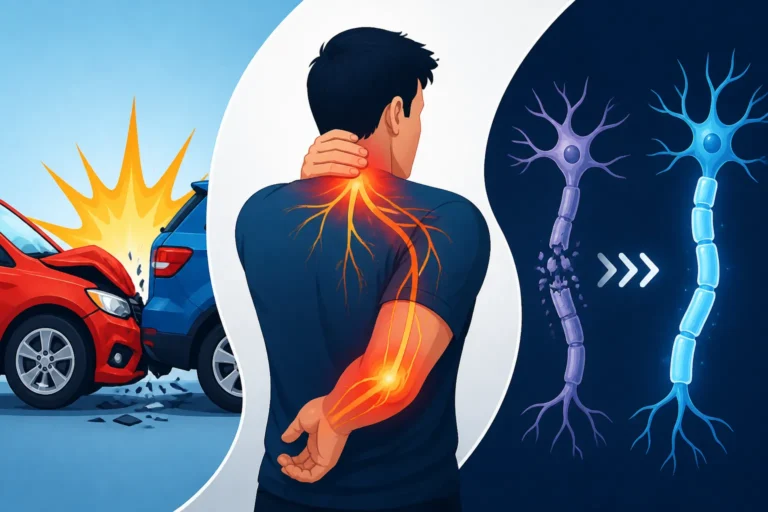
- Stretching: Nerves are somewhat elastic, but there's a point where they can be stretched too far. For instance, if your arm or leg is violently flung during a collision, the nerves leading to that limb can be overextended. A classic example is a brachial plexus injury, often seen when the head is forcefully thrown to one side, stretching the nerves that supply the arm, hand, and shoulder. This kind of stretching can damage the nerve fibers, disrupting their ability to transmit signals.
- Laceration or Severance: While less common in typical collisions, sharp objects or fractured bone fragments can actually cut or partially sever a nerve. This is a severe form of damage, as it completely interrupts the nerve's pathway. For example, a severe fracture in the arm or leg could have jagged edges that slice through nearby nerves. Even without an open wound, internal trauma can lead to this kind of injury.
- Crushing Injuries: When a body part is crushed between two forces, such as being pinned between the dashboard and the seat, the nerves within that area can be severely damaged. This combines elements of compression and stretching, often leading to widespread destruction of nerve tissue.
Types of Nerve Damage
Understanding the specific type of nerve damage you might have can help demystify your symptoms and prognosis. Medical professionals often categorize nerve injuries based on their severity:
- Neurapraxia: This is the mildest form of nerve injury. Think of it like a temporary "stun" to the nerve. The nerve's structure remains intact, but its ability to transmit signals is temporarily disrupted. You might experience numbness, tingling, or weakness that typically resolves within days to weeks. For example, a minor whiplash could cause neurapraxia in the neck, leading to temporary arm numbness. The good news is that these injuries often have a full recovery.
- Axonotmesis: This is a more moderate injury where the axon (the main part of the nerve cell that transmits signals) is damaged, but the protective sheath around it (the endoneurium) remains intact. Imagine a wire where the internal copper strands are broken, but the plastic insulation is still there. This type of injury requires the nerve to regenerate, which can take months to years, depending on the severity and location. Recovery is possible, but it might not be 100%, and some lingering symptoms like reduced sensation or weakness could persist. A common scenario might be a significant impact leading to sustained nerve compression, causing the axon itself to break down.
- Neurotmesis: This is the most severe type of nerve damage. Here, the nerve and its surrounding protective sheaths are completely severed or significantly disrupted. This is like a wire being completely cut through. Without surgical intervention, the nerve often cannot heal itself, leading to permanent loss of function, sensation, or both. Even with surgery, full recovery is rare, and the healing process is incredibly long and challenging. This might occur in scenarios with severe lacerations or crushing injuries.
The journey to understand your injuries can be complex, and it's vital to know that delayed injury symptoms after a car accident are common, especially with nerve damage. What seems like minor discomfort initially could evolve into something far more serious days or even weeks later. This is why seeing a doctor promptly after any accident, even a seemingly minor one, is crucial.
Common Long-Term Symptoms of Nerve Damage
The long-term effects of nerve damage can be incredibly varied and debilitating, often profoundly impacting a person's quality of life. Unlike a visible scar, nerve damage is an invisible injury that can cause constant, frustrating symptoms.
Chronic Pain and Numbness
Perhaps the most common and distressing long-term symptom of nerve damage is persistent chronic pain. This isn't just a sore muscle; it's a deep, often burning, shooting, or electrical sensation that can be relentless. Many describe it as:
- Neuropathic Pain: This specific type of pain is directly caused by nerve damage or dysfunction. It can feel like electric shocks, sharp stabbing sensations, or a constant, deep ache. It might be localized to the injury site or radiate along the path of the affected nerve, such as sciatica pain shooting down the leg from a damaged lower back nerve.
- Paresthesia: This refers to abnormal sensations like tingling, "pins and needles," or crawling feelings on the skin. These sensations can be constant or intermittent, and incredibly distracting.
- Numbness or Loss of Sensation (Anesthesia): Conversely, nerve damage can also lead to a partial or complete loss of feeling in an area. You might struggle to feel hot or cold, light touches, or even deep pressure. This can be dangerous, as it increases the risk of unnoticed injuries, like burns or cuts, and makes daily tasks like dressing or holding objects more difficult. Imagine trying to drive a car if you can't feel the gas pedal or the steering wheel properly.
These symptoms can wax and wane, often exacerbated by certain movements, weather changes, or even stress, making day-to-day life a constant battle against discomfort and a lack of reliable sensory feedback.
Weakness and Motor Impairment
Motor nerves are responsible for controlling muscle movement. When these nerves are damaged, the consequences can be significant:
- Muscle Weakness (Paresis): This is a noticeable reduction in muscle strength, making it difficult to lift objects, walk, or perform fine motor tasks. For instance, damage to the radial nerve in the arm could lead to "wrist drop," where you can't lift your wrist or fingers. This weakness can make everyday activities like carrying groceries, typing, or even getting out of a chair incredibly challenging.
- Muscle Paralysis (Plegia): In severe cases of nerve damage, particularly neurotmesis, there can be a complete loss of muscle function in the affected area. This can be partial or complete, depending on the extent of the nerve damage, and can lead to significant disability, potentially requiring adaptive equipment like wheelchairs or braces.
- Muscle Atrophy: When nerves stop signaling muscles, the muscles themselves begin to waste away due to lack of use. This muscle atrophy can occur over time, leading to visibly smaller and weaker limbs, further complicating recovery and movement. The longer the nerve damage goes untreated or unhealed, the more pronounced the atrophy can become.
- Loss of Coordination and Balance: Nerve damage can disrupt the communication between your brain and muscles, leading to problems with coordination, balance, and proprioception (your body's sense of its position in space). This can make walking steadily, catching a ball, or even standing upright without swaying a real struggle, increasing the risk of falls and further injury.
The impact of these motor impairments can be life-altering, affecting independence and the ability to perform basic self-care.
Autonomic Dysfunction and Secondary Issues
Beyond sensory and motor functions, some nerves control involuntary bodily processes, known as autonomic functions. Damage to these nerves can lead to a host of less commonly recognized but equally disruptive long-term effects:
- Digestive Problems: Nerves regulate digestion. Damage can lead to chronic constipation, diarrhea, difficulty swallowing, or gastroparesis (slowed stomach emptying), causing nausea and bloating.
- Blood Pressure and Heart Rate Irregularities: Autonomic neuropathy can affect how your body regulates blood pressure, leading to dizziness upon standing (orthostatic hypotension) or irregular heartbeats.
- Sweating Abnormalities: You might experience excessive sweating (hyperhidrosis) in some areas and a complete lack of sweating (anhidrosis) in others, making it difficult to regulate body temperature.
- Bladder and Bowel Control Issues: Nerve damage in the lower spine can affect bladder and bowel function, leading to incontinence or difficulty emptying.
- Sexual Dysfunction: Autonomic nerve damage can also impact sexual function in both men and women.
- Psychological and Emotional Impact: Living with chronic pain, limited mobility, and the frustration of an invisible injury takes a tremendous toll on mental health. Many individuals experience depression, anxiety, PTSD, and severe mood swings. This isn't just an emotional response; it's a direct consequence of the physical trauma and the ongoing struggle with the injury. These psychological challenges can sometimes be as debilitating as the physical symptoms themselves.
These widespread effects highlight why nerve damage is such a complex injury, often requiring a multifaceted approach to diagnosis and treatment. Seeking treatment for chronic pain after a car accident is crucial for managing these pervasive symptoms.
Diagnosing and Managing Long-Term Nerve Damage
Navigating the aftermath of a car accident, especially when dealing with the insidious nature of nerve damage, can feel overwhelming. The diagnostic journey often involves a range of tests to pinpoint the exact location and severity of the injury, and then a long-term management plan that might combine various therapies.
The Diagnostic Process
When your doctor suspects nerve damage, they won't just take your word for it – they'll need concrete evidence. The diagnostic process is crucial for understanding the full scope of your injuries and building a strong claim to support your need for ongoing care and potential compensation.
- Thorough Physical Examination: This is always the first step. Your doctor will assess your reflexes, muscle strength, sensation, and range of motion. They'll look for signs like muscle twitching, abnormal posture, or areas of tenderness. They might use a pinwheel or tuning fork to test your sensation, or ask you to perform specific movements to gauge your motor function.
- Electromyography (EMG) and Nerve Conduction Velocity (NCV) Studies: These are often considered the gold standard for diagnosing nerve damage.
- NCV: Measures how quickly electrical signals travel along a nerve. Slower signals can indicate nerve damage. Electrodes are placed on the skin over the nerve, and a mild electrical current is used to stimulate it.
- EMG: Involves inserting a thin needle electrode into a muscle to record its electrical activity both at rest and during contraction. Abnormal electrical patterns can reveal nerve or muscle damage. These tests can distinguish between nerve damage and muscle disorders and help determine the severity and exact location of the injury.
- Imaging Studies:
- Magnetic Resonance Imaging (MRI): An MRI can provide highly detailed images of soft tissues, including nerves, the spinal cord, and surrounding structures. It can reveal nerve compression from herniated discs, inflammation, or structural damage.
- Computed Tomography (CT) Scans: While less detailed for soft tissues than an MRI, a CT scan can be very useful for identifying bone fractures or other structural issues that might be impinging on nerves.
- X-rays: Primarily used to rule out fractures or dislocations that could be affecting nerves.
- Nerve Biopsy: In very rare and complex cases, a small sample of nerve tissue might be taken for microscopic examination, though this is usually a last resort.
These diagnostic tools are essential for proving the extent of your injuries and can significantly impact how much your car accident settlement is worth. They provide objective data that supports your subjective experience of pain and dysfunction.
Long-Term Treatment and Rehabilitation Options
Managing long-term nerve damage is rarely a quick fix; it's a marathon, not a sprint. The goal is to alleviate symptoms, improve function, and enhance quality of life.
- Physical Therapy (PT) and Occupational Therapy (OT): These are cornerstones of nerve injury rehabilitation.
- PT: Focuses on strengthening weakened muscles, improving range of motion, and reducing pain through exercises, stretches, and modalities like heat, ice, or electrical stimulation (TENS). A physical therapist can also teach you proper body mechanics to protect the injured nerves.
- OT: Helps you adapt to daily tasks and activities that might have become difficult. An occupational therapist can recommend adaptive equipment, modify your living or work environment, and teach strategies to manage pain and maximize independence.
- Medication Management: A variety of medications can help manage nerve pain:
- Over-the-counter pain relievers: NSAIDs (like ibuprofen) for inflammation, though often not effective for true neuropathic pain.
- Prescription pain medications: Stronger pain relievers, including opioids (used cautiously due to addiction risk) for severe pain.
- Antidepressants: Certain types of antidepressants, even at low doses, can be very effective in managing neuropathic pain by affecting neurotransmitters involved in pain signaling.
- Anti-seizure medications: Drugs like gabapentin (Neurontin) and pregabalin (Lyrica), originally developed for epilepsy, are often prescribed for nerve pain.
- Topical creams and patches: Lidocaine patches or capsaicin creams can provide localized relief.
- Injections: For localized nerve pain or compression, injections can provide relief.
- Corticosteroid injections: Delivered near the affected nerve or into the epidural space of the spine, these can reduce inflammation and pain.
- Nerve blocks: Anesthetic is injected around a nerve to temporarily block pain signals.
- Surgery: When conservative treatments fail, surgery might be considered, especially for severe nerve compression or laceration.
- Nerve decompression: Surgically relieving pressure on a compressed nerve (e.g., carpal tunnel release, spinal decompression for sciatica).
- Nerve repair/grafting: For severed nerves, surgeons might attempt to sew the ends together or use a nerve graft from another part of the body to bridge a gap. The success of nerve repair depends heavily on the type and severity of the injury, and nerve regeneration is a slow process, often progressing only about an inch per month.
- Alternative Therapies: Many people find relief through complementary approaches:
- Acupuncture: Can help manage chronic pain.
- Massage therapy: Can alleviate muscle tension that might be contributing to nerve irritation.
- Chiropractic care: For spinal alignment issues that might affect nerves.
- Mindfulness and meditation: For pain management and coping with the emotional toll.
It's important to remember that achieving maximum medical improvement (MMI) for nerve damage can take a very long time, and some individuals may live with permanent impairments. Documenting all your medical records to prove your injuries is critical throughout this process.
Impact on Daily Life and Work
Living with long-term nerve damage isn't just about the physical symptoms; it's about the pervasive way those symptoms ripple through every aspect of your existence. What used to be simple, routine tasks can become monumental challenges, leading to profound changes in personal life, relationships, and professional capabilities.
Challenges in Personal Life
The effects of nerve damage stretch far beyond the doctor's office, creeping into the fabric of your everyday life.
- Loss of Independence: Imagine struggling to tie your shoes because your fingers are numb, or needing help getting dressed due to muscle weakness. Simple acts of self-care can become daily battles, eroding your sense of independence and self-worth. Tasks like bathing, cooking, or even personal hygiene might require assistance, which can be both frustrating and emotionally taxing.
- Social Isolation: Chronic pain and mobility issues often lead to withdrawing from social activities. It's hard to go out with friends when sitting for long periods is excruciating, or walking long distances is impossible. Hobbies that once brought joy – gardening, playing sports, painting – may no longer be feasible. This isolation can deepen feelings of depression and anxiety, further impacting your mental well-being.
- Impact on Relationships: Living with chronic pain and disability can strain relationships with family and friends. Spouses might become caregivers, altering the dynamic of the relationship. Children might not understand why a parent can no longer play like they used to. The invisible nature of nerve damage means others might not fully grasp the extent of your suffering, leading to misunderstandings and feelings of being alone.
- Sleep Disturbances: Nerve pain often intensifies at night, making it incredibly difficult to find a comfortable sleeping position or achieve restful sleep. This chronic sleep deprivation exacerbates pain sensitivity, impacts mood, and hinders the body's natural healing processes, creating a vicious cycle of discomfort and fatigue.
- Mental Health Struggles: The constant battle with pain, the limitations on daily activities, and the uncertainty of recovery can lead to significant psychological distress. Depression, anxiety, and even post-traumatic stress disorder (PTSD) are common among individuals with chronic nerve damage from car accidents. The frustration of dealing with a body that no longer cooperates can be profoundly disheartening.
It's important to recognize that these non-economic damages, such as pain and suffering, are a significant component of your overall claim and should be thoroughly documented.
Vocational Limitations
The professional sphere is another area where long-term nerve damage can wreak havoc, often leading to career changes or even the inability to work.
- Difficulty Performing Job Duties: Many jobs require physical capabilities, fine motor skills, or the ability to sit or stand for extended periods. Nerve damage can severely compromise these abilities. A construction worker with sciatic nerve damage might be unable to lift heavy objects. A desk worker with carpal tunnel syndrome from nerve compression might struggle to type. These limitations can lead to reduced productivity, frequent absences, and ultimately, job loss.
- Career Changes: For some, returning to their pre-accident career simply isn't an option. They might be forced to retrain for less physically demanding roles, or seek jobs that accommodate their new limitations. This can involve significant financial strain, as new jobs might pay less or require expensive retraining.
- Loss of Earning Capacity: Even if you can return to some form of work, your long-term earning potential might be diminished. You might not be able to work as many hours, advance in your field, or command the same salary you once did. This loss of earning capacity is a critical component of a car accident settlement calculation.
- Challenges with Workplace Accommodations: While employers are often required to provide reasonable accommodations under laws like the Americans with Disabilities Act (ADA), navigating these processes can be complex and stressful. Advocating for ergonomic adjustments, modified duties, or flexible schedules while dealing with pain and fatigue is an added burden.
- Financial Strain: The combination of medical bills, rehabilitation costs, lost wages, and potentially reduced earning capacity can place immense financial pressure on individuals and their families. This financial stress can compound the physical and emotional burdens of the injury, making the recovery process even more challenging.
Understanding your full range of damages, both economic and non-economic, is vital. This is often where the guidance of an experienced professional becomes invaluable. If you're struggling to understand your options, considering if you need a lawyer for a car accident might be a wise step, especially when dealing with such complex and long-lasting injuries.
Here's a table summarizing the types of nerve damage and their typical long-term outlook:
| Nerve Damage Type | Description | Key Characteristics | Typical Long-Term Outlook |
|---|---|---|---|
| Neurapraxia | Mildest form; temporary disruption of nerve signal, structure intact. | Temporary numbness, tingling, or weakness. | Usually full recovery within days to weeks; no permanent damage. |
| Axonotmesis | Moderate injury; axon damaged, but connective tissue sheath intact. | More pronounced weakness, numbness; muscle atrophy can occur. | Recovery possible, but takes months to years; partial or incomplete recovery common. |
| Neurotmesis | Most severe; entire nerve and its sheath are severed or disrupted. | Complete loss of sensation and motor function in affected area. | Permanent loss of function without surgery; even with surgery, full recovery is rare. |
The path to recovery from nerve damage is unique for everyone, and knowing how long nerve damage takes to heal after a car accident is often a question without a simple answer. It depends heavily on the type, severity, and location of the injury, as well as individual factors. It’s a journey that requires patience, persistent medical care, and robust advocacy for your needs.
Disclaimer
Please remember that the information provided in this article is for general informational purposes only and does not constitute legal or medical advice. Every car accident case and personal injury is unique. You should consult with a qualified medical professional for diagnosis and treatment of any injury, and a legal professional for advice regarding your specific car accident claim. Relying solely on the information presented here is not a substitute for professional guidance.