Claiming Compensation for PTSD in Texas
Experiencing a car accident is terrifying enough, but the nightmare often doesn't end when the physical wounds heal. Many people find themselves battling a silent, invisible injury: Post-Traumatic Stress Disorder (PTSD), which can turn daily life into an uphill struggle long after the crash itself. If you've been in an accident in Texas and are now struggling with the profound emotional and psychological aftermath of PTSD, this guide will walk you through what it means to claim compensation for your suffering.
Understanding PTSD After a Car Accident
It's a common misconception that PTSD only affects combat veterans or survivors of catastrophic events. The truth is, any highly traumatic experience, like a sudden and violent car crash, can leave deep psychological scars. The chaos, the fear of death, the helplessness, and the immediate aftermath of an accident can all combine to create a perfect storm for developing PTSD. It's not "all in your head" or a sign of weakness; it's a very real and debilitating condition.
What Exactly Is PTSD?
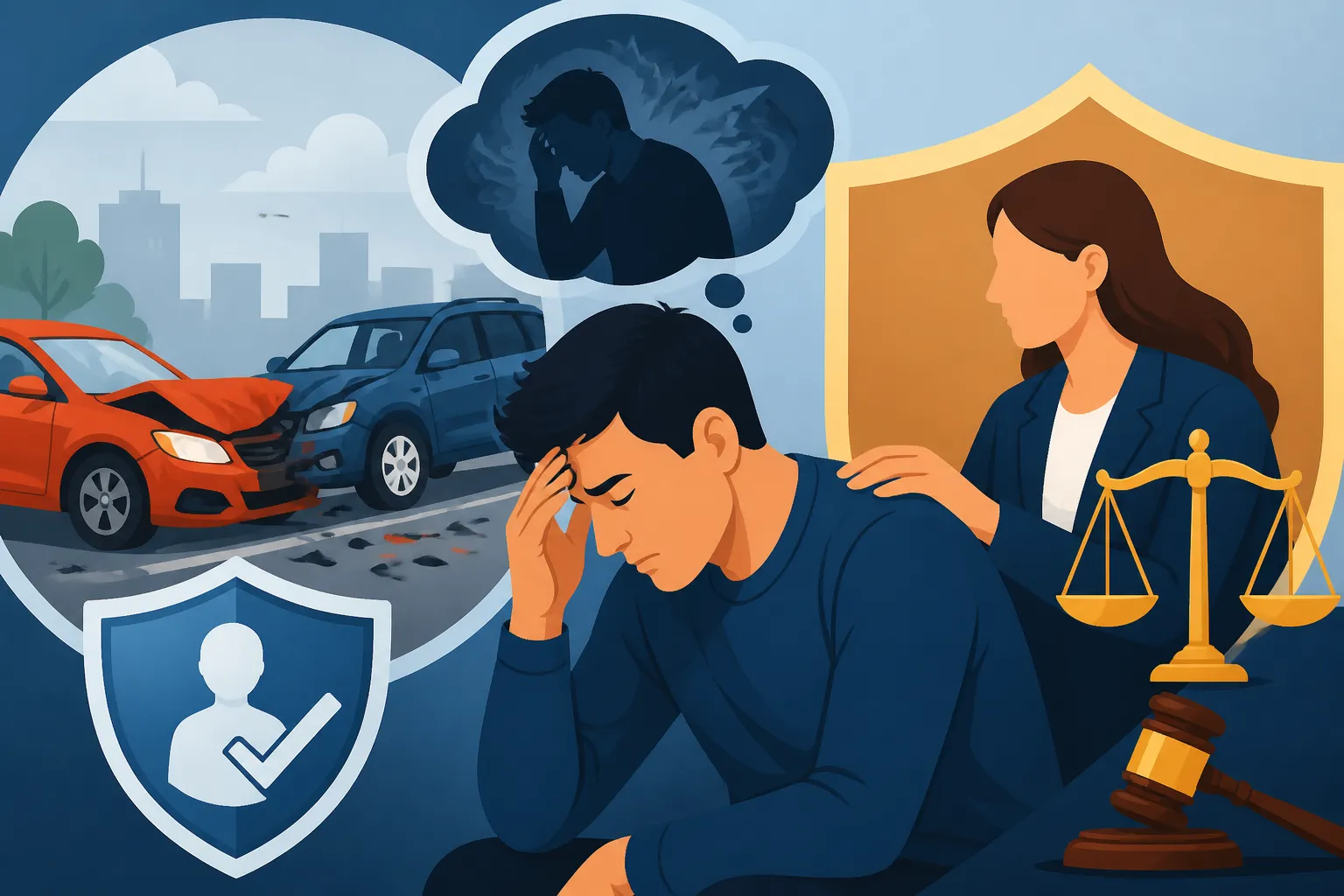
Post-Traumatic Stress Disorder is a mental health condition that some people develop after experiencing or witnessing a terrifying event. While it's normal to feel scared, anxious, or sad after an accident, for someone with PTSD, these feelings don't fade over time. Instead, they intensify and can disrupt daily life for months or even years. Imagine constantly reliving the moment of impact, or feeling a surge of panic every time you get behind the wheel, even for a short trip to the grocery store. That's the persistent, intrusive nature of PTSD. It rewires your brain's response to stress, keeping you in a state of high alert long after the danger has passed.
Common Symptoms of Post-Traumatic Stress Disorder
The symptoms of PTSD are varied and can manifest differently in individuals, making it challenging to identify and diagnose without professional help. However, they generally fall into four main categories. The first is intrusive thoughts, which include flashbacks where you feel like the accident is happening again, recurring nightmares, and unwanted disturbing memories of the event. For instance, you might be driving on a perfectly sunny day, and suddenly the sound of a horn or a quick brake sends you spiraling back to the crash scene, complete with sensory details like the smell of burning rubber or the crunch of metal.
Another common category is avoidance. This might mean avoiding driving altogether, especially near the accident site, or even refusing to get into a car as a passenger. You might also find yourself avoiding conversations about the accident, or activities you used to enjoy if they somehow remind you of the trauma. The third category involves negative changes in thinking and mood. This can look like persistent negative thoughts about yourself or the world, a diminished interest in activities you once found pleasurable, feelings of detachment from friends and family, or difficulty experiencing positive emotions. Finally, changes in physical and emotional reactions, often referred to as "arousal symptoms," include being easily startled, constantly feeling on edge (hypervigilance), having difficulty sleeping, or experiencing angry outbursts. Imagine being unable to relax even in your own home, constantly scanning for danger, or jumping at every unexpected sound. These are all classic signs, and you can learn more about specific manifestations in our guide on PTSD and Emotional Distress After a Car Accident.
Why Car Accidents Can Trigger PTSD
Car accidents are particularly potent triggers for PTSD because they combine several elements that contribute to psychological trauma. First, there's the sudden, unexpected nature of the event, which leaves no time to prepare or react. One moment you're driving along, perhaps listening to music, and the next, your life is potentially on the line. This loss of control is deeply unsettling. Second, the threat to life or serious injury, whether it's your own or witnessing harm to others, can be profoundly shocking. The brain perceives this as an extreme danger, kicking into survival mode. Third, the sensory overload during an accident – the screech of tires, the shattering glass, the impact itself, the cries for help – imprints a vivid, often terrifying, memory.
For example, Sarah, a commuter in Houston, was involved in a multi-car pileup on the I-45. Physically, she only sustained minor cuts and bruises, but mentally, she was devastated. Every time she approached a highway entrance ramp, her heart would race, her palms would sweat, and she'd experience vivid flashbacks of the twisted metal and chaos. This intense fear and avoidance behavior, stemming directly from the accident, clearly points to the development of PTSD. It's crucial to understand that the severity of physical injury doesn't always correlate with the severity of psychological trauma; a minor fender-bender could still lead to significant emotional distress for some individuals.
Establishing a Link Between Your Accident and PTSD in Texas
One of the most challenging aspects of claiming compensation for PTSD is proving that the car accident directly caused or significantly worsened your condition. Unlike a broken arm, which is clearly visible on an X-ray, psychological injuries are invisible. However, with the right approach and comprehensive documentation, it is absolutely possible to establish this crucial link in a Texas car accident claim.
The Importance of Immediate Medical and Mental Health Care
After any car accident, your first priority should always be your health and safety. While many people focus on visible injuries, it's equally vital to recognize and address potential psychological trauma. Seeking immediate medical attention not only helps treat physical injuries but also establishes an official record of the accident's impact on your well-being. This is especially true for mental health concerns. Even if you feel "fine" in the immediate aftermath, it's wise to consult with a doctor and express any feelings of shock, anxiety, or unease.
Following up with a mental health professional – a psychiatrist, psychologist, or therapist – soon after the accident is paramount if you start experiencing any PTSD symptoms. These professionals can provide a formal diagnosis and begin a course of treatment, creating a clear timeline linking your symptoms directly to the car crash. This consistent documentation from qualified experts forms the backbone of your claim. Ignoring psychological symptoms in the hopes they'll fade can severely weaken your ability to claim compensation later, as insurance companies often look for gaps in treatment or delayed reporting to argue that your condition isn't accident-related. Our detailed guide on Delayed Injury Symptoms After a Car Accident also emphasizes why prompt medical attention for any injury, visible or not, is critical.
Documenting Your Emotional and Psychological Trauma
Documenting emotional and psychological trauma goes beyond just receiving a diagnosis. It involves meticulously recording how PTSD has affected every aspect of your life. Keep a detailed journal where you note your symptoms, their frequency and intensity, and how they interfere with your daily activities, work, relationships, and hobbies. For example, if your PTSD causes you to avoid driving, write down specific instances where you missed an important appointment or couldn't pick up your kids from school due to your fear.
Gather statements from family members, friends, and colleagues who can attest to changes in your behavior, mood, or personality since the accident. These personal accounts can paint a powerful picture of your suffering for an insurance adjuster or jury. Additionally, collect all records related to your mental health treatment, including therapy notes, medication prescriptions, and bills. This comprehensive paper trail is what proves your injuries and links them to the accident, as discussed in How to Prove Injuries in a Car Accident Claim. The more thoroughly you document, the stronger your case will be when demonstrating the profound impact of PTSD.
Expert Witness Testimony and Psychological Evaluations
In cases involving PTSD, the testimony of mental health experts often becomes indispensable. Insurance companies are notorious for downplaying or denying psychological injuries, labeling them as pre-existing conditions or claiming they are not severe enough to warrant significant compensation. This is where a qualified expert witness comes in. A forensic psychologist or psychiatrist can perform an independent psychological evaluation, reviewing your history, symptoms, and treatment records to provide an objective assessment of your condition.
This evaluation will detail the diagnosis of PTSD, explain how the car accident was the direct cause or a significant aggravating factor, and outline the prognosis for your recovery, including the expected duration and cost of future treatment. Their expert opinion carries substantial weight in court or during negotiations, serving as a powerful counter to any doubts raised by the defense. They can also explain complex psychological concepts in an understandable way for a jury, highlighting the legitimacy and severity of your invisible injuries.
Types of Compensation Available for PTSD in Texas
When you're pursuing a claim for PTSD in Texas, it's important to understand that your potential compensation isn't just about your medical bills. The legal system recognizes the broad impact of psychological trauma, and as such, various types of damages can be sought to cover your losses and suffering. Generally, these fall into two main categories: economic and non-economic damages.
Economic Damages for Psychological Treatment and Lost Wages
Economic damages are the tangible, quantifiable losses that result directly from your PTSD. These are the "receipts and bills" of your injury. The most obvious component here is the cost of your psychological treatment. This includes everything from initial diagnostic assessments to ongoing therapy sessions with a licensed psychologist or psychiatrist, medication costs (such as antidepressants or anti-anxiety drugs prescribed to manage PTSD symptoms), and any specialized treatments like EMDR (Eye Movement Desensitization and Reprocessing) therapy or inpatient programs if your condition is severe. These expenses can quickly add up over months or even years of treatment.
Beyond direct medical costs, lost wages are another significant economic damage. If your PTSD symptoms, such as severe anxiety, flashbacks, or difficulty concentrating, have made it impossible for you to return to work, or if you've had to take time off for appointments, you can claim compensation for that lost income. This also extends to lost earning capacity – if your PTSD has permanently impaired your ability to perform your job at the same level as before, or forced you into a lower-paying role, that long-term financial impact can be factored into your claim. For instance, a commercial truck driver developing severe driving anxiety after a crash might lose their career, leading to substantial future lost income. You can learn more about this distinction in our article on Economic vs Non-Economic Damages in Injury Claims.
Non-Economic Damages for Pain and Suffering
This is where the less tangible, but equally profound, aspects of PTSD compensation come into play. Non-economic damages address the subjective impact of your injury on your quality of life. For PTSD, this category is particularly crucial because it covers the "pain and suffering" that is at the heart of the condition. This includes the emotional distress you endure daily – the constant anxiety, fear, sadness, anger, and feelings of helplessness. It accounts for the loss of enjoyment of life, such as being unable to participate in hobbies you once loved, avoiding social gatherings, or struggling in your relationships due to your symptoms.
Imagine someone who was once outgoing and loved to travel, but now due to PTSD, is withdrawn, constantly on edge, and can't bear to be in crowded places or even drive beyond their immediate neighborhood. The compensation for pain and suffering aims to acknowledge these fundamental shifts in their existence. There's no fixed formula for calculating pain and suffering, but factors like the severity and duration of your PTSD, its impact on your personal and professional life, and the medical evidence supporting your claim all play a role. Our article Pain and Suffering: How It's Calculated dives deeper into how these complex damages are often quantified in personal injury cases.
The Role of Texas's Comparative Negligence Rule
It's vital to understand how Texas law handles fault when pursuing a PTSD claim, or any car accident claim for that matter. Texas operates under a modified comparative negligence rule, specifically the 51% bar rule. What this means is that if you are found to be 51% or more at fault for the accident, you are legally barred from recovering any damages from the other party. If you are found to be 50% or less at fault, you can still recover damages, but your compensation will be reduced by your percentage of fault.
For example, if a jury determines your total damages (economic and non-economic combined) for PTSD and other injuries amount to $100,000, but they also find you were 20% at fault for the accident, your actual settlement would be reduced by 20%, leaving you with $80,000. This is a critical consideration, especially since insurance companies will aggressively try to shift blame to you to minimize their payout. Even if your PTSD symptoms are severe, if your contribution to the accident is deemed too high, your ability to claim compensation will be severely impacted. Understanding What Happens If You're Partially at Fault? is key to protecting your claim.
Here's a quick overview of compensation types:
| Damage Type | Description | Examples for PTSD Claim |
|---|---|---|
| Economic | Tangible, quantifiable losses with a clear monetary value. | Therapy bills, medication costs, lost wages, future medical care, loss of earning capacity. |
| Non-Economic | Intangible losses related to the subjective experience of pain and suffering. | Emotional distress, anxiety, fear, depression, loss of enjoyment of life, impairment of relationships, mental anguish. |
| Punitive | (Rare in PTSD cases) Awarded to punish egregious wrongdoing by the at-fault driver, not to compensate. | Not typically applied to PTSD claims unless the at-fault driver's conduct was malicious or grossly negligent (e.g., drunk driving). |
Navigating the Claims Process for PTSD in Texas
The claims process after a car accident can be a maze, and adding a complex psychological injury like PTSD only makes it more daunting. Dealing with insurance companies while also managing your symptoms can feel overwhelming, but being prepared and knowing what to expect can make a significant difference in your ability to secure the compensation you deserve.
Gathering All Necessary Documentation
Successfully claiming compensation for PTSD in Texas hinges on robust, comprehensive documentation. This starts from the moment of the accident and continues throughout your recovery. You'll need:
- Accident Report: The official police report detailing the crash.
- Medical Records: All records from emergency room visits, primary care physicians, and specialists for both physical and psychological injuries. This includes diagnosis reports, treatment plans, medication lists, and billing statements.
- Mental Health Records: Detailed notes from your psychologist, psychiatrist, or therapist explicitly outlining your PTSD diagnosis, its connection to the accident, the severity of your symptoms, and the long-term prognosis.
- Proof of Lost Income: Pay stubs, tax returns, and letters from your employer detailing missed workdays, reduced hours, or job loss due to your PTSD.
- Personal Journal/Testimonies: Your personal account of how PTSD has impacted your daily life, along with statements from family and friends observing your decline.
- Bills and Receipts: Any out-of-pocket expenses related to your treatment or recovery.
Having everything organized will significantly streamline your claim, whether you're handling it yourself or with legal assistance. Without proper documentation, it becomes nearly impossible to substantiate the direct link between the accident and your PTSD, making it easy for insurers to deny or minimize your claim. A thorough understanding of How to File a Car Accident Insurance Claim will guide you through the initial steps.
Dealing with Insurance Companies and Their Tactics
Be prepared for insurance companies to scrutinize your PTSD claim intensely. Their primary goal is to pay out as little as possible, and they often employ various tactics to achieve this. They might question the legitimacy of your PTSD, suggest it's a pre-existing condition unrelated to the accident, or argue that your symptoms aren't severe enough to warrant substantial compensation. They may try to get you to give a recorded statement, which can be used against you later, or offer a quick, lowball settlement before you fully understand the extent of your psychological injuries.
It's common for adjusters to act sympathetic, but remember they are not on your side. Avoid discussing the specifics of your psychological state beyond what's necessary, and never admit fault or minimize your suffering. Remember, Dealing With Insurance Adjusters After a Car Accident requires careful consideration and a clear strategy to protect your rights and your claim. If you feel pressured or undervalued, it's a strong sign you might need help.
When to Consider Legal Representation
While some minor accident claims can be handled independently, a PTSD claim resulting from a car accident in Texas is almost always best handled with the guidance of an experienced personal injury attorney. The complexities of proving psychological injury, valuing non-economic damages, and navigating Texas's comparative negligence laws make it incredibly challenging for an individual to go up against a well-resourced insurance company alone.
An attorney specializing in car accident claims understands how to gather the necessary evidence, consult with expert witnesses, and effectively negotiate with insurance adjusters. They can protect you from manipulative tactics, ensure all deadlines (like the statute of limitations) are met, and if necessary, represent you in court. Furthermore, studies show that accident victims who hire an attorney often receive significantly higher settlements than those who do not. If you're struggling with PTSD after an accident, the added stress of a legal battle is the last thing you need. An attorney can handle the legal heavy lifting, allowing you to focus on your recovery. For more on this, consider reading Do You Need a Lawyer for a Car Accident?.
Disclaimer
Please remember that this guide provides general information and is not legal advice. Car accident claims, especially those involving psychological injuries like PTSD, are complex and highly dependent on individual circumstances and the specific laws of Texas. For personalized advice regarding your situation, it is crucial to consult with a qualified personal injury attorney in Texas.