Who Is at Fault in an Intersection Accident in California?
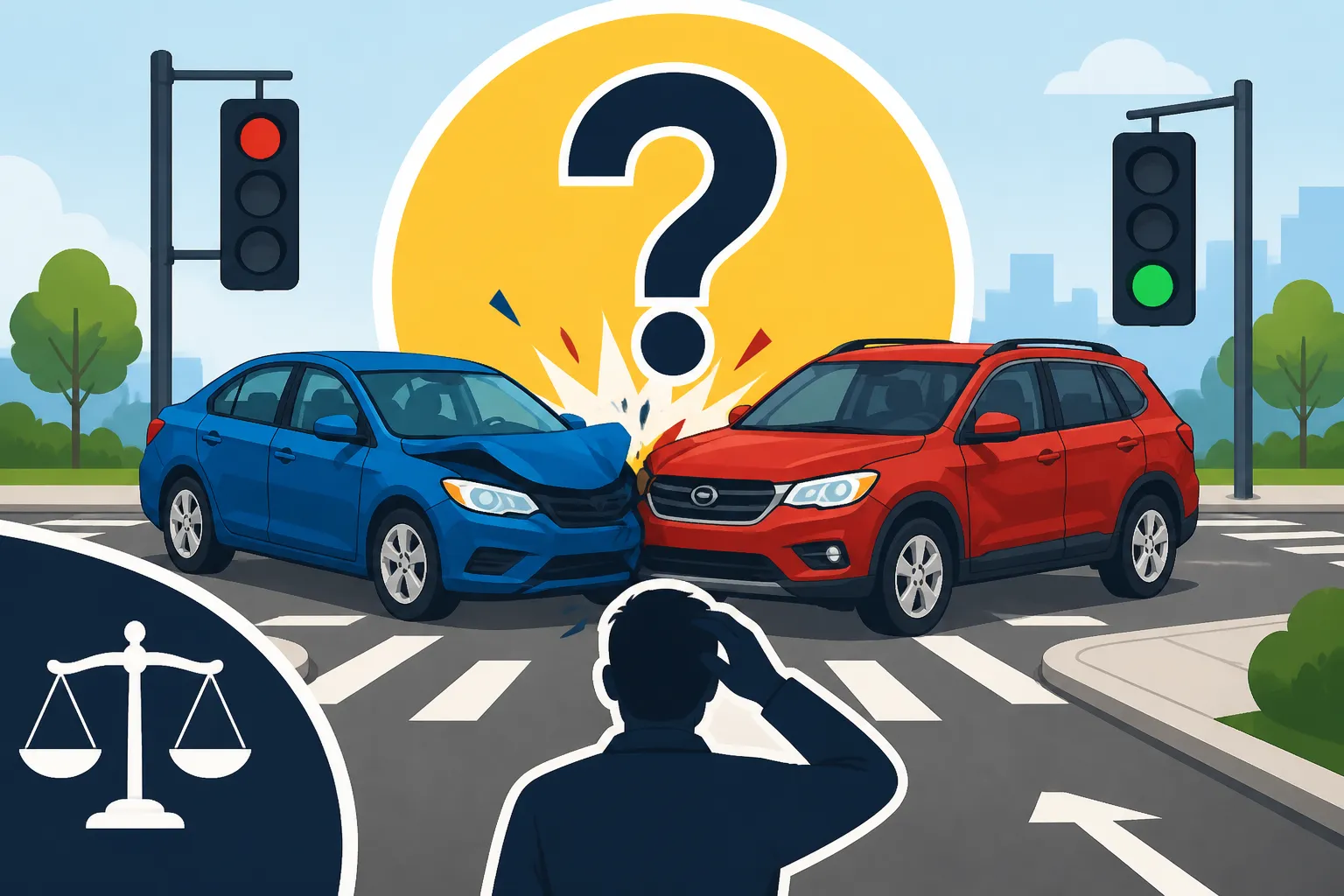
Dealing with a car accident is stressful enough, but when it happens at an intersection, the question of "who caused it?" can feel like a tangled knot. Intersection accidents are notoriously complex because multiple drivers often approach from different directions, making fault determination a real headache. This guide will walk you through the specifics of fault in California intersection accidents, helping you understand the rules of the road and what steps you can take to protect yourself.
Understanding Right-of-Way Rules in California Intersections
The concept of right-of-way is fundamental to determining fault in any traffic accident, especially those at intersections. In California, these rules are designed to prevent collisions by clearly dictating which driver has the privilege to proceed. When these rules are violated, it often points to the at-fault driver. It's not always as simple as "who got there first," and understanding the nuances can make a big difference in your car accident claim.
Controlled Intersections with Traffic Signals
Traffic signals are there to regulate the flow of vehicles, and failing to obey them is a common cause of intersection accidents. These aren't just suggestions; they are legally binding directives.
Running a Red Light or Failing to Stop
This is perhaps the most straightforward scenario for fault. If a driver proceeds into an intersection while the traffic light is red, they are almost certainly at fault for any collision that occurs. Imagine you're driving down Main Street in San Diego, and your light turns green. You proceed cautiously, only to be T-boned by a driver speeding through the intersection coming from Elm Avenue, clearly having run their red light. In this case, the other driver's violation of California Vehicle Code § 21453 (red light violation) would be a primary factor in determining their fault. Evidence like witness statements, traffic camera footage, or even the police report will often clearly show this violation. Sometimes, even if the light was just turning yellow, if they entered the intersection after it turned red, they're typically held responsible. It's not about guessing; it's about the objective state of the light at the moment of entry.
Yellow Lights and Right-of-Way
Yellow lights are often misunderstood. They don't mean "speed up and beat the red!" In California, a yellow light indicates that the signal is about to turn red, and drivers should prepare to stop. Vehicle Code § 21452 states that a driver facing a yellow light should stop before entering the intersection, unless they are so close that they cannot safely do so. This "unless" clause is where things get tricky. If a driver accelerates through a yellow light and collides with a vehicle legally entering the intersection (perhaps someone making a protected left turn on a green arrow that's now changing to yellow), fault can become debatable. However, if a driver clearly could have stopped safely but chose to proceed and caused a crash, especially if their light had already turned red or was about to, they could still be found at fault. For instance, if you're approaching an intersection in Los Angeles, see a stale yellow, and floor it, only to hit someone making a left turn who had a brief green arrow, the responsibility might shift depending on who entered the intersection legally and when.
Uncontrolled Intersections and Stop Signs
Not all intersections have traffic lights. Many rely on stop signs or simply the good old right-of-way rule. These can be even more confusing because there's no flashing light telling you what to do.
Four-Way Stop Sign Rules
At a four-way stop in California, the rule of "first come, first served" generally applies. The vehicle that arrives at and completely stops at the intersection first has the right-of-way. If two vehicles arrive at the same time, the vehicle on the right has the right-of-way. It sounds simple, but drivers often roll through stops or assume they arrived first. Consider a quiet residential street in Pasadena where two cars arrive at a four-way stop simultaneously. The car on the left, impatient, proceeds without yielding to the car on the right, leading to a collision. The driver on the left would be at fault for violating Vehicle Code § 21800(b), which prioritizes the vehicle to the right when arrival is simultaneous. Documentation of impact points and witness statements are critical here. If you're ever in doubt about who arrived first, it's always safer to yield.
Failure to Stop or Yield at a Stop Sign
This is another clear-cut fault scenario. If a driver fails to come to a complete stop at a stop sign or fails to yield to cross-traffic when required (e.g., at a two-way stop where cross-traffic doesn't have a stop sign), they are usually at fault. Imagine you're driving through a scenic route near Big Sur, approaching a two-way stop sign where traffic on the main road has no stop sign. If you pull out into the intersection without yielding to an oncoming vehicle, causing an accident, your failure to yield would place you squarely at fault. This falls under Vehicle Code § 21802. Even a "rolling stop," where the wheels don't completely cease movement, can be considered a failure to stop and contribute to fault. The goal is to establish that the driver could have and should have stopped and waited.
Common Intersection Accident Scenarios and Fault Determination
Beyond general right-of-way, specific maneuvers at intersections frequently lead to crashes, and California law often has clear guidelines for determining who is primarily responsible. Understanding these specific scenarios can help you navigate your own situation or understand what to look for when trying to prove the other driver was at fault.
Left-Turn Accidents
Left-turn accidents are incredibly common and often complex, but California law generally places the burden on the driver making the left turn.
The Presumption of Fault for Turning Drivers
In most left-turn collision scenarios in California, the driver attempting the left turn is presumed to be at fault. This is because Vehicle Code § 21801(a) states that a driver turning left must yield the right-of-way to any vehicle approaching from the opposite direction that is "close enough to constitute a hazard." This means if you're turning left and you get hit by an oncoming car, the law generally assumes you misjudged the distance or speed of the oncoming vehicle. For example, if you're at a busy intersection in Sacramento, trying to make a left turn, and you get hit by an oncoming car that was going straight, the initial assumption will likely be that you failed to yield. The other driver isn't expected to anticipate your turn or slow down for you unless you've already established your right-of-way (e.g., you're already in the intersection with a green arrow). However, this presumption isn't absolute; there are exceptions. You can learn more about specific rules in "Left-Turn Accident Fault Rules".
Exceptions to Left-Turn Fault
While the turning driver often takes the blame, there are situations where the oncoming driver or another party could be at fault. One major exception is if the oncoming driver was speeding excessively or ran a red light. If you had a green arrow for your left turn, and an oncoming car blew through their red light and hit you, they would be at fault, not you. Another exception could be if the oncoming driver was distracted or suddenly swerved into your path in an unsafe manner. If the oncoming vehicle was driving without headlights at night, making them invisible, that could also shift fault. Proving these exceptions requires strong evidence, such as independent witness testimony, traffic camera footage, or even skid mark analysis by accident reconstruction experts. It's a tough battle, but not an impossible one, especially if the facts strongly support the oncoming driver's negligence.
Rear-End Collisions in Intersections
Even at intersections, rear-end collisions happen, often due to sudden stops or aggressive driving. While often straightforward, the intersection context can add layers.
Fault for Following Too Closely
Generally, in a rear-end collision, the driver who rear-ends the vehicle in front is at fault for following too closely (Vehicle Code § 21703) or for distracted driving. This holds true even at an intersection. If the lead car stops suddenly at a yellow light, and you hit them, you're usually at fault. The expectation is that you maintain a safe following distance to allow for sudden stops. Imagine you're driving through downtown San Jose, approaching an intersection. The car in front of you decides to stop short on a yellow light, and you, caught off guard, don't have enough time to react and collide with their bumper. Even though their stop might have been abrupt, you are still likely to be found at fault for not maintaining a safe following distance. The law expects drivers to be prepared for unexpected stops, especially in congested areas. If you want to know more about this, check out our guide on "Rear-End Collision Fault: Who Is Responsible?".
When the Lead Driver Might Be at Fault
There are rare circumstances where the lead driver in a rear-end collision at an intersection could share some fault. This typically happens if the lead driver intentionally or recklessly stops in the middle of an intersection without a valid reason, or if their brake lights were malfunctioning. For example, if the driver in front unexpectedly slams on their brakes for no apparent reason, like stopping to pick up a phone they dropped after they've already entered a green light intersection, they might bear some responsibility. However, proving this can be challenging, as the general rule heavily favors the lead driver. You'd need clear evidence that their stop was genuinely unexpected and unwarranted, and that your own actions (like following distance) were not a contributing factor.
Other Intersection Accident Types
Intersections are hotbeds for various types of collisions beyond just left turns and rear-ends. Each has its own way of assigning blame.
Sideswipe Accidents in Intersections
Sideswipe accidents in intersections often occur when drivers try to change lanes within the intersection or fail to maintain their lane during a turn. In California, changing lanes in an intersection is generally prohibited and considered unsafe. If a driver veers into an adjacent lane while making a turn or while simply proceeding straight through an intersection, and sideswipes another vehicle, they will almost certainly be found at fault. California Vehicle Code § 21658 requires drivers to stay within a single lane and not move out of it until they can do so safely. Consider a multi-lane turn in Fresno where one driver tries to cut from the inner lane to the outer lane while turning right, hitting the car beside them. The driver who initiated the unsafe lane change would be responsible. For more information, see "Who Is at Fault in a Sideswipe Accident?".
Head-On and T-Bone Collisions
Head-on collisions at intersections are less common but devastating, usually resulting from extreme negligence like driving the wrong way or illegally passing. T-bone accidents, also known as broadside collisions, are unfortunately very frequent at intersections and are often a direct result of a driver running a red light or failing to yield at a stop sign. For example, if a driver blows through a red light on a busy street in Oakland and hits the side of a car lawfully proceeding through the intersection, that's a T-bone accident, and the red-light runner is clearly at fault. Evidence from traffic cameras, witness statements, and the police report can be crucial here. The severity of these accidents often leads to serious injuries, making clear fault determination even more vital. You can dive deeper into these specific scenarios by reading "Who Is at Fault in a T-Bone Accident?" or "Who Is at Fault in a Head-On Collision?".
How Fault Is Proven and Its Impact in California
Determining fault is rarely a simple "he said, she said." It involves gathering evidence, understanding traffic laws, and sometimes, navigating California's unique legal framework for shared responsibility. This process is crucial because fault directly dictates who pays for damages.
The Role of Evidence in Proving Fault
After an intersection accident, collecting as much evidence as possible is paramount. Without solid proof, it becomes one driver's word against another, which can complicate your claim significantly.
Police Reports and Citations
While a police report doesn't officially determine fault for insurance purposes, it's an incredibly influential piece of evidence. The officer's observations, diagrams, witness statements they collect, and any traffic citations issued (e.g., for running a red light or failing to yield) can strongly point to who was at fault. If an officer issues a citation to the other driver for a traffic violation directly related to the crash, it creates a strong presumption of their negligence. For example, if the California Highway Patrol responds to an accident at a major intersection in downtown San Diego and cites the other driver for failing to yield, that's a powerful indicator for insurance companies. However, don't rely solely on the police report; sometimes, officers make mistakes or don't have the full picture. You can learn more about how law enforcement factors in by reading "Police Reports and Car Accident Fault".
Witness Statements and Traffic Camera Footage
Independent witnesses who saw the accident unfold can provide invaluable, unbiased accounts. Their testimony can confirm who had the green light, who stopped at the stop sign, or who initiated an unsafe maneuver. Similarly, traffic cameras, dashcams, or even nearby security cameras from businesses can offer irrefutable video evidence of the collision. This kind of objective evidence can instantly resolve disputes over right-of-way. Imagine a crash at a busy intersection in San Francisco known for its traffic cameras; footage showing one driver clearly running a red light would make fault virtually undeniable. Always ask if any businesses or homes nearby have security cameras that might have caught the incident. This type of evidence can be a game-changer when trying to prove the other driver was at fault.
California's Comparative Negligence Rule
California operates under a "pure comparative negligence" system, which is a critical detail that sets it apart from some other states. This system acknowledges that sometimes, more than one party can contribute to an accident.
How Shared Fault Works in California
Under pure comparative negligence, you can still recover damages even if you were partially at fault for the accident. However, your total compensation will be reduced by your percentage of fault. For example, if you were in an intersection accident in Sacramento and suffered $100,000 in damages, but it's determined that you were 20% at fault (perhaps for speeding slightly, even though the other driver ran a red light), you would only be able to recover $80,000. There's no bar to recovery, no matter how high your percentage of fault. This is why it's so important to accurately determine each party's contribution to the crash. Even if you made a minor mistake, like slightly exceeding the speed limit, an insurance company might try to assign you some percentage of fault to reduce their payout. Understanding "What Happens If You're Partially at Fault?" is vital.
Impact on Your Car Accident Claim and Settlement
The comparative negligence rule means that insurance companies will carefully investigate every detail to assign percentages of fault. This can lead to negotiations where each side tries to minimize their client's fault and maximize the other party's. For instance, in a left-turn accident where the turning driver is usually at fault, if they can prove the oncoming driver was speeding significantly, the turning driver's percentage of fault might drop from 100% to, say, 70% or 80%. This directly impacts the settlement amount. Your compensation will be directly tied to the other driver's percentage of fault. This makes proving how fault is determined in a car accident an intricate dance, and securing all possible evidence becomes even more crucial. Learning about "How Comparative Fault Reduces Your Settlement" can prepare you for these discussions.
What to Do Immediately After an Intersection Accident
The moments following an intersection accident in California are chaotic, but how you handle them can significantly impact your ability to prove fault and recover damages. Staying calm and following a structured approach can make all the difference.
Prioritizing Safety and Seeking Medical Attention
Your health and safety, and that of others, should always be the absolute top priority. Nothing else matters as much.
Move to a Safe Location
If your vehicle is operable and it's safe to do so, move it out of the flow of traffic to the side of the road or a nearby parking lot. This prevents further accidents and allows you to exchange information and wait for emergency services more safely. If your car is too damaged to move or doing so would risk further injury, turn on your hazard lights and stay put. Your immediate goal is to prevent a secondary collision, especially at a busy intersection in a place like downtown Los Angeles.
Check for Injuries and Call 911
Immediately check yourself and your passengers for any injuries. Then, check on the occupants of the other vehicle(s). Even if injuries seem minor, call 911. A police officer will create an accident report, and paramedics can assess any immediate medical needs. Many injuries, especially whiplash or concussions, have delayed symptoms. It's always better to have medical professionals check you out at the scene or shortly after. Reporting the accident to the police is a critical step in "What to Do After a Car Accident: Step-by-Step (2026)". Even for minor accidents, a police presence can be beneficial.
Gathering Information and Documenting the Scene
Once safety is secured and emergency services are on their way, it's time to start collecting vital information. This data will be instrumental for your insurance claim and for proving fault.
Exchange Information with All Parties
Collect contact information, insurance details, and driver's license numbers from all drivers involved. Also, get the make, model, year, and license plate number of their vehicles. If there are passengers in other vehicles, get their names and contact information too, as they might be witnesses. It's a hectic moment, but accurately exchanging information is essential for your claim. This is a standard step in "What Information to Exchange After a Car Accident".
Document the Accident Scene
Use your smartphone to take photos and videos of everything:
- Damage to all vehicles involved from multiple angles.
- The position of the vehicles in the intersection.
- Skid marks on the road.
- Traffic signals, stop signs, and any relevant road signs.
- Any debris on the road.
- The surrounding area, including weather conditions, road conditions, and any potential camera locations (security cameras on buildings).
- Visible injuries to yourself or others.
The more visual evidence you have, the better. Photos and videos can speak volumes when trying to explain "How to Prove the Other Driver Was at Fault" to an insurance adjuster.
Obtain Witness Information
If anyone stopped to help or observed the accident, politely ask for their name and contact information. Independent witnesses can be incredibly valuable in corroborating your version of events, especially if there's a dispute over who had the right-of-way or ran a light. Their unbiased testimony can often clarify who is at fault in a car accident.
Reporting to Your Insurance Company and Seeking Legal Advice
After leaving the scene, your next steps involve your insurance company and potentially a legal professional.
Notifying Your Insurance Provider
Report the accident to your own insurance company as soon as possible, even if you believe the other driver was entirely at fault. Provide them with the factual details, but avoid speculating or admitting fault. Stick to what you know. Your insurance company will then begin the process of determining fault and handling your claim, which will involve communicating with the other driver's insurer. This process is covered in detail in "How Insurance Companies Determine Who Is at Fault". Even if you are not at fault, you should still call your insurance if it wasn't your fault.
Consulting with a Car Accident Lawyer
Intersection accidents can be complicated, especially with California's comparative negligence laws and potential disputes over evidence. Consulting with a car accident lawyer can be extremely beneficial, even if you think your case is straightforward. A lawyer can help you understand your rights, gather additional evidence, negotiate with insurance companies, and ensure you receive fair compensation for your injuries and damages. They can also advise you on how to avoid accidentally making an "Admission of Fault (and How to Avoid It)". If you're wondering "Do You Need a Lawyer for a Car Accident?", an intersection accident, particularly one with injuries, is often a strong candidate for legal representation.
Table: Common Intersection Scenarios and Typical Fault
To help you quickly grasp how fault is generally assigned in various intersection accidents, here's a table summarizing common situations. Remember, these are general guidelines, and specific circumstances can always alter the outcome.
| Scenario | Typical At-Fault Party | Primary Reason for Fault | Relevant California Vehicle Code (Examples) |
|---|---|---|---|
| Running a Red Light | Driver who ran the red light | Disobeying traffic control device | § 21453 (Red light) |
| Running a Stop Sign | Driver who failed to stop or yield | Disobeying traffic control device / Failure to yield | § 21802 (Stop signs), § 22450 (Stopping) |
| Left Turn (No Green Arrow) | Driver making the left turn | Failure to yield to oncoming traffic | § 21801(a) (Left turn yield) |
| Left Turn (Oncoming Ran Red) | Oncoming driver | Disobeying traffic control device | § 21453 (Red light) |
| Rear-End at Intersection | Following driver | Following too closely / Distracted driving | § 21703 (Following too closely) |
| Sideswipe (Lane Change) | Driver who changed lanes in intersection | Unsafe lane change / Lane straddling | § 21658 (Single lane usage) |
| T-Bone (Failure to Yield) | Driver who failed to yield (e.g., ran stop sign/red) | Failure to yield right-of-way | § 21802, § 21453 |
| Uncontrolled Intersection | Driver on the left or driver who arrived second | Failure to yield to vehicle on right or vehicle that arrived first | § 21800(b) (Uncontrolled intersection) |
| Driver Swerved Recklessly | Driver who swerved | Unsafe lane movement / Driving without due regard for safety | § 22107 (Unsafe turn), § 21703 (Careless driving) |
Disclaimer
Please remember that this article provides general information and is not legal advice. Every car accident case is unique, and the outcome depends on the specific facts and applicable laws. If you've been involved in an intersection accident in California, it's highly recommended to consult with a qualified personal injury attorney to discuss your specific situation.