Who Is at Fault in a Rideshare Accident in California?
Getting into a car accident is disorienting enough, but when that crash involves an Uber or Lyft, it can feel like you've suddenly stepped into a legal labyrinth. The immediate question swirling in your mind is often, "Who is actually responsible here?" This guide is designed to unravel the complexities of fault in rideshare accidents specifically within California, offering clarity on the unique rules and responsibilities that come into play when a rideshare vehicle is involved.
Understanding Rideshare Accidents in California
When you're involved in any car accident, figuring out who is at fault is usually the first step toward getting your life back on track. But with rideshare companies like Uber and Lyft, the traditional lines of fault and liability get incredibly blurry. California has specific regulations that govern these situations, making it even more crucial to understand how they work.
The Complexity of "Fault" in Rideshare Crashes
In a standard car accident, determining fault involves looking at who violated a traffic law, drove negligently, or failed to exercise reasonable care, ultimately causing the collision. But a rideshare accident adds a whole new layer because there's a third-party company (Uber or Lyft) and a specific commercial-use context involved. This isn't just a personal car; it's a vehicle operating under a commercial agreement, often with different insurance policies kicking in depending on the driver's "status" at the time of the crash.
Moreover, California operates under a "pure comparative negligence" system. This means that even if you are found to be partially at fault for an accident, you can still recover damages from the other at-fault parties, but your recovery will be reduced by your percentage of fault. For example, if you sustained $100,000 in damages but were found 20% at fault, you could still recover $80,000. This system directly impacts what happens if you're partially at fault, making it vital to accurately assess all contributing factors.
Key Players in a California Rideshare Accident
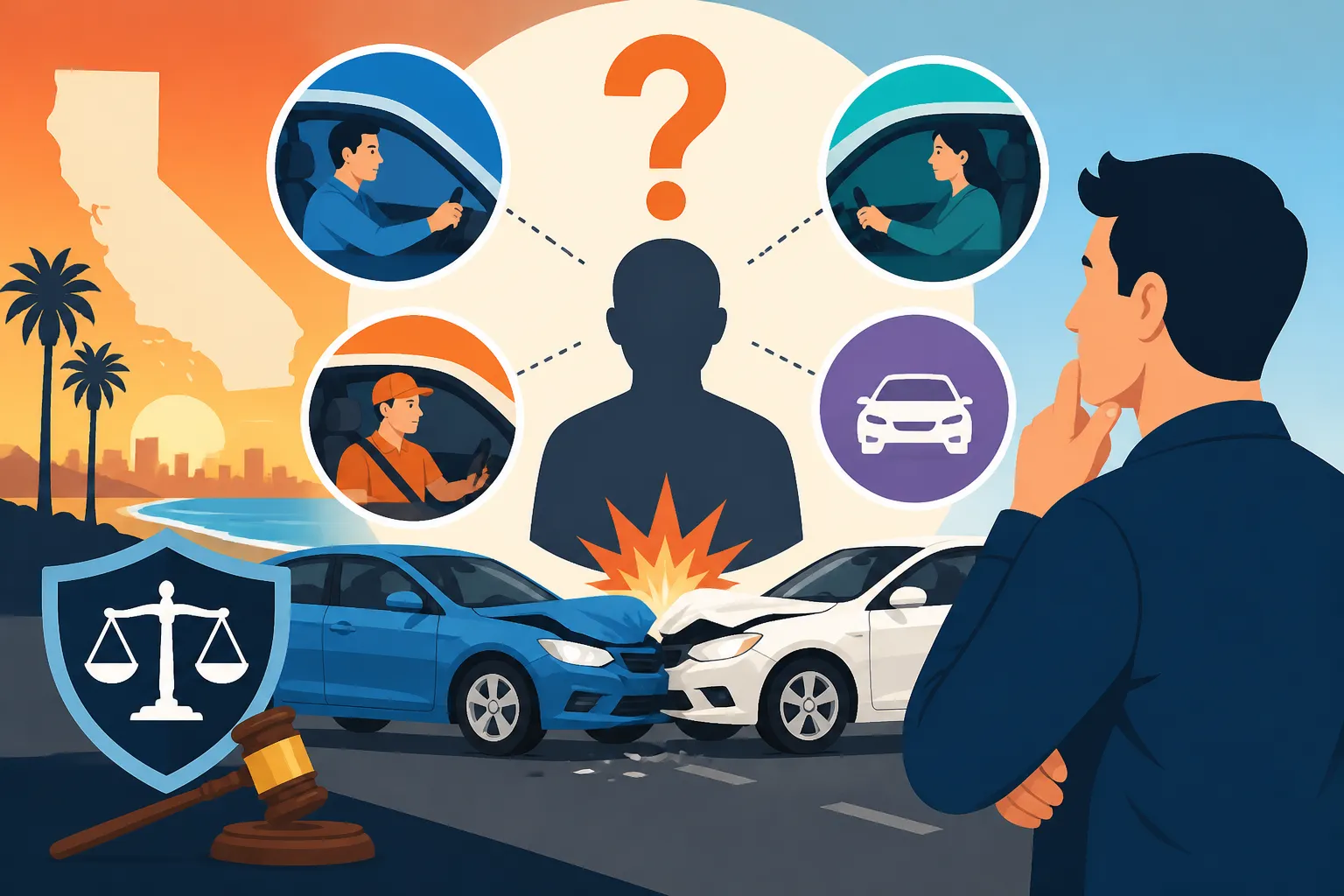
Identifying who the "players" are is paramount, as each has different responsibilities and insurance implications:
- The Rideshare Driver: This is the individual operating their personal vehicle for commercial purposes. Their personal insurance often has clauses that exclude commercial activity, which is why rideshare companies provide supplemental coverage.
- The Rideshare Passenger: As a paying customer, passengers are generally considered victims in an accident unless their own actions contributed to the crash in some unusual way (e.g., intentionally distracting the driver).
- The "Other" Driver: This refers to any driver not associated with the rideshare service who might be involved in the collision. They could be entirely at fault, partially at fault, or even a victim themselves.
- The Rideshare Company (Uber or Lyft): These companies have significant insurance policies designed to cover accidents when their drivers are actively providing services. Understanding how these insurance companies determine who is at fault is critical.
- Pedestrians, Cyclists, or Other Third Parties: Sometimes, accidents involve people outside of vehicles. Their claims will also fall under the liability of the at-fault driver(s) and relevant insurance policies.
The unique combination of these parties and their potential liabilities makes rideshare accident claims far more intricate than your average fender bender.
California's Unique Rideshare Insurance Laws
The most significant differentiator in rideshare accident claims in California, and really across the country, lies in how insurance coverage activates. It's not a simple case of one policy fitting all scenarios. California specifically delineates different "periods" of a rideshare driver's day, each with its own set of insurance requirements and coverage limits.
The Crucial "Periods" of a Rideshare Driver's Day
To truly understand who is at fault and whose insurance will respond, you need to know what the rideshare driver was doing at the exact moment of the crash. State law categorizes this into three distinct periods:
-
Period 0: App Off
- What it means: The rideshare driver's app is completely off, or they are logged out. They are simply driving their personal vehicle for personal reasons, perhaps heading to the grocery store or visiting a friend.
- Insurance coverage: In this scenario, the rideshare company's insurance provides absolutely no coverage. Any accident that occurs would fall solely under the driver's personal car insurance policy, just like any other private vehicle owner. If the driver is at fault, their personal liability coverage would kick in to cover damages to others. If another driver hits them, that other driver's insurance would be primary.
- Example: A Lyft driver is driving home after finishing their last ride, with the app completely shut down. They get into a collision at an intersection. This incident would be treated like any other personal car accident, with their private auto insurance handling the claim.
-
Period 1: App On, Waiting for a Ride Request
- What it means: The rideshare driver has the app on and is actively waiting for a ride request. They haven't accepted a passenger yet, but they are available to do so.
- Insurance coverage: This is where things get interesting. The driver's personal insurance might deny coverage, arguing that the driver was engaged in commercial activity, which is often excluded from personal policies. This "gap" is where the rideshare company's contingent liability coverage steps in. During Period 1, both Uber and Lyft typically provide:
- $50,000 in bodily injury liability per person
- $100,000 in bodily injury liability per accident
- $25,000 in property damage liability per accident
- This coverage acts as secondary to the driver's personal insurance, meaning it only kicks in if the personal policy denies the claim or if its limits are exhausted. If the rideshare driver is at fault during this period, these limits apply to claims made by others.
- Example: An Uber driver is logged into the app, cruising around downtown San Diego, hoping to pick up a fare. While waiting for a request, they accidentally rear-end another vehicle. Their personal insurance may deny the claim due to commercial use, in which case Uber's Period 1 coverage would activate.
-
Period 2 & 3: App On, Accepted Trip & On Trip
- What it means: This covers two scenarios: when the driver has accepted a ride request and is en route to pick up the passenger (Period 2), and when the driver has picked up the passenger and the trip is underway (Period 3).
- Insurance coverage: This is where the most substantial coverage comes into play. Both Uber and Lyft provide a robust commercial insurance policy that is generally primary during these periods. This includes:
- $1,000,000 in third-party liability coverage. This covers bodily injury and property damage to others (including passengers in the rideshare vehicle) if the rideshare driver is at fault.
- Uninsured/Underinsured Motorist (UM/UIM) coverage: This protects the rideshare driver and passengers if the at-fault driver (who is not the rideshare driver) has insufficient or no insurance.
- Contingent comprehensive and collision coverage: This covers damage to the rideshare driver's vehicle, provided they have personal comprehensive and collision coverage on their own policy. There's typically a deductible (e.g., $1,000 or $2,500).
- Example: An Uber driver has picked up a passenger in Los Angeles and is driving them to LAX. Another driver runs a red light and T-bones the Uber vehicle. Since the Uber driver was on an active trip, Uber's $1,000,000 liability coverage would be primary, covering the passenger's injuries, damage to the Uber vehicle, and potentially the Uber driver's injuries if UM/UIM applies. This robust coverage is often why victims wonder, "How much is my car accident settlement worth?" in these situations.
Who Covers What: Uber and Lyft's Policies in California
To make it even clearer, here's a quick breakdown of how Uber and Lyft's insurance policies typically operate in California based on these periods. Remember, these are general guidelines, and policy specifics can change, so always verify with the rideshare company directly.
| Rideshare Driver Status | Driver's Personal Insurance | Uber/Lyft Coverage (if driver at fault) |
|---|---|---|
| App Off (Period 0) | Primary | None |
| App On, Waiting (Period 1) | May deny coverage (secondary) | Contingent: $50K BI/person, $100K BI/accident, $25K PD/accident |
| Accepted Trip/On Trip (Periods 2 & 3) | May deny coverage (secondary) | Primary: $1,000,000 Third-Party Liability, UM/UIM, Contingent Comp/Collision |
This table clearly illustrates the massive difference in coverage depending on the driver's status, which directly impacts who is at fault in a car accident and who pays for the damages.
Determining Fault in Different Rideshare Scenarios
Given the complex insurance framework, determining fault in a rideshare accident requires a careful look at the specific circumstances of the crash, just like in any other car accident. However, the unique roles of the rideshare driver and company add layers to consider. This goes back to the fundamental question of How fault is determined in a car accident.
Rideshare Driver at Fault
When the rideshare driver causes the accident through their negligence, the situation largely depends on their "period" status:
- Driver Negligence (Distracted, Speeding, DUI): If the rideshare driver was speeding, distracted (perhaps looking at their app or texting), ran a red light, or was under the influence of alcohol or drugs, they are clearly at fault. If this happens while they are on an active trip (Period 2 or 3), the rideshare company's $1,000,000 liability policy would likely cover damages for anyone injured, including passengers, other drivers, or pedestrians. If the accident happened while the driver was waiting for a ride (Period 1), the lower $50k/$100k/$25k policy would apply.
- Driver Underinsured/Uninsured (App Off): If the driver caused an accident while their app was off (Period 0), their personal insurance is responsible. However, if their personal policy has low limits or if the driver is uninsured, the injured party might face challenges recovering full compensation. This is less common in California where minimum liability coverage is required, but it can still happen. In such cases, the injured party might need to rely on their own uninsured motorist coverage.
Other Driver at Fault
Often, the rideshare vehicle itself is merely a victim in a collision caused by another negligent driver.
- Scenario: Rideshare Vehicle Hit by Another Negligent Driver: Imagine a scenario where an Uber driver is properly stopped at a red light with a passenger, and another driver slams into the back of them. Clearly, the other driver is at fault here. In this case, the at-fault driver's personal insurance would be the primary payer for damages to the Uber driver, their vehicle, and the passenger.
- How Rideshare Insurance Acts as Secondary or Primary: If the at-fault driver's insurance is insufficient to cover all damages (they are underinsured), or if they flee the scene (a hit-and-run) and are unidentified, the rideshare company's Uninsured/Underinsured Motorist (UM/UIM) coverage would become incredibly important. As mentioned, during Periods 2 and 3, Uber and Lyft provide substantial UM/UIM coverage, which can protect both the rideshare driver and passengers. If the incident occurred during Period 1 or Period 0, the injured party might need to rely on their own personal UM/UIM coverage. This highlights the importance of thorough documentation and following the steps outlined in our guide on What to Do After a Car Accident: Step-by-Step (2027).
Passenger Injuries and Fault
Passengers in a rideshare accident are almost never found to be at fault. Their role is simply to be transported safely. If a passenger is injured, they would typically file a claim against the at-fault driver (whether it's the rideshare driver or another driver) and/or the rideshare company's insurance policy.
For instance, if you are a passenger in an Uber and the Uber driver causes a crash, you would likely be covered by Uber's $1,000,000 liability policy. If another driver causes the crash, you would first seek compensation from that driver's insurance. If that's insufficient, Uber's UM/UIM coverage could then come into play to cover your medical bills, lost wages, and pain and suffering. Understanding common car accident injuries is crucial for passengers to effectively pursue their claim.
Pedestrian or Cyclist Collisions
Rideshare accidents can also involve vulnerable road users like pedestrians or cyclists. If a rideshare driver (or the passenger of a rideshare vehicle) opens a door into a cyclist, or if a rideshare vehicle strikes a pedestrian in a crosswalk, the fault rules become particularly stringent. The same insurance periods apply:
- If the rideshare driver is at fault while on a trip (Periods 2/3), the $1,000,000 liability policy covers the pedestrian or cyclist's injuries and damages.
- If the app was off, the driver's personal insurance would apply.
- These cases often involve severe injuries and substantial medical costs, emphasizing the need for robust insurance coverage.
What to Do After a California Rideshare Accident
Being in any car accident is a jarring experience, but a rideshare accident can add layers of confusion and stress. Knowing what to do in the immediate aftermath can significantly impact your ability to determine fault and successfully navigate your claim.
Immediate Steps to Protect Yourself and Your Claim
No matter the scenario, certain steps are universally crucial after any car accident, and especially one involving a rideshare vehicle:
- Ensure Safety First: Your immediate priority should always be your own safety and the safety of others. Move to a safe location if possible, and check for injuries. If anyone is seriously hurt, call 911 immediately. Remember that delayed injury symptoms after a car accident are common, so even if you feel okay, medical attention is paramount.
- Call the Police: Always call the police, even for seemingly minor accidents. A police report can be invaluable in establishing who is at fault in a rideshare accident in California. It provides an official, unbiased record of the incident, including details like road conditions, witness statements, and initial fault determinations. This report, such as a California Highway Patrol (CHP) or local police report, can be a cornerstone of your claim. Keep in mind that Police Reports and Car Accident Fault are powerful tools.
- Exchange Information: Get the name, contact information, and insurance details from the rideshare driver and any other drivers involved. If you were a passenger, ask the rideshare driver for their name, the rideshare company they were driving for, and their driver ID if possible. Also, collect contact information from any witnesses.
- Document the Scene Thoroughly: Use your phone to take as many photos and videos as possible. Capture vehicle damage, the position of the cars, road conditions, traffic signs, skid marks, and any visible injuries. This evidence is vital for proving the other driver was at fault.
- Seek Medical Attention: Even if you feel fine, see a doctor as soon as possible. Some injuries, like whiplash or a concussion, may not manifest immediately. Medical records are critical for substantiating your injury claim and linking it directly to the accident.
Notifying Insurance and Rideshare Companies
This is a critical juncture where the specifics of a rideshare accident truly come into play.
- Notify the Rideshare Company: If you were a passenger, contact Uber or Lyft through their app immediately to report the accident. They will need to know which driver, vehicle, and trip was involved. If you were the rideshare driver, you must report the accident through your driver app as soon as it's safe to do so. This notification is essential for activating their commercial insurance policy.
- Contact Your Own Insurance Company (If Applicable): If you were another driver involved, or if you were the rideshare driver with your app off, you'll need to contact your personal auto insurance provider. Even if you were a passenger, it's wise to inform your own health insurance provider about the accident for any medical bills, and your auto insurance about the incident if you have medical payments (MedPay) or personal injury protection (PIP) coverage, which can help cover immediate medical costs regardless of fault.
- Avoid Admitting Fault: Do not apologize or admit fault at the scene, even if you feel partially responsible. Let the facts and official investigations determine fault. What Is an Admission of Fault (and How to Avoid It)? is a key resource for understanding why this is so important. Remember, any statements you make could be used against you by insurance adjusters trying to minimize their payout.
Navigating Your Claim: Key Considerations
Once the immediate aftermath is handled, the real work of navigating your car accident claim begins. Rideshare accidents often involve complexities that typical collisions do not, particularly when it comes to insurance and legal frameworks.
Dealing with Multiple Insurance Companies
One of the most frustrating aspects of a rideshare accident claim is the potential involvement of multiple insurance carriers. You could be dealing with:
- The Rideshare Company's Commercial Policy (e.g., Uber or Lyft): This is often the primary source of compensation if the rideshare driver was at fault while on duty (Periods 1, 2, or 3).
- The Rideshare Driver's Personal Auto Insurance: This might be relevant if the app was off (Period 0) or if the personal policy has certain endorsements that provide some coverage for rideshare activity, though this is rare.
- The At-Fault Driver's Personal Auto Insurance (if not the rideshare driver): If another vehicle caused the crash, their insurance would be the initial point of contact for claims.
- Your Own Personal Auto Insurance: Your policy might have MedPay, PIP, or UM/UIM coverage that can help you, regardless of who was at fault.
- Your Health Insurance: For medical bills, your health insurance will likely pay initially, then seek reimbursement from the at-fault party's insurance (a process known as subrogation).
Coordinating between these entities can be a nightmare. Each company will naturally try to shift responsibility to another, making it difficult to figure out how to file a car accident insurance claim effectively. This is where a knowledgeable advocate becomes crucial.
The Impact of Comparative Negligence in California
As mentioned earlier, California follows a system of "pure comparative negligence." This legal doctrine means that even if you are found to be partially responsible for the accident, you can still recover damages, but your compensation will be reduced by your percentage of fault.
For example:
- If you are a passenger in a rideshare and the rideshare driver is 70% at fault, and another driver is 30% at fault, you can seek damages from both, with their respective insurance companies responsible for their share.
- If you were another driver involved in a collision with a rideshare vehicle and you were found 15% at fault for, say, slightly exceeding the speed limit, but the rideshare driver was 85% at fault for making an unsafe lane change, your total damages would be reduced by 15%. This means you still have a valid claim, but you won't recover 100% of your losses.
This system can become especially complicated when you factor in the different insurance policies active for rideshare drivers. Determining what happens if you're partially at fault requires careful analysis of all available evidence and often necessitates legal expertise. If you're wondering, Do you need a lawyer for a car accident? in a rideshare scenario, the answer is often a resounding yes. Their experience can be invaluable in navigating these complex fault determinations and ensuring you receive fair compensation.
Disclaimer
Please remember that this guide provides general information and should not be considered legal advice. Every car accident case is unique, and the laws and insurance policies can be complex and subject to change. For personalized advice regarding your specific situation, it is always recommended to consult with a qualified legal professional in California.