Who Is at Fault in a Uninsured Driver Accident in Texas?
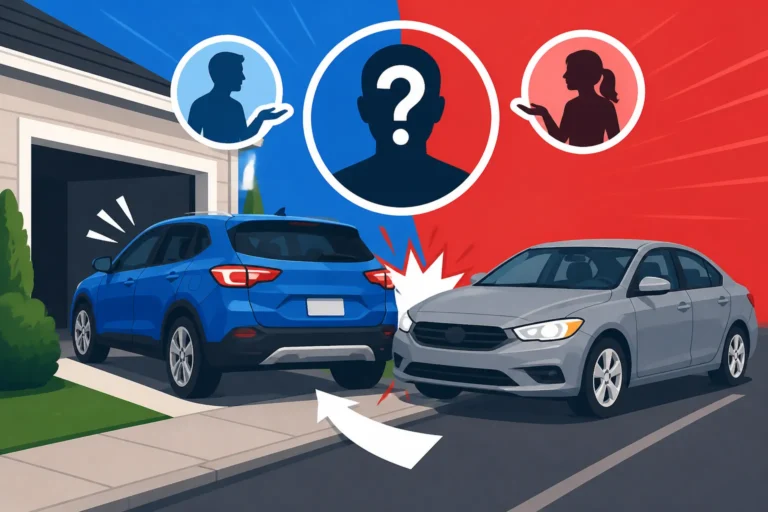
Getting into a car accident is already stressful enough, but discovering the other driver doesn't have insurance can turn a frustrating situation into an absolute nightmare, especially here in Texas. You're left wondering not only who is actually at fault, but also how on earth you're going to cover the damages and medical bills. This guide is here to walk you through the specifics of fault determination in an uninsured driver accident in Texas, explaining your rights and the practical steps you can take to navigate this challenging scenario.
Understanding Fault in Texas Car Accidents
Texas operates under an "at-fault" insurance system, which means that the person who causes an accident is legally responsible for the damages and injuries of everyone involved. This principle forms the cornerstone of any car accident claim here in the Lone Star State, regardless of whether the other party is insured. However, when an uninsured driver is involved, things get a lot more complicated very quickly.
Texas is an "At-Fault" State
In an "at-fault" state like Texas, the burden falls on the at-fault driver to pay for the other party's damages. This payment typically comes from their liability insurance. When you're involved in a crash, your first thought is often about proving that the other person was negligent or careless, because that's what makes them liable. For instance, if someone blows through a red light at an intersection in Dallas and T-bones your vehicle, their clear disregard for traffic laws makes them at fault, and their insurance should step in to cover your losses. This is a fundamental concept that dictates how much compensation you can receive.
However, it's not always black and white. Sometimes, multiple parties can share some degree of responsibility. Texas uses a system called "modified comparative negligence" with a 51% bar. This means that if you are found to be 51% or more at fault for the accident, you cannot recover any damages from the other driver. If you are found to be less than 51% at fault, your compensation will be reduced by your percentage of fault. So, if your damages total $10,000, but you're found 20% at fault for contributing to the crash, you would only be able to recover $8,000. Understanding What Happens If You're Partially at Fault? is crucial, as this percentage directly impacts your potential settlement.
How Fault Is Determined
Determining fault is rarely as simple as one driver pointing the finger at another. Insurance companies, law enforcement, and potentially attorneys will meticulously examine a variety of evidence to piece together what happened. They're looking for concrete proof of negligence. This can include anything from the positions of the vehicles after impact, to skid marks on the pavement, to traffic camera footage.
Police reports are a primary source of information, often detailing officer observations, witness statements, and initial conclusions about the cause of the accident. While not always the final word, a police report can heavily influence how insurance companies view the incident. Witness testimonies, especially from impartial third parties, can also be incredibly valuable in corroborating your account of events. Beyond that, photographic evidence of vehicle damage, road conditions, and the accident scene itself provides tangible proof. All these elements help construct a clear picture of How Fault Is Determined in a Car Accident.
The Complication of an Uninsured Driver in Texas
The presence of an uninsured driver drastically changes the landscape of a car accident claim in Texas. While the at-fault rules still apply, the mechanism for recovery becomes significantly more challenging, often leaving the innocent party in a difficult financial bind.
Why Uninsured Drivers Are a Problem
The most immediate and obvious problem with an uninsured driver is financial. If the at-fault driver doesn't have liability insurance, there's no insurance company to step in and pay for your vehicle repairs, medical bills, lost wages, or pain and suffering. This leaves you, the victim, with the unenviable task of trying to recover damages directly from a person who likely doesn't have significant assets to cover your losses. It's a frustrating reality for many accident victims in Texas, as it means even if fault is crystal clear, getting compensated can be an uphill battle.
Imagine you're hit by a driver in Houston who admits fault and causes $15,000 in damage to your car and $5,000 in medical bills. If they don't have insurance, pursuing them personally for $20,000 can mean years of legal battles with no guarantee of recovery, especially if they have limited income or no assets. This scenario highlights the profound financial risk uninsured drivers pose, turning what should be a straightforward insurance claim into a complex personal pursuit. It's truly a situation where you feel like you've done everything right, but you're still left holding the bag.
Legal Requirements for Insurance in Texas
Despite the issues with uninsured drivers, Texas law does mandate minimum liability insurance coverage for all drivers. The minimum liability coverage required is often referred to as "30/60/25," which breaks down as follows:
- $30,000 for bodily injury per person: This covers medical expenses, lost wages, and pain and suffering for one injured person in an accident.
- $60,000 for total bodily injury per accident: This is the maximum amount an insurance company will pay for all injured parties in a single accident.
- $25,000 for property damage per accident: This covers damages to the other driver's vehicle or property.
These minimums are in place to ensure that when an at-fault driver causes an accident, there's at least a basic level of financial protection for the victims. Unfortunately, many drivers either fail to carry any insurance or let their policies lapse, leading to the nightmare scenario of an uninsured motorist accident. According to recent data, a significant percentage of drivers on Texas roads may be uninsured, making this a very real concern for everyone.
Proving Fault Against an Uninsured Driver
Even with an uninsured driver, establishing fault remains paramount. Without proof that they were responsible for the crash, you won't have a basis for any claim, regardless of their insurance status. This means your actions immediately after the accident are more critical than ever.
Gathering Evidence at the Scene
When an accident happens, especially with an uninsured driver, your immediate actions at the scene are absolutely crucial for your potential claim. First and foremost, check for injuries and call 911 if anyone is hurt. Then, assuming it's safe to do so, document everything. Take comprehensive photos and videos of the accident scene, including all vehicles involved from multiple angles, road conditions, traffic signs, and any visible injuries. Exchange information with the other driver, making sure to get their name, contact details, driver's license number, and vehicle information. Even if they claim they don't have insurance, get whatever information they are willing to provide.
This collection of data forms the bedrock of your case, helping to establish liability. Don't rely solely on memory; the shock of an accident can make details fuzzy later. The more detailed your documentation, the stronger your position will be when you need to prove How to Prove the Other Driver Was at Fault. Remember to never admit fault or make assumptions about the cause of the accident, even if you feel shaken or overwhelmed.
The Role of Police Reports and Witnesses
A police report is an official record of the accident, created by a law enforcement officer, and it often includes their assessment of fault, diagrams of the scene, and statements from drivers and witnesses. While not legally binding proof of fault in court, it carries significant weight with insurance companies and can be instrumental in demonstrating who was responsible. Make sure the police are called to the scene, even for seemingly minor accidents, especially if there's any dispute about fault or an uninsured driver. The officer's objective view can provide invaluable third-party validation.
Similarly, independent witnesses can significantly bolster your case. Their unbiased accounts can confirm your version of events and refute any false claims made by the uninsured driver. If there are any bystanders who saw the accident unfold, ask for their contact information immediately. A simple phone number or email address can become a pivotal piece of evidence later on. For instance, if you were involved in a Rear-End Collision Fault: Who Is Responsible? in downtown San Antonio and the other driver claims you stopped short, a witness who saw them texting could be crucial.
What If the Uninsured Driver Blames You?
It's an unfortunate but common tactic: the at-fault uninsured driver tries to shift the blame onto you. This can feel incredibly unfair and confusing, especially when you know you weren't responsible. When this happens, it becomes even more vital to have collected strong evidence. Your detailed photos, any witness statements, and the police report become your strongest allies. If the uninsured driver accuses you of negligence, don't argue with them at the scene. Simply stick to the facts when talking to the police and let the evidence speak for itself.
This is often where your own insurance company, specifically your uninsured motorist (UIM) coverage, becomes your primary defense and source of recovery. They will investigate the accident just as they would any other claim. If the uninsured driver continues to blame you, your insurer will use the evidence you provided to defend their insured (you) and establish the uninsured driver's fault. This scenario truly underscores why understanding your options for recovery, which we'll discuss next, is so critical.
Your Options for Recovery After an Uninsured Driver Accident
When the at-fault driver has no insurance, the traditional path of filing a third-party claim against their insurer is closed. This means you need to explore other avenues to recover your damages.
Utilizing Your Uninsured Motorist UIM Coverage
This is, hands down, your most reliable option if you're hit by an uninsured driver in Texas. Uninsured/Underinsured Motorist (UM/UIM) coverage is designed specifically for this nightmare scenario. In Texas, insurance companies are required to offer UM/UIM coverage, though you can reject it in writing. This coverage acts like the at-fault driver's missing liability insurance, paying for your medical bills, lost wages, and vehicle damage, up to your policy limits.
Think of it as your own safety net. If you have $100,000 in UIM bodily injury coverage and $50,000 in UIM property damage coverage, your insurance company steps in to cover what the uninsured driver cannot. This means you would file a claim directly with your own insurance provider, much like a first-party claim. They will then pursue the uninsured driver to try and recoup their losses, a process called subrogation. This coverage can make a world of difference between a smooth recovery process and a prolonged financial struggle. It's a critical reason why you should always consider opting for this coverage, even if it adds a little extra to your premium. Knowing What to Do If the Other Driver Has No Insurance can save you a lot of heartache.
Pursuing the At-Fault Uninsured Driver Directly
While using your own UIM coverage is often the most practical route, you do have the legal right to pursue the uninsured at-fault driver directly for damages. This typically involves filing a personal injury lawsuit against them in civil court. If successful, you could obtain a judgment ordering them to pay you for your losses. However, the biggest challenge here is collecting on that judgment.
Many uninsured drivers lack significant assets or disposable income. Even with a court judgment in your favor, you might find it incredibly difficult, if not impossible, to actually get paid. You might be able to garnish wages, seize bank accounts, or place liens on property, but these are often complex and time-consuming processes that yield little return. For example, trying to garnish wages from someone who works odd jobs or is unemployed will likely be fruitless. This path is often considered a last resort or pursued in conjunction with your UIM claim, especially if your damages far exceed your UIM policy limits.
When to Consult an Attorney
Navigating an uninsured driver accident claim, particularly in an "at-fault" state like Texas, is complex. This is precisely why it's often wise to consult with an experienced car accident attorney. An attorney can help you understand your rights, properly evaluate your damages, and deal with your own insurance company, ensuring you get the full benefits of your UIM policy. Insurance companies, even your own, are businesses, and their primary goal is to pay out as little as possible. An attorney acts as your advocate, protecting your interests.
They can also investigate the accident further, gather additional evidence, and negotiate on your behalf. If your damages exceed your UIM coverage, they can advise you on the feasibility of pursuing the uninsured driver directly and handle the litigation process if necessary. Given the intricacies of fault, evidence, and coverage, deciding Do You Need a Lawyer for a Car Accident? becomes an even more resounding "yes" when an uninsured driver is involved. They can help you understand the full value of your claim, including aspects like future medical expenses or diminished earning capacity, which you might overlook on your own.
Here's a quick comparison of your main options for recovery:
| Feature | Uninsured Motorist (UM/UIM) Coverage | Direct Lawsuit Against At-Fault Driver |
|---|---|---|
| Source of Funds | Your own insurance company | At-fault driver's personal assets |
| Ease of Recovery | Generally faster and more reliable | Often challenging and prolonged |
| Requires At-Fault Proof | Yes, still need to prove their fault | Yes, absolutely |
| Max Recovery | Limited by your policy limits | Theoretically unlimited (but practical collection issues) |
| Legal Fees | Potentially none (unless disputed) | Often contingency-based (percentage of recovery) |
| Timeframe | Weeks to months | Months to years |
| Common Use Case | Most common and recommended approach | When UM/UIM limits are exceeded, or for deterrence |
The path after an accident with an uninsured driver in Texas can feel overwhelming, but by understanding fault, diligently gathering evidence, and leveraging your insurance coverage and legal support, you can significantly improve your chances of a fair recovery. Remember that filing a claim with your own insurance is a crucial step, and understanding How to File a Car Accident Insurance Claim will be very beneficial. Your priority should be your health and well-being, but taking these practical steps can protect your financial future as well.
Disclaimer
Please remember that this information is for educational purposes only and does not constitute legal advice. Every car accident case is unique, and the outcome depends on specific facts and applicable laws. If you've been in an accident with an uninsured driver in Texas, it is strongly recommended that you consult with a qualified personal injury attorney to discuss your specific situation and understand your legal options.