Who Is at Fault in a Single-Car Accident in Texas?
It’s easy to feel overwhelmed and totally alone after a single-car accident. You might immediately assume that because no other vehicle was involved, the blame falls entirely on your shoulders. This common misconception often leaves drivers feeling helpless and unsure of how to proceed, especially when dealing with the aftermath in a state like Texas. This comprehensive guide will walk you through the complexities of determining fault in single-car accidents, showing you that the picture isn't always as simple as it seems.
Understanding What a Single-Car Accident Really Is
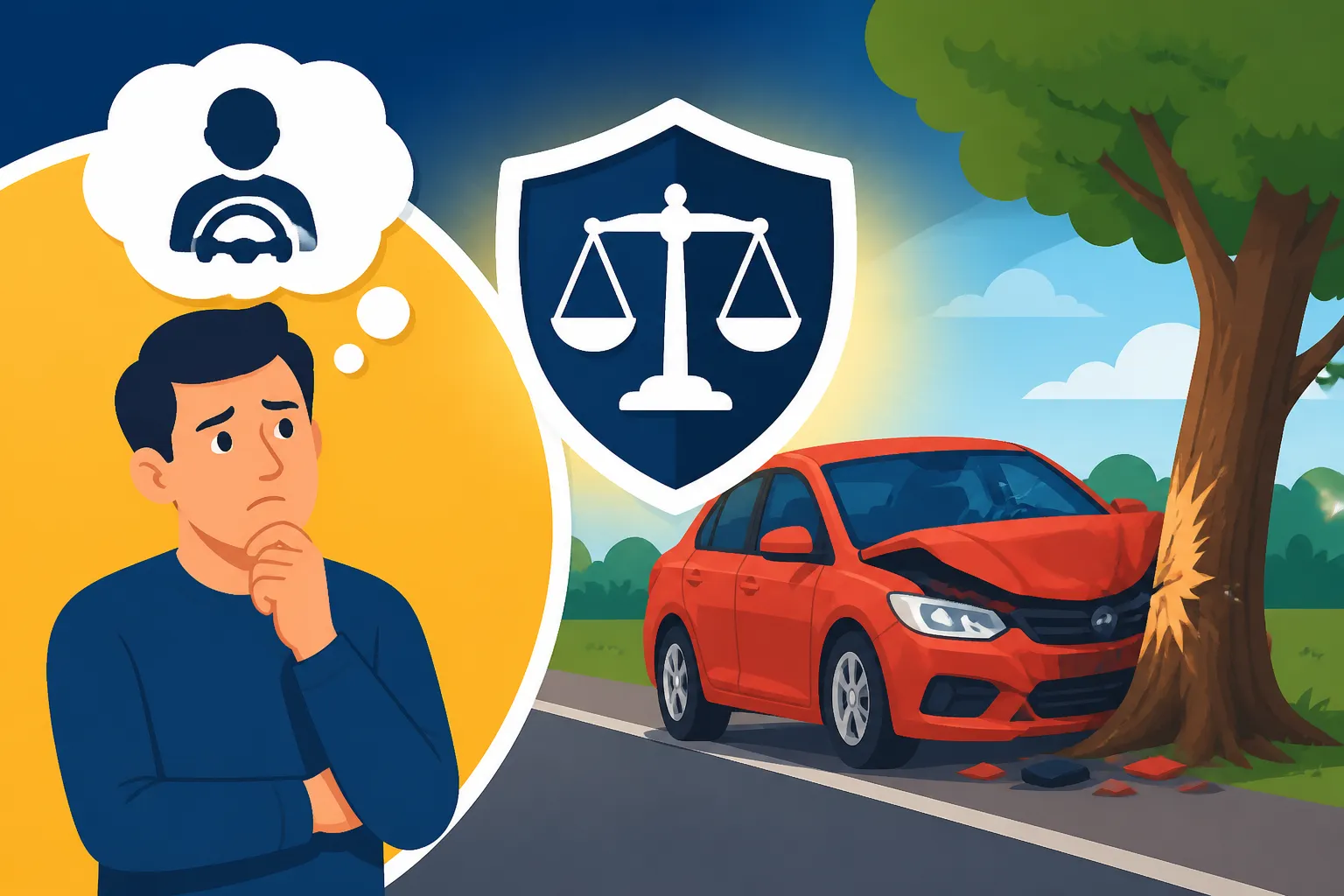
When we talk about a "single-car accident," it generally refers to any incident where only one vehicle is directly involved in the crash itself. This doesn't mean no other parties or factors were involved in causing the accident, but rather that the physical impact was solely between your vehicle and something else – a tree, a guardrail, a ditch, a pole, or even a patch of ice on the road. It’s a pretty broad category, encompassing everything from running off the road due to distraction to swerving to avoid an animal, or even hitting a large pothole that causes you to lose control.
Common Scenarios for Single-Vehicle Crashes
These types of accidents happen more frequently than you might think, and the circumstances vary widely. Picture this: you're driving down a rural Texas road, maybe near Marble Falls, and suddenly a deer bolts out from the brush. Your instinct is to swerve, and you end up in a ditch. Or perhaps you're on a busy highway in Houston, and the car in front of you slams on its brakes, causing you to swerve into the median to avoid a rear-end collision, hitting a barrier. These are classic examples.
Another common scenario involves environmental factors. Imagine driving through a sudden downpour on I-35 in Dallas, and your tires hydroplane, sending you into a spin and off the road. Or perhaps a mechanical failure occurs – a tire blows out unexpectedly, or your brakes fail without warning. In all these cases, only your car has directly collided with an inanimate object or the environment, but the cause might extend far beyond just your actions.
The Immediate Aftermath and Stress
The moments right after a single-car accident are often filled with a mix of shock, confusion, and sometimes even embarrassment. It's natural to feel a rush of guilt, thinking, "This is all my fault." You might be injured, your car damaged, and the thought of dealing with insurance companies and potential costs can be incredibly daunting. Many people simply accept blame without fully understanding that other factors, or even other parties, could have contributed significantly to what happened. It's crucial to resist the urge to immediately admit fault, as this can severely impact any potential claim you might have. You can learn more about this in our guide on What Is an Admission of Fault (and How to Avoid It)?.
Why Initial Assumptions About Fault Can Be Misleading
It's almost human nature to point the finger at the driver in a single-car accident. After all, if no other car touched yours, who else could be responsible? This line of thinking is not only simplistic but can lead you to accept unfair blame and miss out on compensation you might be entitled to. Texas operates under an "at-fault" insurance system, meaning the person who caused the accident is generally responsible for the damages. However, determining who is at fault in a car accident isn't always straightforward, especially in these situations.
The "Obvious" Driver Blame
Insurance adjusters, and even law enforcement, might initially lean towards blaming the driver in a single-car incident. It's the path of least resistance. They see a vehicle that veered off the road or hit an object, and the immediate conclusion is that the driver was either distracted, speeding, drowsy, or otherwise negligent. This presumption can be incredibly frustrating, especially when you know there was a perfectly valid reason for losing control, a reason that wasn't entirely your doing. This is where understanding your rights and the potential for other contributing factors becomes absolutely vital.
The Role of Independent Investigation
What's often overlooked is that the "obvious" blame might not hold up under closer scrutiny. A thorough investigation can uncover details that completely change the narrative. For instance, if you swerved to avoid hitting a large piece of debris on Loop 1604 in San Antonio, and that debris was negligently left there by a construction crew or fell from another vehicle, your fault might be mitigated or even eliminated. Similarly, if you were forced off the road by another driver who then fled the scene – a phantom vehicle – you might initially be blamed, but evidence could prove otherwise. This is why it’s so important to gather as much information as you can at the scene, as detailed in our guide What to Do After a Car Accident: Step-by-Step (2027).
It's a tough pill to swallow when you're already shaken up and dealing with vehicle damage or injuries. But remember, the initial assessment isn't always the final word, and you shouldn't feel pressured to take all the blame if you genuinely believe other factors were at play.
Unpacking Potential Causes Beyond Driver Error in Texas
While it might seem counterintuitive, you are not always solely responsible for a single-car accident, even in Texas. There are several contributing factors and even third parties whose negligence could have played a significant role in causing your crash. Understanding these can be crucial for your car accident claim.
Hazardous Road Conditions
Poorly maintained roads, unexpected hazards, or faulty road design can all contribute to single-car accidents.
Negligent Road Maintenance
Imagine you're driving on a state highway near Big Bend National Park, and you hit an enormous pothole that wasn't properly marked or repaired. The impact causes you to lose control and crash into a culvert. While you were the driver, the cause of you losing control was the negligent maintenance of the road by a city, county, or state entity (like the Texas Department of Transportation, TxDOT). Unmarked construction zones, sudden drops in pavement, or even inadequate drainage leading to standing water in unexpected places can all fall under this category. Proving this requires documenting the road conditions, possibly taking photos, and understanding governmental liability, which often has specific notice requirements.
Unforeseen Road Obstacles or Debris
Sometimes, the road itself is fine, but there's an unexpected hazard. This could be anything from a fallen tree limb to construction materials left in the road, or even large debris that fell off another vehicle. If you're forced to swerve violently to avoid such an obstacle, and you crash, the fault might lie with the party responsible for the obstacle. For example, if a commercial truck lost part of its load on I-10 in El Paso, and you hit it or swerved to avoid it, causing your accident, the trucking company could be held liable. This is a complex area, as proving where the debris came from can be challenging, but not impossible.
Vehicle Malfunctions and Defects
Another significant area where fault can shift away from the driver is when a mechanical failure or vehicle defect causes the accident.
Manufacturer Defects
Modern cars are complex machines, and sometimes, despite regular maintenance, a part can fail due to a manufacturing defect. This could be a faulty braking system, a steering component that gives out, a defective tire that blows out prematurely, or even an accelerator pedal that sticks. If an independent mechanic's inspection reveals that a defect in your vehicle, unknown to you, was the direct cause of your accident, the vehicle manufacturer or the manufacturer of the faulty part could be held responsible. These cases can be challenging and often require expert testimony and detailed forensic analysis.
Improper Maintenance or Repairs
Sometimes, the fault lies with a mechanic or service center that performed negligent maintenance or repairs on your vehicle. If you recently had your brakes serviced at a shop in Austin, and they failed catastrophically shortly after due to improper installation, leading to your single-car crash, the repair shop could be liable. Documenting your vehicle's service history and any recent work done is critical in such a scenario.
Negligence of Other Drivers or Parties
Even in a "single-car" accident, another driver's actions can be the root cause, even if they never made physical contact with your vehicle.
Phantom Vehicles
This is a common and incredibly frustrating scenario. A "phantom vehicle" is one whose driver causes an accident but leaves the scene without stopping or providing information. For example, if another driver merges into your lane on Highway 290 near Houston without looking, forcing you to swerve into a barrier to avoid a collision, but they simply drive away, that's a phantom vehicle incident. Proving the existence and negligence of a phantom vehicle can be difficult, but witness statements, dashcam footage, or even debris from their vehicle can help. Your uninsured motorist coverage might kick in here.
Distracted or Impaired Drivers Who Don't Make Contact
Imagine a driver in front of you on a residential street in Plano suddenly slams on their brakes because they were texting, not paying attention to traffic. To avoid a rear-end collision, you swerve sharply and hit a mailbox or a tree. Even if you didn't touch their car, their distracted driving was the proximate cause of your accident. Similarly, an impaired driver swerving into your lane and forcing you off the road could be held liable, even if there's no contact. For more on this, see What Is Proximate Cause in a Car Accident Claim?.
Environmental Factors and Acts of God
While sometimes unavoidable, even environmental factors can have layers of responsibility.
Unforeseen Weather Conditions
While drivers are expected to adjust to weather conditions like heavy rain, ice, or fog, there are instances where these conditions are so sudden, severe, or localized that they could be considered an "Act of God" or at least a significant mitigating factor for the driver. For example, if a sudden, intense microburst of rain hits a dry patch of road in Fort Worth, creating instant hydroplaning conditions that are impossible to react to, it's different from simply speeding in a drizzle. However, drivers generally have a high burden to prove they were operating their vehicle safely and reasonably for the conditions. Our guide on Who Is at Fault in Bad Weather (Rain, Snow, Ice)? has more details.
Unforeseeable Natural Disasters
In extremely rare cases, an event like an earthquake, tornado, or flash flood might directly cause a loss of control. These are generally considered Acts of God, meaning no human party is at fault. Your comprehensive insurance coverage would typically handle the damages to your vehicle in such a scenario, but establishing liability for injuries is much harder.
Navigating Your Claim After a Single-Car Accident
Dealing with the aftermath of a single-car accident in Texas, especially when you believe another party might be at fault, requires careful steps and a solid understanding of how insurance claims work.
Gathering Evidence at the Scene
The moments immediately following the accident are crucial. Even if you're the only driver involved, act as if another party might be responsible.
- Document Everything: Take extensive photos and videos of the accident scene. This includes your vehicle's damage, the environment around your vehicle (road conditions, skid marks, debris, potholes, lack of signage, lighting issues), and any objects you collided with. If another vehicle forced you off the road, look for any identifying features or witness accounts.
- Witness Information: If anyone saw what happened, get their contact details. Their testimony about a phantom vehicle, road debris, or sudden lane changes by another driver can be invaluable.
- Police Report: Always call the police, even if it seems minor. A police report documents the circumstances, damages, and sometimes even initial observations about potential contributing factors. While a police report doesn't definitively determine who pays, it's a vital piece of evidence for your claim. You can read more about Police Reports and Car Accident Fault.
Understanding Texas's Comparative Fault Rules
Texas is a "modified comparative negligence" state with a 51% bar. This means that if you are found to be 51% or more at fault for the accident, you cannot recover any damages from other parties. If you are found to be 50% or less at fault, you can recover damages, but your compensation will be reduced by your percentage of fault. For example, if your total damages are $10,000, and you are found 20% at fault because you were slightly speeding, you would only receive $8,000. This is an important consideration when evaluating claims where there might be shared responsibility. Our guide on Modified Comparative Negligence (50% vs 51% Bar) explains this in more detail.
This system highlights why it's so important to explore all avenues of fault in a single-car accident. Even if you have some degree of responsibility (e.g., perhaps you could have reacted more quickly), if a defective tire or a negligently maintained road contributed more significantly, you might still be able to recover a portion of your losses.
Dealing with Insurance Companies and Adjusters
When you report a single-car accident to your insurance company, they will open a claim. If you believe another party is at fault, you'll be making a third-party claim against their insurance, or potentially a claim under your own policy's collision or uninsured motorist coverage if it's a phantom driver.
Initial Contact and Investigation
Insurance adjusters will investigate the scene, often relying on the police report and their own assessment. They might try to get you to give a recorded statement. It's generally advisable to consult with a lawyer before providing a recorded statement, as anything you say can be used against you. Remember, their job is to protect their company's bottom line. For more insight into this, refer to Dealing With Insurance Adjusters After a Car Accident.
Proving the Other Party's Fault
This is where your meticulous evidence gathering comes into play. If you're asserting that TxDOT was negligent for a pothole, or a manufacturer for a defective part, you will need strong evidence. This might include:
- Photos and Videos: As mentioned, showing the exact conditions.
- Witness Statements: Credible accounts can corroborate your version of events.
- Expert Testimony: In cases of vehicle defects or complex road design issues, engineers or accident reconstruction specialists might be necessary.
- Maintenance Records: To show regular vehicle upkeep, or to point to negligent repairs.
- Medical Records: Crucial for demonstrating the extent of your injuries and their direct link to the accident.
| Scenario | Potential At-Fault Party | Evidence Needed | Texas Fault System Impact |
|---|---|---|---|
| Pothole/Road Hazard | City/County/State (TxDOT) | Photos/videos of hazard, proof of prior complaints (if any), expert analysis of road condition, police report. | Driver's recovery reduced by their % of fault (e.g., if driver was speeding). If >50% at fault, no recovery. |
| Vehicle Defect | Vehicle Manufacturer/Part Manufacturer | Independent mechanic's report, expert testimony on defect, recall notices (if applicable), vehicle maintenance history. | If defect is sole cause, driver 0% at fault. If driver contributed, comparative negligence applies. |
| Phantom Vehicle | Unidentified Other Driver | Witness statements, dashcam footage, debris from other vehicle (if found), police report, details of evasive maneuver. | Covered by Uninsured Motorist (UM) insurance. Driver's fault assessment for reaction. |
| Negligent Repair | Auto Repair Shop | Repair invoices, mechanic's report detailing improper work, expert testimony, vehicle inspection. | If repair is sole cause, driver 0% at fault. If driver contributed, comparative negligence applies. |
| Debris from Other Vehicle | Driver/Company of Vehicle Dropping Debris | Witness statements, dashcam footage, police report, specific details about the debris and its origin (e.g., commercial truck company). | Driver's fault assessment for reaction. |
The Importance of Legal Counsel
Given the complexities involved in proving fault in a single-car accident, especially against governmental entities or large corporations, hiring an attorney can be incredibly beneficial. An experienced Texas car accident lawyer understands the state's comparative fault laws and knows how to investigate these nuanced cases, gather the necessary evidence, and negotiate with insurance companies. They can help you prove How to Prove the Other Driver Was at Fault and ensure your rights are protected. Without legal representation, you might find yourself accepting an unfair settlement or having your claim denied outright. For advice on when to seek legal help, consider reading Do You Need a Lawyer for a Car Accident? (2026).
Disclaimer
Please remember that this article provides general information and insights into car accident claims and is not a substitute for professional legal advice. Every accident is unique, and the laws governing fault and liability can be complex and vary by specific circumstances. It is always recommended to consult with a qualified attorney in Texas to discuss your individual situation and understand your legal options.