What Are Punitive Damages in a Car Accident?
Navigating the aftermath of a car accident is already a deeply stressful experience, filled with worries about medical bills, vehicle repairs, and dealing with insurance companies. When you start hearing complex legal terms like "punitive damages," it can feel like you're drowning in a sea of jargon, adding another layer of confusion to an already difficult time. This guide is here to cut through that complexity, explaining exactly what punitive damages are in a car accident claim, when they might apply, and how they differ from the compensation you usually hear about.
Understanding Punitive Damages in Car Accident Claims
When most people think about a car accident settlement, they imagine money covering their doctor's visits, lost income, and perhaps the pain and suffering they endured. These are all part of what we call compensatory damages, designed to make you whole again. Punitive damages, however, are a completely different beast. They're not about compensating the victim, but about punishing the at-fault driver for truly egregious behavior and sending a clear message to others.
What Exactly Are Punitive Damages?
At its heart, a punitive damage award is a financial penalty. It's extra money awarded to the injured party, above and beyond what's needed to cover their actual losses. Think of it as a legal slap on the wrist, but one that comes with a significant monetary cost. Unlike economic damages, which cover tangible losses like medical expenses and lost wages, or non-economic damages, which address intangible harm like pain and suffering or emotional distress, punitive damages are not tied to any specific loss you experienced.
Instead, they are levied against a defendant whose actions were particularly malicious, reckless, or showed a willful disregard for the safety of others. Not every car accident case will involve punitive damages, and in fact, they are quite rare. They are reserved for the most severe instances of misconduct, where society feels a stronger message needs to be sent than merely compensating the victim. It’s crucial to understand this distinction; without truly reprehensible conduct by the at-fault driver, a court will not consider awarding them.
The Core Purpose: Punishment and Deterrence
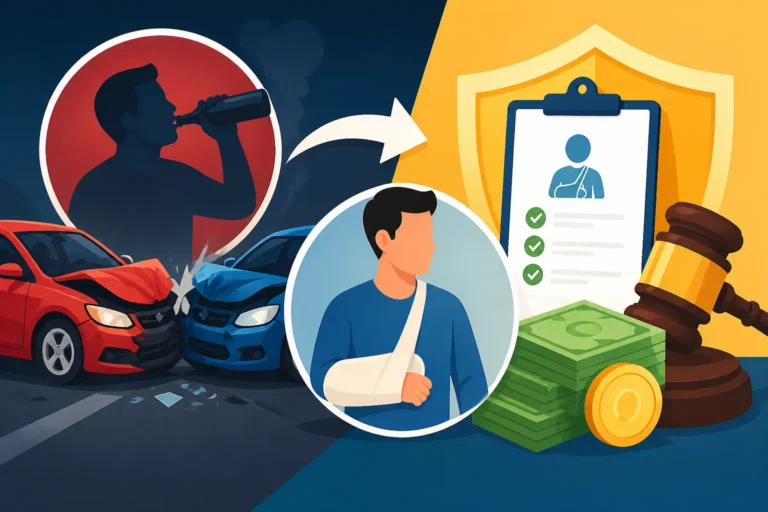
The primary goals of punitive damages are twofold: to punish the wrongdoer and to deter both them and others from engaging in similar harmful conduct in the future. The idea is that if the penalty for truly outrageous behavior is high enough, it will discourage people from acting so recklessly on the road. For example, if a drunk driver causes a devastating accident, a court might award punitive damages to the victim not just to cover their injuries and other losses, but to penalize the driver for their irresponsible choice to get behind the wheel while intoxicated.
This deterrent effect is meant to protect the public at large. Imagine a scenario where a trucking company knowingly allows its drivers to operate vehicles with severe, unaddressed mechanical issues, leading to a serious crash. If only compensatory damages were awarded, the company might see it as just the cost of doing business. Punitive damages, however, could be so substantial that they force the company to completely overhaul its safety protocols, preventing future accidents and saving lives. This shows that the impact of punitive damages extends far beyond the individual case, aiming to foster greater safety within the community.
When Punitive Damages Come into Play
Punitive damages are not handed out lightly. They require a very specific set of circumstances that go beyond simple negligence. We're talking about situations where the at-fault driver's actions were so far outside the bounds of reasonable conduct that they warrant not just compensation for the victim, but a direct punishment from the legal system.
Gross Negligence and Willful Misconduct
To be eligible for punitive damages, the at-fault driver's conduct typically needs to rise to the level of "gross negligence" or "willful and wanton misconduct." What does that really mean? It's more than just making a mistake or driving carelessly. Simple negligence might be looking at your phone for a second and drifting out of your lane. Gross negligence, on the other hand, implies an extreme departure from what a reasonably careful person would do under similar circumstances, indicating a conscious and voluntary disregard of the need to use reasonable care. It's almost like they knew the risk but chose to ignore it anyway, with serious consequences.
Willful misconduct goes even further. This is when a driver intentionally acts or fails to act, knowing that their actions are likely to cause harm, or doing so with a reckless indifference to the consequences. For example, knowingly driving a vehicle with faulty brakes at high speed through a school zone could be seen as willful misconduct. This level of culpability is what distinguishes these cases from the everyday fender-bender and often requires a lawyer to gather substantial evidence to prove. Understanding how fault is determined in a car accident is crucial here, as punitive damages hinge on proving an elevated degree of fault.
Examples of Driving Behaviors That May Warrant Punitive Damages
Let's look at some real-world examples that might open the door for punitive damages. These aren't just minor mistakes; they represent a severe disregard for safety:
- Drunk or Drugged Driving: This is perhaps the most common scenario where punitive damages are considered. A driver choosing to get behind the wheel while intoxicated demonstrates a profound indifference to the safety of others on the road. For more on this, you might want to read our guide on Fault in a Drunk Driving Accident.
- Extreme Distracted Driving: While all distracted driving is dangerous, an egregious case might involve a driver watching a movie on their phone or intensely texting for an extended period, leading to a serious collision. This isn't just a quick glance; it's sustained, reckless inattention. For detailed information, see our post on Fault in a Distracted Driving Texting Accident.
- Street Racing or Reckless Evading: Engaging in high-speed street racing or deliberately evading law enforcement at dangerous speeds, putting countless lives at risk, could certainly lead to punitive damage claims if an accident occurs.
- Hit-and-Run Accidents: If a driver causes an accident and then flees the scene, especially if they were driving recklessly beforehand, this abandonment of responsibility can also contribute to a punitive damages claim.
In each of these situations, the driver's actions aren't just negligent; they demonstrate a shocking indifference to the well-being of others, making them prime candidates for punitive damages. It's not about making a simple error; it's about making a dangerous choice.
Key Legal Requirements for Awarding Punitive Damages
The bar for proving punitive damages is significantly higher than for compensatory damages. Courts are generally hesitant to impose punitive measures unless there's compelling evidence that the defendant's actions truly warrant such a severe penalty. This means the plaintiff, or the injured party, has a much tougher road to travel in terms of evidence and legal argumentation.
Proving "Malice, Oppression, or Fraud"
Many states require plaintiffs to prove that the defendant acted with "malice, oppression, or fraud" to be awarded punitive damages. These are specific legal terms with distinct meanings:
- Malice: This doesn't necessarily mean personal hatred, though it can. Legally, malice often refers to a conscious disregard for the rights or safety of others, or a willful and deliberate intention to injure. For example, if a driver intentionally rams another car in a fit of road rage, that would be considered malice. More commonly, it refers to acting with a high probability that injury will result and doing so with indifference.
- Oppression: This involves subjecting a person to cruel and unjust hardship in conscious disregard of that person's rights. Imagine a large corporation with a history of safety violations that consistently ignores warning signs about dangerous equipment, leading to an accident. Their systematic disregard for public safety could be considered oppressive.
- Fraud: While less common in typical car accident scenarios, fraud could come into play if, for instance, a car manufacturer knowingly concealed a dangerous defect in a vehicle that directly caused the accident. This involves deceit or intentional misrepresentation to deprive someone of their rights or cause injury.
These are not easy to prove. It requires a deep dive into the defendant's state of mind and intentions, often relying on circumstantial evidence, expert testimony, and a thorough investigation of all available facts related to the Who Is at Fault in a Car Accident? Complete Guide (2027).
The Higher Burden of Proof
When seeking compensatory damages, the standard of proof is typically "preponderance of the evidence," meaning it's more likely than not (over 50% chance) that the defendant is responsible. For punitive damages, however, the standard is usually much higher: "clear and convincing evidence." This means the evidence must be highly probable, substantially more than a mere probability, and sufficient to create a firm belief or conviction in the mind of the fact-finder (the jury or judge).
This elevated standard reflects the serious nature of punitive damages. They are meant to be an extraordinary remedy, not an everyday occurrence. Proving "clear and convincing evidence" often involves:
- Detailed Documentation: Gathering every shred of evidence, from police reports and witness statements to toxicology results (in DUI cases) and internal company documents (in corporate negligence cases).
- Expert Testimony: Bringing in accident reconstructionists, medical professionals, or other experts who can clearly articulate how the defendant's actions led to the accident and the severe nature of their misconduct.
- Legal Argumentation: A skilled attorney will build a narrative that strongly demonstrates the defendant's willful disregard or malicious intent, leaving little room for doubt.
Without meeting this higher burden, even in cases of severe injury, a court is unlikely to award punitive damages. It's a complex legal challenge that underscores the importance of a thorough legal strategy.
How Punitive Damages Are Calculated and Limited
Even when a court decides that punitive damages are warranted, determining the exact amount is another intricate process. There's no fixed formula, and the final sum can vary wildly based on several factors, including state laws and the specifics of the case. This is also where the concept of "fairness" comes heavily into play, as courts must balance the need to punish and deter with constitutional limits.
Factors Influencing the Amount
Judges and juries consider a range of factors when deciding how much to award in punitive damages. These are not about your losses, but about the at-fault driver's actions and circumstances:
- Egregiousness of the Defendant's Conduct: How truly bad, reckless, or malicious were their actions? Was it an isolated incident of extreme carelessness, or a pattern of dangerous behavior? The more shocking the conduct, the higher the potential award.
- Severity of Harm Caused: While punitive damages aren't compensatory, the court will still look at the level of harm inflicted. A catastrophic injury or wrongful death resulting from egregious conduct will typically warrant higher punitive damages than a minor injury, even if the underlying conduct was similar. This helps align the punishment with the real-world impact.
- Defendant's Financial Wealth: This is a significant factor. The purpose of punitive damages is to punish and deter. A small award might mean nothing to a multi-millionaire or a large corporation, but could be financially devastating to an individual with limited means. Therefore, the award is often scaled to have a meaningful punitive effect on the specific defendant.
- Ratio to Compensatory Damages: Courts often consider the ratio between the punitive damages and the actual, or compensatory, damages awarded. While there's no hard-and-fast rule, the Supreme Court has indicated that punitive damage awards that are excessively disproportionate to compensatory damages may be unconstitutional. A single-digit ratio is often cited as a general guideline, though this can vary.
These factors provide a framework, but the ultimate decision often comes down to the jury's judgment and the judge's oversight.
State-Specific Caps and Limitations
One of the biggest challenges with punitive damages is that they vary dramatically by state. Many states have implemented caps, or limits, on how much can be awarded in punitive damages to prevent excessively high awards. These caps can take several forms:
- Fixed Dollar Amounts: Some states, like Texas, might set a maximum dollar amount, such as $200,000, or a multiple of economic damages plus a fixed sum.
- Multiples of Compensatory Damages: Other states might cap punitive damages at a certain multiple of the compensatory damages awarded (e.g., three times the amount of economic damages, up to a certain total).
- Ratio to Other Damages: As mentioned, the ratio to compensatory damages often acts as a de facto limit.
For instance, in California, there's no statutory cap on punitive damages, but courts strictly apply the "malice, oppression, or fraud" standard and carefully review the ratio to compensatory damages. In states like Florida, punitive damages are generally capped at three times the amount of compensatory damages or $500,000, whichever is greater, unless the defendant had a specific intent to harm, in which case the cap can rise to $2 million. This state-by-state variation means that seeking punitive damages requires a deep understanding of the specific laws in the jurisdiction where the accident occurred. This is why our comprehensive guide, How Much Is My Car Accident Settlement Worth? (2026), emphasizes the importance of local legal expertise.
Distinguishing Punitive from Compensatory Damages
It’s easy to get lost in the terminology, but grasping the fundamental difference between punitive and compensatory damages is key to understanding how car accident claims work. While both result in financial payouts to the injured party, their underlying purpose and the types of harm they address are entirely separate.
Economic vs. Non-Economic Compensatory Damages
Let's quickly recap compensatory damages, which are what most people claim after an accident. These are designed to "compensate" the victim, putting them back in the financial position they would have been in had the accident not occurred. They aim to make the injured party "whole" again, as much as money can.
Compensatory damages are typically broken down into two main categories:
- Economic Damages: These are quantifiable financial losses. Think of your hard costs, the things you can point to a receipt or a bill for. This includes:
- Medical expenses (hospital stays, doctor visits, surgeries, medications, rehabilitation, future medical care)
- Lost wages (income you couldn't earn because of your injury)
- Loss of earning capacity (if your injury prevents you from earning what you used to in the future)
- Property damage (cost to repair or replace your vehicle and other damaged property)
- Out-of-pocket expenses (rental car costs, travel to appointments, household help)
- Non-Economic Damages: These are more subjective, intangible losses that don't have a direct bill but deeply impact your life. This includes:
- Pain and suffering (physical discomfort, emotional distress, mental anguish)
- Loss of enjoyment of life (inability to participate in hobbies or activities you once loved)
- Disfigurement or scarring
- Loss of consortium (impact on marital or familial relationships)
These types of damages are the core components of almost every car accident claim, aiming to address the direct and indirect consequences of the injury. For a deeper dive, check out our article on Economic vs Non-Economic Damages Explained.
The Fundamental Difference: Making Whole vs. Punishing
Here's the table that really highlights the contrast:
| Feature | Compensatory Damages | Punitive Damages |
|---|---|---|
| Primary Purpose | To make the injured party "whole" again for their losses. | To punish the at-fault party and deter future misconduct. |
| Eligibility | Based on actual losses and injuries suffered by the victim. | Based on extreme, willful, malicious, or grossly negligent conduct. |
| Recipient | The injured party, to cover their expenses and suffering. | The injured party, as a means of punishment for the defendant. |
| Calculation Basis | Actual bills, lost income, and subjective harm. | Egregiousness of conduct, defendant's wealth, state caps. |
| Standard of Proof | Preponderance of the evidence (more likely than not). | Clear and convincing evidence (higher standard). |
| Frequency | Common in almost all successful personal injury claims. | Rare, reserved for the most severe cases of misconduct. |
This table clearly shows that while both types of damages involve money changing hands after an accident, their philosophical underpinnings are entirely different. Compensatory damages are about your recovery and your losses, whereas punitive damages are about the defendant's blameworthiness and setting an example. Without proving the latter, even if you have extensive Common Car Accident Injuries: Complete Guide (2027), punitive damages simply won't be on the table.
The Role of a Lawyer in Seeking Punitive Damages
Given the high legal bar and the complexity involved, pursuing punitive damages in a car accident claim is almost impossible without the expertise of an experienced attorney. They are not just nice to have; they are often essential to even have a chance at this type of award.
Building a Strong Case for Punitive Damages
An attorney specializing in personal injury and car accident claims knows exactly what kind of evidence is needed to prove the "malice, oppression, or fraud" standard. This goes far beyond simply documenting your injuries and property damage. They will embark on a thorough investigation, which might include:
- Deep Discovery: This can involve requesting the defendant's driving history, phone records (with a court order), toxicology reports, employment records (especially if driving for work), and even surveillance footage.
- Witness Interviews: An attorney will meticulously interview any witnesses to the accident, looking for details that highlight the defendant's extreme recklessness leading up to and during the crash.
- Expert Analysis: They might bring in accident reconstruction experts to demonstrate exactly how the defendant's actions caused the collision, or forensic specialists to analyze phone data or other digital evidence.
- Precedent Research: They will research previous court cases in your specific state or jurisdiction where punitive damages were awarded for similar conduct, to build a strong legal argument based on established precedent.
Without this dedicated and specialized effort, it's incredibly difficult to compile the compelling "clear and convincing" evidence required for a judge or jury to consider punitive damages. For more on this, consider reading How to Prove the Other Driver Was at Fault.
Navigating Complex Legal Standards and Negotiations
The legal landscape surrounding punitive damages is constantly evolving, with new court decisions and state legislative changes regularly impacting how these awards are handled. An experienced attorney stays abreast of these developments and understands the nuances of state-specific laws, including any caps or limitations that might apply in your jurisdiction.
Furthermore, insurance companies are notoriously reluctant to pay punitive damages. Most standard auto insurance policies explicitly exclude coverage for punitive damages, as they are seen as punishment for intentional or grossly negligent acts rather than coverage for accidental harm. This means that if punitive damages are awarded, the at-fault driver themselves might be personally liable, which can lead to complex collection efforts.
A skilled lawyer will:
- Properly Frame the Claim: They know how to present your case to maximize the chances of a court considering punitive damages.
- Negotiate with Insurers and Defendants: Even if an insurance company won't directly cover punitive damages, their involvement in the compensatory portion of the settlement can still create leverage. An attorney can skillfully negotiate for a higher overall settlement, even if the punitive damages component isn't explicitly paid by the insurer.
- Prepare for Litigation: Because punitive damages are so heavily litigated, your attorney will be prepared to take your case to trial if necessary, presenting a robust argument to a jury.
Ultimately, while you might feel you can handle a simple claim on your own, the complexities of seeking punitive damages mean that asking, "Do You Need a Lawyer for a Car Accident? (2027)" when punitive damages are a possibility, almost always leads to a resounding "yes." Their expertise significantly increases your chances of holding the reckless party fully accountable. Our guide, How Car Accident Settlements Are Calculated, further illustrates the multi-faceted nature of these calculations and why professional legal guidance is invaluable.
Disclaimer
Please remember that this article is for informational purposes only and does not constitute legal advice. Car accident claims are complex, and the laws regarding punitive damages vary significantly by state. If you or a loved one has been involved in a car accident and believe punitive damages may be applicable, it is crucial to consult with a qualified personal injury attorney in your area to discuss the specifics of your case.