Average Settlement for Knee Injury From a Car Accident
Experiencing a knee injury after a car accident is incredibly jarring, not just physically but also emotionally and financially. One moment you're driving along, and the next, you're dealing with pain, doctor visits, and the daunting question of how you're going to pay for it all. This guide is here to walk you through what to expect regarding potential compensation for a knee injury stemming from a car accident, helping you understand the factors that shape your settlement.
Understanding Knee Injuries from Car Accidents
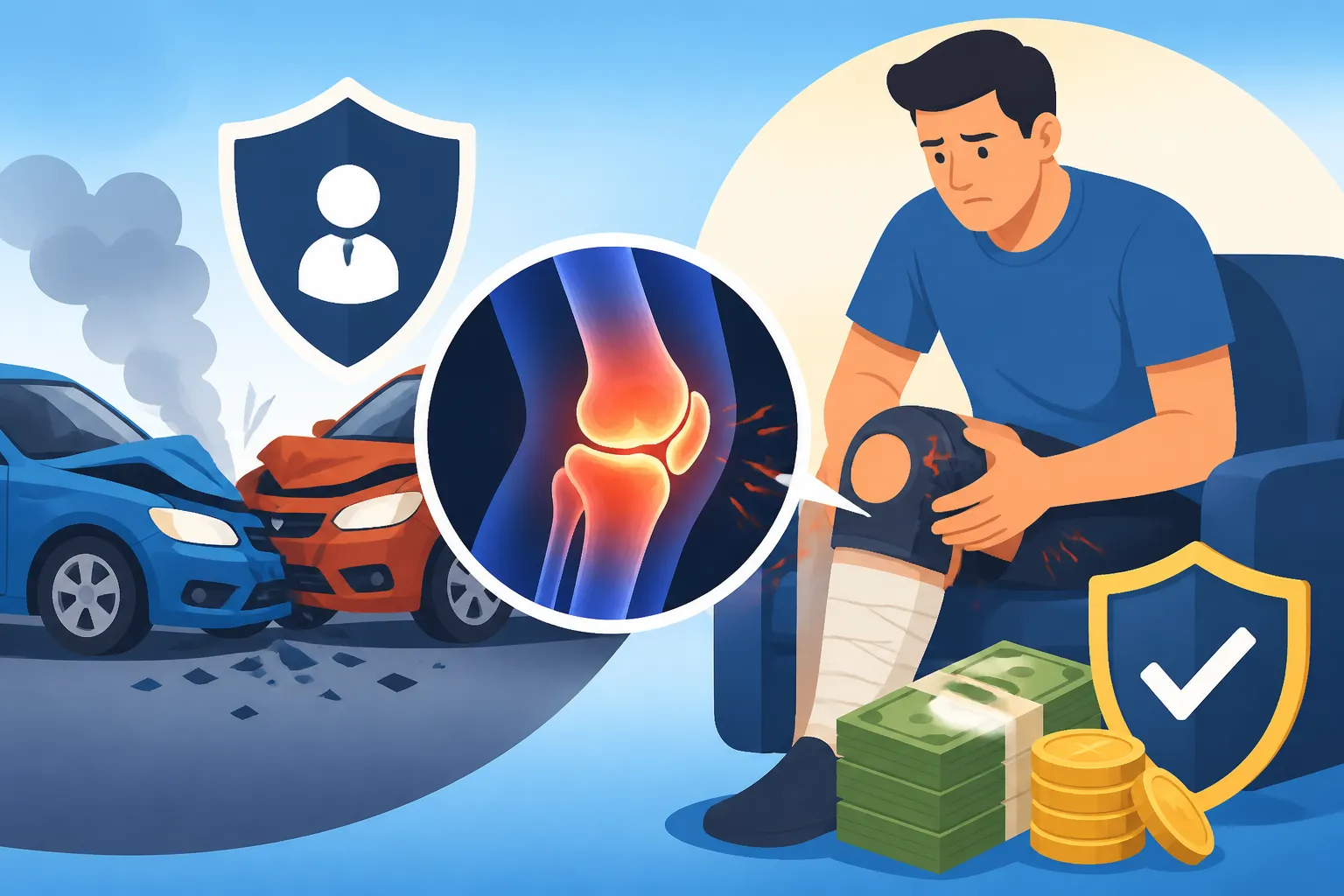
Knee injuries are unfortunately common in car accidents, often resulting from direct impact with the dashboard, steering column, or even being twisted or hyperextended during the sudden forces of a collision. These aren't just minor bumps and bruises; they can range from painful sprains to severe, life-altering damage. The specific type of injury you sustain will significantly impact your recovery, your daily life, and ultimately, the value of your claim.
Common Types of Knee Injuries Sustained in Collisions
When we talk about knee injuries in car accidents, we're really talking about a spectrum of damage to the complex structure of bones, ligaments, tendons, and cartilage that make up the knee joint. It's not just a single problem; it could be a combination of issues. Many people initially dismiss knee pain, thinking it's just a strain, only to find out later that something more serious is at play, especially with symptoms that might be Delayed Injury Symptoms After a Car Accident.
For instance, the ligaments that stabilize your knee – the ACL (anterior cruciate ligament), PCL (posterior cruciate ligament), MCL (medial collateral ligament), and LCL (lateral collateral ligament) – are highly vulnerable. A torn ACL, for example, is a devastating injury that often requires extensive surgery and a long, arduous rehabilitation period. The same goes for a torn PCL, which can be particularly insidious as it sometimes goes unnoticed in the immediate aftermath of a crash.
Beyond ligament tears, you might suffer meniscus tears, which involve the C-shaped cartilage that acts as a shock absorber in your knee. These can be incredibly painful and limit your mobility, sometimes requiring arthroscopic surgery. Fractures to the patella (kneecap), tibia (shinbone), or femur (thigh bone) near the knee joint are also severe, often necessitating casts, plates, screws, or even total knee replacement surgery in the most extreme cases. Even soft tissue injuries, while sometimes considered less severe than fractures or tears, can lead to chronic pain and long-term functional impairment.
How These Injuries Occur During an Accident
The mechanics of a car accident can apply incredible, sudden forces to your body, and your knees are often right in the line of fire. In a frontal collision, for instance, your knees can slam into the dashboard or the back of the seat in front of you (if you're a passenger). This direct impact can cause patellar fractures, or push your tibia backward, leading to a PCL tear. This mechanism is so common it's sometimes referred to as "dashboard knee."
A side-impact or T-bone accident can cause your knee to be violently twisted or hyperextended, leading to tears in the MCL or LCL, or even meniscus damage. The rotational forces can wrench the entire joint. Even in a rear-end collision, though less commonly associated with direct knee impact, the sudden deceleration and acceleration can cause your body to move in ways that put immense strain on the knee joint, leading to sprains, strains, or even more complex injuries like a ruptured quadriceps or patellar tendon. Understanding these mechanisms helps connect the accident directly to your injury, which is crucial for your Car Accident Claim.
Factors Influencing a Knee Injury Settlement
When it comes to figuring out how much your knee injury claim might be worth, there's no magic calculator that spits out a number. It's a nuanced process, heavily influenced by several key factors. Every injury is unique, and so is every person's situation. What might be a moderate settlement for one person could be totally inadequate for another, depending on their specific circumstances and how their life has been altered. This is why understanding How Car Accident Settlements Are Calculated is so vital.
Severity of the Injury and Medical Treatment Required
This is often the biggest factor. A minor sprain that heals with a few weeks of rest and physical therapy will naturally result in a much lower settlement than a shattered kneecap requiring multiple surgeries, extensive rehabilitation, and potentially a lifetime of chronic pain or limited mobility. Insurers and courts look at the objective medical evidence: X-rays, MRIs, CT scans, surgical reports, and the diagnoses from orthopedists and other specialists.
Consider someone who tears their ACL, PCL, and meniscus (often called "unhappy triad" when it involves MCL, ACL, and meniscus). This injury almost always requires extensive surgical intervention, followed by months of intensive physical therapy. The medical bills alone could easily reach tens of thousands of dollars, not to mention the pain and suffering involved. Compare that to someone with a mild contusion that resolves with ice and over-the-counter pain relievers. The contrast in settlement potential is stark. The goal is to reach Maximum Medical Improvement MMI before fully assessing the long-term impact.
Impact on Daily Life and Lost Wages
A knee injury can drastically impact your ability to perform daily activities, from walking and climbing stairs to driving and even sleeping comfortably. If you're an avid hiker, runner, or even just someone who enjoys long walks, a knee injury can steal those joys. If your job involves standing, walking, lifting, or driving, a severe knee injury could lead to significant lost wages, both in the short term during recovery and potentially long-term if you can no longer perform your previous job duties. This is where Lost Earning Capacity vs Lost Wages comes into play.
For example, a construction worker who suffers a severe knee fracture may be out of work for many months, losing their primary source of income. If their injury prevents them from ever returning to construction, their lost earning capacity could be enormous, profoundly affecting their family's financial future. Even for someone with a less physically demanding job, chronic pain or limited mobility can make it difficult to focus, commute, or maintain productivity, leading to lost income or the need for accommodations. The more your injury interferes with your work, hobbies, and general quality of life, the higher the potential settlement value.
Proof of Negligence and "Fault"
In most states, the amount you can recover is directly tied to the other driver's fault. If the other driver was clearly 100% at fault for the accident – say, they ran a red light and T-boned your car – then their insurance company is typically responsible for covering your damages. However, if there's any dispute over Who Is at Fault in a Car Accident, or if you are found to be partially responsible, your settlement can be significantly reduced, or even eliminated in some states.
For example, if you were making a left turn and the other driver sped through a yellow light, there might be a debate over who was more negligent. If a jury or insurance adjuster determines you were 20% at fault, your total settlement amount would be reduced by 20%. This is known as comparative negligence. In states like Maryland, which follow a contributory negligence rule, being found even 1% at fault can bar you from recovering any compensation at all. Proving the other driver was solely at fault is a critical step, and this is where evidence like police reports, witness statements, and accident reconstruction can make all the difference.
Insurance Policy Limits
Even with a severe knee injury and clear fault, the amount you can actually recover is often limited by the at-fault driver's insurance policy limits. If the driver who caused your accident only has the state minimum liability coverage, which might be as low as $25,000 in some states like Florida, and your medical bills alone exceed that, you could be facing a significant shortfall. This is a common and incredibly frustrating reality for many accident victims.
This is why having your own underinsured motorist (UIM) coverage is so important. If the at-fault driver's insurance isn't enough to cover your damages, your UIM policy can kick in to cover the difference, up to your own policy limits. Without UIM coverage, you might have to pursue a personal lawsuit against the at-fault driver directly, which can be a long and difficult process, especially if they don't have significant personal assets to cover your damages. The reality is that if the other driver doesn't have much insurance and no personal assets, even a million-dollar injury might only net you what their policy covers.
Components of a Knee Injury Settlement
A car accident settlement isn't just one lump sum meant to cover everything; it's typically broken down into different categories of damages, each designed to compensate you for specific losses. These damages fall broadly into two categories: economic and non-economic, as detailed in Economic vs Non-Economic Damages Explained. Understanding these components is key to maximizing your claim.
Economic Damages: Tangible Financial Losses
These are the calculable, out-of-pocket expenses you've incurred or will incur as a direct result of your knee injury. They're often easier to prove with receipts, bills, and pay stubs.
Medical Expenses (Past and Future)
This is usually the largest component of economic damages for a significant knee injury. It includes everything from the ambulance ride and emergency room visit immediately after the accident, to orthopedic consultations, diagnostic tests (X-rays, MRIs), surgeries, hospital stays, medications, physical therapy, chiropractic care, and even durable medical equipment like crutches or a knee brace.
Crucially, it also includes future medical expenses. If your knee injury requires ongoing physical therapy, future surgeries (such as a total knee replacement years down the line), or long-term medication, these projected costs are a vital part of your claim. Expert medical testimony, often from your treating physician or a vocational expert, might be needed to accurately estimate these future costs. For instance, if you're a young adult who suffered a severe knee injury, the likelihood of needing a knee replacement in 10-15 years versus someone much older with the same injury could drastically change the future medical cost calculations. This is also where understanding How Medical Bills Are Paid From a Settlement becomes important.
Lost Wages and Loss of Earning Capacity
As mentioned earlier, if your knee injury prevents you from working, you can claim compensation for any wages you've lost, whether it's for a few days, weeks, or even months. This includes your regular salary, bonuses, commissions, and benefits. You'll need pay stubs, employment records, and a doctor's note indicating your inability to work.
Beyond just lost wages, there's also the concept of "loss of earning capacity." This refers to your reduced ability to earn income in the future due to your injury. For example, if your knee injury means you can no longer perform the physical demands of your previous job and must take a lower-paying, less physically demanding role, the difference in potential earnings over your lifetime could be substantial. This often requires an economist or vocational expert to calculate, taking into account your age, education, work history, and the severity of your permanent impairment.
Non-Economic Damages: Intangible Losses
These damages are designed to compensate you for the subjective, non-financial impacts of your injury. They are often more challenging to quantify but are a significant part of any serious personal injury claim.
Pain and Suffering
This is perhaps the most well-known category of non-economic damages, covering the physical pain, discomfort, and emotional distress caused by your knee injury. This isn't just about the immediate agony after the accident; it includes chronic pain, limitations in movement, the discomfort of physical therapy, and the emotional toll of dealing with a long recovery.
Calculating Pain and Suffering: How It's Calculated is complex and often involves a "multiplier" method, where your economic damages are multiplied by a factor (e.g., 1.5x to 5x, or even higher for very severe injuries) based on the severity and permanence of your injury. The more severe your knee injury, the longer your recovery, and the greater the long-term impact on your quality of life, the higher this multiplier tends to be. For instance, a persistent ache that limits your ability to walk your dog would be valued differently than excruciating, debilitating pain that confines you to a wheelchair.
Loss of Enjoyment of Life
This component covers the inability to participate in activities you once enjoyed due to your knee injury. If you were an active person who loved hiking, playing sports, or dancing, and your knee injury prevents you from doing those things, you've experienced a loss of enjoyment of life. This also applies to everyday activities like playing with your children or grandchildren, gardening, or even just comfortably doing household chores.
The loss of enjoyment can be profoundly impactful, even if it doesn't directly cost money. It's about the diminishment of your quality of life and personal happiness. For someone who derived great joy and identity from being a marathon runner, a severe knee injury that ends their running career represents an immense personal loss that should be recognized in the settlement. Documentation through journals, witness statements, and medical records outlining activity restrictions can help substantiate this claim.
Navigating the Settlement Process for a Knee Injury
Dealing with a knee injury is tough enough without the added stress of navigating an insurance claim. The process can feel overwhelming, complex, and sometimes even adversarial. Knowing the steps involved and what to expect can empower you to protect your rights and pursue the compensation you deserve.
Initial Steps After a Car Accident
The moments immediately following an accident are critical for your knee injury claim, even if you don't feel pain right away. First and foremost, What to Do After a Car Accident: Step-by-Step (2027) outlines the immediate actions. Always call the police, even for seemingly minor collisions, as a police report can be invaluable evidence. Exchange information with the other driver and take photos of the scene, vehicle damage, and any visible injuries.
However, the most crucial step is seeking medical attention promptly. Even if your knee just feels "sore," get it checked out by a doctor. Adrenaline can mask pain, and some serious knee injuries, like meniscus tears or PCL sprains, might not present with excruciating pain immediately. A delay in seeking treatment can be used by insurance companies to argue that your injury wasn't caused by the accident or isn't as severe as you claim. Seeing a doctor establishes a clear link between the accident and your injury, and ensures you get the care you need for Knee Injuries in Car Accidents.
Documenting Your Injuries and Treatment
Thorough documentation is the bedrock of a successful knee injury claim. This means keeping meticulous records of everything. Every doctor's visit, every physical therapy session, every prescription, every diagnostic test – ensure you have copies of all medical records and bills. Keep a pain journal where you detail your daily pain levels, how your knee limits your activities, and any emotional distress you're experiencing.
Also, track all your accident-related expenses: mileage to medical appointments, over-the-counter pain relievers, co-pays, lost wages, and any household services you had to pay for because you couldn't do them yourself (e.g., cleaning, childcare, yard work). Photos or videos of your injured knee throughout recovery can also serve as powerful evidence. The more comprehensively you document, the stronger your case will be in demonstrating the full extent of your damages, making it easier to determine How Much Is My Car Accident Settlement Worth? (2026).
Dealing with Insurance Companies
Insurance companies are not on your side, no matter how friendly the adjuster sounds. Their primary goal is to pay out as little as possible. They will often try to get you to give a recorded statement, which can be used against you. It's almost always in your best interest to consult with a personal injury lawyer before speaking at length with the at-fault driver's insurance company.
Adjusters may offer a quick, lowball settlement, especially if they sense you're desperate or unaware of the true value of your claim. Be wary of accepting any offer until you have reached maximum medical improvement (MMI) and fully understand the long-term prognosis for your knee. Once you accept and sign a release, you generally cannot seek further compensation, even if your knee problem worsens. If you believe your claim is being unfairly valued, knowing How to Counter a Low Settlement Offer is crucial.
Settlement Negotiations and Potential for Lawsuit
Most car accident claims, including those for knee injuries, are settled through negotiation with the insurance company, rather than going to court. Your attorney will typically compile a "demand package" that includes all your medical records, bills, lost wage documentation, and a detailed explanation of your pain and suffering, along with a demand for a specific settlement amount.
The insurance company will then make a counteroffer, and the negotiation process begins. This back-and-forth can take months, or even longer, especially for severe knee injuries where long-term effects are uncertain. If negotiations fail to reach a satisfactory settlement, your attorney might advise filing a lawsuit. Filing a lawsuit doesn't necessarily mean going to trial; many cases settle through mediation or arbitration even after a lawsuit has been filed. However, the threat of litigation can sometimes incentivize insurance companies to make a more reasonable offer. A lawyer can skillfully How to Negotiate a Car Accident Settlement on your behalf.
Here's a simplified overview of how different knee injuries might impact a settlement:
| Injury Type | Severity Level | Typical Treatment | Potential Impact on Settlement |
|---|---|---|---|
| Knee Contusion/Bruise | Mild | R.I.C.E. (Rest, Ice, Compression, Elevation), OTC pain meds | Lower medical bills, minimal lost wages, modest pain and suffering. |
| Minor Sprain (MCL/LCL) | Mild-Moderate | R.I.C.E., bracing, physical therapy | Modest medical bills, some lost wages (if recovery time), moderate pain and suffering. |
| Meniscus Tear | Moderate-Severe | Physical therapy, arthroscopic surgery | Significant medical bills, potential for lost wages, notable pain and suffering, possible long-term limitations. |
| ACL/PCL Tear | Severe | Reconstructive surgery, extensive physical therapy | Very high medical bills, significant lost wages, severe pain and suffering, long-term impact on mobility. |
| Patella/Tibia/Femur Fracture | Severe-Catastrophic | Surgery (plates/screws), casting, long-term rehab | Extremely high medical bills, substantial lost wages (potential for permanent disability), debilitating pain and suffering, possible need for future joint replacement. |
| Multi-ligament/Complex Injury | Catastrophic | Multiple surgeries, prolonged rehab, lifelong care | Highest medical bills, extensive lost earning capacity, profound and lasting pain and suffering, permanent disability. |
This table provides general estimates, and individual settlement amounts can vary wildly based on the specific details of the case, including where the accident happened (some states have damage caps), the individual's age and pre-existing health, and the quality of legal representation. The key is thorough documentation and understanding all the various forms of What Are Damages in a Car Accident Claim?.
Disclaimer
Please remember that this information is for educational purposes only and is not legal advice. Every car accident claim is unique, and the value of your knee injury settlement will depend on the specific facts and circumstances of your case, as well as the laws of your state. It is always recommended to consult with a qualified personal injury attorney to discuss your situation and understand your legal options.