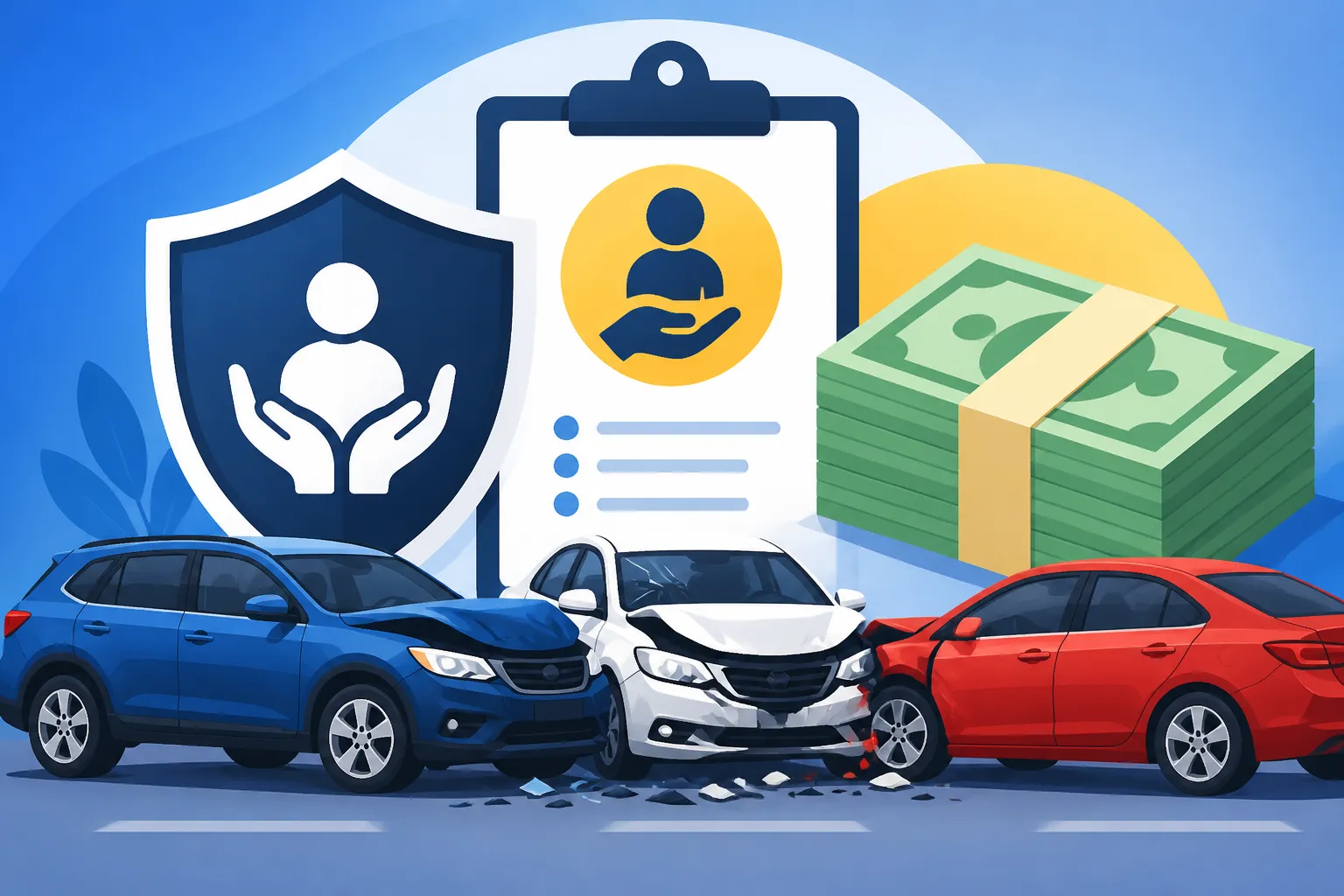
Average Settlement for a Multi-Car Accident
Getting involved in a multi-car accident can feel like a chaotic nightmare, far worse than a simple fender-bender. You're not just dealing with one other driver and one insurance company; suddenly, there are multiple vehicles, multiple injured parties, and a dizzying web of blame. This guide will walk you through what to expect regarding average settlements for multi-car accidents, helping you understand the complex factors that influence your potential compensation.
Understanding the Complexity of Multi-Car Accidents
When you hear about a "pileup" on the highway or even a seemingly minor chain-reaction crash in heavy traffic, you know it's not going to be simple. These types of accidents inherently bring a level of complexity that single-car or even two-car collisions just don't have. It's a logistical challenge for everyone involved, from first responders to insurance adjusters and, most importantly, for the victims trying to recover.
Defining a Multi-Car Pileup
A multi-car pileup, often referred to as a chain-reaction accident, involves three or more vehicles colliding. These can happen in various scenarios, but they're particularly common on highways, especially during inclement weather or in heavy traffic where sudden stops can trigger a domino effect. Imagine driving on I-5 in California during a rainstorm, and the car in front of you suddenly brakes hard. You manage to stop, but the truck behind you doesn't, pushing you into the car ahead, and then another vehicle hits the truck. Suddenly, you're in the middle of a four-car pileup, and the scene can be incredibly disorienting and terrifying. Each impact adds another layer to the incident, making it hard to immediately grasp the full scope of what just happened.
The term "pileup" often conjures images of dozens of cars on a foggy interstate, but even three cars involved can constitute a multi-car accident that significantly complicates the typical accident claim process. The primary challenge stems from how fault is determined when multiple vehicles are involved. It's rarely a straightforward "he hit me, so he's at fault" situation. Instead, it becomes a puzzle where investigators must meticulously piece together the sequence of events, often relying on witness statements, traffic camera footage, and even vehicle damage patterns to understand the physics of each impact.
Why Multi-Car Accidents are Different from Two-Car Collisions
The key difference lies in the number of parties involved and the intricate web of liability. In a standard two-car accident, identifying the at-fault driver, or at least the primary one, is usually simpler. You have two drivers, two insurance policies, and a more direct cause-and-effect relationship. However, in a multi-car accident, the question of Who Is at Fault in a Multi-Car Pileup? becomes much more difficult to untangle.
For example, consider a five-car accident. The first car might have stopped abruptly, causing the second car to rear-end it. The third car then rear-ends the second, and so on. In this scenario, is the first driver at fault for the sudden stop, or is each subsequent driver at fault for following too closely? Often, multiple drivers share some degree of fault, which significantly impacts how insurance companies handle claims and how settlements are ultimately calculated. This complex interplay of blame can lead to what's known as Fault in a Chain-Reaction Rear-End Crash, where liability isn't a single line but a series of interconnected events, often influenced by state-specific comparative negligence laws. This complexity means that reaching a settlement can take much longer, as adjusters from various companies try to protect their own policyholders and minimize their payouts.
Key Factors Influencing Your Multi-Car Accident Settlement
There's no one-size-fits-all answer for the "average settlement" in a multi-car accident, and frankly, anyone who tells you there is might not be giving you the full picture. Your settlement amount is going to be incredibly specific to the details of your unique situation. However, there are several overarching factors that consistently play a huge role in determining the value of your claim. Understanding these can help you set realistic expectations and prepare for the road ahead.
Severity of Injuries and Damages
The most significant factor in any car accident settlement, and particularly in multi-car accidents, is the extent of your injuries and the damage to your vehicle. If you've suffered severe injuries, such as a traumatic brain injury, spinal cord damage, or multiple broken bones, your settlement will naturally be higher than if you only sustained minor whiplash. The medical bills, rehabilitation costs, and potential for long-term care associated with serious injuries drive up the economic damages portion of your claim substantially. This also significantly impacts the non-economic damages, like pain and suffering, which are often directly tied to the severity and duration of your physical recovery.
For example, if a multi-car accident on the I-95 in Florida resulted in a severe spinal cord injury for one driver, necessitating extensive surgery, physical therapy, and permanent lifestyle changes, their settlement would reflect those profound losses. In contrast, someone with a soft tissue injury like whiplash might have a claim focused more on lost wages during recovery and initial medical treatments. Documenting your injuries thoroughly and seeking immediate medical attention is absolutely critical to proving the full extent of your damages. Without clear medical records, insurance companies can and will challenge the severity and causation of your injuries. You might find it helpful to review resources like Common Car Accident Injuries: Complete Guide (2027) to understand what to look for and how to document your experience.
Establishing Fault in a Chain Reaction Crash
Determining who is at fault in a multi-car accident is notoriously challenging, and this ambiguity directly impacts your settlement. In many states, particularly those following comparative negligence rules, you can still recover damages even if you are partially at fault. However, your compensation will be reduced by your percentage of fault. For example, if you're deemed 20% at fault for following too closely, and your total damages are $100,000, you would only be able to recover $80,000. This is a critical aspect, and understanding What Happens If You're Partially at Fault? is crucial for managing your expectations.
Insurance companies, and often their adjusters, will meticulously investigate to assign percentages of fault to each driver. This often involves reviewing police reports, eyewitness statements, and accident reconstruction expert opinions. It's not uncommon for fault to be split among several drivers in a multi-car pileup. Driver A might be 40% at fault, Driver B 30%, and Driver C 30%. Your ability to collect depends on the fault assigned to the other drivers and the specific negligence laws in your state. This complex allocation of liability can lead to intense negotiations among multiple insurance carriers, each trying to shift blame away from their policyholder, ultimately affecting how quickly and how much you receive.
Insurance Coverage Limits
Even if your injuries are severe and fault is clearly established against another driver, the at-fault driver's insurance policy limits can place a ceiling on your potential settlement. Most states require drivers to carry minimum liability insurance, but these minimums are often quite low and may not be enough to cover serious injuries and extensive property damage in a multi-car accident. For instance, in Texas, the minimum liability is currently 30/60/25, meaning $30,000 for bodily injury per person, $60,000 for bodily injury per accident, and $25,000 for property damage. If a multi-car accident results in $100,000 in medical bills alone for one injured party, and the at-fault driver only has the state minimum coverage, there's a significant shortfall.
When multiple victims are severely injured, the "per accident" limit can quickly be exhausted. For example, if the at-fault driver has a $60,000 bodily injury per accident limit, and there are three injured parties each with $50,000 in damages, the $60,000 will be divided among them, likely pro rata, leaving each person with significantly less than their actual damages. In such cases, your own uninsured/underinsured motorist (UM/UIM) coverage becomes incredibly important, as it can help cover the gap between what the at-fault driver's insurance pays and your actual damages. This is a common frustration, as victims often believe the at-fault party's insurance should cover everything, only to find out there isn't enough coverage to go around.
Types of Damages You Can Claim
When you're involved in a multi-car accident, understanding the full scope of what you can claim is essential. It's not just about getting your car fixed or your immediate medical bills paid. The law allows you to recover for a wide range of losses, broadly categorized into economic and non-economic damages, each playing a critical role in calculating your overall settlement.
Economic Damages
Economic damages, also known as special damages, are the quantifiable financial losses you've incurred as a direct result of the multi-car accident. These are relatively straightforward to calculate because they come with receipts, invoices, and pay stubs. Keeping meticulous records of all expenses and losses related to the accident is absolutely crucial for maximizing this portion of your claim.
Here's a breakdown of common economic damages:
- Medical Expenses: This includes everything from ambulance rides and emergency room visits to doctor consultations, surgeries, medications, physical therapy, chiropractic care, and even future medical treatments that your doctors anticipate you'll need. If you had to see specialists or undergo long-term rehabilitation, those costs are included.
- Lost Wages: If your injuries prevented you from working, you can claim the income you lost. This includes not just your regular salary or hourly wages but also any bonuses, commissions, or other benefits you missed out on. For someone with a highly specialized job, say an architect or a skilled tradesperson, being out of work can mean significant financial hardship.
- Loss of Earning Capacity: This goes beyond immediate lost wages. If your injuries are so severe that they permanently affect your ability to earn at the same level as before the accident, you can claim for the reduction in your future earning potential. This is often calculated with the help of economic experts.
- Property Damage: The cost to repair or replace your vehicle is a major component. This also includes any personal property inside your car that was damaged, such as a laptop, phone, or child safety seat. If your car is declared a "total loss," you'll be compensated for its fair market value.
- Other Out-of-Pocket Expenses: This category can cover a wide array of costs you wouldn't have incurred otherwise, such as rental car fees while your vehicle is being repaired, transportation costs to medical appointments, childcare expenses if you're unable to care for your children due to your injuries, or even modifications to your home or vehicle to accommodate a permanent disability.
Every single one of these items needs to be documented. Imagine the stack of bills from a major multi-car collision in a busy city like Los Angeles, California – emergency transport, hospital stays, follow-up appointments, prescription costs, and weeks of missed work. Keeping these records organized is paramount to proving your claim.
Non-Economic Damages
Non-economic damages, often referred to as general damages, are more subjective and harder to quantify with a precise dollar amount, but they represent very real losses. These are designed to compensate you for the intangible impacts the multi-car accident has had on your life.
- Pain and Suffering: This is perhaps the most well-known non-economic damage. It covers the physical pain you've endured, both immediately after the accident and during your recovery, as well as any ongoing or chronic pain. It also accounts for the emotional distress, discomfort, and inconvenience caused by your injuries.
- Emotional Distress: Beyond physical pain, the psychological toll of a traumatic multi-car accident can be immense. This can include anxiety, fear, depression, post-traumatic stress disorder (PTSD), and other mental health challenges. Imagine the ongoing fear of driving after being caught in a horrific pileup.
- Loss of Enjoyment of Life: If your injuries prevent you from engaging in hobbies, sports, social activities, or other aspects of life that you once enjoyed, you can claim for this loss. For instance, a keen hiker who can no longer walk long distances due to a knee injury from the accident would claim for this.
- Loss of Consortium: In cases of severe injury, this damage refers to the negative impact on the relationship with your spouse or partner, covering the loss of companionship, affection, and intimacy.
Calculating non-economic damages often involves a "multiplier" method, where your economic damages are multiplied by a factor (usually between 1.5 and 5, depending on injury severity) to arrive at a pain and suffering value. However, the ultimate amount is subject to negotiation and can be influenced by factors like the clarity of fault, the severity of impacts, and how compellingly your experience is presented. You can learn more about this by reading How Car Accident Settlements Are Calculated and Pain and Suffering: How It's Calculated.
To give you a clearer picture, here's a table summarizing the different types of damages:
| Damage Type | Description | Examples | Evidence Required |
|---|---|---|---|
| Economic | Quantifiable financial losses directly resulting from the accident. | Medical bills (ambulance, ER, doctors, therapy, prescriptions), lost wages, loss of earning capacity, vehicle repair/replacement, rental car costs, travel to appointments, home modifications. | Medical bills, pay stubs, employment records, repair estimates, rental agreements, receipts for related expenses. |
| Non-Economic | Subjective, intangible losses that impact your quality of life. | Physical pain and discomfort, emotional distress (anxiety, fear, PTSD), mental anguish, loss of enjoyment of life (inability to pursue hobbies), disfigurement, inconvenience, loss of companionship/consortium. | Medical records detailing pain, psychological evaluations, personal journals, witness testimonies, statements from family/friends. |
Navigating the Settlement Process
The journey to a settlement after a multi-car accident is rarely a smooth, quick ride. It's often a drawn-out process filled with investigations, negotiations, and sometimes, the looming threat of a lawsuit. Understanding these stages can help you brace for what's ahead and actively participate in protecting your rights.
Initial Investigation and Evidence Gathering
Right after the accident, while you're still reeling, a crucial period of evidence gathering begins. The police will file a report, and insurance companies for all involved parties will launch their own investigations. This is where the complexities of a multi-car accident truly become apparent. Each insurance company will want to minimize their payout, and that often means trying to shift as much fault as possible to another driver. As the victim, your job is to gather as much information as you can from the scene, including photos, witness contact information, and details of all vehicles and drivers involved. Remember, documentation is key when trying to How to Prove the Other Driver Was at Fault.
Medical documentation is equally vital. Seeing a doctor immediately after the accident, even if you feel fine, can establish a clear link between the accident and any delayed injuries. Multi-car accidents, by their nature, can involve significant impact forces, leading to common issues like whiplash, concussions, and back injuries that might not manifest symptoms for days or even weeks. Consistent medical treatment and detailed records of your symptoms, diagnoses, and treatments will form the backbone of your injury claim. Without this evidence, insurance adjusters can argue that your injuries weren't caused by the accident or aren't as severe as you claim, which can significantly reduce your eventual settlement.
Dealing with Multiple Insurance Companies
Perhaps the most frustrating aspect of a multi-car accident is dealing with not one, but several insurance companies. You might be communicating with your own insurer, the insurer of the driver who hit you, and potentially the insurers of other drivers in the chain reaction. Each company will have its own adjuster, and they are not on your side; their primary goal is to protect their policyholder and minimize their company's financial exposure. This can feel like a game of finger-pointing, with each insurer trying to place the blame elsewhere.
This multi-party dynamic means the negotiation process is often protracted and more complex than a standard two-party claim. Offers might come from different insurers, sometimes for portions of your damages. You might receive a "lowball offer" early on, especially if the insurance company hopes to settle quickly before the full extent of your injuries is known. It's important to understand How to Deal With a Lowball Insurance Offer and not to accept any settlement before you have a complete understanding of your injuries and their long-term impact. This often involves significant back-and-forth communication, providing additional documentation, and sometimes, engaging in formal demand letters and counter-offers. The sheer volume of paperwork and phone calls can be overwhelming for someone trying to recover from injuries and get their life back on track.
Potential for Litigation
While most car accident claims, including multi-car ones, eventually settle out of court, the potential for litigation is always present, especially when liability is hotly contested or damages are substantial. If negotiations with the various insurance companies reach an impasse, or if you believe their offers are inadequate to cover your losses, your attorney may advise filing a personal injury lawsuit. This is not a decision to take lightly, as litigation adds more time, stress, and cost to the process.
A lawsuit formally initiates court proceedings, leading to discovery (where both sides exchange information), depositions (where witnesses provide sworn testimony), and potentially mediation or arbitration to try and reach a resolution before trial. If no settlement is reached, the case could go to trial, where a judge or jury will ultimately decide fault and the amount of damages. The threat of a lawsuit often prompts insurance companies to take settlement negotiations more seriously, as trials are expensive and unpredictable for all parties involved. Understanding How a Car Accident Lawsuit Works (If You Don't Settle) can help you weigh your options if negotiations hit a wall.
Seeking Professional Guidance
Given the labyrinthine nature of multi-car accident claims, trying to handle everything on your own is not just difficult, it can be detrimental to your recovery and your potential settlement. The emotional and physical toll of an accident is enough without adding the stress of legal and insurance complexities. This is where professional guidance becomes not just helpful, but often absolutely essential.
When a Lawyer Becomes Essential
After a multi-car accident, you might be wondering if you truly need a lawyer. The answer, almost universally, is yes. While some minor, clear-cut two-car accidents might be manageable without one, a multi-car pileup presents too many variables and too much at stake. A personal injury attorney specializing in car accidents can be your most powerful advocate, handling the confusing legal landscape so you can focus on healing. If you're pondering Do You Need a Lawyer for a Car Accident? (2027), the answer is likely yes for this scenario.
Here's why a lawyer is critical in multi-car accidents:
- Establishing Fault: An experienced attorney can conduct an independent investigation, working with accident reconstructionists, reviewing police reports, and analyzing evidence to precisely determine How Fault Is Determined in a Car Accident. This is vital in a multi-car scenario where blame is often shared and disputed by multiple parties. They understand the nuances of comparative negligence laws in your state, whether it's California's pure comparative negligence or a modified comparative negligence state like Texas.
- Dealing with Insurance Companies: Lawyers act as a buffer between you and the relentless calls from multiple insurance adjusters. They know the tactics insurance companies use to minimize payouts and will negotiate on your behalf to ensure you receive fair compensation. They will also manage all communication, paperwork, and deadlines, ensuring no crucial steps are missed. Dealing With Insurance Adjusters After a Car Accident is a skill that takes years to master, and your attorney brings that expertise.
- Maximizing Your Settlement: An attorney understands the true value of your claim, accounting for all economic and non-economic damages, including future medical costs and lost earning capacity. They will fight for the maximum possible settlement, ensuring that all your losses are included and properly quantified, which can significantly increase How Much Is My Car Accident Settlement Worth? (2026).
- Navigating Legal Procedures: If your case requires litigation, your lawyer will guide you through every step of the legal process, from filing the lawsuit to representing you in court. They will ensure you adhere to strict deadlines, like the statute of limitations for filing a claim, which varies by state.
- Peace of Mind: Perhaps most importantly, having a lawyer handle your claim allows you to focus on your recovery. The stress of dealing with legal and insurance matters can exacerbate injuries and prolong recovery, so entrusting these responsibilities to a professional can be incredibly beneficial for your overall well-being.
Consider the complexity of a pileup on an Arizona highway. With potentially many vehicles and even more insurance policies involved, an attorney can streamline the process, cutting through the red tape and focusing on getting you the justice and compensation you deserve. They will understand the intricacies of How Long Does a Car Accident Settlement Take? in such a complex scenario and manage expectations regarding the timeline.
Disclaimer
Please remember that the information provided in this guide is for general informational purposes only and does not constitute legal advice. Every car accident case is unique, and the average settlement for a multi-car accident can vary significantly based on specific facts, jurisdiction, and numerous other factors. You should consult with a qualified personal injury attorney to discuss the specifics of your situation and get personalized legal advice.