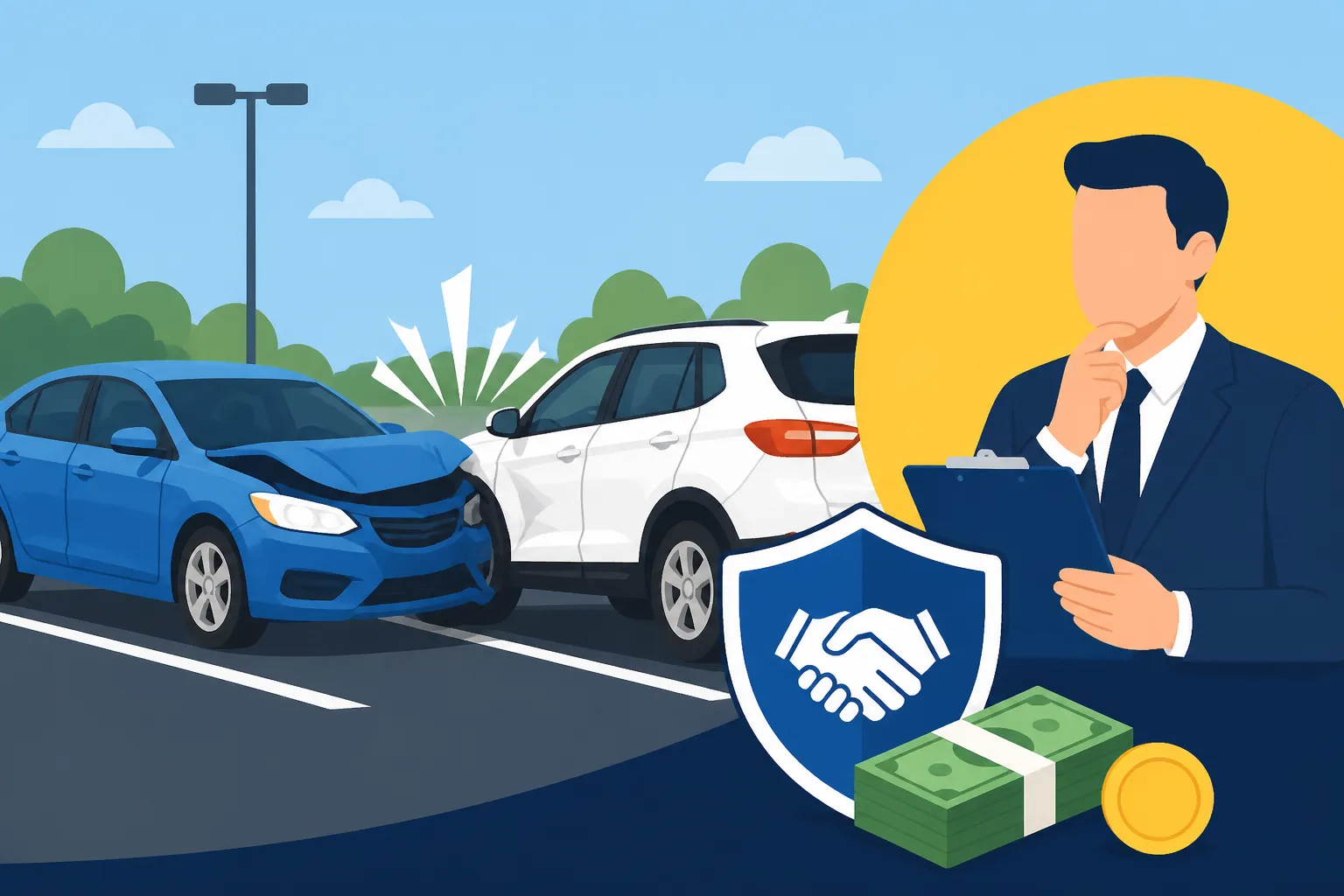
Average Settlement for a Parking Lot Accident
Parking lot accidents can feel like a minor annoyance, but they often lead to unexpected injuries and significant vehicle damage, leaving you wondering how to cover the costs and get back on your feet. The truth is, these incidents can be surprisingly complex, both in determining who's at fault and in understanding what kind of settlement you might expect. This guide is here to walk you through the factors that truly impact a parking lot accident settlement, helping you navigate the aftermath with more confidence.
Understanding Parking Lot Accidents: More Than Just a Fender Bender
When you think of a car accident, you probably picture high-speed collisions on a highway. But the reality is, many frustrating and often injurious incidents occur in the seemingly low-stakes environment of a parking lot. These aren't always just minor scrapes; they can involve significant property damage and serious personal injuries, leading to a lot of stress and financial strain.
Common Scenarios and Injuries
Parking lots are a maze of moving vehicles, distracted drivers, and pedestrians, creating a fertile ground for a variety of accidents. You might be reversing out of a spot, another driver speeds through a lane, or someone opens a door right into your path. Each scenario comes with its own set of potential damages and injuries.
For instance, a common type of parking lot incident is when two cars back out of opposing spaces and collide. Another frequent occurrence involves a driver failing to yield while pulling out of a spot or traveling down a lane, leading to a T-bone or sideswipe. Pedestrians are also highly vulnerable in parking lots; a car backing up might not see someone walking behind them, or a driver might fail to check for foot traffic while turning. These incidents, while often at lower speeds, can still cause significant damage. Even a seemingly gentle impact can rattle passengers, leading to injuries like whiplash, neck strains, back pain, or even concussions. It’s a common misconception that low-speed impacts can’t cause serious harm, but the forces involved can still jolt the body severely. Sometimes, the adrenaline of the moment masks the pain, and symptoms don't fully manifest until hours or even days later. For a deeper dive into these issues, you might want to read about Common Car Accident Injuries: Complete Guide.
Why Fault Can Be Tricky
Determining who is at fault in a car accident can be complicated, and parking lot mishaps are no exception—they often introduce unique challenges. Unlike public roads where traffic laws are usually clear-cut, parking lots often operate under less stringent, or at least less understood, rules. Many parking lots are considered private property, meaning standard traffic laws might not apply in the same way, and local ordinances or property rules may take precedence.
Often, parking lot accidents involve shared fault, where both drivers contribute to the collision. Perhaps you were backing out, but the other driver was also speeding through the lane or driving without proper attention. Without clear lines, traffic signals, or even consistent signage, it's easy for finger-pointing to begin. Witnesses can be scarce, and without official police reports (which are often not filed for minor parking lot incidents unless there's significant damage or injury), establishing a clear narrative can be tough. This ambiguity makes it harder for insurance companies to quickly assign 100% blame, leading to lengthier claim processes and potentially reduced settlements for those who are found partially responsible. Understanding Who Is at Fault in a Parking Lot Accident? can provide further clarity on these situations.
Factors Influencing Your Parking Lot Accident Settlement
There's no single "average" settlement for a parking lot accident, because every crash is unique. Instead, the value of your settlement hinges on a combination of specific factors. Think of it less like a fixed price tag and more like a complex formula where several variables play a crucial role. Understanding these variables is key to setting realistic expectations and effectively negotiating with insurance companies.
Severity of Injuries and Medical Expenses
This is often the most significant factor in determining the value of your settlement. It’s not just about the immediate pain, but the entire medical journey you undertake to recover. If you sustained a serious injury like a herniated disc, a concussion, or even a broken bone, your medical expenses will naturally be higher than if you only experienced minor bruising or a superficial scratch.
Consider the ongoing costs: emergency room visits, specialist consultations (like orthopedists or neurologists), diagnostic tests such as X-rays, CT scans, or MRIs, physical therapy sessions, prescription medications, and potentially even surgical procedures. All these expenses add up quickly. Insurance companies will scrutinize your medical records to assess the necessity and reasonableness of your treatment. The more extensive and well-documented your injuries and treatment are, the stronger your case for a higher settlement. This also includes future medical expenses if your injury is expected to require long-term care or have lasting effects, which can significantly increase your claim’s value. It’s always important to see a doctor promptly after any accident, even if you feel fine, as some injuries have Delayed Injury Symptoms After a Car Accident.
Property Damage and Other Economic Losses
Beyond your physical well-being, the damage to your vehicle is another major component of your settlement. This includes the cost to repair your car or, if it's totaled, its actual cash value. Parking lot accidents can range from a minor dent that costs a few hundred dollars to fix, to significant damage requiring extensive bodywork or even a total loss, especially if critical components like the frame or engine are affected.
But economic losses extend beyond just your car. If your vehicle is undrivable, you might need a rental car while yours is being repaired. The cost of a rental, especially for several weeks, can be substantial. Furthermore, if your injuries prevent you from working, you'll be able to claim lost wages for the time you missed. This isn't just your hourly wage; it can also include lost overtime, bonuses, or commissions. If your injuries cause a long-term disability or affect your ability to perform your job at the same capacity, you could also claim for lost earning capacity. Keep meticulous records of all receipts, repair estimates, and proof of income to support these claims.
Non-Economic Damages: Pain and Suffering
This category addresses the subjective, non-financial impacts of your accident. While it’s harder to quantify, it’s a crucial part of any personal injury settlement. Pain and suffering includes physical pain, emotional distress, mental anguish, loss of enjoyment of life, and inconvenience resulting from the accident and your injuries.
For example, if a severe back injury from a parking lot collision prevents you from playing with your kids, pursuing a beloved hobby like gardening, or even sleeping comfortably, these are all aspects of pain and suffering. The inability to participate in daily activities or enjoy life as you did before the accident has a real, tangible impact on your well-being. Insurance companies typically use a multiplier method, often between 1.5 to 5 times your economic damages (medical bills and lost wages), to calculate pain and suffering, with the multiplier increasing for more severe and long-lasting injuries. However, proving and valuing these damages requires careful documentation of how your life has changed. For more on this, check out Pain and Suffering: How It's Calculated.
Here's a simplified table illustrating how various factors might influence a parking lot accident settlement range:
| Factor | Low Impact/Minor Injury (e.g., small dent, minor bruise) | Moderate Impact/Moderate Injury (e.g., significant body damage, whiplash) | High Impact/Serious Injury (e.g., totaled car, herniated disc, fracture) |
|---|---|---|---|
| Property Damage | $500 – $2,000 | $2,000 – $10,000+ | $10,000 – $30,000+ (Total Loss) |
| Medical Expenses | $0 – $1,000 (initial check-up) | $1,000 – $10,000 (ER, PT, diagnostics) | $10,000 – $100,000+ (Surgery, long-term care) |
| Lost Wages | Minimal or None | $500 – $5,000 (few days/weeks missed) | $5,000 – $50,000+ (extensive time off, reduced capacity) |
| Pain & Suffering | Minimal to None | $1,000 – $15,000 | $15,000 – $200,000+ |
| Average Settlement Range (Estimated) | $500 – $3,000 | $3,000 – $35,000 | $35,000 – $300,000+ |
| Complexity of Claim | Low | Medium | High |
Disclaimer: These are rough estimates and actual settlements vary widely based on jurisdiction, specific facts, insurance limits, and negotiation.
The Role of Fault and Insurance in Your Claim
Fault plays an incredibly important role in any car accident claim, but especially so in parking lot scenarios. It directly impacts whether you can recover damages, and if so, how much. Understanding how fault is determined and how your insurance policy responds is crucial for navigating the claims process effectively.
Determining Fault in a Parking Lot
As mentioned earlier, establishing fault in a parking lot can be notoriously difficult. Unlike crashes on public roads with clear right-of-way rules, parking lots often present ambiguous situations. For instance, if two cars back out simultaneously and collide, both drivers might share some level of responsibility. If one driver pulls out of a parking space without looking, but the other driver was speeding through the lane, fault could again be split.
To determine fault, insurance companies will look at all available evidence. This includes photos or videos taken at the scene, statements from both drivers, witness testimonies, and sometimes even surveillance footage from nearby businesses. If a police report was filed, it would also be a critical piece of evidence, although police are often reluctant to get involved in minor parking lot incidents unless there are significant injuries or a dispute that necessitates their intervention. In many states, a system of comparative negligence is used, which means that even if you are partially at fault, you may still be able to recover damages, albeit a reduced amount. Understanding What Happens If You're Partially at Fault? is critical in these situations. Some states follow a "50% bar" rule (modified comparative negligence), meaning you can recover if you're 50% or less at fault, while others, like California, use "pure comparative negligence," allowing recovery even if you're 99% at fault. It's a complex area, and How Insurance Companies Determine Who Is at Fault can vary.
Navigating Insurance Claims
Once fault is assessed (or disputed), the claims process begins. You’ll typically file a claim with your own insurance company, or directly with the at-fault driver's insurance company. If you're filing with the other driver's insurance, this is a third-party claim. Your own collision coverage would cover your vehicle damage regardless of fault, but your rates might increase if you're found responsible.
Dealing with insurance adjusters can be a daunting task. They represent the insurance company's interests, which often means paying out as little as possible. They might ask for a recorded statement, which you should generally avoid giving without consulting with a lawyer first, as anything you say could be used to minimize your claim. They will also request documentation of your injuries and damages. Be prepared for a negotiation process, especially if the initial offer seems low. It’s also important to be aware of your policy's specifics, such as deductibles and coverage limits. If the at-fault driver has minimal coverage, or if your injuries are severe, their policy limits might not be enough to cover all your damages. In such cases, your own uninsured/underinsured motorist (UM/UIM) coverage might kick in. For a detailed guide on what to do, you can refer to How to File a Car Accident Insurance Claim and Dealing With Insurance Adjusters After a Car Accident.
How to Maximize Your Parking Lot Accident Settlement
While a parking lot accident might seem minor, it's crucial to treat it with the same seriousness as any other collision if you want to ensure fair compensation. There are proactive steps you can take immediately after the incident and throughout the claims process to strengthen your position and maximize your potential settlement.
Documenting the Scene and Your Injuries
The moments immediately following an accident are critical for gathering evidence. Even in a seemingly insignificant parking lot bump, documenting everything can make a huge difference. Start by taking clear, detailed photos and videos of the accident scene from multiple angles. Capture the positions of the vehicles, any damage to both cars, skid marks (if any), debris, and the surrounding environment, including any relevant signage or unique features of the parking lot. Don't forget to get wide shots that show the overall context. You'll also want to exchange information with the other driver, including their name, contact details, insurance information, and license plate number. If there are any witnesses, politely ask for their contact information as well. Their unbiased account could be invaluable. For more guidance on this, see How to Document a Car Accident Scene.
Crucially, even if you feel fine right after the collision, seek medical attention promptly. Adrenaline can mask pain, and some serious injuries, like whiplash or a concussion, may not present symptoms for hours or even days. A medical evaluation establishes a clear link between the accident and your injuries, creating an official record that insurance companies will rely on. Follow all doctor’s recommendations, attend all follow-up appointments, and keep a meticulous record of all medical bills, prescription receipts, and any out-of-pocket expenses related to your treatment. This documentation is essential for proving the extent of your injuries and the financial impact they've had.
The Value of Legal Representation
Navigating the aftermath of a car accident, even a parking lot one, can quickly become overwhelming. Between dealing with insurance adjusters, gathering medical records, documenting lost wages, and understanding the nuances of comparative negligence laws, it’s a lot to handle, especially when you’re also trying to recover from injuries. This is where a skilled personal injury lawyer can be incredibly beneficial.
A lawyer acts as your advocate, protecting your rights and handling all communications with the insurance companies. They understand how to properly value your claim, taking into account both current and future medical expenses, lost income, and the subjective components of pain and suffering. They can gather necessary evidence, interview witnesses, negotiate with adjusters who might otherwise try to lowball your offer, and, if necessary, prepare your case for trial. Studies have shown that individuals represented by an attorney generally receive significantly higher settlements than those who try to handle their claims alone, even after attorney fees. This is especially true if your injuries are more severe, if fault is disputed, or if the insurance company is being uncooperative. A lawyer can clarify complex legal jargon and ensure you don’t inadvertently make statements or take actions that could jeopardize your claim. For a detailed breakdown of when to consider legal help, check out Do You Need a Lawyer for a Car Accident?.
Disclaimer
Please remember that this article provides general information and insights into car accident settlements. It is not legal advice. Every accident claim is unique, and the outcome depends heavily on specific facts, applicable laws in your state, insurance policy details, and the unique circumstances of your case. For personalized advice regarding your situation, it is always recommended to consult with a qualified legal professional.