Fault in a Distracted Driving (Texting) Accident
It's incredibly frustrating and frankly terrifying to be on the road these days, constantly worrying about other drivers whose attention is glued to their phones instead of the road. Distracted driving, especially texting, is a rampant problem, leading to countless preventable accidents and leaving victims scrambling to understand their rights and how to get compensation. This comprehensive guide will meticulously break down how fault is determined in a distracted driving (texting) accident, providing you with clear insights and actionable advice.
The Alarming Reality of Distracted Driving
We've all seen it: the driver in the next lane veering slightly, brake lights coming on late, or even missing a light change entirely, all because their head is bowed, eyes fixed on a glowing screen. It's not just annoying; it's a dangerous epidemic that puts everyone at risk. Understanding what constitutes distracted driving and why texting is particularly hazardous is the first step in addressing this serious issue.
Defining Distracted Driving
Distracted driving isn't just one thing; it's any activity that diverts a driver's attention from the primary task of operating a vehicle. This can be anything from eating and drinking, adjusting the radio, talking to passengers, or even daydreaming. However, most legal and safety discussions focus on activities that involve phones. The National Highway Traffic Safety Administration (NHTSA) categorizes distractions into three main types:
- Visual Distraction: Taking your eyes off the road. This is perhaps the most obvious one, like looking at your phone's screen.
- Manual Distraction: Taking your hands off the steering wheel. Reaching for your phone or typing on it falls squarely into this category.
- Cognitive Distraction: Taking your mind off driving. Even if your hands and eyes are on the wheel, if your brain is engrossed in a text message conversation, you're cognitively distracted.
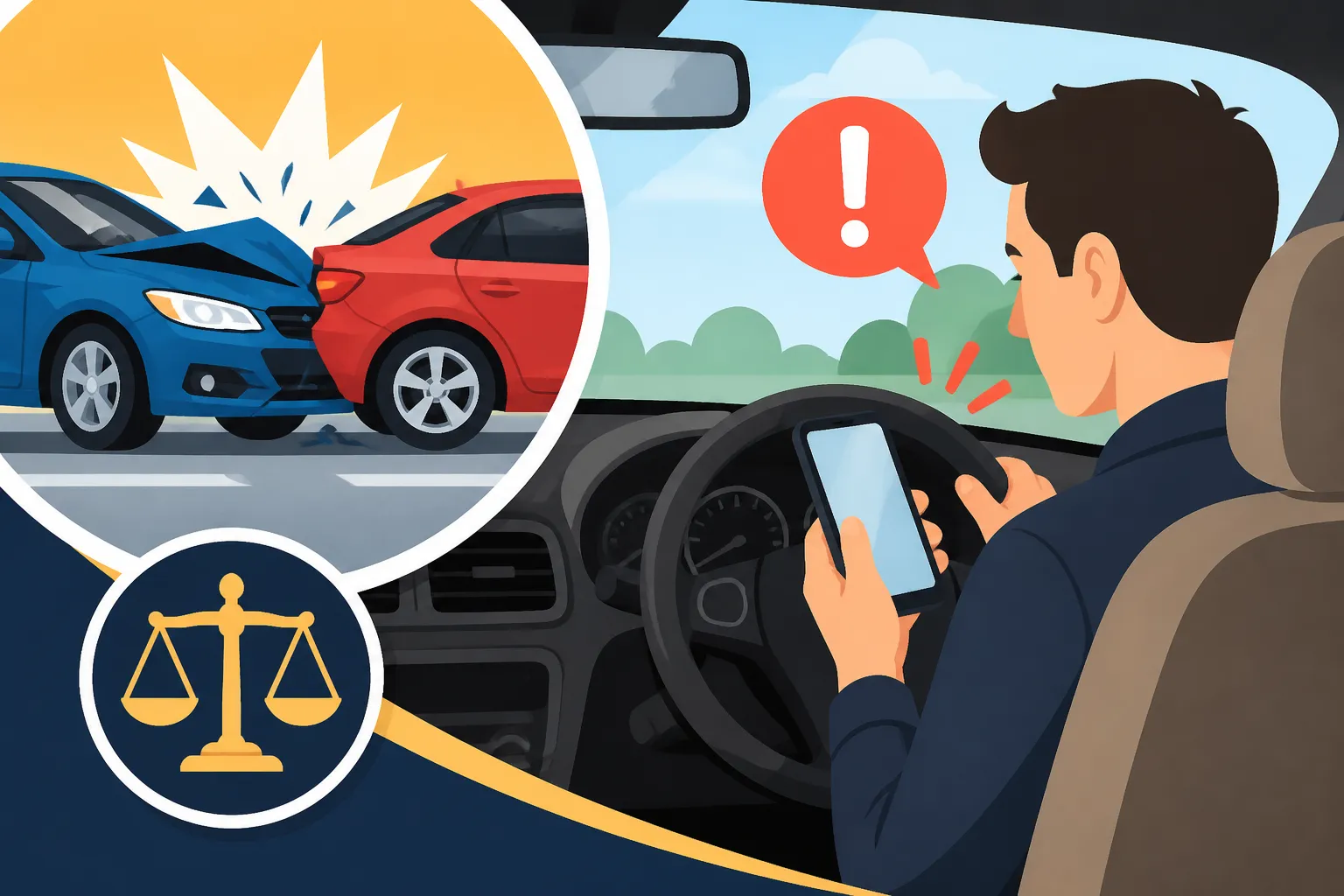
Texting while driving is particularly insidious because it often involves all three types of distraction simultaneously, making it exceptionally dangerous. You're looking at your phone (visual), holding and typing on it (manual), and your mind is processing the message (cognitive). This trifecta of inattention is why texting accidents are often severe and why proving fault in a texting accident is so crucial.
Why Texting is So Dangerous
The statistics surrounding texting while driving are truly sobering, painting a grim picture of how deadly this habit can be. Studies have shown that sending or reading a text takes your eyes off the road for approximately five seconds. At 55 mph, that's like driving the length of a football field blindfolded. Imagine the potential for disaster in that time frame—a sudden stop, a pedestrian stepping into the road, a car turning unexpectedly.
Beyond the immediate danger, texting behind the wheel significantly impairs a driver's reaction time, often making it worse than drunk driving in certain scenarios. It also increases the likelihood of lane departures, missed traffic signals, and failure to yield. The risks are magnified in complex driving situations, such as navigating busy intersections or heavy traffic, where split-second decisions are critical. The sheer recklessness of choosing to engage with a phone instead of focusing on the road makes it a clear example of negligence, which is a cornerstone of determining fault in a car accident claim.
Proving Distracted Driving Caused the Accident
One of the biggest hurdles after a distracted driving accident is often proving that the other driver was indeed distracted. They're unlikely to admit it, and without solid evidence, their insurance company might try to deny fault. Building a strong case requires diligent evidence collection and a clear understanding of what information can bolster your claim.
Gathering Evidence at the Scene
The moments immediately following an accident can be chaotic and frightening, but they are also crucial for gathering evidence. If you suspect the other driver was distracted, try to document as much as you can, safely and without confrontation.
- Photograph the Scene: Use your phone to take pictures of everything – vehicle damage, skid marks, road conditions, traffic signs, and even the other driver's vehicle interior if you can safely capture it (e.g., if their phone is visible on the dash or in their hand immediately after impact, without putting yourself in danger or escalating the situation).
- Police Report: Always call the police, even for seemingly minor accidents. A police report doesn't definitively assign fault, but it will document the accident circumstances, officer observations, and potentially list any citations issued. If the other driver was cited for a distracted driving offense, it will be a powerful piece of evidence. Remember, how fault is determined in a car accident often relies heavily on these initial observations.
- Witness Information: If anyone saw the accident happen, get their contact information. Independent witnesses can provide unbiased accounts of what they observed, including whether they saw the other driver looking at their phone.
- Dashcam Footage: If you have a dashcam, the footage can be invaluable. It provides an objective record of the events leading up to and during the collision.
It's important to act quickly and thoroughly. The more information you can collect at the scene, the better your chances of proving the other driver's negligence later on.
Witness Testimony and Phone Records
Beyond the immediate aftermath, there are other avenues for uncovering proof of distracted driving. These often require a more formal approach, potentially involving legal assistance.
- Eyewitness Accounts: While gathering contact info at the scene is a start, a lawyer can formally depose witnesses, asking specific questions about what they saw. A witness who clearly states they observed the other driver texting right before impact is a compelling piece of evidence.
- Driver's Own Statements: Sometimes, in the heat of the moment or during an initial conversation with police or paramedics, a distracted driver might admit to being on their phone. These "admissions of fault" can be incredibly damaging to their defense, so it's important for you to be cautious about what you say, as well, as discussed in "What Is an Admission of Fault (and How to Avoid It)?".
- Cell Phone Records: This is often the most direct way to prove texting. If a lawsuit is filed, your attorney can subpoena the other driver's cell phone records. These records can show call logs, text message timestamps, and data usage. If a text message was sent or received at the exact time of the accident, or immediately before, it provides almost undeniable proof of distraction. Be aware that privacy laws mean these records cannot be obtained easily without a subpoena, which is why legal counsel is often essential.
- Accident Reconstruction: In severe cases, an accident reconstruction expert might be brought in. They can analyze vehicle damage, skid marks, road conditions, and other physical evidence to determine factors like speed, direction, and even driver behavior, which can indirectly support a claim of distracted driving.
- Social Media: While less common, sometimes drivers post about their activities before or after an accident on social media, which could inadvertently reveal distraction. This avenue requires careful and legal investigation.
Proving the other driver was texting can significantly impact the outcome of your claim, as it clearly establishes negligence and fault. This evidence will be critical when dealing with insurance adjusters later on.
Legal Ramifications and State Laws
The legal landscape surrounding distracted driving is constantly evolving as states grapple with this persistent issue. Most states have enacted specific laws to curb texting and driving, and these laws play a direct role in how fault is assigned after an accident.
Understanding Anti-Texting Laws
Almost every state in the U.S. has some form of anti-texting law. These laws vary in their strictness, but generally, they prohibit sending or reading text messages while operating a motor vehicle. Some states have "primary enforcement" laws, meaning a police officer can pull you over solely for texting. Others have "secondary enforcement," where you can only be cited for texting if you've been pulled over for another offense first.
For example, states like California and Texas have hands-free laws, meaning drivers cannot use a handheld device for any purpose, including texting or talking, unless it's for an emergency. Penalties can range from fines to points on your license, and repeated offenses can lead to higher fines and even license suspension. These laws exist not just to punish, but to deter dangerous behavior. When a driver violates one of these laws and causes an accident, it's often considered a form of negligence per se, meaning their actions are presumed negligent because they violated a safety statute. This can make proving fault much more straightforward.
Comparative Negligence in Distracted Driving Cases
While it might seem clear-cut that the distracted driver is at fault, sometimes the situation is more complex, especially in states that adhere to comparative negligence laws. Comparative negligence is a legal principle that allows fault to be shared between multiple parties involved in an accident. This means if you were also found to be partly responsible for the collision, your compensation could be reduced.
There are two main types of comparative negligence:
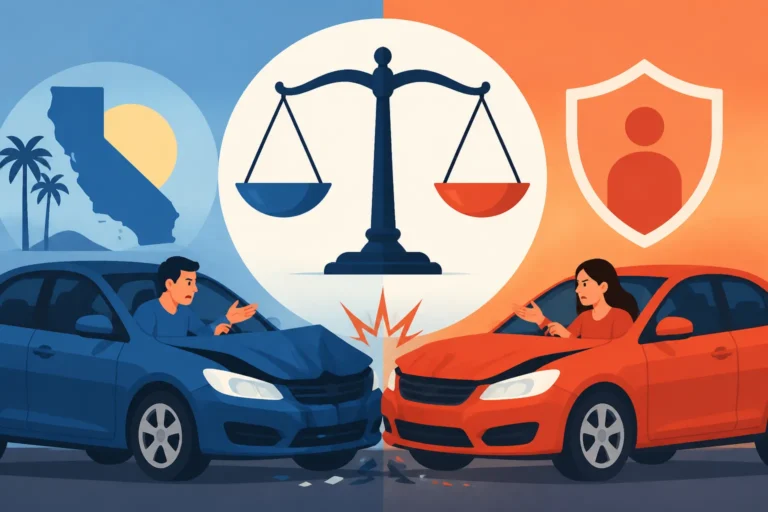
- Pure Comparative Negligence: In states like California, even if you are 99% at fault, you can still recover damages for the 1% that the other driver contributed. However, your settlement will be reduced by your percentage of fault. So, if you suffered $100,000 in damages but were 10% at fault, you would only receive $90,000. This is explained further in articles like "Pure Comparative Negligence States Explained".
- Modified Comparative Negligence: Most states follow this rule, which comes in two forms: the 50% bar rule and the 51% bar rule.
- 50% Bar Rule: In these states (e.g., Texas, Ohio), you can only recover damages if you are 49% or less at fault. If you are found to be 50% or more at fault, you cannot recover any compensation.
- 51% Bar Rule: In these states (e.g., Illinois, Pennsylvania), you can recover damages if you are 50% or less at fault. If you are found to be 51% or more at fault, you cannot recover.
The key takeaway here is that even if the other driver was clearly texting, an insurance company or court might try to assign some fault to you – for instance, if you were speeding slightly, didn't react quickly enough, or had a broken taillight. This is where diligent evidence collection and legal representation become invaluable, as they can help minimize any fault unfairly placed upon you and protect your potential settlement. For a deeper dive, check out "Comparative vs Contributory Negligence Explained".
What Happens If Both Drivers Are Distracted?
It's an unfortunate reality that in some accidents, more than one driver might have been distracted. While the notion of one "at-fault" driver is common, the legal system often accounts for shared responsibility. This can significantly complicate the claims process and how compensation is distributed.
Shared Responsibility Scenarios
Imagine a scenario: Driver A, texting, swerves into another lane. Driver B, also texting, doesn't react quickly enough and hits Driver A's vehicle. Who is at fault? This is a classic example of a shared responsibility scenario. Both drivers engaged in negligent behavior. The determination of fault in such cases will involve assessing the degree to which each driver's distraction contributed to the accident.
Factors that might be considered include:
- Severity of Distraction: Was one driver merely glancing at a notification while the other was actively typing a long message?
- Direct Causation: Whose distraction directly led to the initial unsafe maneuver or failure to avoid the collision?
- Other Contributing Factors: Were there other elements at play, such as speeding, impaired driving, or traffic law violations, that compounded the distracted driving?
For instance, if Driver A was texting and drifted into Driver B's lane, Driver A might bear a higher percentage of fault for the lane change. However, if Driver B was also distracted and could have avoided the collision had they been paying attention, they might be assigned a smaller percentage of fault for failing to react. These complex situations require a thorough investigation, often involving police reports and potentially accident reconstruction experts to piece together the sequence of events and assign percentages of fault. This is where understanding how insurance companies determine who is at fault becomes critically important.
How Shared Fault Impacts Your Claim
When both drivers are found to share fault, the impact on your ability to recover damages is directly tied to your state's comparative negligence laws. If you are injured in an accident where you were partially at fault due to your own distraction, your potential settlement will likely be reduced.
Let's use an example from a modified comparative negligence state with a 51% bar rule, like Illinois. If you suffered $50,000 in damages, but were found 20% at fault for being distracted, you would only be able to recover $40,000 ($50,000 – 20%). However, if you were found 55% at fault, you would recover nothing. In a pure comparative negligence state like California, even with 55% fault, you could still recover $22,500 ($50,000 – 55%), though your net recovery would be significantly less.
This is precisely why it's so important to be completely honest with yourself and any legal counsel about your own actions leading up to an accident. The defense will undoubtedly look for ways to shift blame, and if you were also distracted, they will use that against you. Knowing "What Happens If You're Partially at Fault?" can help you prepare for the potential reduction in your settlement.
| State Type | Your Fault Percentage | Recovery Impact | Example (for $100,000 damages) |
|---|---|---|---|
| Pure Comparative Negligence | Any percentage | Your compensation is reduced by your percentage of fault. | 20% fault = $80,000 |
| 60% fault = $40,000 | |||
| Modified Comparative (50% Bar) | 0-49% | Your compensation is reduced by your percentage of fault. | 20% fault = $80,000 |
| 50% or more | Cannot recover any damages. | 50% fault = $0 | |
| Modified Comparative (51% Bar) | 0-50% | Your compensation is reduced by your percentage of fault. | 20% fault = $80,000 |
| 51% or more | Cannot recover any damages. | 51% fault = $0 | |
| Contributory Negligence | Any percentage | If you are 1% or more at fault, you cannot recover any damages. (Rare, e.g., AL, MD, NC, VA, DC) | 1% fault = $0 |
Note: This table provides a simplified overview. State laws are complex and may have additional nuances.
Navigating Your Claim After a Texting Accident
Dealing with the aftermath of an accident, especially one caused by a distracted driver, can feel overwhelming. You're likely hurt, your car is damaged, and now you have to contend with insurance companies. Knowing the steps to take and when to seek professional help can make all the difference.
Dealing With Insurance Companies
The moment you report an accident, the insurance companies begin their process. If you were hit by a distracted driver, you'll primarily be dealing with their insurance provider, but you should also inform your own. Remember that insurance adjusters, while seemingly helpful, are ultimately looking out for their company's bottom line. Their goal is to pay out as little as possible.
- Be Cautious About Recorded Statements: The other driver's insurance company will likely ask you for a recorded statement. While you must cooperate, be very cautious. Do not speculate about fault, minimize your injuries, or discuss your medical history in detail. Stick to the facts of the accident. It's often best to consult with an attorney before giving a recorded statement.
- Provide Evidence Promptly: Share any evidence you've collected – photos, witness contacts, police report numbers – with both your insurance company and the at-fault driver's insurer. This helps build a strong case right from the start.
- Don't Settle Too Quickly: The at-fault insurer might offer you a quick settlement, especially if their policyholder's distraction is obvious. These initial offers are often "lowball" offers and may not cover the full extent of your damages, including future medical bills or lost wages. It's crucial to understand "How Much Is My Car Accident Settlement Worth?" before accepting anything.
- Keep Detailed Records: Maintain meticulous records of all medical appointments, treatments, prescription costs, lost wages, and any other expenses related to the accident. These documents will be vital for substantiating your claim.
Even if it wasn't your fault, informing your own insurance company is usually a good idea, as they can sometimes help navigate the process or, if necessary, cover costs under your policy (like medical payments or uninsured motorist coverage) and then seek reimbursement from the at-fault driver's insurer through subrogation. For more guidance, see "Should You Call Your Insurance If It Wasn't Your Fault?".
When to Involve a Car Accident Lawyer
While you can technically try to handle a car accident claim on your own, a distracted driving accident, especially if injuries are involved, often benefits greatly from legal expertise. A car accident lawyer can be your advocate, ensuring your rights are protected and you receive fair compensation.
You should seriously consider hiring an attorney if:
- You Sustained Injuries: Even seemingly minor injuries like whiplash can have long-term consequences. An attorney can help document your injuries, connect you with appropriate medical care, and ensure all your medical expenses are covered. Learn more about "Common Car Accident Injuries: Complete Guide (2026)".
- Fault is Disputed: If the other driver denies texting or tries to blame you, a lawyer can gather the necessary evidence, including phone records, to prove their negligence. They know "How to Prove the Other Driver Was at Fault".
- Significant Damages: If your car is totaled, you have extensive medical bills, or you've lost substantial income, the potential settlement amount will be higher and more complex to negotiate.
- The Insurance Company is Being Uncooperative: If the insurer is delaying, denying your claim unfairly, or offering a very low settlement, a lawyer can pressure them to act responsibly.
- You're Unsure of Your Rights: The legal process is intricate, and a lawyer can explain your rights and options clearly.
A lawyer can handle all communication with insurance companies, investigate the accident thoroughly, negotiate a fair settlement, and if necessary, file a lawsuit on your behalf. They work on a contingency fee basis, meaning you typically don't pay anything upfront and they only get paid if you win your case. This makes legal representation accessible even if you're worried about costs. Don't hesitate to seek a "Free Car Accident Lawyer Consultation: What to Expect" to understand your options.
Preventing Distracted Driving for Safer Roads
Ultimately, the best way to avoid the headache and heartbreak of a distracted driving accident is to prevent them from happening in the first place. While you can't control other drivers, you can certainly control your own actions and advocate for safer roads for everyone.
Defensive Driving Strategies
Being a defensive driver means anticipating potential hazards and reacting safely. This is especially critical in an era where distracted drivers are common.
- Maintain a Safe Following Distance: This is perhaps the most important tip. The more space you have between your vehicle and the one in front of you, the more time you'll have to react if that driver suddenly brakes due to distraction. This also gives you room if the driver behind you is distracted and fails to stop in time, potentially reducing the impact of a rear-end collision.
- Scan the Road Constantly: Don't just look at the car directly in front of you. Keep your eyes moving, checking mirrors, intersections, and several car lengths ahead. This allows you to spot erratic driving behavior (like weaving or sudden slowdowns) that might indicate a distracted driver.
- Avoid Assumptions: Don't assume other drivers will signal, yield, or stop at red lights. Always be prepared for them to do the unexpected, especially if you see them on their phone.
- Minimize Your Own Distractions: Lead by example. Put your phone away, set your navigation before you leave, and eat before or after your drive. Your attention needs to be 100% on the road. Many modern vehicles integrate Apple CarPlay and Android Auto to minimize manual interaction with phones, allowing safer access to navigation and music.
- Be Aware of Your Surroundings: Pay extra attention in areas where distracted driving is common, such as school zones, construction areas, or heavy traffic.
By practicing these defensive driving techniques, you can significantly reduce your risk of being involved in any type of accident, including those caused by distracted drivers.
Technological Solutions and Public Awareness
Beyond individual actions, there's a growing push for technological solutions and public awareness campaigns to combat distracted driving.
- Vehicle Technology: Many newer cars come equipped with advanced driver-assistance systems (ADAS) that can help prevent accidents. Features like automatic emergency braking, lane-keeping assist, and blind-spot monitoring can provide a crucial safety net, sometimes even intervening when a human driver (or another human driver) is distracted. For instance, Toyota Safety Sense and Honda Sensing suites include features designed to mitigate collisions.
- Smartphone Apps: There are numerous apps designed to prevent distracted driving by blocking texts or calls when the phone detects it's in a moving vehicle. Apple's "Do Not Disturb While Driving" mode is a prime example, automatically silencing notifications and sending auto-replies.
- Public Awareness Campaigns: Organizations like the National Safety Council and NHTSA regularly launch campaigns to educate the public about the dangers of distracted driving. These campaigns use powerful messages to remind drivers of the potentially devastating consequences of texting behind the wheel, encouraging a change in behavior.
- Enhanced Enforcement: Law enforcement agencies are increasing efforts to enforce distracted driving laws through initiatives like "U Drive. U Text. U Pay." campaigns, particularly in states with primary enforcement laws. The aim is to create a culture where distracted driving is as socially unacceptable as drunk driving.
By embracing these solutions and continually raising awareness, we can collectively work towards making our roads safer for everyone and reducing the number of tragic accidents caused by a moment of inattention.
Disclaimer
Please remember that this article provides general information and insights into car accident claims involving distracted driving. It is not intended as legal advice. Every accident case is unique, and the laws governing car accidents can vary significantly by state and specific circumstances. For personalized advice regarding your situation, it is always recommended to consult with a qualified legal professional in your jurisdiction.