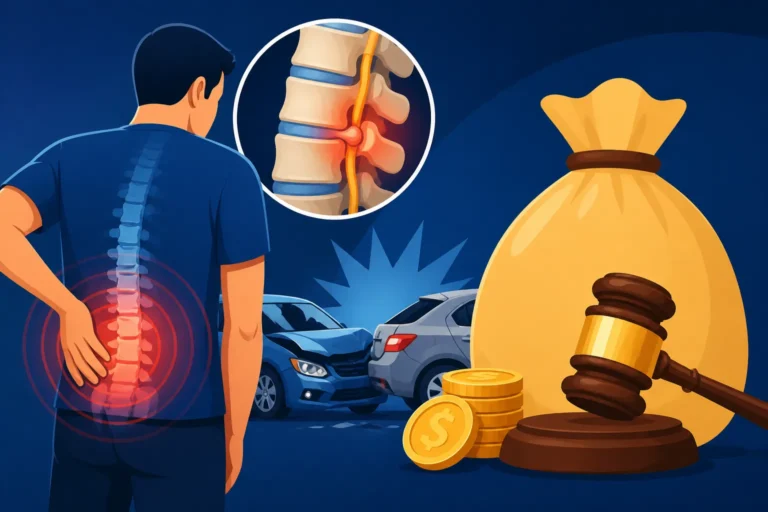
How Much Is a Back Injury Settlement Worth in California?
Getting into a car accident can turn your world upside down, and discovering you have a back injury afterward can add layers of pain, anxiety, and uncertainty. One of the biggest worries, beyond healing, is often: "How much is my back injury settlement worth, especially here in California?" This guide is designed to shed some light on that very real concern, helping you understand the factors that shape settlement values and what to expect when pursuing compensation for your back injury.
Understanding Back Injuries and Their Impact After a Car Accident
When you're involved in a car accident, even a seemingly minor fender bender, the forces at play can wreak havoc on your spine. The sudden impact, twisting motions, and violent jerking can cause significant damage to the delicate structures of your back. This isn't just a fleeting ache; these injuries can alter your life in profound ways, affecting everything from your ability to work to simply enjoying time with your family.
Common Types of Back Injuries from Car Crashes
The back is a complex system of bones, muscles, ligaments, tendons, and nerves, making it vulnerable to a wide range of injuries in a collision. It's crucial to get a proper diagnosis, as what might feel like a simple muscle strain could actually be something much more serious.
One of the most frequently discussed car accident injuries, though often associated with the neck, is What Is Whiplash? Symptoms, Treatment & Claims. Whiardlash can extend down into the upper back, causing muscle spasms, stiffness, and pain. It happens when your body is thrown forward and then snapped back, stretching and tearing soft tissues. While seemingly minor, chronic whiplash can be debilitating.
Beyond soft tissue injuries like strains and sprains to the muscles and ligaments, more severe back injuries often involve the vertebral discs. These jelly-like cushions sit between your vertebrae, absorbing shock. A car accident can cause a Herniated Disc From a Car Accident, where the soft inner material pushes out through a tear in the tougher outer layer. This can press on nearby nerves, leading to radiating pain, numbness, or weakness in your arms or legs – a truly miserable experience that many people endure. Fractured vertebrae, where one or more bones in your spine crack or break, are also sadly common in high-impact collisions and can lead to intense pain and instability.
The most catastrophic of all back injuries is a spinal cord injury. The spinal cord is the main pathway for messages between your brain and the rest of your body. Damage to it can result in partial or complete paralysis below the injury site, fundamentally changing a person's life forever. Such injuries demand extensive, lifelong care, and understanding their long-term impact is critical for any settlement discussion.
The Long-Term Consequences of Back Injuries
It's not just the immediate pain that makes back injuries so challenging; it's the potential for lingering, life-altering consequences. Many people experience chronic pain that persists for months or even years after the initial accident, transforming daily tasks into Herculean efforts. This persistent discomfort can lead to a significant reduction in mobility, making it difficult to bend, lift, or even sit comfortably for extended periods. Imagine being unable to pick up your child, enjoy a hike you once loved, or even just drive without constant throbbing.
The ripple effect extends far beyond the physical. Back injuries can severely impact your ability to work, leading to lost wages and, in some cases, a complete inability to return to your previous profession. This financial strain compounds the physical and emotional burden. The psychological toll is also immense; living with chronic pain and limited function often leads to depression, anxiety, and a feeling of hopelessness. Simple pleasures, hobbies, and social activities that once brought joy can become impossible or too painful to undertake. This loss of enjoyment of life is a significant, yet often overlooked, component of damages in an accident claim.
Furthermore, these injuries frequently necessitate ongoing medical care. This can include continuous physical therapy, regular doctor visits, pain management injections, expensive medications, and potentially even multiple surgeries down the line. These aren't one-time expenses but a future stream of costs that must be accounted for in any fair settlement. For a deeper dive into these complex issues, you can explore guides on Back and Spinal Injuries From Car Accidents.
Key Factors Influencing Back Injury Settlement Values in California
California is a unique state when it comes to car accident claims, and understanding the specific laws and how various elements contribute to your case's value is absolutely essential. It's not a one-size-fits-all scenario; your settlement amount will be a direct reflection of the specifics of your injury and how well your case is presented.
Severity of the Injury and Medical Treatment Required
This is arguably the most significant factor. Simply put, the more severe your back injury, and the more extensive the medical care needed to treat it, the higher your potential settlement value. A minor back strain that resolves with a few weeks of physical therapy will understandably yield a lower settlement than a ruptured disc requiring spinal fusion surgery.
Insurance companies, and eventually juries if a case goes to trial, look at objective evidence to confirm the severity. This includes diagnostic imaging like X-rays, MRIs, and CT scans that clearly show the damage. They'll also scrutinize your medical records detailing every doctor's visit, specialist consultation, prescription, and therapeutic session. The type and duration of treatment — whether it’s chiropractic care, physical therapy, epidural injections, or complex surgeries — directly inform the economic damages related to your medical bills. A strong, consistent medical record that clearly links your injuries to the accident is paramount for proving your claim and demonstrating the true impact of your injury.
Economic vs. Non-Economic Damages in California
Car accident settlements in California are typically divided into two main categories of damages: economic and non-economic. Understanding the difference is crucial for grasping your claim's full potential value. For a comprehensive overview, consider reading our guide on Economic vs Non-Economic Damages in Injury Claims.
-
Economic Damages: These are quantifiable, objective losses that have a clear monetary value. They include:
- Medical Bills: Past and future costs for doctors, hospitals, specialists, medications, therapies, and any necessary medical equipment.
- Lost Wages: Income you've lost due to being unable to work, and any future lost earning capacity if your injury prevents you from returning to your job or requires you to take a lower-paying one.
- Property Damage: Costs to repair or replace your vehicle.
- Out-of-Pocket Expenses: Anything else you've paid for directly because of the accident, like transportation to medical appointments or assistive devices.
-
Non-Economic Damages: These are subjective, intangible losses that don't have a direct bill associated with them. In California, these can be substantial, especially for back injuries. They primarily cover:
- Pain and Suffering: The physical pain and discomfort you've endured and will continue to endure.
- Emotional Distress: Anxiety, depression, fear, anger, and other psychological impacts of the accident and injury.
- Loss of Enjoyment of Life: Your inability to participate in hobbies, recreational activities, or daily functions you once enjoyed.
- Loss of Consortium: If applicable, the negative impact on your relationship with your spouse.
In California, non-economic damages can be a significant portion of your settlement, particularly for chronic back injuries. The method often used to estimate these is the "multiplier method," where your economic damages are multiplied by a factor (usually between 1.5 and 5, or even higher for severe injuries). The specific multiplier depends on the severity, permanence, and overall impact of your injury. To learn more about this calculation, see How the Pain and Suffering Multiplier Works (1.5x–5x).
Impact of Fault and Comparative Negligence Laws
California operates under a "pure comparative negligence" system, which is a critical piece of information when dealing with any car accident claim, especially one involving a back injury. What does this mean for you? Even if you are found to be partially at fault for the accident, you can still recover damages from the other driver. However, your total settlement amount will be reduced by your percentage of fault. For a detailed explanation, check out our guide on Pure Comparative Negligence States Explained.
Let's imagine a scenario: you're driving in Sacramento and get into a T-bone accident at an intersection. Your back is severely injured, and your total damages (economic and non-economic) are calculated at $100,000. However, the investigation determines that while the other driver ran a red light, you were slightly speeding, and a jury assigns you 20% of the fault. Under California's pure comparative negligence, your $100,000 settlement would be reduced by 20%, meaning you would ultimately recover $80,000.
This aspect of the law underscores the importance of thoroughly investigating the accident and accurately assigning fault. Insurance companies will always try to shift as much blame as possible onto you to minimize their payout. This is where meticulous documentation and potentially legal counsel become invaluable.
Estimating Your Back Injury Settlement Range in California
Trying to put a number on a back injury settlement can feel like an impossible task, but by breaking down the components and understanding the methods used, you can get a clearer picture of what a fair settlement might look like. There's no magic calculator, but you can certainly make an educated estimate. For a broader understanding of how these figures are derived, you might find our article on How Car Accident Settlements Are Calculated helpful.
Calculating Economic Damages
This is the most straightforward part of the calculation because it involves concrete numbers. Start by gathering every single bill, receipt, and record related to your accident and injuries.
- Current Medical Bills: Add up everything from ambulance rides, emergency room visits, doctor appointments, specialist consultations (orthopedists, neurologists), physical therapy sessions, chiropractic care, medications, diagnostic tests (X-rays, MRIs, CT scans), and any medical equipment you've had to purchase (braces, walkers, special pillows).
- Future Medical Expenses: This is where it gets a bit trickier and often requires expert opinion, especially for serious back injuries. If your doctor anticipates ongoing treatment, future surgeries, long-term physical therapy, or lifelong pain management, these costs need to be estimated and included. A life care plan, developed by medical professionals, can project these expenses accurately.
- Lost Wages: Calculate the income you've lost from missing work due to your injury, recovery time, and medical appointments. Include not just your base salary or hourly wage, but also any lost bonuses, commissions, or benefits.
- Lost Earning Capacity: If your back injury prevents you from returning to your previous job or requires you to take a lower-paying one, you can claim damages for your reduced earning capacity over your lifetime. This often requires vocational experts to assess.
- Other Out-of-Pocket Costs: Don't forget expenses like mileage to and from doctor appointments, parking fees, household services you had to hire (like cleaning or yard work) because you couldn't do them yourself, and assistive devices.
Keeping a meticulous log of all these expenses is non-negotiable for a robust claim.
Approaching Non-Economic Damages (Pain and Suffering)
Estimating pain and suffering, emotional distress, and loss of enjoyment of life is inherently more subjective, but California law acknowledges their very real impact. As mentioned earlier, the "multiplier method" is frequently employed by insurance adjusters and lawyers to arrive at a figure.
Here's how it generally works: your total economic damages are multiplied by a number, typically between 1.5 and 5. For a minor back injury like a sprain that heals fully in a few weeks, a multiplier of 1.5 or 2 might be used. For a severe herniated disc requiring surgery, causing chronic pain and significantly impacting your daily life, a multiplier of 3, 4, or even 5 could be applied. In cases of catastrophic injury, such as a severe spinal cord injury with permanent disability, the multiplier could be even higher.
Factors that influence the multiplier include:
- Severity of the Injury: Is it a soft tissue injury or a fractured vertebra?
- Permanence of the Injury: Will you fully recover, or will you have lifelong pain or limitations?
- Impact on Daily Life: How much has the injury interfered with your work, hobbies, family life, and personal relationships?
- Pain Levels: Documented and consistent complaints of pain.
- Emotional Distress: Evidence of anxiety, depression, or PTSD related to the accident.
- Medical Prognosis: What do your doctors say about your future recovery and needs?
Documenting your pain and suffering through a detailed personal journal can be incredibly helpful. Note your daily pain levels, how the injury affects your sleep, mood, ability to do chores, and hobbies.
Real-World Examples and Averages
It's tempting to look for an "average" settlement, but the truth is, average numbers can be misleading because every back injury and every accident is unique. However, we can look at ranges based on injury severity and typical treatment paths. Remember, these are estimates for California, and your specific case may fall outside these ranges.
| Back Injury Type | Typical Treatment | Potential Economic Damages (Estimate) | Potential Non-Economic Multiplier | Estimated Settlement Range (California) |
|---|---|---|---|---|
| Minor Back Strain/Sprain | Rest, physical therapy, pain medication | $3,000 – $10,000 | 1.5x – 2.5x | $4,500 – $35,000 |
| Moderate Herniated Disc | PT, injections, possible minimally invasive surgery | $15,000 – $50,000 | 2.5x – 3.5x | $37,500 – $175,000 |
| Severe Herniated/Bulging Disc (Surgery) | Spinal fusion, discectomy, long-term PT | $50,000 – $150,000+ | 3.5x – 5x+ | $175,000 – $750,000+ |
| Vertebrae Fracture | Bracing, surgery, extensive rehabilitation | $75,000 – $250,000+ | 4x – 6x+ | $300,000 – $1,500,000+ |
| Spinal Cord Injury | Extensive surgery, lifelong medical care, adaptive equipment, in-home care | $500,000 – millions | 5x – 8x+ | $2,500,000 – several millions |
Disclaimer: These ranges are highly generalized estimates for informational purposes only. Actual settlement values depend on numerous unique factors of each case, including liability, insurance limits, and negotiation tactics.
As you can see, the range is vast. A simple soft tissue injury might lead to a settlement in the tens of thousands, while a severe spinal cord injury can be worth millions. This is why a thorough and detailed assessment of all your damages is so important. When evaluating your potential settlement, it can also be useful to review information on the Average Car Accident Settlement Amounts by Injury.
Navigating the Claims Process and Maximizing Your Settlement
The journey from accident to settlement can be complicated and stressful, especially when you're dealing with a debilitating back injury. Knowing how to protect your rights and build a strong case is crucial for maximizing your compensation in California.
The Importance of Immediate Medical Attention and Documentation
This cannot be stressed enough: seek medical attention immediately after a car accident, even if you feel okay at the scene. Symptoms of back injuries, like a herniated disc or nerve impingement, can have Delayed Injury Symptoms After a Car Accident and may not manifest for hours or even days. Delaying medical care can seriously harm your claim for two main reasons:
- Health First: Your health is paramount. A medical professional can properly diagnose your injury and start you on the right treatment plan.
- Causation: Insurance companies love to argue that your injuries weren't caused by their insured's negligence if there's a gap between the accident and your first medical visit. They'll claim you injured your back doing something else. Prompt documentation from a doctor creates an undeniable link between the accident and your injury.
Once you're under medical care, diligently follow all your doctor's recommendations. Attend every physical therapy session, take prescribed medications, and go to all specialist appointments. Consistency in treatment demonstrates to the insurance company that your injuries are real and that you are committed to your recovery. Keep detailed records of every doctor's visit, every bill, every prescription, and any medical reports. Maintaining a personal pain journal, noting how your back injury affects your daily life, your mood, and your ability to do things, also provides crucial evidence for your non-economic damages. To really understand how important this is, read How to Prove Injuries in a Car Accident Claim.
Dealing with Insurance Companies in California
Dealing with insurance adjusters can feel like a game you don't understand, and they often hold all the cards – or so it seems. Remember, their primary goal is to minimize the payout, not to ensure you get everything you deserve.
- Be Cautious with Statements: Never give a recorded statement to the at-fault driver's insurance company without first consulting with an attorney. What you say can and will be used against you to devalue your claim. A simple, polite statement that you are seeking medical attention and will have your attorney contact them is usually sufficient.
- Initial Offers are Low: Be prepared for a lowball offer initially. This is standard practice. They're testing the waters to see if you're desperate or uninformed. Don't feel pressured to accept it. Our article on Should You Accept the First Settlement Offer? covers this in more detail.
- Understand Policy Limits: The amount of coverage the at-fault driver has can impact your maximum recovery. However, an experienced attorney can explore other avenues, like your own uninsured/underinsured motorist coverage, if the at-fault driver's policy is insufficient.
- Negotiation is Key: Car accident claims are almost always a negotiation. Providing compelling evidence of your damages, including medical bills, lost wages, and detailed accounts of your pain and suffering, is vital for a successful negotiation. Check out our guide on How to Negotiate a Car Accident Settlement for more tips.
When to Consider Legal Representation
For a severe back injury from a car accident in California, hiring an experienced personal injury attorney is almost always a wise decision. While you can try to handle a minor claim yourself, the complexities of a significant back injury — medical prognoses, future care costs, the intricacies of comparative negligence, and dealing with aggressive insurance adjusters — usually warrant professional help.
An attorney specializing in car accident claims in California will:
- Protect Your Rights: Ensure you don't inadvertently say or do something that harms your case.
- Gather Evidence: Collect all necessary medical records, police reports, witness statements, and expert testimony to build a robust case.
- Accurately Calculate Damages: Account for all current and future economic and non-economic damages, ensuring nothing is overlooked.
- Negotiate Aggressively: Leverage their experience to negotiate with insurance companies, pushing for the highest possible settlement.
- Represent You in Court: If a fair settlement cannot be reached, they will be prepared to take your case to trial.
Trying to manage a complex back injury claim on your own while simultaneously recovering from your injuries can be overwhelming and lead to a significantly lower settlement. While there might be some fees involved, a good lawyer often helps you recover substantially more than you would on your own, making their fees a worthwhile investment. For a more detailed look at this decision, you might want to read Do You Need a Lawyer for a Car Accident?.
Disclaimer
Please remember that this article provides general information and insights into car accident back injury settlements in California. It is not legal advice. The value of any car accident settlement is highly dependent on the specific facts and circumstances of each individual case. For personalized advice regarding your back injury claim, it is essential to consult with a qualified personal injury attorney in California.