Is Knee Injury Common After a Rear-End Collision?
Being involved in a rear-end collision, even a seemingly minor one, can be incredibly jarring and leave you feeling disoriented, anxious, and often, in pain. When we think about injuries from these types of accidents, our minds often jump straight to whiplash or lower back pain. But what many people don't realize is that your knees are also highly susceptible to significant injury in a rear-end crash. This guide will delve into why knee injuries are surprisingly common after rear-end collisions, what specific types of injuries to look out for, and why seeking prompt medical attention is absolutely critical.
The Overlooked Vulnerability of Knees in Rear-End Accidents
It's a common misconception that rear-end collisions primarily impact the neck and spine. While those are certainly areas of concern, the forces at play in such an accident can have a ripple effect throughout your entire body, and your knees are right in the line of fire. The sudden stop or forceful push from behind can cause your body to react in ways that place immense stress on these vital joints.
Understanding the Mechanics of Knee Impact
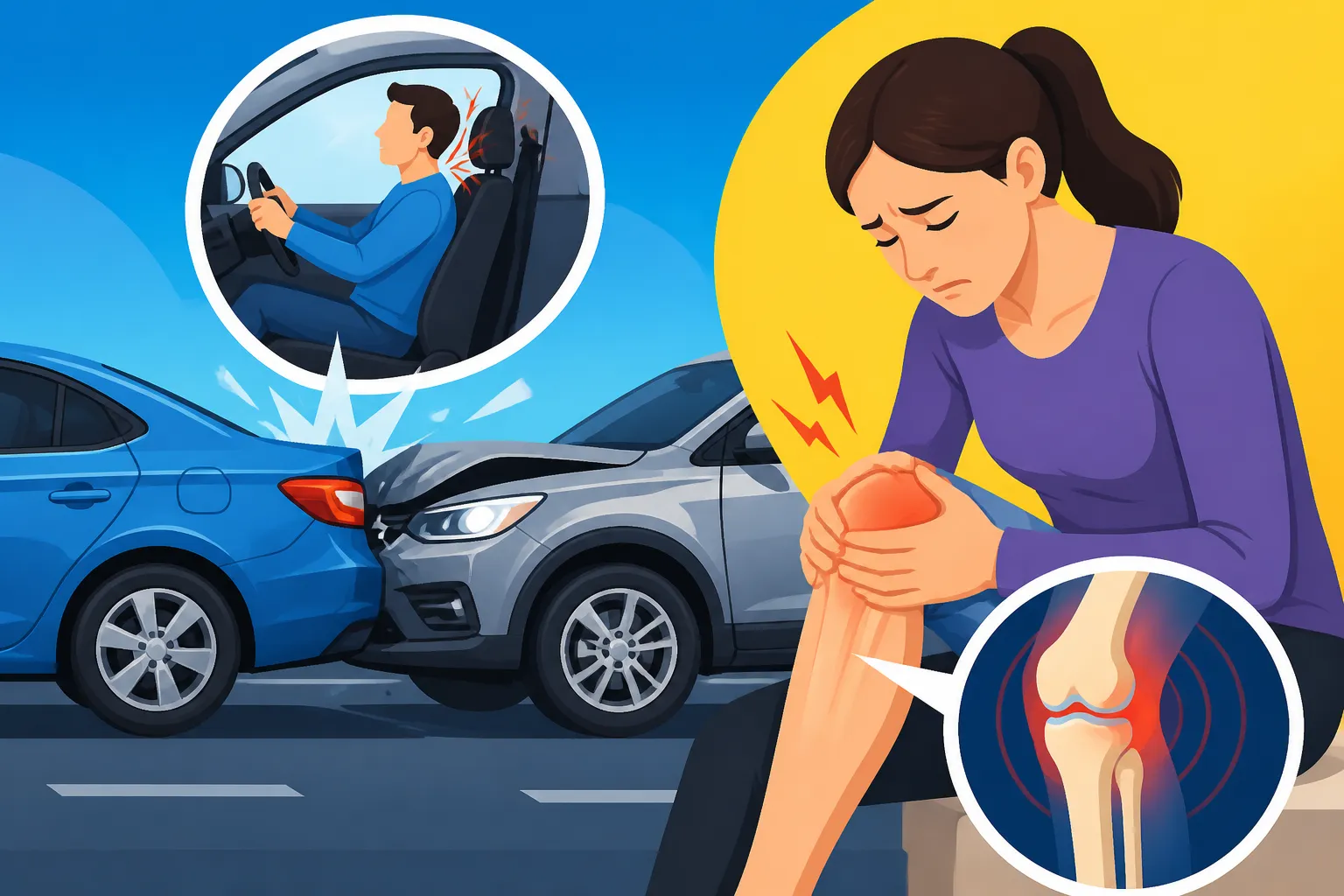
Think about what happens to your body when your car is struck from behind. Even if you see it coming and try to brace yourself, the inertia is powerful. Your torso is thrown forward, and your legs, often positioned firmly on the brake pedal or against the floorboard, absorb a tremendous amount of force. This can lead to your knees striking the dashboard, steering column, or even the underside of the glove compartment with considerable impact. This direct force can cause significant damage, especially if you had your knees bent.
Furthermore, the act of bracing your body, particularly by stiffening your legs, can also put your knees in a vulnerable, locked-out position. When the impact occurs, this rigid posture prevents the natural shock absorption of your joints, transferring the force directly through the bones and ligaments of the knee. It's not just the direct impact but the twisting and hyperextension that can occur as your body shifts unexpectedly.
Why Knee Pain Might Not Be Immediate
One of the most insidious aspects of car accident injuries, including those to the knee, is that they don't always manifest immediately. The adrenaline rush following a collision is a powerful thing; it can mask pain and allow you to function with injuries you might not even be aware of. You might feel fine at the scene, exchange information with the other driver, and even drive home, only for stiffness, swelling, or outright pain to set in hours or even days later. This phenomenon of Delayed Injury Symptoms After a Car Accident is very real and can complicate both your recovery and any potential claims process.
Because of this delay, many people might dismiss initial knee discomfort as just part of the overall body soreness from the accident, not realizing it could be a sign of a more serious underlying injury. It's crucial not to underestimate any new aches or pains that develop after a crash, no matter how minor they seem at first.
Common Types of Knee Injuries Sustained from Rear-End Collisions
When your knee takes a hit, either directly or through extreme twisting, several types of injuries can occur. Some are more common than others, but all warrant prompt medical evaluation to prevent long-term complications.
Dashboard Injuries and Their Consequences
These are perhaps the most straightforward knee injuries in rear-end collisions, happening when your knee forcefully impacts the dashboard or other interior structures.
- Patellar Fractures: Your kneecap (patella) can fracture from direct impact. This can range from minor cracks to more severe breaks that require surgery. Symptoms usually include immediate pain, swelling, bruising, and difficulty straightening the leg.
- Posterior Cruciate Ligament (PCL) Tears: The PCL is one of the major ligaments in your knee, preventing your shinbone (tibia) from sliding too far backward. A dashboard impact can push your shinbone backward, tearing or rupturing this ligament. PCL tears can cause pain, swelling, and instability, making it hard to walk or bear weight.
- Meniscus Tears: The meniscus is cartilage that acts as a shock absorber between your thigh bone (femur) and shinbone. A direct blow or sudden twisting motion can tear this cartilage. Symptoms often include pain, swelling, stiffness, a popping sensation, and difficulty extending or bending your knee fully. These can be particularly debilitating and sometimes require surgical repair.
Twisting and Bracing-Related Knee Damage
Even without direct impact, the awkward positioning and sudden forces during a rear-end crash can lead to significant knee injuries.
- Anterior Cruciate Ligament (ACL) Tears: While more commonly associated with sports injuries involving sudden stops and changes in direction, an ACL tear can happen in a car accident if your foot is planted and your body twists violently. This ligament helps stabilize the knee, and a tear often presents with a popping sound, severe pain, swelling, and instability.
- Medial Collateral Ligament (MCL) Sprains/Tears: The MCL is on the inside of your knee and helps prevent the knee from bending inward. A rear-end collision can cause your leg to be forced outward, stressing or tearing the MCL. This typically results in pain and tenderness on the inside of the knee, swelling, and a feeling of instability.
- Kneecap Dislocation: The patella can be forced out of its groove if your leg twists or takes a hit from an unusual angle. This is often excruciatingly painful, causes visible deformity, and makes it impossible to move the leg.
- Tibial Plateau Fractures: This is a fracture of the top part of your shinbone where it meets the knee joint. This can be caused by significant axial loading (force pushing down through the leg) or a direct impact. These are serious injuries that often require surgery and can have long recovery times, impacting your ability to walk.
Other Significant, Though Less Common, Knee Injuries
While less frequent, it's important to be aware of other potential knee injuries that can occur:
- Articular Cartilage Damage: This smooth tissue covers the ends of bones in the knee joint, allowing them to glide smoothly. Trauma from an accident can damage this cartilage, leading to pain, swelling, and eventually, arthritis.
- Avulsion Fractures: These occur when a ligament or tendon pulls a small piece of bone away from the main bone. In the knee, this can happen at the attachment points of various ligaments due to extreme forces.
Recognizing Symptoms and Seeking Prompt Medical Attention
Understanding that knee injuries are a real possibility after a rear-end accident is the first step. The next is knowing how to recognize the signs and, crucially, what to do about them.
What to Look For: Immediate vs. Delayed Symptoms
As mentioned, immediate pain isn't always present. Here’s a detailed list of symptoms that should prompt you to seek medical attention for your knee after a rear-end collision:
- Pain: Any new pain in or around the knee, whether sharp, aching, or throbbing. Pay attention to pain that worsens with activity or specific movements.
- Swelling: Noticeable swelling around the knee joint, which can indicate fluid buildup, inflammation, or internal bleeding.
- Bruising: Discoloration around the knee, a clear sign of impact or internal bleeding.
- Stiffness: Difficulty bending or straightening your knee, especially after periods of rest.
- Popping or Clicking Sounds: These sounds, especially if accompanied by pain, can suggest a meniscus tear or other structural damage.
- Instability or "Giving Way": A feeling that your knee might buckle or give out, indicating potential ligament damage.
- Limited Range of Motion: Inability to fully extend or flex your knee compared to your other leg or before the accident.
- Tenderness to Touch: Localized pain when you press on specific areas of the knee.
- Numbness or Tingling: This could indicate nerve involvement, though it's less common for isolated knee injuries.
It cannot be stressed enough: if you experience any of these symptoms after a car accident, even if they appear days later, you must see a doctor. Ignoring these signs can lead to worsening injury, chronic pain, and long-term disability. Remember, seeing a doctor is also vital for your Car Accident Claim Timeline: What to Expect.
The Absolute Necessity of Medical Documentation
Seeking timely medical attention isn't just about your health; it's also paramount if you ever need to pursue a car accident claim. Insurance companies require concrete evidence of your injuries and their direct link to the accident. Without proper medical documentation, it becomes incredibly challenging to prove your injuries were caused by the collision.
When you visit a doctor, be completely honest and thorough about your symptoms, even if they seem minor. Describe the accident, how your knee was impacted or twisted, and when you started feeling pain. Your doctor will perform a physical examination, and likely order diagnostic tests such as X-rays (to rule out fractures) or an MRI (which can show soft tissue damage like ligament or meniscus tears). This detailed medical record is the backbone of How to Prove Injuries in a Car Accident Claim. Every appointment, every diagnosis, every treatment plan – it all contributes to a comprehensive picture of your injury and its impact on your life.
Navigating Your Recovery and Potential Claim
Dealing with a knee injury after an accident is a multifaceted challenge, involving not just physical recovery but also the often-stressful process of dealing with insurance companies and potential claims.
Understanding Treatment Paths for Knee Injuries
Treatment for knee injuries can vary widely depending on the specific diagnosis and severity. Many soft tissue injuries, such as minor sprains or tears, might respond well to conservative treatments like:
- RICE Therapy: Rest, Ice, Compression, and Elevation.
- Over-the-counter or prescription pain relievers and anti-inflammatory medications.
- Physical Therapy: This is incredibly important for regaining strength, flexibility, and range of motion. A good physical therapist will guide you through exercises designed to rehabilitate your specific injury.
- Bracing: A knee brace can provide support and stability, especially during the initial recovery phases.
For more severe injuries, such as significant ligament tears (like a complete ACL rupture), extensive meniscus tears, or complex fractures, surgery might be necessary. Post-surgery, an intensive physical therapy regimen will be critical for a successful recovery. Your doctor will work with you to determine the best course of action for your particular injury.
The Critical Role of Documentation in Your Claim
As you progress through diagnosis and treatment, consistently documenting everything is key. This includes:
- Medical Records: All doctor's notes, test results, diagnoses, and treatment plans.
- Medical Bills: Keep track of every bill related to your injury, from ER visits to specialists, physical therapy, and prescriptions.
- Lost Wages Documentation: If your knee injury prevents you from working, collect statements from your employer detailing your lost income. This falls under Economic vs Non-Economic Damages Explained.
- Pain and Symptom Journal: Maintain a daily journal detailing your pain levels, limitations, how the injury affects your daily activities, and your emotional state. This helps in documenting Pain and Suffering Damages: What They Cover.
- Photographs: Document any visible bruising, swelling, or scarring.
This meticulous record-keeping is crucial for a smooth How Car Accident Insurance Claims Work process. It provides concrete evidence for your damages, both economic (medical bills, lost wages) and non-economic (pain and suffering, loss of enjoyment of life). Insurance companies are notorious for scrutinizing claims, and comprehensive documentation helps validate your experience and the true extent of your losses.
Considering Legal Guidance
While you focus on recovery, the thought of dealing with insurance adjusters can be daunting, especially when trying to understand the full value of your claim, including the potential for an Average Settlement for Knee Injury From a Car Accident. If your knee injury is significant, leading to extensive medical treatment, lost wages, or long-term disability, it might be beneficial to consult with a car accident attorney. They can help you navigate the complexities of the legal system, negotiate with insurance companies, and ensure you receive fair compensation for all your damages. They understand how different factors can affect your settlement amount and can protect your rights throughout the process.
| Type of Knee Injury | Common Symptoms | Typical Treatment Approaches |
|---|---|---|
| Patellar Fracture | Immediate pain, swelling, bruising, difficulty straightening leg, tenderness. | Immobilization (cast/brace), pain medication. Severe fractures may require surgery (e.g., pinning, wiring) followed by physical therapy. |
| PCL Tear | Pain, swelling, instability (feeling knee might give out), difficulty walking, tenderness behind the knee. | RICE, pain relief, physical therapy to strengthen surrounding muscles. Surgery is less common than for ACL tears but may be recommended for complete tears with instability. |
| Meniscus Tear | Pain (often worse with twisting), swelling, stiffness, popping/clicking sound, feeling of knee "locking" or catching. | RICE, pain relief, physical therapy. For larger or symptomatic tears, arthroscopic surgery to repair or trim the torn cartilage (meniscectomy) is common, followed by rehabilitation. |
| ACL Tear | Loud "pop" sound at time of injury, severe pain, rapid swelling, feeling of knee giving way, inability to continue activity. | RICE, pain relief. Often requires surgical reconstruction (using a graft) for active individuals, followed by extensive physical therapy. Non-surgical management with bracing and PT may be an option for less active individuals. |
| MCL Sprain/Tear | Pain on the inside of the knee, swelling, tenderness, feeling of instability. | RICE, pain relief, brace for support. Physical therapy to restore strength and range of motion. Surgery is rarely needed for MCL injuries. |
| Kneecap Dislocation | Intense pain, visible deformity of the knee, inability to bend or straighten the leg, feeling that the kneecap is "out of place." | Manual reduction (doctor puts kneecap back in place), immobilization (brace), pain relief. Physical therapy to strengthen quadriceps and improve stability. Recurrent dislocations may require surgery. |
| Tibial Plateau Fracture | Severe pain, swelling, bruising, inability to bear weight, possible numbness/tingling if nerves are affected. | Immobilization (cast/brace). Often requires surgery (open reduction and internal fixation) to realign and stabilize the bone, followed by a long period of non-weight bearing and extensive physical therapy. |
Remember, this table provides general information. Only a medical professional can provide an accurate diagnosis and personalized treatment plan for your specific knee injury.
Disclaimer
The information provided in this article is for general informational purposes only and does not constitute legal or medical advice. Always consult with a qualified legal professional for advice regarding your specific situation and a medical professional for any health concerns or before making any decisions related to your health or treatment.