Long-Term Effects of Wrist Injury From a Car Accident
Experiencing a car accident is jarring enough, but when the immediate shock wears off, you might find yourself dealing with persistent pain that just won't quit. A wrist injury, often dismissed as a simple sprain in the heat of the moment, can quietly evolve into a source of chronic discomfort, stiffness, and even disability, severely impacting your everyday life. This guide is here to shed light on the long-term effects of a wrist injury from a car accident, helping you understand what to expect, how to manage it, and how it might affect any potential car accident claim.
Understanding Your Wrist Anatomy and Why It's Vulnerable
Your wrist is a marvel of engineering, allowing for an incredible range of motion and fine motor control. However, this very complexity also makes it incredibly susceptible to intricate damage when subjected to the sudden, forceful impacts of a car accident. It's not just a simple joint; it's a delicate interplay of many components working in harmony.
The Complex Structure of the Wrist
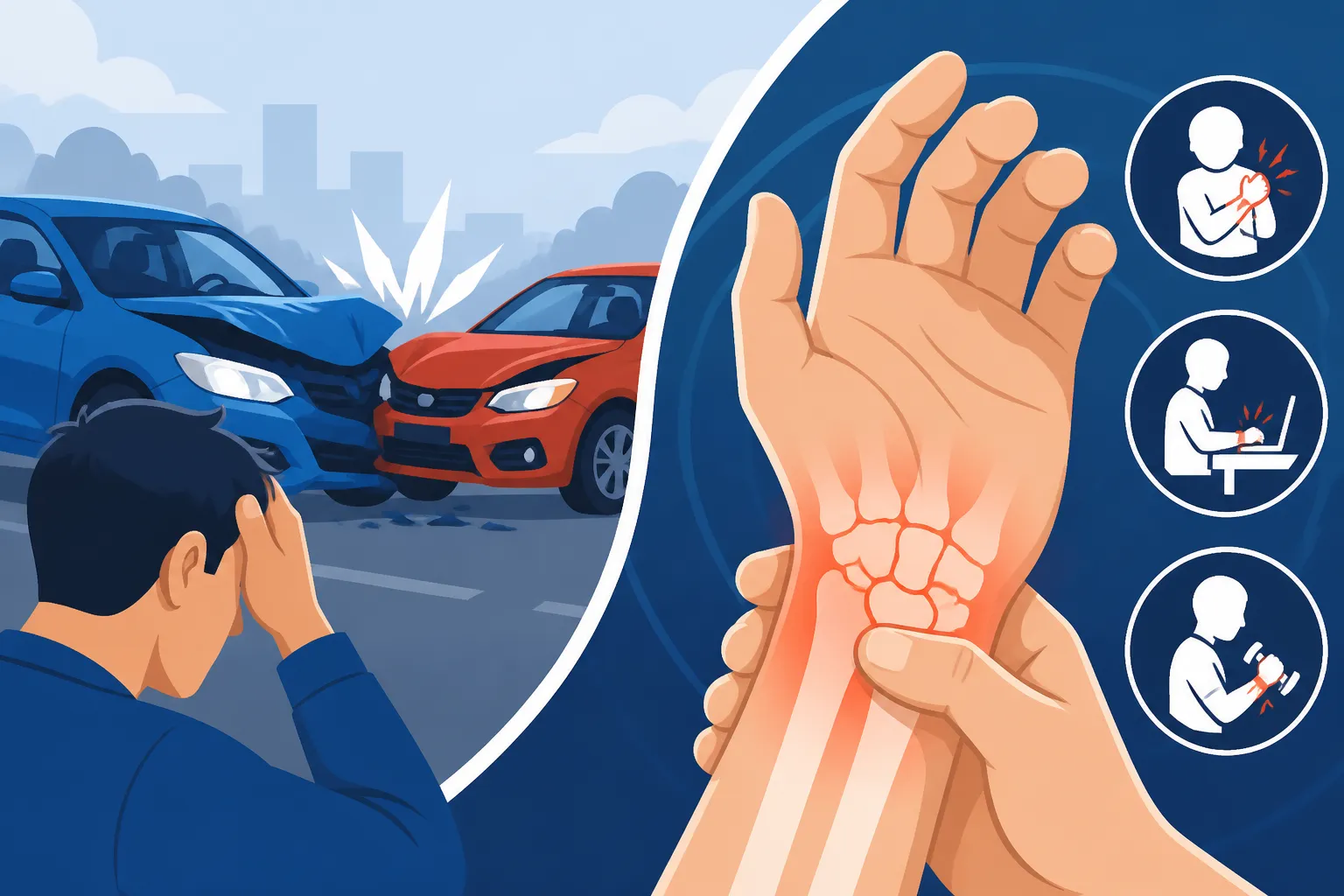
Imagine your wrist as a meticulously constructed puzzle. At its core, you have two long bones from your forearm, the radius and the ulna, meeting eight smaller, oddly shaped carpal bones. These carpal bones are then connected to the five metacarpal bones that lead into your fingers. Holding all these bones together and allowing for movement are a complex network of ligaments, tendons, muscles, nerves, and blood vessels. Ligaments connect bone to bone, providing stability, while tendons connect muscles to bone, enabling movement. The median nerve, a crucial player often involved in wrist issues, runs through the carpal tunnel, a narrow passageway in your wrist.
When a car accident occurs, the forces involved don't just push and pull; they twist, compress, and hyperextend. Think about the energy transmitted through your body as you brace for impact, perhaps gripping the steering wheel tightly or extending an arm to shield yourself. This sudden, violent transfer of force can easily disrupt this delicate balance. A seemingly minor jolt can cause microtears in ligaments that lead to instability, or fracture a small carpal bone that's difficult to spot on an initial X-ray. The sheer number of moving parts means there are countless ways for things to go wrong, and even a slight misalignment or hidden tear can lead to persistent problems down the line.
Common Car Accident Mechanisms Causing Wrist Injuries
Wrist injuries in car accidents aren't just random occurrences; they often result from specific actions or forces during the collision. One of the most common scenarios involves drivers bracing themselves against the steering wheel just before impact. The force of the collision, combined with the driver's grip, can hyperextend or hyperflex the wrist, leading to fractures of the distal radius (a common "Colles fracture"), scaphoid bone fractures, or significant ligament tears. Passengers might brace against the dashboard or armrests, leading to similar injuries.
Direct impact is another frequent culprit. If your arm is resting on the window sill when your vehicle is struck from the side, or if flying debris from a shattered windshield makes contact, it can cause direct trauma to the wrist bones and soft tissues. Even seemingly minor accidents can result in twisting or torsion forces if your arm gets caught or wrenched awkwardly during the sudden movement. For example, if your hands are on the wheel and the car spins, your wrists can be subjected to extreme rotational stress. These diverse mechanisms mean that diagnosing wrist injuries accurately requires a keen eye and often more than just a quick look, as the initial pain might mask underlying, more serious damage that will undoubtedly lead to long-term issues if not addressed.
Immediate vs. Long-Term Wrist Injury Symptoms
It's a common story: you're involved in an accident, feel some pain, but it doesn't seem too bad. Maybe you even go to the emergency room, get checked out, and are told everything appears fine. But weeks or months later, that "minor" discomfort hasn't gone away, and in some cases, it's gotten worse. This difference between immediate and long-term symptoms is crucial for understanding your prognosis and potential car accident claim.
What You Might Feel Right After the Crash
Immediately following a car accident, your body often goes into a state of shock, which can actually mask the true extent of your injuries. For a wrist injury, you might experience acute, sharp pain, especially when trying to move it or bear weight. Swelling, bruising, and tenderness to the touch are also very common. Your range of motion might be visibly limited, making simple tasks like gripping a pen or turning a doorknob difficult. In cases of fractures, you might even notice a visible deformity in your wrist.
However, many wrist injuries aren't immediately obvious. A "sprain," which is essentially a stretched or torn ligament, can feel less severe than a broken bone but still lead to long-term problems if not properly diagnosed and treated. People often make the mistake of downplaying their pain, especially if the initial X-rays don't show a clear break. You might think, "It's just a sprain, it'll heal," and try to tough it out. This mindset, while understandable, can be detrimental to your recovery and future claim. Without proper medical evaluation, including follow-up imaging or specialist consultations, a seemingly minor issue can fester. For comprehensive guidance on what steps to take right after an incident, consider reviewing our article on What to Do After a Car Accident: Step-by-Step (2027).
The Insidious Nature of Delayed and Chronic Symptoms
The real challenge with wrist injuries from car accidents often lies in their insidious, delayed onset and their potential to become chronic. What starts as a dull ache or intermittent stiffness can, over weeks or months, evolve into persistent, debilitating pain. You might notice your wrist feels weaker than before, making it hard to lift everyday objects, or that certain movements cause a sharp, shooting pain. Numbness, tingling, or a burning sensation in your hand and fingers, especially at night, could indicate nerve involvement, such as carpal tunnel syndrome.
This transition from acute to chronic pain is not just a physical burden; it's a mental and emotional one too. Imagine struggling to perform tasks you once did effortlessly, like typing, cooking, or even shaking someone's hand. The frustration, the constant reminder of the accident, and the fear that the pain will never truly go away can be overwhelming. These long-term symptoms are particularly important when it comes to your claim, as they represent ongoing damages that need to be accounted for. It's not just about the initial medical bills; it's about the continued impact on your life, your work, and your overall well-being. This is why understanding Delayed Injury Symptoms After a Car Accident is so vital for anyone involved in a collision.
Specific Long-Term Wrist Conditions from Car Accidents
When the acute pain of a car accident wrist injury lingers or changes, it often points to a specific underlying condition that developed or was exacerbated by the trauma. These aren't just "aches and pains"; they are diagnosable medical issues with significant long-term implications.
Post-Traumatic Arthritis
One of the most disheartening long-term effects of a significant wrist injury is the development of post-traumatic arthritis. Unlike osteoarthritis, which is typically associated with wear and tear over time, post-traumatic arthritis is a direct result of physical trauma to a joint. Even if a fracture or ligament tear heals, the initial impact can disrupt the smooth cartilage surfaces within the wrist joint. This disruption, or the subsequent inflammation, can lead to premature degeneration of the cartilage. Over time, this protective cartilage wears away, causing bones to rub directly against each other.
Symptoms typically include chronic pain, stiffness, swelling, and a grinding or popping sensation (crepitus) with movement. These symptoms often worsen with activity and in cold weather. While it might take months or even years for post-traumatic arthritis to fully manifest, once it does, it can be progressive and significantly limit the wrist's range of motion and strength. Imagine struggling to turn a doorknob, type on a keyboard for extended periods, or lift even a light grocery bag without pain. This condition can severely impact your quality of life, often requiring ongoing medical management, physical therapy, and in severe cases, surgical interventions like arthrodesis (joint fusion) or arthroplasty (joint replacement) to manage the pain and improve function.
Carpal Tunnel Syndrome and Other Nerve Entrapments
The wrist is a crossroads for several important nerves, most notably the median nerve, which passes through a narrow passageway called the carpal tunnel. Trauma from a car accident, even without a direct wrist fracture, can cause significant swelling, inflammation, or the formation of scar tissue within this tunnel. This in turn can compress the median nerve, leading to carpal tunnel syndrome. Symptoms typically include numbness, tingling, and pain in the thumb, index, middle, and half of the ring finger, often worsening at night or with repetitive hand movements. Weakness in the hand, particularly when gripping objects, is also common.
Beyond carpal tunnel syndrome, other nerves can also be affected. The ulnar nerve, for example, can become compressed at Guyon's canal in the wrist, leading to numbness and tingling in the little finger and the other half of the ring finger, along with hand weakness. The radial nerve can also be damaged, affecting sensation on the back of the hand. These nerve entrapments can be debilitating, affecting everything from your ability to write and type to your grip strength. Diagnosis often involves nerve conduction studies and electromyography (NCS/EMG) to pinpoint the location and severity of nerve damage. Treatment can range from splinting and anti-inflammatory medications to corticosteroid injections or even surgery to relieve the pressure on the nerve.
Chronic Pain and Complex Regional Pain Syndrome (CRPS)
Perhaps one of the most challenging and devastating long-term effects is the development of chronic pain, particularly if it evolves into Complex Regional Pain Syndrome (CRPS). Chronic pain, by definition, is pain that persists beyond the normal healing time for an injury, typically lasting for three months or more. For wrist injuries, this could mean ongoing discomfort even after fractures have healed or ligaments have seemingly repaired themselves. It can be a dull ache, a sharp shooting sensation, or a burning feeling that becomes a constant companion, affecting every aspect of a person's life.
CRPS, formerly known as Reflex Sympathetic Dystrophy (RSD), is a more severe and rare form of chronic pain that can develop after trauma, including car accident injuries. It is characterized by persistent, intense pain that is disproportionate to the original injury, often accompanied by changes in skin temperature, color, swelling, and abnormal sweating in the affected limb. The pain is typically described as a severe burning sensation, and the affected wrist and hand can become extremely sensitive to touch. CRPS is notoriously difficult to treat and can lead to severe functional impairment, muscle atrophy, and psychological distress. While the exact mechanisms are not fully understood, it's believed to involve a dysfunction of the nervous system. The impact of such a condition on daily life, mental health, and financial stability is profound, highlighting the severe consequences of even seemingly "minor" injuries.
Ligamentous Instability and Tendonitis
Even without a fracture, the strong forces of a car accident can stretch or tear the ligaments that stabilize the intricate bones of the wrist. Two common examples include tears to the scapholunate ligament, which connects the scaphoid and lunate carpal bones, and the Triangular Fibrocartilage Complex (TFCC), a crucial structure on the pinky-finger side of the wrist. These tears might not always be immediately apparent on standard X-rays and can lead to chronic instability. You might experience a persistent dull ache, clicking, popping, or a feeling that your wrist "gives out" under stress. This instability can reduce your grip strength and make precise movements difficult, effectively hindering your ability to perform tasks requiring fine motor skills.
Furthermore, the inflammation of tendons, known as tendonitis, can become a chronic issue after an accident. If the tendons were overstretched, partially torn, or constantly stressed due to altered wrist mechanics following an injury, they can remain inflamed. Activities that were once routine, such as typing, lifting, or repetitive motions, can trigger episodes of significant pain. This condition can lead to persistent weakness and discomfort, requiring ongoing physical therapy, anti-inflammatory medications, and sometimes injections or even surgery to debride or repair the affected tendons. Both ligamentous instability and chronic tendonitis can contribute to a cycle of pain, weakness, and limited function, profoundly altering one's ability to engage in work and hobbies.
The Far-Reaching Impact on Your Daily Life and Work
A wrist injury isn't just about pain in one part of your body; it's about the ripple effect it has on every aspect of your existence. When your hand and wrist are compromised, so much of what you do, consciously and unconsciously, becomes a struggle. It's a fundamental shift in how you interact with the world around you.
Everyday Activities Becoming Monumental Tasks
Think about how many times a day you use your hands and wrists without even realizing it. From the moment you wake up, you're grabbing your coffee mug, brushing your teeth, getting dressed, and preparing a simple meal. With a long-term wrist injury, these once-simple actions can become monumental tasks, fraught with pain and frustration. Turning a doorknob, buttoning a shirt, opening a jar, typing an email, or even safely gripping the steering wheel to drive can become excruciating.
This isn't just about physical discomfort; it deeply impacts your independence and mental well-being. Imagine having to ask for help with basic hygiene or being unable to participate in hobbies you once loved, like gardening, playing an instrument, or engaging in sports. This loss of autonomy can lead to feelings of helplessness, isolation, and even depression. It changes your entire routine and can leave you feeling constantly reminded of the accident and the lingering physical scars it left behind.
Professional and Financial Repercussions
Beyond the personal toll, a chronic wrist injury can have severe professional and financial repercussions. Many jobs, from office work involving extensive typing to manual labor requiring lifting and gripping, depend heavily on wrist function. If your job involves repetitive motions, heavy lifting, or fine motor skills, a compromised wrist can make it impossible to continue in your role. You might find yourself unable to perform your duties, leading to reduced hours, job modifications, or even the tragic necessity of changing careers entirely.
The financial strain that accompanies this is often immense. Lost wages from time off work, reduced earning capacity if you can no longer perform your previous job, and the ongoing cost of medical treatments, physical therapy, medications, and potential surgeries can quickly add up. This financial burden, combined with the physical pain and emotional distress, creates a vicious cycle of stress. When calculating damages for a car accident claim, it's crucial to consider not just immediate losses but also future medical expenses and your potential for Lost Earning Capacity vs Lost Wages. Our guide on How Lost Wages Are Calculated in a Settlement can provide more details on how these financial impacts are assessed.
Navigating Medical Treatment and Prognosis for Long-Term Wrist Injuries
Dealing with a long-term wrist injury means embarking on a potentially lengthy and complex medical journey. It's not always a straightforward path, and understanding the diagnostic and treatment options, along with realistic recovery expectations, is key to managing your condition and your claim effectively.
Diagnostic Challenges and Advanced Imaging
One of the frustrating realities of long-term wrist injuries is that they can be challenging to diagnose accurately, especially if the initial assessment was rushed or incomplete. Standard X-rays are excellent for detecting obvious fractures, but they often miss subtle bone breaks, ligament tears, or cartilage damage. This is where advanced imaging becomes crucial. Magnetic Resonance Imaging (MRI) can provide detailed views of soft tissues, revealing ligament and tendon tears, as well as cartilage damage. Computerized Tomography (CT) scans offer more intricate detail of bone structures, which can be vital for identifying complex fractures or malunions. In some cases, an arthrogram (an MRI or CT with dye injected into the joint) or even diagnostic arthroscopy (a minimally invasive surgical procedure where a surgeon looks inside the joint with a camera) may be necessary to get a definitive diagnosis.
It's absolutely critical to advocate for yourself and seek further evaluation if your pain persists. Don't accept a generic diagnosis of "sprain" if you're still in significant discomfort months after the accident. Getting a second opinion from a hand specialist or orthopedic surgeon who regularly deals with complex wrist injuries can make all the difference in achieving an accurate diagnosis and appropriate treatment plan. This diligent pursuit of an accurate diagnosis is also vital for substantiating your injury in a car accident claim.
Treatment Pathways for Chronic Wrist Pain
Once a long-term wrist injury is accurately diagnosed, the treatment pathway can vary widely depending on the specific condition and its severity. Many chronic wrist problems begin with conservative treatments. Physical therapy and occupational therapy are cornerstones of rehabilitation, focusing on improving range of motion, strength, and function. Therapists might use modalities like ultrasound, electrical stimulation, and specific exercises, along with custom splints or braces, to support healing and prevent further injury. Injections, such as corticosteroids to reduce inflammation or Platelet-Rich Plasma (PRP) to promote healing, might also be considered.
However, for some long-term wrist injuries, conservative approaches may not be enough. Surgical interventions can range from arthroscopic procedures to repair ligaments or debride damaged cartilage, to open surgeries for complex fracture fixation, joint reconstruction, or nerve decompression (like carpal tunnel release). In very severe cases of post-traumatic arthritis, options like wrist fusion (arthrodesis) to eliminate painful motion, or even total wrist replacement (arthroplasty) may be considered, though these are typically last resorts due to their significant impact on function. Managing chronic pain often also involves a multidisciplinary approach, including pain management specialists who can offer medications, nerve blocks, or other interventional treatments. It's essential to have realistic expectations for recovery and to understand that some long-term injuries may require ongoing management rather than a complete "cure." Your medical journey and its documentation will be pivotal in any Car Accident Claim Timeline: What to Expect.
Documenting Your Long-Term Wrist Injury for a Car Accident Claim
When you're dealing with the lingering effects of a wrist injury from a car accident, the last thing you want to think about is paperwork. But thorough documentation is not just a suggestion; it's absolutely non-negotiable if you hope to recover fair compensation for your suffering and losses. Without it, even the most legitimate claims can falter.
Why Thorough Documentation is Non-Negotiable
From the moment you seek medical attention, every visit, diagnosis, treatment plan, prescription, and referral becomes a crucial piece of evidence. Insurance companies operate on facts and records, not on your word alone. They want to see a clear, unbroken chain of medical care directly linking your wrist injury and its long-term effects to the car accident. This means consistently attending all scheduled appointments with doctors, physical therapists, and specialists. If you miss appointments or have significant gaps in your treatment, the insurance company might argue that your injuries weren't severe, that you weren't truly in pain, or that a new injury occurred, thus breaking the causation to the original accident.
It's also essential that your medical records accurately reflect the full extent of your pain and limitations. Clearly communicate to your doctors how the wrist injury affects your daily activities, work, and quality of life. Don't downplay your symptoms. This detailed information will be vital in establishing the severity of your damages, particularly non-economic damages like Pain and Suffering: How It's Calculated. For a deeper dive into proving your injuries, check out our guide on How to Prove Injuries in a Car Accident Claim.
The Role of Medical Experts and Your Personal Journal
For complex or long-term wrist injuries, the expertise of specialists becomes paramount. Orthopedic surgeons, neurologists, pain management specialists, and occupational therapists can provide objective assessments, diagnoses, and prognoses. Their expert testimony regarding the nature of your injury, its permanence, and your future medical needs (including potential surgeries, ongoing therapy, and medications) is invaluable. These experts can project the costs of future care, which can be a significant component of your claim settlement.
In addition to professional medical records, keeping a personal pain journal can be incredibly powerful. This journal should detail your daily symptoms, including pain levels (e.g., on a scale of 1-10), the specific activities that aggravate your wrist, medications you're taking and their effectiveness, and how the injury impacts your daily life, mood, and sleep. This personal account provides a human element to your claim, illustrating the real-world impact of your injury beyond clinical notes. It can help bridge gaps in memory and demonstrate consistency in your suffering. This level of detail strengthens your claim for both economic and Economic vs Non-Economic Damages Explained. If you're finding the process overwhelming, it's often wise to consider if Do You Need a Lawyer for a Car Accident? (2026) is the right step for you.
Types of Long-Term Wrist Injuries and Their Impact
| Injury Type | Description | Common Symptoms | Potential Long-Term Impact | Typical Treatments (Non-Surgical) |
|---|---|---|---|---|
| Post-Traumatic Arthritis | Cartilage degeneration due to joint trauma. | Chronic pain, stiffness, swelling, grinding/popping, reduced ROM. | Permanent joint damage, chronic pain, functional limitation, need for joint fusion/replacement. | PT, anti-inflammatories, injections, activity modification. |
| Carpal Tunnel Syndrome | Compression of the median nerve in the carpal tunnel. | Numbness, tingling, pain in thumb/index/middle finger, hand weakness. | Permanent nerve damage, chronic pain, muscle atrophy, impaired grip strength. | Splinting, PT, anti-inflammatories, injections. |
| CRPS (Complex Regional Pain Syndrome) | Chronic pain disproportionate to injury, nervous system dysfunction. | Intense burning pain, swelling, skin changes, extreme sensitivity. | Severe disability, intractable pain, psychological distress, limb atrophy. | Multidisciplinary pain management, PT, nerve blocks. |
| Ligamentous Instability | Tears or stretching of wrist ligaments, leading to joint looseness. | Persistent pain, clicking/popping, feeling of wrist "giving out." | Chronic pain, accelerated arthritis, reduced strength, functional impairment. | Bracing, PT, activity modification. |
| Tendonitis (Chronic) | Persistent inflammation of tendons from injury or overuse. | Pain with movement, tenderness, weakness. | Chronic pain, reduced strength, impaired range of motion, rupture risk. | PT, anti-inflammatories, bracing, injections. |
| Nerve Entrapment (Other) | Compression of ulnar or radial nerves (e.g., Guyon's Canal Syndrome). | Numbness, tingling, weakness in specific finger/hand areas. | Permanent nerve damage, chronic pain, muscle weakness, sensory loss. | Splinting, PT, anti-inflammatories, injections. |
Dealing with a long-term wrist injury after a car accident is undeniably challenging, impacting not just your physical health but also your mental well-being and financial stability. Understanding the potential long-term effects, diligently pursuing appropriate medical care, and meticulously documenting your journey are crucial steps toward managing your condition and securing the compensation you deserve. For advice on navigating the complexities of your claim, especially when facing lasting injuries, knowing When to Hire a Car Accident Lawyer can be incredibly beneficial. They can guide you through the process, ensuring your long-term needs are properly addressed in any settlement negotiations, and help you understand how your claim's value relates to the severity of your injuries, as detailed in How Much Is My Car Accident Settlement Worth? (2026).
Disclaimer
Please remember that this information is intended for educational purposes only and does not constitute legal or medical advice. Every car accident and injury claim is unique. It is highly recommended to consult with a qualified medical professional for diagnosis and treatment of any injuries, and with an experienced personal injury attorney to discuss the specifics of your case and understand your legal rights and options.