Nerve Damage From a Car Accident
Experiencing a car accident can turn your world upside down in an instant. Beyond the immediate shock and visible injuries, some of the most insidious and long-lasting problems arise from damage to your nervous system. Nerve damage can manifest in a myriad of confusing, painful, and debilitating ways, leaving you struggling to understand what's happening to your body and how to move forward. This guide is here to unravel the complexities of nerve damage after a car accident, offering a clear, empathetic, and realistic roadmap for understanding your condition, seeking appropriate treatment, and navigating the challenging path of a car accident claim.
Understanding Nerve Damage After a Car Accident
The human body is an intricate network, and at the heart of its communication system are the nerves. When something disrupts this delicate network, especially due to the violent forces of a car accident, the consequences can be profound and far-reaching. It's not just about a temporary ache; nerve damage can alter how you feel, move, and even function on a daily basis, making simple tasks incredibly challenging.
What is Nerve Damage?
Before diving into how accidents cause this damage, it’s helpful to understand what nerves actually do. Think of your nerves as the electrical wiring of your body. They carry messages back and forth between your brain, spinal cord, and every other part of your body. These messages control everything from the sensation of touch to the movement of your muscles and even the automatic functions of your internal organs.
There are three main types of nerves, and a car accident can affect any of them. Sensory nerves are responsible for sensations like pain, touch, temperature, and vibration. Damage to these can lead to numbness, tingling, burning sensations, or even excruciating pain without an obvious external wound. Motor nerves control your voluntary muscle movements, allowing you to walk, lift, or even smile. When these are damaged, you might experience muscle weakness, spasms, or even paralysis. Finally, autonomic nerves regulate involuntary functions like heart rate, breathing, digestion, and blood pressure. While less commonly discussed in accident claims, damage here can lead to issues with blood pressure regulation, digestion problems, or abnormal sweating. The complexity of these systems means that nerve damage isn't a "one size fits all" injury, and its symptoms can be incredibly varied and frustrating.
How Car Accidents Cause Nerve Damage
The sheer force and unpredictable movements involved in a car crash make nerve damage a common, albeit often initially overlooked, injury. When vehicles collide, your body is subjected to rapid acceleration, deceleration, and direct impact, all of which can harm the delicate nerve tissues.
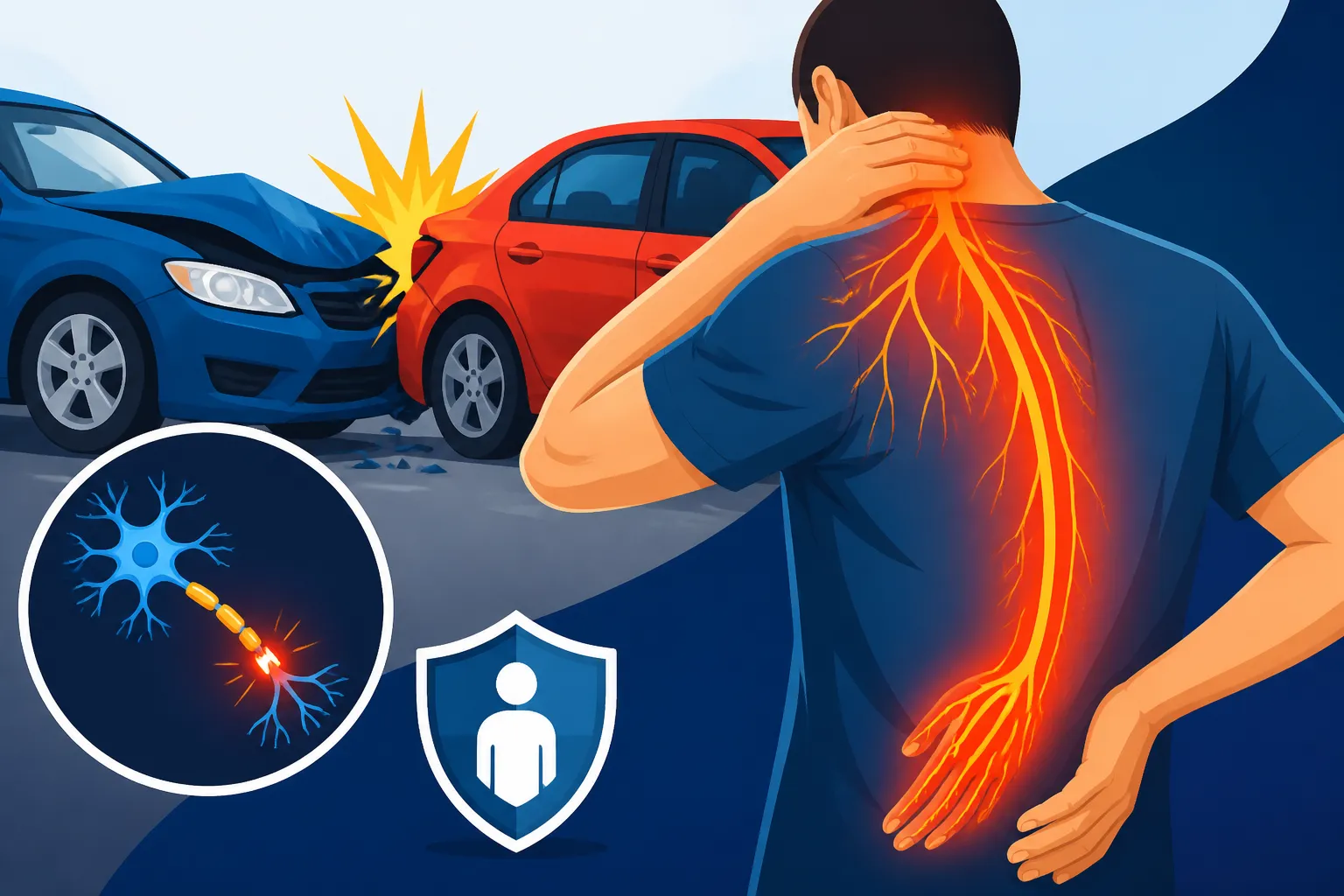
One of the most common ways nerves get damaged is through blunt force trauma. Imagine your body being thrown against a steering wheel, dashboard, or even compressed by a seatbelt. This direct impact can bruise, crush, or sever nerves. Another frequent cause is compression, where surrounding tissues, bones, or even herniated discs — a common car accident injury — press down on nerves. For example, a sudden forceful jolt to your spine can cause a disc to bulge or rupture, impinging on nearby spinal nerves and leading to intense radiating pain, numbness, or weakness in your limbs. The violent hyperextension and hyperflexion of the neck in a rear-end collision, often associated with whiplash, can stretch or tear nerves in the cervical spine, leading to symptoms in the shoulders, arms, and hands. Even lacerations from shattered glass or torn metal can directly cut nerves, causing immediate and severe functional loss. Understanding these mechanisms is the first step in connecting your symptoms to the accident itself, which is vital for your recovery and any potential claim.
Common Symptoms and Diagnosis of Nerve Damage
One of the most challenging aspects of nerve damage is that it isn't always immediately obvious. Unlike a broken bone, which often presents with immediate, unmistakable pain and deformity, nerve damage symptoms can be subtle at first, evolving or worsening over days or weeks. This delay can lead to frustration and even self-doubt, but recognizing these signs early is crucial.
Recognizing the Signs of Nerve Damage
After the adrenaline of a car accident wears off, your body might start sending you signals that something isn't quite right. Keep a close eye on any new sensations or changes in how your body functions. A very common sign is numbness or a loss of sensation, often described as feeling like a limb has "fallen asleep" but without the tingling. Conversely, you might experience heightened sensitivity to touch, where even light pressure causes pain, a condition known as allodynia.
Tingling or a "pins and needles" sensation is another classic indicator, often traveling down an arm or leg. You might also notice burning pain that doesn't seem to originate from a surface injury or sharp, shooting pains that come and go unpredictably. Muscle weakness or difficulty moving a limb, even without significant pain, can signal motor nerve damage. For example, you might struggle to grip objects, lift your foot, or experience muscle twitching and spasms. It's incredibly important not to dismiss these sensations, especially if they are new or persistent following your accident. Remember, symptoms can be delayed, so paying attention to your body in the days and weeks after a crash is paramount. If you're experiencing any of these, it's critical to see a medical professional right away, even if you think it's minor. For more on this, you might find our guide on Delayed Injury Symptoms After a Car Accident helpful.
Diagnostic Procedures and Tests
When you suspect nerve damage, getting an accurate diagnosis is the next critical step. This isn't just about identifying the problem; it’s about providing clear, objective medical evidence for your treatment and, if applicable, your car accident claim. Doctors will typically start with a thorough neurological exam, which involves testing your reflexes, muscle strength, balance, coordination, and your ability to feel sensations like light touch or temperature. This initial assessment helps pinpoint which nerves might be affected and the general area of damage.
Beyond a physical exam, several diagnostic tests can provide more definitive answers. An Electromyography (EMG) and Nerve Conduction Velocity (NCV) study are often performed together. The NCV measures how quickly electrical signals travel through your nerves, while the EMG assesses the electrical activity of your muscles when they're at rest and when they're contracting. These tests can reveal nerve compression, damage, or even a complete severance. Magnetic Resonance Imaging (MRI) and Computed Tomography (CT) scans are also invaluable. While they don't directly show nerve damage, they can identify the underlying cause, such as a herniated disc, spinal stenosis, or a fracture that is impinging on a nerve. The key here is consistent and thorough documentation of all your symptoms, visits, and test results. This collection of medical records is vital in proving your injuries and their direct link to the accident, as detailed in our article on How Medical Records Prove Your Injuries.
Types of Nerve Damage and Their Impact
Nerve damage isn't a singular condition; it's a broad term that encompasses various specific injuries, each with its own characteristics and potential long-term impact on a person's life. Understanding these different types can help you better articulate your symptoms to medical professionals and legal representatives.
Peripheral Neuropathy
Peripheral neuropathy is a condition that arises when nerves outside of the brain and spinal cord (the peripheral nerves) are damaged. These are the nerves that transmit information from your brain and spinal cord to the rest of your body, as well as those that send sensory information back to your central nervous system. In the context of a car accident, peripheral neuropathy can occur when these nerves are crushed, severed, stretched, or compressed due to direct trauma or inflammation from surrounding tissue damage.
The symptoms of peripheral neuropathy can vary widely depending on which nerves are affected, but they commonly include numbness, tingling, burning pain, and muscle weakness, often starting in the hands and feet but potentially affecting any part of the body. For someone who has sustained a car accident, this can mean a loss of fine motor skills, difficulty walking or balancing, or persistent, severe pain that significantly impacts their quality of life. For instance, a person might find it excruciating to type on a keyboard, grip a steering wheel, or even simply stand for extended periods. This condition often leads to chronic pain, which can be one of the most challenging aspects to manage and can necessitate long-term treatment and rehabilitation, as we discuss in depth in our guide on Chronic Pain After a Car Accident. The insidious nature of peripheral neuropathy means it can develop gradually, making its link to the accident sometimes harder to establish without diligent medical follow-up.
Radiculopathy (Pinched Nerves)
Radiculopathy, commonly known as a "pinched nerve," occurs when a nerve root in the spine becomes compressed or irritated. This type of nerve damage is extremely common after car accidents due to the sudden and violent forces exerted on the spinal column. The spinal nerves exit the spinal cord through small openings between vertebrae, making them particularly vulnerable to compression from injuries like herniated discs, bone spurs, or inflammation.
If the pinched nerve is in your neck (cervical spine), it’s called cervical radiculopathy. This can cause pain, numbness, tingling, or weakness that radiates down into your shoulder, arm, hand, or fingers. Imagine the sharp, shocking pain that shoots down your arm when you turn your head a certain way after a rear-end collision. Similarly, if the nerve compression is in your lower back (lumbar spine), it's known as lumbar radiculopathy, or often referred to as sciatica. This manifests as pain, tingling, or numbness that travels down your buttock and into your leg and foot. A common scenario following a car accident involves a sudden jolt causing a Herniated Disc From a Car Accident which then presses directly on a nerve root. The impact can be so severe that it affects not just the disc but also the surrounding ligaments and muscles, leading to a cascade of issues that compress the delicate nerves. Understanding the specific location and nature of this compression is vital for effective treatment and for establishing the full extent of your claim. This is closely related to Spinal Cord Injury From a Car Accident, which involves more severe damage to the cord itself rather than just the nerve roots.
Brachial Plexus Injuries
The brachial plexus is a network of nerves that originates in the neck and extends through the shoulder and into the arm. These nerves are responsible for controlling muscle movement and sensation in the shoulder, arm, hand, and fingers. Brachial plexus injuries are particularly devastating because they can severely impact the function of an entire limb.
In car accidents, these injuries often occur when the head and neck are violently forced away from the shoulder, or when the shoulder itself takes a direct, high-impact blow. This can stretch, tear, or even avulse (rip away) the nerves from the spinal cord. For example, if your body is thrown one way and your helmeted head another during a motorcycle accident, or if your shoulder is wrenched violently against the interior of a car during a high-speed collision, the brachial plexus can be severely damaged. Symptoms can range from mild numbness or weakness to complete paralysis and loss of sensation in the affected arm and hand. These injuries often require extensive and long-term rehabilitation, and in some severe cases, surgical intervention to attempt to reattach or graft nerves. The recovery can be a long and arduous journey, often with residual limitations, making early and specialized medical attention absolutely critical.
Treatment Options and Recovery for Nerve Damage
Discovering you have nerve damage after a car accident can feel overwhelming. However, a range of treatment options and rehabilitation strategies exist to help manage symptoms, promote healing, and improve your quality of life. The path to recovery is often long and requires patience, persistence, and a multidisciplinary approach.
Medical Interventions
The first line of defense for nerve damage often involves a combination of conservative medical interventions aimed at reducing inflammation, managing pain, and protecting the damaged nerves. Your doctor might prescribe anti-inflammatory medications, muscle relaxants, or even specific neuropathic pain medications like gabapentin or pregabalin, which are designed to target nerve pain more effectively than traditional painkillers. For localized inflammation and pain, corticosteroid injections (like epidural injections for radiculopathy) can provide temporary relief by reducing swelling around the nerve, allowing it space to heal.
When conservative treatments prove insufficient or if the nerve damage is severe and progressive, surgical options may be considered. These can range from procedures to decompress a pinched nerve (such as a discectomy or laminectomy for a herniated disc) to more complex nerve repair surgeries. In cases where nerves are severed or significantly torn, surgeons might attempt nerve grafting, where a segment of a healthy nerve from another part of the body is used to bridge the gap in the damaged nerve, or nerve transfers, where a less critical nerve is rerouted to take over the function of a damaged one. The decision for surgery is usually a last resort, made after careful consideration of the risks and potential benefits, and often after extensive consultation with neurologists and orthopedic or neurosurgeons.
Rehabilitation and Long-Term Management
Medical interventions are only one piece of the puzzle; comprehensive rehabilitation is crucial for maximizing recovery and adapting to any long-term limitations. Physical therapy is a cornerstone of recovery, focusing on restoring strength, flexibility, range of motion, and function to the affected areas. A physical therapist will design a personalized exercise program that might include stretching, strengthening exercises, manual therapy, and modalities like electrical stimulation or ultrasound to promote nerve healing and muscle re-education. For injuries like Whiplash Treatment and Recovery, specific exercises are vital to regain neck mobility and reduce nerve irritation.
Occupational therapy can also be incredibly beneficial, especially for hand and arm nerve damage, helping individuals relearn daily tasks and adapt their environment to accommodate any functional deficits. This might involve training in assistive devices or modifying how you perform routine activities like dressing, cooking, or working. Beyond physical recovery, managing chronic nerve pain often requires a holistic approach, including pain management clinics that offer a combination of medication management, injection therapies, nerve blocks, and alternative treatments. Psychological support, such as counseling or cognitive behavioral therapy, can also play a vital role in coping with the emotional impact of chronic pain and functional limitations, helping you to regain a sense of normalcy and control over your life.
Building a Car Accident Claim for Nerve Damage
Dealing with nerve damage is not only physically and emotionally taxing, but it can also become a significant financial burden. Medical treatments, rehabilitation, lost income, and the overarching impact on your quality of life can quickly accumulate. Successfully navigating a car accident claim when nerve damage is involved requires a clear understanding of how to prove your injuries and accurately assess their value.
Proving Your Nerve Damage and Its Cause
One of the biggest hurdles in any personal injury claim, especially one involving nerve damage, is establishing a clear and undeniable link between the accident and your injuries. Because nerve damage symptoms can sometimes be delayed, or mimic other conditions, insurance companies often try to argue that your injuries were pre-existing or not directly caused by the collision. This is where meticulous documentation becomes your most powerful tool.
You need to present comprehensive medical records, starting from your very first visit after the accident, detailing every symptom, diagnosis, and treatment. This includes reports from your neurologist, orthopedic surgeon, physical therapist, and any specialists you see. Diagnostic tests, such as EMG/NCV studies, MRIs, and CT scans, are objective evidence that can confirm the presence and extent of nerve damage. In many cases, expert medical testimony from your treating physicians or independent medical examiners will be necessary to explain the nature of your nerve damage, its direct causation by the accident, and its long-term prognosis. Consistent attendance at all prescribed appointments and adherence to treatment plans are also critical; any gaps in care can be used by the defense to suggest your injuries weren't as severe or that you weren't committed to recovery. For a deeper dive into this, consult our article on How to Prove Injuries in a Car Accident Claim.
Valuing Your Nerve Damage Claim
Accurately valuing a nerve damage claim is complex because it involves both easily quantifiable economic losses and subjective, non-economic damages that profoundly impact your life. Economic damages are your tangible financial losses. These include all past and future medical expenses related to your nerve damage, such as doctor visits, diagnostic tests, medications, physical therapy, surgery, and any assistive devices. It also covers lost wages due to time missed from work, as well as loss of future earning capacity if your nerve damage prevents you from returning to your previous job or working at full capacity. For a comprehensive overview of how settlement amounts are determined, check out How Much Is My Car Accident Settlement Worth? (2026).
Non-economic damages are often the largest component of a nerve damage claim. These compensate you for the intangible losses that significantly diminish your quality of life. The most prominent of these is pain and suffering, which encompasses not only physical pain but also emotional distress, anxiety, and depression caused by your injury. Nerve damage often leads to chronic pain and permanent limitations, which can profoundly affect your ability to engage in hobbies, enjoy family activities, or even perform basic daily tasks. This loss of enjoyment of life is a significant factor. Calculating these damages is highly subjective and often relies on the severity and permanence of your nerve damage, your age, and your pre-accident lifestyle. Lawyers frequently use multipliers based on medical expenses to help determine a fair amount for pain and suffering. Our article on Pain and Suffering: How It's Calculated explains this process in more detail.
Dealing with Insurance Companies and Legal Considerations
When you're suffering from nerve damage after a car accident, the last thing you want to deal with is a complicated and often adversarial insurance claims process. However, navigating this system effectively is crucial to securing the compensation you need for your recovery. It's a challenging time, and knowing what to expect can make a significant difference.
Navigating Insurance Adjusters
Shortly after your accident, you'll likely receive calls from the at-fault driver's insurance company. Their adjusters are often polite and seem helpful, but it's important to remember their primary goal is to minimize the payout from their company. One common tactic is asking for a recorded statement about the accident. While you might feel compelled to cooperate, providing a recorded statement without legal counsel can be detrimental to your claim. Anything you say can be used against you, potentially misconstrued to suggest you were at fault or that your injuries are not as severe as you claim. Even seemingly innocent details could be twisted to undermine your case.
Another common strategy is offering a quick, lowball settlement, especially before the full extent of your nerve damage is known. They might present it as a generous offer to "close the case" and provide immediate relief. However, if you accept this offer, you forfeit your right to seek further compensation, even if your nerve damage worsens or requires more extensive treatment than initially anticipated. This is particularly risky with nerve damage, which often has delayed symptoms and can require long-term, expensive care. It's almost always in your best interest to consult with an attorney before engaging in detailed discussions or accepting any offers from the other party's insurance company. For more advice on this, our guide on Dealing With Insurance Adjusters After a Car Accident offers invaluable insights.
The Role of a Car Accident Lawyer
When dealing with significant injuries like nerve damage, the question of Do You Need a Lawyer for a Car Accident? (2026) usually has a resounding "yes." A skilled car accident lawyer acts as your advocate, protecting your rights and handling all communications with insurance companies, allowing you to focus on your recovery. They bring a wealth of experience in understanding the intricacies of personal injury law and the tactics insurance companies employ.
A lawyer will meticulously investigate your accident, gather crucial evidence such as police reports, witness statements, and traffic camera footage, and work closely with your medical team to ensure all your nerve damage diagnoses and prognoses are thoroughly documented. They will also consult with medical experts to provide testimony that clearly links your nerve damage to the accident and substantiates the long-term impact on your life. Moreover, a lawyer is adept at valuing complex claims, understanding not just your immediate medical bills and lost wages but also projecting future medical needs, lost earning capacity, and the extensive pain and suffering associated with chronic nerve damage. They will negotiate aggressively on your behalf, countering lowball offers and, if necessary, preparing to take your case to trial to ensure you receive fair compensation. They also ensure that crucial deadlines, like the state's statute of limitations for filing a lawsuit, are not missed, which could otherwise bar you from any recovery.
| Type of Nerve Damage | Common Symptoms | Typical Treatments | Potential Long-Term Impact |
|---|---|---|---|
| Peripheral Neuropathy | Numbness, tingling, burning pain, muscle weakness, sensitivity to touch | Medications, physical therapy, nerve blocks, surgery (in severe cases) | Chronic pain, functional limitations, impaired sensation |
| Radiculopathy (Pinched Nerve) | Radiating pain, numbness, tingling, weakness in limbs | Physical therapy, anti-inflammatories, steroid injections, surgery (discectomy, laminectomy) | Persistent pain, recurrence, muscle weakness |
| Brachial Plexus Injury | Weakness or paralysis, numbness, severe pain in shoulder, arm, hand | Physical therapy, occupational therapy, nerve repair surgery, nerve grafts | Permanent weakness, paralysis, loss of sensation |
Disclaimer
Please note that this article provides general information and insights into nerve damage from car accidents and the claims process. It is not intended as legal or medical advice. Every car accident and resulting injury is unique. For personalized advice regarding your specific situation, symptoms, treatment, or legal options, it is essential to consult with a qualified medical professional and an experienced car accident attorney.