Who Is at Fault in a Parking Lot Accident in Texas?
Texas fault laws and the 51 percent rule determine liability, damages, and right-of-way for parking lot vehicle accidents.

Texas fault laws and the 51 percent rule determine liability, damages, and right-of-way for parking lot vehicle accidents.

Nevada comparative negligence laws assign fault percentages in car accident claims and determine compensation limits for injured drivers.

Texas lane-change accident fault rules and the Texas Transportation Code determine liability for drivers involved in highway collisions.
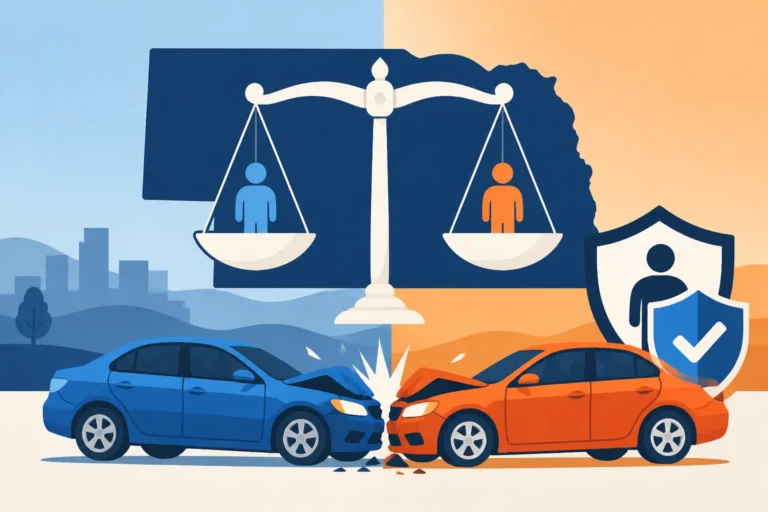
Nebraska comparative negligence laws block damage recovery if you are fifty percent or more at fault for a car accident.

Texas merging accident fault rules determine liability and insurance payouts for collisions on highways and construction zones.

Montana comparative negligence laws determine how shared fault impacts car accident claims and your ability to recover damages.

Texas sideswipe collision fault determination rules explain liability for parallel vehicle crashes during lane changes and highway merging.

Missouri comparative negligence laws determine how fault percentages reduce car accident compensation and damage recovery amounts.

Texas head-on accident fault rules and legal liability determine how victims recover compensation for severe injuries and damages.
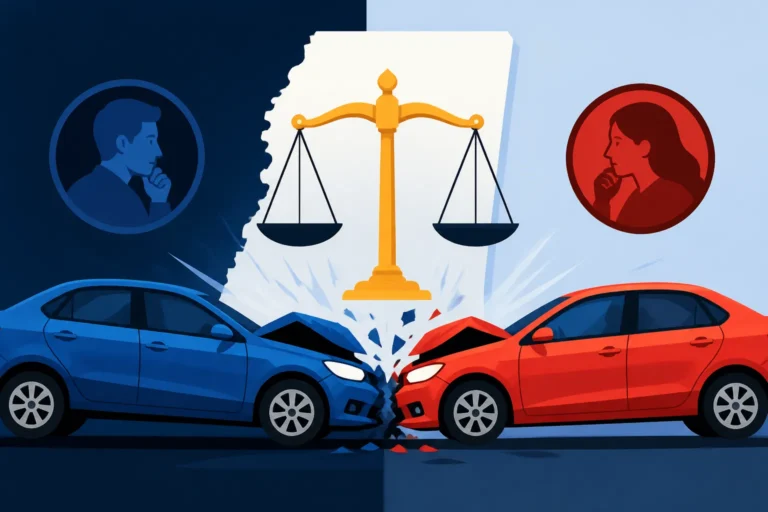
Mississippi pure comparative negligence laws allow injured drivers to recover damages reduced by their specific percentage of fault.