Is Pennsylvania a No-Fault State?
Pennsylvania operates under a choice no-fault system, allowing drivers to select limited or full tort options for injury claims.

Pennsylvania operates under a choice no-fault system, allowing drivers to select limited or full tort options for injury claims.

California fault rules and pure comparative negligence systems determine compensation after sideswipe collisions.
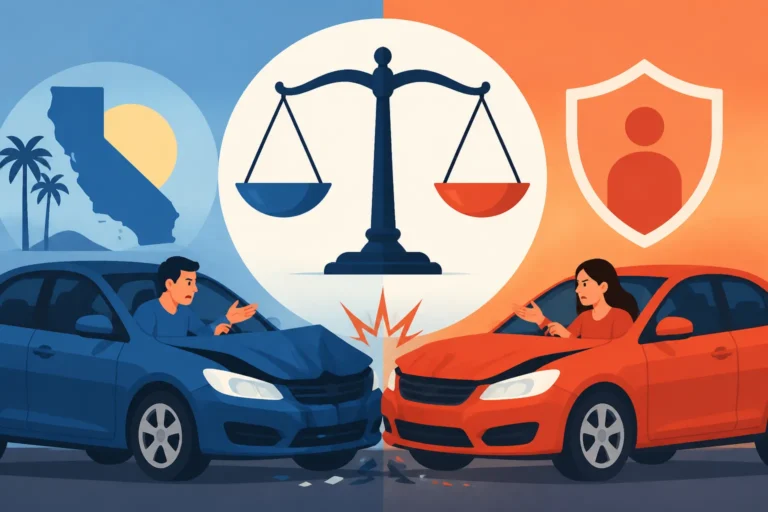
California pure comparative negligence laws allow injured drivers to recover reduced compensation even when partially at fault.

Georgia car accident laws and the modified comparative negligence system determine fault, liability, and damage recovery limits.

Virginia contributory negligence law bars accident victims from recovering damages if they share any fault for collisions.

California fault determination rules for head-on collisions, using pure comparative negligence to assign liability and compensation.

Arkansas comparative negligence laws explain how shared fault impacts car accident claims, including the fifty percent bar rule.

New York car insurance laws require personal injury protection coverage up to fifty thousand dollars to pay immediate medical bills and lost wages.

North Carolina contributory negligence rules bar injured drivers from recovering compensation if they share one percent fault.

California fault determination rules for T-bone accidents explain how insurance companies assign responsibility and compensation percentages.