How Long Does Shoulder Injury Take to Heal After a Car Accident?
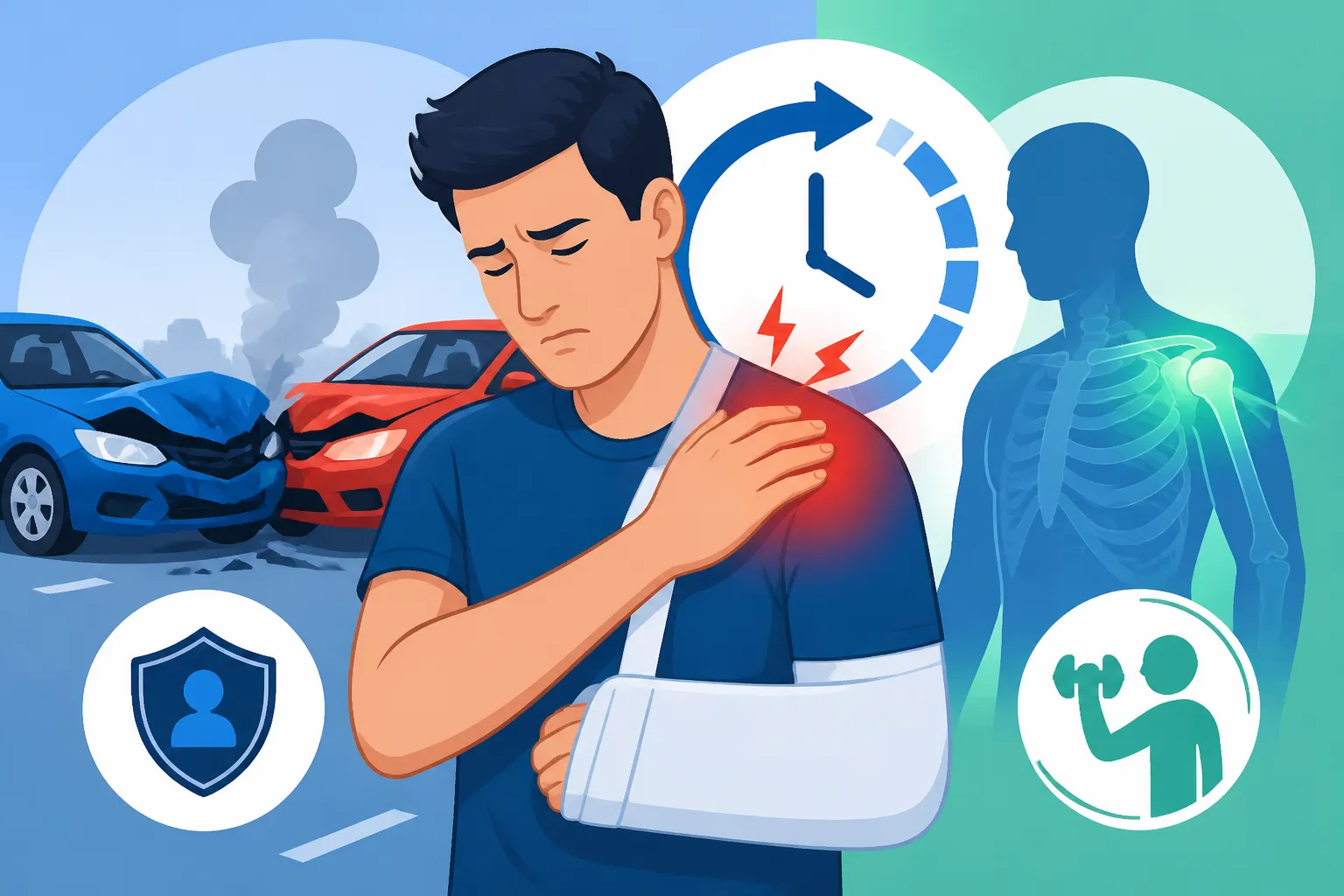
It's incredibly frustrating when you're involved in a car accident, and even more so when you realize the pain isn't just a fleeting ache but a persistent, debilitating shoulder injury. The worry sets in – how long will this last? Can I go back to work? Will I ever lift my kids again without pain? This guide aims to shed light on the healing journey for shoulder injuries sustained in car accidents, offering realistic timelines and crucial information to help you navigate this challenging recovery.
Understanding Your Shoulder Injury After a Car Accident
When you've been in a car crash, your body goes through an immense amount of stress and force. It's not uncommon for the impact to send shockwaves through your musculoskeletal system, and your shoulders, being quite vulnerable, often bear the brunt of it. Whether it's the sudden jolt, bracing yourself, or the seatbelt locking up, these forces can cause a range of painful and often long-lasting shoulder injuries.
Common Types of Shoulder Injuries in Car Crashes
The shoulder joint is a complex marvel, designed for incredible range of motion, but that flexibility also makes it prone to injury, especially under the trauma of a car accident. We see everything from mild sprains to severe fractures, each with its own recovery path.
One of the most frequent culprits is a rotator cuff tear. Your rotator cuff is a group of four muscles and their tendons that surround the shoulder joint, providing stability and allowing you to lift and rotate your arm. A car accident can cause these tendons to partially tear or completely rupture, making everyday movements like reaching for a cup or combing your hair agonizing. Imagine trying to sleep on your side, only to be woken by a sharp, shooting pain – that's often a hallmark of a rotator cuff issue.
Then there's shoulder impingement, which occurs when the tendons of the rotator cuff (and sometimes the bursa, a fluid-filled sac that cushions the joint) get pinched between the bones in your shoulder. This can happen from repetitive overhead movements, but a sudden, forceful impact can also initiate or exacerbate it, leading to pain when lifting your arm.
Fractures are another serious concern. You might break your clavicle (collarbone), humerus (upper arm bone), or even your scapula (shoulder blade). A broken collarbone, for example, is often incredibly painful and can severely limit arm movement, especially in a side-impact collision where direct force is applied to the shoulder. These aren't just minor breaks; they can require significant recovery time and sometimes surgery.
Dislocations or subluxations (partial dislocations) happen when the head of your upper arm bone pops out of your shoulder socket. This is an incredibly painful and often visible injury, sometimes leaving you with a visibly deformed shoulder and an inability to move your arm at all. You might have been holding onto the steering wheel tightly, and the sudden stop forced your arm out of its socket. The immediate aftermath often involves an emergency room visit to have the shoulder put back into place.
Finally, we have various forms of soft tissue damage, including strains (muscle or tendon injuries) and sprains (ligament injuries), as well as labral tears. The labrum is a rim of cartilage around your shoulder socket that helps keep the joint stable. A forceful yank or impact, like those experienced in a car crash, can tear this cartilage, leading to pain, instability, and a clicking or popping sensation in the shoulder. These injuries can sometimes be insidious, meaning they don't always present with immediate, crushing pain, which brings us to delayed symptoms.
Why Car Accidents Lead to Shoulder Trauma
It's not just the direct impact that causes shoulder injuries in a car accident. The complex physics of a collision can create forces that twist, strain, and hyperextend your shoulder in ways it's not designed to handle.
Think about the moment of impact. Your body is suddenly decelerated or accelerated, and if you're wearing a seatbelt, it's doing its job by restraining you. However, this restraint can also lead to injury. The shoulder strap, while preventing you from flying forward, can exert immense pressure on your shoulder, potentially causing injuries like those detailed in our guide on Shoulder Injuries From a Seatbelt. This force can bruise, strain, or even fracture bones and tear soft tissues. In side-impact collisions, your shoulder might directly hit the door or window, or be violently thrown against the interior of the vehicle.
Often, people instinctively brace for impact, tensing their muscles and gripping the steering wheel. This natural reaction, while protective, can put extraordinary strain on the shoulder joint and surrounding muscles. The sudden tensing and subsequent jarring can lead to muscle strains, rotator cuff injuries, or even dislocations as the force of the collision overwhelms the joint's stability. Airbag deployment, though life-saving, can also contribute to shoulder trauma. The speed and force with which an airbag deploys can impact your arms and shoulders, sometimes causing fractures or soft tissue damage. The combination of these factors means that nearly any part of the shoulder can be affected, and often, multiple injuries occur simultaneously.
Immediate vs. Delayed Symptoms
One of the most confusing aspects of a car accident injury is the timing of symptoms. Sometimes, the pain is instant and undeniable, screaming for attention right after the crash. You might feel a sharp, searing pain, notice swelling, or even see a visible deformity in your shoulder. In such cases, there's no doubt you need immediate medical attention.
However, it's incredibly common for shoulder pain and other symptoms to be delayed. You might walk away from the accident feeling shaken but otherwise "fine," only for a dull ache to start a few hours later, gradually worsening over the next few days or even weeks. This delay can be due to adrenaline masking the pain, or the subtle inflammation and damage taking time to fully manifest. You could have a hairline fracture that doesn't cause severe pain until you put weight on it, or a small rotator cuff tear that only becomes apparent when you try to lift your arm above your head a few days later.
This is precisely why we always emphasize the importance of seeing a doctor after a car accident, even if you feel okay. Our guide, Why You Should See a Doctor After a Car Accident, goes into this in more detail. Delayed symptoms can complicate both your recovery and your car accident claim, as insurance companies might try to argue that your injuries aren't related to the accident if you didn't seek immediate care. Don't let a deceptive lack of initial pain prevent you from getting checked out; early diagnosis is key to a smoother recovery and a stronger claim.
Factors Influencing Shoulder Injury Healing Time
Understanding how long your shoulder injury will take to heal isn't a simple "one-size-fits-all" answer. There are numerous variables at play, ranging from the specific nature of your injury to your personal health and how diligently you follow your treatment plan. It’s a bit like baking a cake – many ingredients and steps contribute to the final outcome.
Severity and Type of Injury
Naturally, a minor shoulder strain is going to heal much faster than a complex fracture or a complete rotator cuff tear requiring surgery. The type of tissue damaged plays a huge role. Muscles and tendons, while critical, can often heal with rest and physical therapy, whereas ligaments (which connect bone to bone) can be notoriously slow to recover due to their limited blood supply. Fractures, depending on their location and severity (e.g., displaced vs. non-displaced), might need casting, immobilization, or surgical intervention with plates and screws, all of which extend recovery significantly.
For example, a simple shoulder sprain or strain might only keep you sidelined for a few weeks, with full function returning relatively quickly. However, a full rotator cuff tear, especially one that requires surgical repair, can mean weeks of immobilization, followed by months of intensive physical therapy. You might be looking at a minimum of six months before you can even consider returning to strenuous activities, and full recovery could take over a year. Injuries like labral tears or severe dislocations, particularly those that result in chronic instability, often fall into the longer recovery category, especially if surgery is required to reconstruct or stabilize the joint.
Individual Patient Factors
Beyond the injury itself, your own body and lifestyle choices significantly influence healing time. It's a sobering reality that not everyone heals at the same pace.
Age is a big one. Generally, younger individuals tend to have faster healing rates due to more robust cellular regeneration and better blood flow. As we age, our tissues become less resilient, and the body's repair mechanisms can slow down, leading to longer recovery periods for similar injuries. Someone in their twenties might bounce back from a minor fracture in 6-8 weeks, while someone in their sixties might need 12-16 weeks for the same injury, assuming no complications.
Overall health and pre-existing conditions are also critical. If you have conditions like diabetes, circulatory issues, or autoimmune diseases, your body's ability to heal might be compromised. Similarly, if you had a pre-existing shoulder condition, even if it was asymptomatic before the accident, the trauma can aggravate it, making recovery more complex and potentially longer. This is why it's so important to be upfront with your doctors about your full medical history.
Your lifestyle choices also factor in. Smoking, for instance, restricts blood flow and can severely impair healing. Nutrition plays a role; a body well-nourished with vitamins and protein is better equipped for tissue repair. Perhaps most importantly, your adherence to the treatment plan is paramount. Skipping physical therapy sessions, trying to push yourself too hard too soon, or failing to follow medication instructions can delay healing, increase the risk of re-injury, and potentially lead to chronic issues. You simply cannot rush the body's natural healing process without consequences.
The Importance of Prompt Medical Attention
We've touched on this before, but it bears repeating: seeking prompt medical attention after a car accident is not just a good idea for your health, it's absolutely crucial for your recovery timeline. Ignoring pain or hoping it will go away on its own is a common mistake that almost always leads to worse outcomes and extended healing periods.
Early diagnosis allows for the correct treatment plan to be initiated immediately. Imagine you have a small rotator cuff tear. If caught early, it might be manageable with conservative treatment like rest, ice, and targeted physical therapy. But if you wait weeks or months, the tear could worsen, leading to more significant damage that eventually necessitates surgery – drastically increasing your healing time from weeks to many months or even a year. Furthermore, delaying treatment can allow scar tissue to form improperly, leading to chronic stiffness and limited range of motion, which can be harder to correct later.
Beyond the physical healing, early medical documentation is vital for your car accident claim. Insurance companies scrutinize gaps in treatment and delayed reporting of injuries. If you wait to see a doctor, they might argue that your shoulder injury wasn't caused by the accident, or that you exacerbated it by not seeking timely care. This can severely impact your ability to recover compensation for medical bills, lost wages, and pain and suffering. Our guide on How to Prove Injuries in a Car Accident Claim explains the critical role of documentation. Don't give them an excuse to devalue your experience; get seen by a medical professional as soon as possible.
Typical Recovery Timelines for Shoulder Injuries
Setting expectations for recovery can be tough because every injury and every person is unique. However, we can look at typical timelines based on the general type and severity of shoulder injuries. These are not guarantees, but rather common ranges to help you understand what might lie ahead.
Non-Surgical Treatment and Rehabilitation
For many shoulder injuries, particularly sprains, strains, minor impingement, and some non-displaced fractures, the initial treatment involves conservative methods. This typically includes rest, applying ice, anti-inflammatory medications, and eventually, a dedicated course of physical therapy.
-
Minor Sprains and Strains: These are usually the quickest to heal. You might experience significant pain and limited movement for a few days to a week. With proper rest and perhaps some gentle stretching or light physical therapy, many people start feeling much better within 2 to 4 weeks. Full recovery, where you regain strength and full range of motion, often takes 4 to 6 weeks. It's crucial not to rush back into strenuous activities, or you risk re-injury.
-
Shoulder Impingement: If caught early and managed conservatively, impingement can improve significantly with physical therapy focused on posture, strengthening rotator cuff muscles, and improving scapular stability. This often involves a commitment to therapy for 6 weeks to 3 months, with some individuals needing up to 6 months for full resolution, especially if the inflammation was chronic.
-
Minor Fractures (e.g., non-displaced clavicle fracture): These usually require a period of immobilization, often with a sling, followed by physical therapy. The bone typically takes 6 to 8 weeks to heal enough to remove the sling, but regaining full strength and range of motion through physical therapy can extend the total recovery to 10 to 12 weeks, or even up to 4 months for complete restoration of function.
Physical therapy is the cornerstone of non-surgical rehabilitation. It's not just about doing exercises; it's about restoring proper mechanics, strengthening weakened muscles, and improving flexibility and stability. Consistency and patience are paramount here.
Surgical Recovery and Long-Term Outlook
When an injury is severe – like a complete rotator cuff tear, a significant labral tear, complex fractures, or recurrent dislocations – surgery often becomes necessary. This is where recovery timelines can become significantly longer and more demanding.
-
Rotator Cuff Repair or Labral Repair: These are common surgeries after car accidents. The initial phase involves strict immobilization in a sling, often for 4 to 6 weeks, to allow the repaired tissues to heal without strain. During this time, you'll likely have very limited movement. Following immobilization, intensive physical therapy begins, gradually increasing range of motion and strength. This therapy phase can last 3 to 6 months. Full recovery, meaning a return to most normal activities and feeling strong and stable, often takes 6 months to a year, or sometimes even longer. It's a marathon, not a sprint, and adhering to your physical therapy regimen is absolutely critical.
-
Complex Fracture Repair: Depending on the bone fractured (e.g., humerus, scapula) and the extent of the damage, surgery might involve plates, screws, or pins to stabilize the bone. Recovery often mimics rotator cuff repair, with an initial immobilization period followed by extensive physical therapy. Overall, you might be looking at 6 months to well over a year for complete healing and functional restoration, especially if nerve damage or joint involvement occurred.
The long-term outlook after surgery can be very positive, but it often depends on the extent of the original injury, the success of the surgery, and your dedication to rehabilitation. Some individuals may experience residual stiffness or minor limitations, while others regain full function. It's important to have realistic expectations and work closely with your surgical team and physical therapists.
Recognizing When Healing Isn't Progressing
While these timelines offer a general guide, healing isn't always linear. There will be good days and bad days, and sometimes, you might find that your progress has stalled or even reversed. It's important to be an active participant in your recovery and communicate openly with your medical team.
If you notice persistent pain that isn't improving with treatment, or if it suddenly worsens, that's a red flag. Similarly, if your range of motion remains severely limited despite consistent physical therapy, or if you develop new symptoms like numbness, tingling, or weakness, it's time to speak up. These could indicate complications like nerve impingement, improper healing, scar tissue formation, or even that the initial diagnosis missed something.
Don't hesitate to seek a second opinion from another specialist if you feel your current treatment isn't yielding results. Sometimes, a fresh perspective can identify an alternative approach or a previously undiagnosed issue. Your body is giving you signals; listen to them. Ignoring these signs can lead to chronic pain, long-term disability, and further complications, ultimately extending your recovery and impacting your quality of life. Be proactive in your care to ensure the best possible healing outcome.
Navigating Your Claim While Healing
Dealing with a significant shoulder injury is taxing enough, but adding a car accident claim on top of it can feel overwhelming. You're trying to heal, attend appointments, and understand medical jargon, all while an insurance company might be questioning every move you make. It's a lot to juggle, but managing your claim effectively is crucial for securing the compensation you deserve for your pain and medical expenses.
Documenting Your Injuries and Treatment
The single most powerful tool you have in a car accident claim is thorough documentation. From the moment of the accident through every step of your recovery, detailed records paint a clear picture of your injury, its severity, and its impact on your life.
This means keeping every single medical record: doctor's notes, diagnostic imaging reports (X-rays, MRIs, CT scans), physical therapy notes, occupational therapy notes, prescriptions, and receipts for medications or medical equipment (like slings, ice packs, or TENS units). Each piece of paper serves as evidence connecting your shoulder injury to the car accident and quantifying your damages. Make sure you keep a copy of everything; don't rely solely on the medical providers or the insurance company to have all your records.
Beyond official medical documents, maintaining a personal pain journal can be incredibly helpful. Jot down your daily pain levels (on a scale of 1-10), what activities are limited, how your sleep is affected, and any emotional distress you're experiencing. This personal record helps to document your "pain and suffering" and can provide a human element that medical charts sometimes miss. For more on proving your injury, refer to our guide on How to Prove Injuries in a Car Accident Claim. This meticulous record-keeping is your foundation when discussing your settlement or negotiating with adjusters.
How Delayed Symptoms Affect Your Claim
As we discussed, it's not unusual for shoulder pain or other symptoms to surface days or even weeks after a car accident. This phenomenon, while medically common, can unfortunately create hurdles in your insurance claim. Insurance adjusters are trained to look for any inconsistencies or gaps in treatment that they can use to minimize your claim's value.
If you don't seek medical attention immediately after the accident, and your shoulder pain only starts a week later, the insurance company for the at-fault driver might argue that your injury wasn't caused by their insured's negligence. They might suggest you injured your shoulder doing something else in the interim, or that your pre-existing condition (if you have one) is the true cause.
To counteract this, it's vital to:
- Seek medical attention as soon as any symptoms appear, no matter how minor. Clearly explain to the doctor that these symptoms arose after the car accident.
- Ensure your medical records explicitly state the connection to the car accident. Don't assume the doctor will automatically link it.
- Be consistent in reporting your symptoms. Any changes should be documented.
Our article on How Delayed Symptoms Affect Your Claim dives deeper into this complex issue, but the takeaway is clear: while delayed symptoms are real, they require extra vigilance and documentation on your part to ensure your claim isn't unfairly devalued.
Seeking Legal Guidance for Your Shoulder Injury Claim
Dealing with a shoulder injury and the ensuing recovery is a full-time job in itself. Adding the complexities of an insurance claim can be overwhelming, especially when you're in pain and trying to understand your rights. This is where the expertise of a car accident lawyer becomes invaluable.
An attorney can handle all communication with insurance companies, protecting you from potentially damaging statements or tactics. They understand how insurance companies determine who is at fault and how they try to minimize payouts. They will gather all necessary evidence, including your medical records, police reports, and witness statements, to build a strong case proving the other driver's fault and the extent of your injuries.
Perhaps most importantly, a lawyer can accurately assess the full value of your claim, considering not just your immediate medical bills and lost wages, but also future medical expenses (which are very common with significant shoulder injuries), pain and suffering, and loss of earning capacity. They know how to negotiate with insurance adjusters, who often offer low initial settlements. If a fair settlement isn't reached, they can guide you through the lawsuit process, potentially taking your case to trial. Many people wonder Do You Need a Lawyer for a Car Accident? (2026), and for a shoulder injury, especially one requiring extensive treatment or surgery, the answer is almost always yes. A seasoned lawyer can help maximize your car accident settlement and ensure you receive the compensation needed to cover your long and challenging healing journey.
| Injury Type | Typical Healing/Recovery Time (Non-Surgical) | Typical Healing/Recovery Time (Surgical) | Key Recovery Activities | Potential Long-Term Issues |
|---|---|---|---|---|
| Minor Sprains/Strains | 2-6 weeks | N/A | Rest, ice, gentle stretches, light PT | Minor stiffness if not fully rehabilitated |
| Shoulder Impingement | 6 weeks – 6 months | 3-6 months+ (if debridement/decompression) | Physical therapy, activity modification, anti-inflammatories | Chronic pain, limited range of motion if untreated |
| Non-Displaced Fractures (Clavicle) | 6-12 weeks (bone healing) + PT | N/A (unless severe/displaced) | Immobilization (sling), gradual PT | Mild stiffness, occasional aches |
| Shoulder Dislocation (First time) | 6-12 weeks (immobilization + PT) | 4-9 months+ (if stabilization surgery) | Immobilization, PT for stability and strength | Recurrent dislocations, instability |
| Partial Rotator Cuff Tear | 3-6 months (intensive PT) | 6-12 months (if repaired) | PT for strengthening, activity modification | Chronic pain, weakness, re-tear risk |
| Complete Rotator Cuff Tear | Seldom heals without surgery | 6-12 months (post-op PT) | Post-surgical immobilization, intensive PT | Stiffness, weakness, re-tear risk, residual pain |
| Labral Tear (SLAP tear) | 3-6 months (PT, if conservative) | 6-12 months (post-op PT) | Rest, PT, activity modification | Instability, clicking, chronic pain |
Disclaimer
Please remember that the information provided in this guide is for general informational purposes only and does not constitute medical or legal advice. Every individual's injury and recovery process is unique, and you should always consult with a qualified medical professional for diagnosis and treatment recommendations. Similarly, navigating a car accident claim can be complex, and seeking advice from an experienced personal injury attorney is highly recommended to protect your rights and ensure you receive proper compensation.