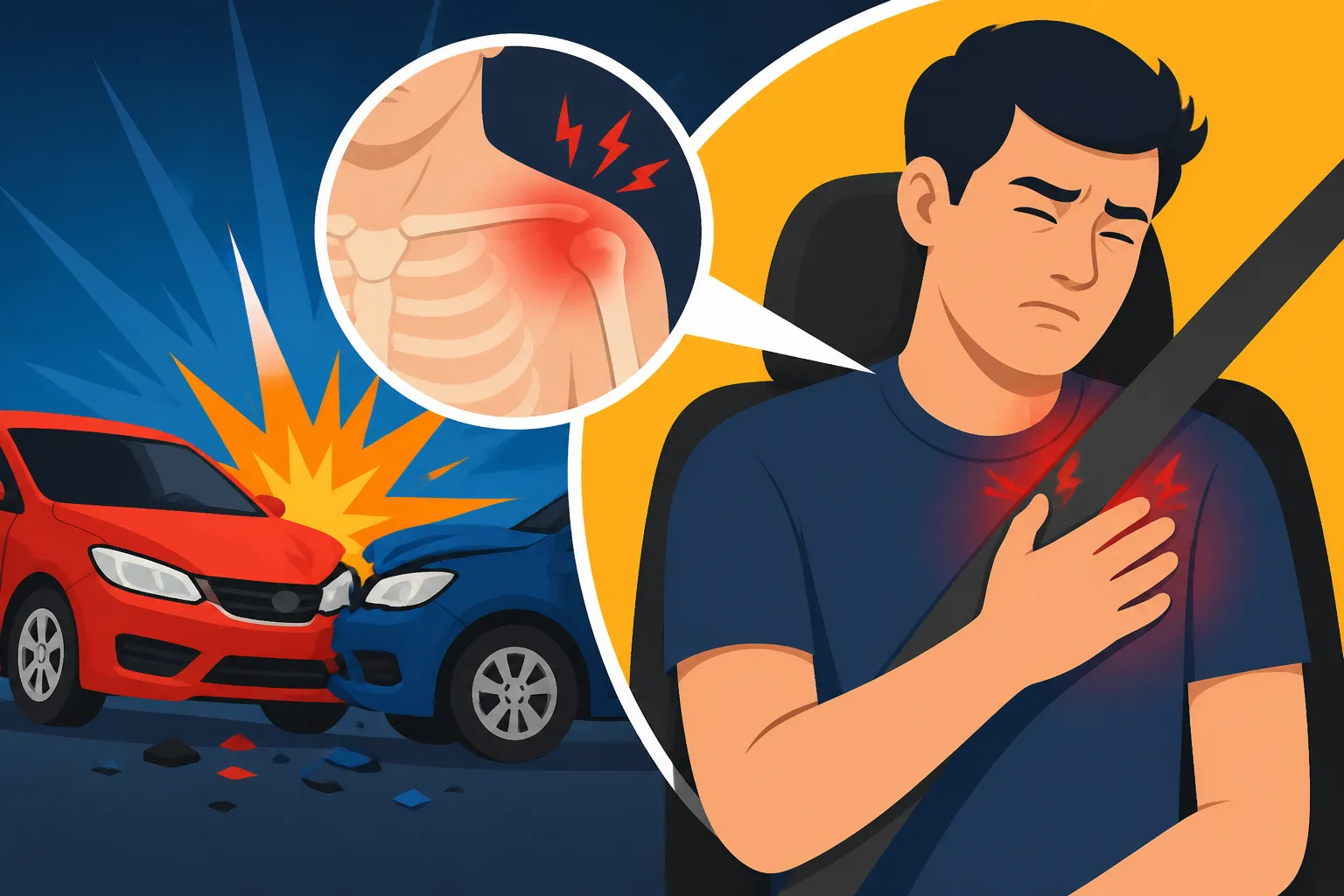
Shoulder Injuries From a Seatbelt
It’s a cruel irony, isn't it? That very device designed to keep us safe in a car accident—the seatbelt—can sometimes be the cause of significant pain and injury, especially to your shoulder. While a seatbelt is undeniably a life-saver, the immense forces at play during a sudden stop or collision can turn its protective embrace into a source of trauma. If you've been in an accident and are now dealing with nagging shoulder pain that seems linked to where your seatbelt pressed against you, you're not alone. This comprehensive guide will walk you through the common types of seatbelt-related shoulder injuries, how to recognize them, what to expect for diagnosis and treatment, and how these injuries factor into your car accident claim.
The Double-Edged Sword of Seatbelts: Protecting and Injuring
We all buckle up almost instinctively, knowing that seatbelts are crucial for our safety. But understanding the dynamics of how they protect us, and how those same dynamics can lead to injury, is key to comprehending shoulder trauma after a crash.
How Seatbelts Protect You in a Crash
The primary function of a seatbelt is undeniably heroic: to keep you inside the vehicle and prevent your body from striking the interior components with devastating force during a collision. Imagine the scenario without a seatbelt: in a head-on crash, your body would continue moving forward at the speed the car was traveling before impact, slamming into the dashboard, windshield, or steering wheel. The seatbelt mitigates this by decelerating your body along with the car, over a longer period, reducing the peak forces exerted upon you.
This protective mechanism is often called the "ride-down" effect. Instead of a sudden, brutal stop against a hard surface, the seatbelt stretches slightly, absorbing some of the energy and spreading the impact forces across stronger parts of your body, primarily the hips and chest. This distribution of force is critical in preventing more severe, often fatal, injuries like ejection from the vehicle, which is one of the deadliest outcomes in a car crash. The sheer statistics confirm it: seatbelts save thousands of lives annually, drastically reducing the risk of severe injury and death.
The Mechanics of Seatbelt-Related Shoulder Injuries
While seatbelts are literal lifesavers, the way they work inevitably places significant stress on specific parts of your body, and the shoulder is particularly vulnerable. In a front-end collision, for instance, your body is thrown forward, but the diagonal shoulder strap of your three-point seatbelt holds your upper torso back. This sudden deceleration and restraint create a powerful whipping or stretching motion across your shoulder and chest. The force isn't always a direct impact, but often a combination of sheer force, compression, and tension as your body tries to continue its forward momentum while being violently pulled back.
Think of it this way: your shoulder acts as a critical anchor point against the seatbelt's resistance. The momentum of your torso, head, and arm is all transferred through that relatively small area where the seatbelt crosses your collarbone and chest. This can lead to a range of injuries, from the relatively mild muscle strains to severe fractures and dislocations. The angle of the seatbelt, your posture at the time of impact, and the direction and severity of the crash all play a role in precisely how these forces manifest as injury. This phenomenon is so well-recognized in the medical community that there's even a term, "seatbelt syndrome," which describes a pattern of injuries, including those to the shoulder, associated with seatbelt restraint.
Common Shoulder Injuries Caused by Seatbelts
When the immense forces of a car crash meet the restraining power of a seatbelt, the shoulder joint, with its complex network of bones, muscles, ligaments, and tendons, can take a serious hit. These injuries can range from painful soft tissue damage that might take weeks or months to heal, to more severe fractures and dislocations requiring significant medical intervention.
Soft Tissue Injuries: Sprains, Strains, and Rotator Cuff Tears
Soft tissue injuries are incredibly common after a car accident, and your shoulder is particularly susceptible to them from seatbelt forces. A sprain involves the stretching or tearing of ligaments—the tough, fibrous bands of tissue that connect bones to each other and stabilize joints. In the shoulder, this could mean damage to ligaments supporting the acromioclavicular (AC) joint (where your collarbone meets your shoulder blade) or the glenohumeral joint (the main shoulder ball-and-socket). A strain, on the other hand, refers to the stretching or tearing of muscle or tendon tissue. The sudden jolt and unnatural pulling motion caused by the seatbelt can easily overstretch or tear the muscles surrounding your shoulder joint.
Among the most debilitating soft tissue injuries are rotator cuff tears. Your rotator cuff is a group of four muscles and their tendons that surround the shoulder joint, providing stability and enabling a wide range of motion. During a car accident, the violent, uncontrolled movement of your arm or the sudden pull from the seatbelt can cause these tendons to tear, either partially or completely. For example, the supraspinatus tendon, often involved in overhead movements, can be particularly vulnerable to sudden tensile forces from the seatbelt. Symptoms typically include severe pain, especially when lifting or rotating the arm, weakness, and a diminished range of motion. If you experience persistent shoulder pain and weakness after an accident, especially when trying to lift things or reach overhead, it's crucial to get it checked out by a doctor as it could indicate a rotator cuff tear.
Another significant soft tissue injury often seen with seatbelt trauma is a labral tear, specifically SLAP (Superior Labrum Anterior to Posterior) lesions. The labrum is a rim of cartilage that deepens the shoulder socket, helping to stabilize the joint. A direct impact or the forceful tug of the seatbelt on the arm can cause this cartilage to tear away from the bone. This can result in a deep, aching pain, a catching or grinding sensation in the shoulder, and difficulty with overhead activities. These injuries are notoriously difficult to diagnose without advanced imaging like an MRI. Beyond these, in very severe cases, the powerful forces can even stretch or tear the brachial plexus, a network of nerves that extends from your spinal cord through your neck and into your arm. These nerve injuries can lead to numbness, tingling, weakness, or even paralysis in the arm and hand, and require immediate medical attention.
Fractures and Dislocations: More Severe Trauma
While soft tissue injuries are common, seatbelt forces can also lead to more severe orthopedic traumas, including fractures and dislocations. A clavicle (collarbone) fracture is one of the most frequently observed bone breaks linked to seatbelt use in accidents. The diagonal strap of the seatbelt often crosses directly over the clavicle. In a sudden impact, the force from the seatbelt can press directly down on the bone, or the shoulder can be violently thrown forward against the strap, leading to a break. You'll likely experience immediate, sharp pain, swelling, bruising, and difficulty moving your arm or shoulder if your collarbone is fractured. Depending on the type of fracture—whether it's a clean break, comminuted (multiple pieces), or displaced—treatment can range from immobilization with a sling to surgery involving plates and screws.
Scapula (shoulder blade) fractures are less common than clavicle fractures but can occur in high-impact collisions where the seatbelt significantly restrains the torso while the shoulder is subjected to other forces. Because the scapula is encased in a protective layer of muscle, it typically requires substantial force to fracture. These injuries are often associated with other severe traumas due to the energy required to break the shoulder blade itself. Symptoms include severe pain, swelling, and limited arm movement.
Perhaps one of the most acutely painful seatbelt-related shoulder injuries is a shoulder dislocation. The shoulder joint, being the most mobile joint in the body, is also the most prone to dislocation. When the seatbelt violently restrains your torso, and your arm or shoulder is twisted or pulled forcefully, the head of the humerus (upper arm bone) can be yanked out of the glenoid socket. This can happen anteriorly (forward), posteriorly (backward), or inferiorly (downward). A dislocated shoulder is visibly deformed, extremely painful, and you will be unable to move your arm. It requires immediate medical attention to have the joint "reduced," or put back into place, usually under sedation. Post-reduction, immobilization and physical therapy are crucial to prevent recurrence.
Thoracic Outlet Syndrome
Beyond the immediate damage to bones and soft tissues, some individuals might develop a condition known as Thoracic Outlet Syndrome (TOS) after a car accident where a seatbelt played a role. TOS occurs when the nerves or blood vessels (specifically the subclavian artery and vein, and the brachial plexus nerves) in the space between your collarbone and your first rib become compressed. This area is called the thoracic outlet.
A seatbelt injury can contribute to TOS in several ways. The trauma from the seatbelt's diagonal strap crossing the collarbone can directly injure or inflame the soft tissues in this region. The subsequent muscle spasms, swelling, or even the formation of scar tissue in the neck and shoulder area after the accident can lead to chronic compression of these delicate structures. Imagine the seatbelt pulling and tugging, causing micro-trauma that, over time, leads to a tightening of the muscles or connective tissues in that specific bottleneck.
Symptoms of TOS are varied and can be quite frustrating to diagnose, often mimicking other conditions. They can include pain, numbness, tingling, and weakness in the shoulder, arm, and hand. You might experience a sensation of coldness or discoloration in your hand if blood vessels are compressed. Diagnosing TOS usually involves a physical examination, nerve conduction studies, and imaging, but it often requires a doctor who is specifically experienced in identifying this complex condition. Early recognition and treatment, including physical therapy, pain management, and sometimes surgery to decompress the area, are vital for managing TOS.
Recognizing Symptoms and Getting a Diagnosis
The aftermath of a car accident is chaotic, and distinguishing between immediate shock, minor aches, and serious injuries can be incredibly difficult. However, understanding the timing and nature of shoulder pain, and how medical professionals approach diagnosis, is paramount for your health and for any potential car accident claim.
Immediate vs. Delayed Symptoms
Immediately after a car accident, your body often floods with adrenaline, which can mask pain from injuries. You might feel a dull ache or simply be in shock. However, if you've sustained a significant shoulder injury from a seatbelt, you might experience immediate symptoms such as sharp, intense pain at the site of impact or pull, visible bruising or swelling across your collarbone or shoulder, and an inability to move your arm or shoulder normally. If a bone is fractured or dislocated, you might even notice a visible deformity or hear a popping sound at the time of the collision.
The tricky part, and why many people initially underestimate their injuries, is the phenomenon of delayed symptoms. It's incredibly common for shoulder pain, stiffness, limited range of motion, or radiating numbness to appear hours, days, or even weeks after the initial impact. For example, a minor tear in a rotator cuff might not cause debilitating pain until inflammation builds up or you attempt a specific movement a few days later. Similarly, nerve impingement or the subtle onset of conditions like thoracic outlet syndrome might take time to manifest clearly. This delay can lead people to believe they weren't seriously hurt, only to find themselves in increasing pain later. This is precisely why it's so important to seek medical attention promptly, even if you feel fine right after the crash. Waiting too long to see a doctor can not only prolong your recovery but also complicate your ability to prove that your injuries were directly caused by the accident, which is crucial for your claim. It’s a common pitfall people face when dealing with injuries, as discussed in detail in guides like Delayed Injury Symptoms After a Car Accident.
The Diagnostic Process
Once you seek medical attention for your shoulder pain, a thorough diagnostic process will begin. It usually starts with a detailed physical examination by a doctor. They will ask you about the accident, your symptoms, and your medical history. They will then carefully assess your shoulder, palpating (gently feeling) for tenderness, swelling, or deformities. The doctor will test your range of motion, both actively (you moving your arm) and passively (them moving your arm), to identify limitations or pain points. Specific orthopedic tests, which involve various movements and pressures, can help pinpoint potential issues like rotator cuff tears, labral damage, or ligamentous instability.
To confirm a diagnosis and rule out other conditions, doctors will often order imaging tests. X-rays are usually the first step, as they are excellent for detecting fractures, such as a broken clavicle or scapula, and identifying dislocations. However, X-rays don't show soft tissues. For injuries like rotator cuff tears, labral tears, or significant ligament damage, an MRI (Magnetic Resonance Imaging) is typically required. An MRI provides highly detailed images of muscles, tendons, ligaments, and cartilage. In some cases, a CT (Computed Tomography) scan might be used, especially if there's suspicion of complex fractures or when more detailed bone imaging is needed. It’s through this combination of physical examination and advanced imaging that doctors can arrive at an accurate diagnosis, which forms the bedrock of your treatment plan and significantly strengthens your personal injury claim. The detailed records generated from these diagnostic steps are invaluable, as explored in the guide How Medical Records Prove Your Injuries.
Treatment and Recovery for Seatbelt Shoulder Injuries
Dealing with a seatbelt-related shoulder injury is a journey, and understanding the road ahead for treatment and recovery is crucial. It's not just about alleviating pain, but about restoring full function and preventing long-term complications.
Non-Surgical Treatment Options
For many seatbelt-related shoulder injuries, especially less severe sprains, strains, and some partial rotator cuff tears, non-surgical treatment is the first line of defense. Immediately after the injury, the RICE protocol (Rest, Ice, Compression, Elevation) is often recommended to reduce swelling and pain. Your doctor will likely prescribe pain medication, such as over-the-counter NSAIDs (non-steroidal anti-inflammatory drugs) like ibuprofen or naproxen, or stronger prescription pain relievers for more severe pain. Muscle relaxants might also be used if muscle spasms are present.
A cornerstone of non-surgical recovery is physical therapy. A physical therapist will design a personalized program of exercises aimed at reducing pain, restoring your shoulder's range of motion, and strengthening the surrounding muscles. This might involve gentle stretching, pendulum exercises, resistance band work, and eventually, weight-bearing exercises. The key to successful physical therapy is consistent adherence; skipping sessions or not doing your home exercises can significantly delay your recovery. Think of it as rebuilding your shoulder, step by careful step. In some cases, if conservative measures aren't providing enough relief, your doctor might suggest corticosteroid injections directly into the joint or surrounding tissues. These injections can provide powerful, albeit temporary, relief from inflammation and pain, giving you a window to more effectively engage in physical therapy.
When Surgery Becomes Necessary
While many shoulder injuries heal with conservative care, there are specific situations where surgery becomes the best, or only, option for optimal recovery. If you have a complete rotator cuff tear that significantly impacts your strength and function, or if a partial tear doesn't respond to months of physical therapy, surgical repair might be indicated. Similarly, if your shoulder repeatedly dislocates (becomes unstable) after the initial injury, surgery may be necessary to stabilize the joint and prevent future dislocations. Complex or displaced fractures of the clavicle or scapula might also require surgical intervention to correctly align the bone fragments and secure them with plates, screws, or pins to ensure proper healing.
Common surgical procedures for shoulder injuries include arthroscopy, a minimally invasive technique where a surgeon uses a small camera and instruments inserted through tiny incisions to repair damaged tissues like the labrum or rotator cuff. For more extensive repairs or complex fractures, an open surgical procedure might be necessary. After surgery, the recovery journey is often intensive. You'll typically need a period of immobilization using a sling or brace to protect the healing tissues. This is followed by a rigorous physical therapy program, which is absolutely critical for regaining strength, flexibility, and full function. Pain management is also a significant component of post-surgical care. While surgery can be daunting, for certain injuries, it's the most effective path to restoring long-term shoulder health and function.
Long-Term Outlook and Potential Complications
The long-term outlook for seatbelt-related shoulder injuries varies widely depending on the type and severity of the injury, as well as the individual's adherence to their treatment plan. For minor sprains and strains, most people make a full recovery within weeks to a few months. However, more significant injuries like rotator cuff tears, labral tears, and fractures can take much longer to heal, often involving several months of rehabilitation. For example, the guide on How Long Does Shoulder Injury Take to Heal After a Car Accident? outlines various timelines. Even after successful treatment, some individuals might experience residual chronic pain, stiffness, or a reduced range of motion, particularly in activities that involve overhead reaching or heavy lifting.
Complications can arise, too. A dislocated shoulder, once injured, has a higher chance of re-dislocating in the future. Untreated or poorly rehabilitated rotator cuff tears can lead to progressive weakness and functional limitations. Fractures that don't heal correctly (non-union) can require further surgical intervention. Over time, significant joint trauma can also accelerate the development of arthritis in the shoulder joint, leading to persistent pain and stiffness years down the line. It's important for both your physical recovery and your car accident claim that your medical care aims to help you reach what's known as Maximum Medical Improvement (MMI). This term, as explained in articles like What Is Maximum Medical Improvement MMI?, signifies the point at which your condition has stabilized and no further significant improvement is expected, which is a key marker in assessing the full extent of your damages.
How Seatbelt Shoulder Injuries Impact Your Car Accident Claim
Experiencing a shoulder injury from a seatbelt in a car accident is not just a physical ordeal; it also brings with it the daunting task of navigating the car accident claim process. Proving the extent of your injury and its impact on your life is crucial to securing fair compensation.
Documenting Your Injuries and Medical Expenses
The absolute bedrock of any successful car accident claim, especially one involving a specific injury like a seatbelt-induced shoulder trauma, is thorough and meticulous documentation. From the moment the accident occurs, every step you take to document the incident and your subsequent injuries is critical. This includes collecting contact and insurance information at the scene, taking photos of vehicle damage and your visible injuries, and most importantly, seeking immediate medical attention. As highlighted in What to Do After a Car Accident: Step-by-Step 2026, these initial steps are paramount.
Beyond the immediate aftermath, you must keep exhaustive records of all your medical care. This means every doctor's visit, specialist consultation (orthopedist, physical therapist), imaging test (X-rays, MRIs, CT scans), prescription, and over-the-counter medication purchased for your shoulder pain. Obtain copies of all medical bills, invoices for physical therapy sessions, receipts for medical devices (like slings or braces), and even records of mileage driven to and from appointments. This comprehensive paper trail is how you demonstrate the financial impact of your injury. Perhaps even more importantly, this documentation helps to establish a clear causal link between the car accident and your specific shoulder injury, counteracting any potential arguments from insurance companies that your injury was pre-existing or unrelated.
Claiming Economic and Non-Economic Damages
When pursuing a car accident claim for a seatbelt shoulder injury, you'll generally be seeking two main types of damages: economic and non-economic. Economic damages are the quantifiable financial losses you've incurred due to the accident and your injury. This includes all your past and future medical expenses, such as hospital stays, surgical costs, physical therapy, medications, and any necessary assistive devices. It also covers lost wages if you had to miss work due to your injury or recovery, and potentially loss of earning capacity if your injury permanently impairs your ability to perform your job or other work in the future. This distinction between the tangible costs is well-explained in Economic vs Non-Economic Damages Explained.
Non-economic damages, on the other hand, compensate you for the intangible impacts of your injury. This primarily includes pain and suffering, which encompasses not just the physical pain but also emotional distress, mental anguish, and the inconvenience caused by your injury. It also covers the loss of enjoyment of life, meaning how your shoulder injury has prevented you from participating in hobbies, sports, or daily activities you once enjoyed, whether that's playing with your kids, gardening, or golfing. Calculating pain and suffering can be complex, often relying on multipliers applied to economic damages, as detailed in resources like Pain and Suffering: How It's Calculated. To establish these non-economic damages, it's vital to have consistent medical records detailing your pain levels, limitations, and how your injury has affected your daily life, supported by testimony from medical experts who can attest to the long-term impact.
Navigating Insurance Companies and Settlements
Dealing with insurance companies after a car accident is rarely straightforward, and claims involving seatbelt-related shoulder injuries are no exception. Insurers, even your own, are businesses focused on minimizing payouts. They might try to argue that your injury wasn't as severe as you claim, that it was a pre-existing condition, or that you contributed to the accident. For example, if you had a prior shoulder tweak from a sports injury years ago, they might try to attribute your current pain to that, rather than the seatbelt trauma from the recent collision.
This is where having strong, clear evidence of causation and severity becomes invaluable. Without it, you might find yourself facing a lowball settlement offer or even a denial of your claim. Many people find that engaging with an experienced car accident lawyer significantly strengthens their position. A lawyer can gather necessary evidence, negotiate with the insurance company on your behalf, and ensure all potential damages are accounted for. This is often the point where you might decide When to Hire a Car Accident Lawyer is appropriate. Furthermore, it's crucial to understand how fault is determined in your state, as your degree of responsibility for the accident can directly impact the amount of compensation you can recover, particularly in states that follow comparative negligence rules. This is covered more broadly in articles like How Fault Affects Your Insurance Claim. A lawyer can help navigate these complex legal nuances, ensuring that your rights are protected and you receive a fair settlement for your seatbelt shoulder injury.
Here's a table summarizing common seatbelt-related shoulder injuries, their key symptoms, and typical recovery timeframes:
| Injury Type | Key Symptoms | Typical Recovery Timeframe |
|---|---|---|
| Shoulder Sprain/Strain | Pain, tenderness, swelling, limited range of motion | 2-6 weeks (mild); several months (severe) |
| Rotator Cuff Tear | Deep pain, weakness, difficulty lifting arm, clicking/popping | 3-6 months (non-surgical); 6-12 months (surgical) |
| Labral Tear (SLAP) | Aching pain, catching/grinding sensation, instability, pain with overhead | 3-6 months (conservative); 6-12 months (surgical) |
| Clavicle (Collarbone) Fracture | Severe pain, swelling, deformity, inability to lift arm | 6-12 weeks (non-surgical); 3-6 months (surgical) |
| Shoulder Dislocation | Intense pain, visible deformity, immediate loss of function | 3-6 months (after reduction and therapy), higher recurrence risk |
| Thoracic Outlet Syndrome (TOS) | Numbness, tingling, pain in shoulder/arm/hand, weakness, circulatory issues | Varies widely, often chronic. Years of therapy/management, sometimes surgery. |
| Brachial Plexus Injury | Numbness, weakness, severe pain, paralysis in arm/hand (depending on severity) | Weeks to months (mild stretch); 6 months to 2 years (severe tear), often with residual deficits |
Disclaimer
Please remember that this article provides general information and is not a substitute for professional legal or medical advice. Every car accident and personal injury claim is unique. It is crucial to consult with a qualified medical professional for diagnosis and treatment of any injuries, and to seek advice from an experienced car accident attorney regarding your specific legal situation.