Who Is at Fault in a Merging Accident?
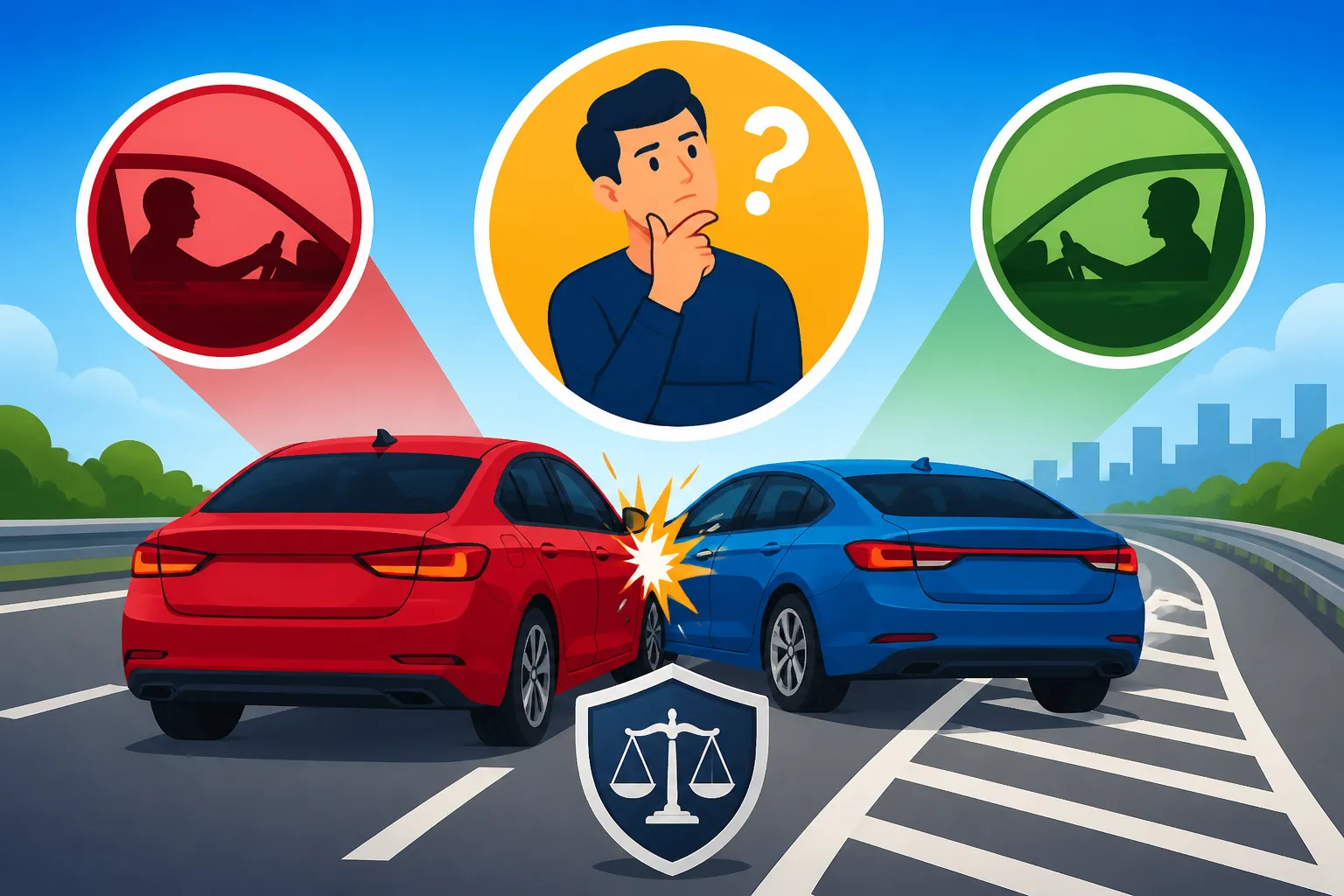
Merging into traffic can be one of the most stressful driving maneuvers, and when things go wrong, figuring out who's to blame in a merging accident often feels like a giant puzzle. Was it the driver entering the main flow, or the one already there? This guide will cut through the confusion, offering a realistic look at how fault is typically determined in these tricky situations, helping you understand your rights and responsibilities when navigating a car accident claim involving a merge.
The Complex Dance of Merging Lane Dynamics
Merging lanes isn't just about moving from one strip of asphalt to another; it's a dynamic interaction between multiple drivers, each with their own speed, intentions, and often, distractions. The rules and expectations can vary slightly depending on the type of merge, the local traffic laws, and even how well drivers understand their shared responsibility. This complexity is exactly what makes determining fault in these accidents so challenging and frustrating for everyone involved.
The "Zipper Merge" vs. Yielding Expectations
When we talk about merging, it’s crucial to understand that not all merges are created equal. You essentially have two main categories, and understanding the difference is paramount in understanding fault:
First, there's the traditional yielding merge. This is most commonly seen when an on-ramp feeds onto a highway or freeway, or when a lane simply ends and traffic needs to move into an adjacent lane. In these scenarios, the driver who is entering the new lane of traffic has the primary responsibility to yield to vehicles already present in that lane. This means they must accelerate or decelerate to find a safe gap and blend in without disrupting the flow of traffic. The expectation is that they will not force their way in, and if they collide with a car already in the lane, fault often leans heavily towards the merging driver for failing to yield the right-of-way. This can be incredibly frustrating for drivers stuck on a short on-ramp, trying desperately to get up to speed with fast-moving highway traffic. Many drivers feel pressured, or even entitled, to just "go for it," leading to dangerous situations.
Then there's the zipper merge. This method is typically used in construction zones or areas where two lanes are explicitly designated to converge into one at a specific point. The key difference here is that drivers are encouraged to use both lanes all the way to the merge point, and then take turns, alternating like the teeth of a zipper. The frustration for many drivers, especially in places like Boston or Phoenix, is that not everyone understands or follows this rule. You’ll often see drivers in the "through" lane getting angry at those using the "ending" lane, thinking they're cutting in line. However, when a zipper merge is indicated by signage, both drivers carry a shared responsibility: the merging driver to alternate, and the existing lane driver to allow them in. When accidents occur in these zones, the fault can be much more ambiguous, requiring a careful look at whether drivers were following the alternating pattern or acting aggressively.
Shared Responsibility on the Road
While specific rules dictate who should yield, it's a common misconception that the driver with the right-of-way is completely absolved of all responsibility in an accident. The truth is, driving requires constant vigilance and a commitment to safety from everyone behind the wheel. Even if you technically have the right-of-way, you still have a duty to drive safely and avoid collisions if reasonably possible.
Consider a scenario where a driver on an on-ramp fails to yield and starts to merge dangerously close to your vehicle on the highway. If you, as the highway driver, have ample space to slow down slightly or shift into an open lane to avoid a collision, but instead choose to speed up to "block" the merging driver or maintain your speed aggressively, you could be found to share some degree of fault. This is where the concept of defensive driving comes into play – taking actions to prevent an accident, even if another driver is making a mistake. It's a tough pill to swallow when you feel like you've done nothing wrong, but the law often considers whether a reasonable driver could have taken evasive action. This shared responsibility can make car accident claims incredibly complex, as insurance companies and legal teams will dissect every second leading up to the crash.
Common Causes of Merging Accidents and Who's at Fault
Merging accidents rarely happen in a vacuum. They are almost always the result of one or more drivers failing to exercise due care or follow traffic laws. Understanding these common culprits can shed light on who might be found responsible when a merge goes wrong. It's not just about who hit whom; it's about why it happened.
Failure to Yield
This is, without a doubt, the leading cause of merging accidents and typically places the primary burden of fault on the driver who was attempting to merge. The law is quite clear in most jurisdictions: if you are entering a flow of traffic, whether from an on-ramp, an acceleration lane, or a lane that is ending, you must yield to the vehicles already in that traffic lane. This means you need to adjust your speed, wait for a safe opening, and ensure you can merge without forcing another driver to brake or swerve abruptly.
Think of it this way: a driver speeding down an on-ramp in Miami, expecting highway traffic to simply make room for them, is a prime example of a failure to yield. Or, imagine a driver in a construction zone trying to cut into a reduced lane without looking over their shoulder, causing a sideswipe. In these situations, the merging driver has not fulfilled their legal obligation to yield, and their actions directly lead to the collision. Evidence such as a police report citing a "failure to yield" is a powerful indicator of fault in these cases, although it doesn't automatically mean 100% fault.
Improper Lane Changes
While merging is a type of lane change, an "improper lane change" can refer to a range of unsafe maneuvers that contribute to merging accidents, sometimes involving the driver already in the lane. For the merging driver, an improper lane change might mean attempting to merge when there isn't sufficient space, failing to signal their intention, or not checking their blind spots adequately. For instance, a driver merging onto I-5 in Seattle might glance quickly, assume a gap is large enough, and then realize too late that the vehicle behind them was accelerating, leading to a collision.
However, improper lane changes can also implicate the driver already in the lane. While they typically have the right-of-way, they also have a duty to drive safely. If the driver in the main lane makes an erratic lane change themselves, perhaps swerving unexpectedly into the path of a merging vehicle or drifting into the merging lane without cause, they could be found partially at fault. Such actions complicate fault determination considerably, highlighting that the incident is never entirely one-sided. To delve deeper into similar situations, you might find our guide on Who Is at Fault in a Lane-Change Accident? particularly insightful, as many principles overlap.
Distracted Driving
In our hyper-connected world, distracted driving is an increasingly common factor in all types of accidents, and merging scenarios are no exception. The complex nature of merging – requiring keen awareness of speed, distance, and surrounding vehicles – makes distraction particularly perilous. A driver looking down at their phone to check a text message, adjusting their navigation system, or even engaging in an intense conversation with a passenger, can miss critical cues.
For the merging driver, distraction means they might misjudge the speed of oncoming traffic, fail to see a safe opening, or neglect to signal. For the driver already in the through lane, distraction could prevent them from noticing a merging vehicle, reacting appropriately to an unsafe merge, or even just maintaining a consistent speed. If a driver with the right-of-way was clearly distracted and could have avoided the collision had they been paying attention, their percentage of fault in the accident could increase. For more on this critical issue, consider reading our post on Fault in a Distracted Driving (Texting) Accident to understand how these factors play out in accident claims.
Determining Fault in Specific Merging Scenarios
The general rules of merging become much clearer when we apply them to specific, everyday driving situations. While the core principle of yielding remains, the nuances of different road designs and traffic patterns can significantly influence who shoulders the blame when an accident occurs.
Entering a Highway from an On-Ramp
This is perhaps the most classic merging scenario, and it's where most drivers encounter the greatest stress. When you're on an on-ramp, the expectation is that you will accelerate to match the speed of highway traffic and find a safe gap to enter the flow. The drivers already on the highway almost always have the right-of-way. Therefore, if a collision occurs because the on-ramp driver failed to get up to speed, didn't find a sufficient gap, or forced their way into traffic, fault is primarily assigned to the merging driver.
However, as mentioned earlier, this isn't always 100% black and white. If the highway driver, for instance, saw the merging vehicle struggling and intentionally sped up to block them, or slammed on their brakes for no reason, they could bear some partial responsibility. This is especially true if the highway driver was excessively speeding, making it impossible for the merging driver to match their speed safely. For a more comprehensive understanding of how blame is apportioned in various incidents, check out our guide on How Fault Is Determined in a Car Accident. The specifics of the road layout, traffic volume, and driver behavior all contribute to the final determination.
Merging Lanes on a Multi-Lane Road
Beyond highway on-ramps, merging also happens frequently on multi-lane roads, often in urban or suburban settings where lanes might narrow or a dedicated turn lane ends. In these situations, the critical factor is typically signage. If one lane has a clear "Yield" sign or a sign explicitly stating "Lane Ends, Merge Left/Right," then the driver in the lane that is ending or yielding has the primary responsibility to find a safe opening and merge into the adjacent lane. They must yield to the traffic already occupying the through lane.
If there's no clear signage indicating which lane has the right-of-way, the situation can become more ambiguous. In such cases, fault often defaults to whoever initiated the unsafe maneuver, such as a driver veering sharply without signaling or cutting off another vehicle. It often comes down to which driver failed to exercise reasonable care and created the dangerous condition that led to the collision. For example, on a busy stretch of the I-80 in New Jersey where lanes merge frequently, careful observation of traffic flow and defensive driving are absolutely essential to avoid these types of accidents.
Merging Construction Zones or Lane Drops
Construction zones are notorious for creating merging headaches and are often the site of fender-benders and more serious collisions. These areas frequently implement "lane drop" situations, where one or more lanes are closed, requiring drivers to merge. The specific rules for these merges are usually communicated through temporary signage.
Sometimes, these signs will instruct drivers to merge early, well before the lane closure. In other cases, particularly with modern traffic management, signs might explicitly encourage the "zipper merge" method, where drivers use both lanes up to the merge point and then take turns. When an accident occurs in a construction zone, determining fault involves closely examining these signs and driver behavior. If a driver ignored clear signs to merge early and then tried to force their way in at the last second, they would likely be at fault. Conversely, if a zipper merge was indicated, and a driver in the through lane refused to let anyone in, or acted aggressively, they could share blame. These situations highlight the importance of understanding specific local traffic control devices. For an overarching perspective on accountability, our article on Who Is at Fault in a Car Accident? Complete Guide provides excellent background.
Evidence to Establish Fault in a Merging Accident
After the initial shock of a merging accident, one of the most pressing concerns is how to prove what happened. Without solid evidence, your version of events might just be your word against theirs, making your car accident claim incredibly difficult to pursue. This is why gathering detailed information at the scene and compiling documentation afterward is absolutely crucial.
Police Reports and Citations
When police respond to an accident, they will typically create an official police report. This document is a cornerstone of evidence in any car accident claim. The report will include crucial details such as the date and time of the accident, the location, the parties involved, witness information, vehicle damage, and often a diagram of the accident scene. Critically, the officer may also include their initial assessment of fault or issue traffic citations to one or more drivers.
For instance, if a merging driver is cited for "failure to yield" or "unsafe lane change," this citation serves as strong, though not absolute, evidence that they were at fault. While a police report's determination of fault isn't legally binding in a civil case, it carries significant weight with insurance companies and, if necessary, in court. It reflects an objective, third-party observation of the incident and can heavily influence how How Insurance Companies Determine Who Is at Fault. It's important to remember, however, that sometimes officers don't explicitly assign fault, especially in minor accidents, or they might make errors.
Witness Statements and Dashcam Footage
In the absence of clear police fault determination, or to bolster your case, independent witness statements can be invaluable. Drivers or pedestrians who saw the accident unfold can provide unbiased accounts that corroborate your story and contradict the other driver's. Their perspective, free from the emotional bias of being directly involved, can be a deciding factor. Always try to get contact information from any potential witnesses at the scene.
Even more powerful is dashcam footage. The rise of affordable dashcams means that more and more vehicles are equipped to record exactly what happened. A dashcam can provide incontrovertible evidence of which driver failed to yield, who was speeding, who signaled (or didn't), and the precise point of impact. Imagine a merge on a busy Los Angeles freeway where a dashcam clearly shows the merging vehicle cutting across three lanes without signaling, leading to a collision. Such footage removes all doubt and can significantly expedite a claim. If you don't have one, it's certainly something to consider for future peace of mind.
Vehicle Damage and Accident Reconstruction
The physical evidence left at the scene and on the vehicles themselves can also tell a compelling story about how the accident occurred. The type and location of vehicle damage (e.g., a sideswipe on the passenger side versus front-end damage), along with debris fields, skid marks, and the final resting positions of the vehicles, can all provide clues.
For more complex or severe accidents, accident reconstruction specialists might be brought in. These experts use physics, engineering principles, and all available data (vehicle damage, road conditions, witness accounts, black box data from vehicles) to recreate the accident sequence. They can determine vehicle speeds, angles of impact, and critical moments leading up to the collision, helping to definitively establish who was at fault. This type of analysis is particularly useful in disputes where both drivers claim the other was responsible for the merge. To understand more about how such evidence builds a case, our article on How to Prove the Other Driver Was at Fault offers further guidance.
Challenges and Nuances in Merging Accident Claims
Even with strong evidence, navigating a merging accident claim is rarely straightforward. The inherent complexities of shared road space and human error often lead to disputes, making it essential to understand the legal frameworks and insurance strategies that come into play.
Comparative Negligence Rules
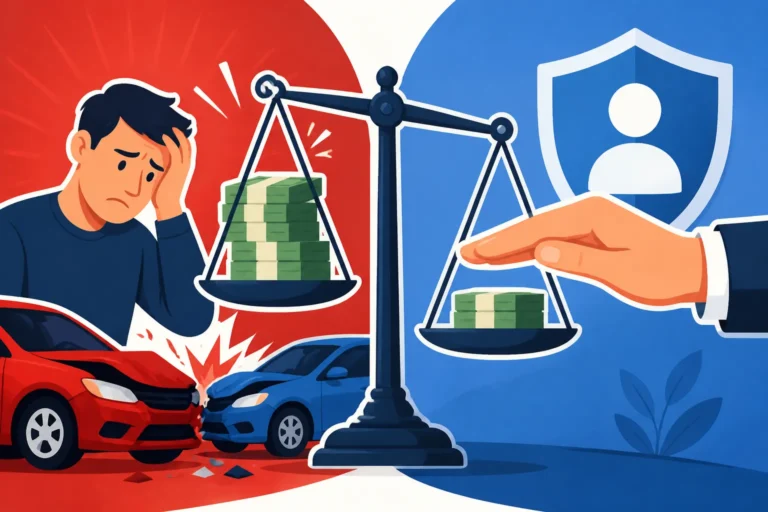
One of the biggest hurdles in any car accident claim, especially merging accidents, is the concept of comparative negligence. In many states, fault is not an all-or-nothing proposition. Instead, both drivers can be assigned a percentage of fault for the accident. For example, a driver failing to yield from an on-ramp might be found 70% at fault, while the highway driver who was speeding and could have avoided the crash might be assigned 30% fault.
The impact of comparative negligence is significant: if you are found partially at fault, your ability to recover compensation for your damages will be reduced by your percentage of fault. So, if you suffered $10,000 in damages but were 30% at fault, you would only be able to recover $7,000. It’s a bitter pill to swallow when you feel the other driver was primarily to blame, but it's a reality of how many jurisdictions handle multi-party fault. States like California follow "pure comparative negligence," meaning you can recover even if you're 99% at fault, though your payout will be significantly reduced. Other states, like Texas, use "modified comparative negligence (51% bar)," where you cannot recover anything if you are found 51% or more at fault. Understanding these rules is critical, and our detailed explanation of Comparative vs Contributory Negligence Explained offers a deeper dive into these different systems. It’s also important to consider What Happens If You're Partially at Fault? and how this might affect your overall claim.
Insurance Company Tactics
When you file a car accident claim, you're not just dealing with the other driver; you're dealing with their insurance company, and often, your own. Insurance companies are businesses, and their primary goal is to minimize payouts. This means they will often scrutinize merging accident claims, looking for any opportunity to assign a greater percentage of fault to you, the claimant.
They might argue that you weren't paying attention, that you had an opportunity to avoid the accident, or that your injuries aren't as severe as you claim. They might also try to get you to give a recorded statement early on, hoping you'll inadvertently say something that can be used against your claim. This is a common tactic, and it's why many personal injury lawyers advise caution when speaking with insurance adjusters. They are not on your side, and navigating these conversations effectively is crucial. If you find yourself in a situation where the insurance company is giving you a hard time, or if you simply want to protect your interests, it's wise to be informed about how to interact with them, particularly concerning your obligation to Do You Have to Give a Recorded Statement?.
| Merging Scenario | Typical Fault | Key Factors Determining Fault | Potential Shared Fault Scenarios |
|---|---|---|---|
| Highway On-Ramp | Merging Driver (Primary) | Failure to yield, insufficient acceleration, forcing entry | Highway driver speeding, aggressively blocking, sudden braking |
| Two Lanes into One (No Sign) | Whoever initiated contact | Unsafe lane change, failure to check blind spots, sudden swerving | Both drivers inattention, driving too close, failure to react safely |
| Two Lanes into One (Yield Sign) | Driver in yielding lane (Primary) | Ignoring yield sign, forcing entry, cutting off other vehicle | Through lane driver speeding, distracted, intentionally blocking |
| Construction Zone "Zipper Merge" | Often Shared (50/50 possible) | Failure to alternate, aggressive driving, changing lanes too early/late | Refusal to let alternating traffic in, cutting line, speeding |
What to Do After a Merging Accident
The moments immediately following a car accident can be chaotic and frightening, especially if you're feeling shaken up or injured. However, the actions you take (or don't take) at the scene can significantly impact your ability to establish fault and pursue a successful car accident claim later on. It’s crucial to prioritize safety, gather information, and protect your rights. Our comprehensive guide on What to Do After a Car Accident: Step-by-Step (2027) provides a detailed checklist, but here are the key takeaways specific to merging incidents.
Immediate Steps at the Scene
First and foremost, assess the situation for safety. If your vehicle is movable and you can do so safely, move it to the side of the road or a nearby parking lot to prevent further accidents or traffic obstruction. Turn on your hazard lights immediately. Check yourself and your passengers for injuries, and then check on the occupants of the other vehicle.
If anyone is injured, or if there's significant property damage, call 911 immediately to report the accident and request emergency services. Even if it seems minor, a police report can be incredibly helpful for your claim. While waiting for the authorities, exchange information with the other driver: names, contact details, insurance company names and policy numbers, and vehicle information (make, model, license plate). Most importantly, do not admit fault, even if you feel shaken up or partially responsible. Any admission, even a simple "I'm so sorry," can be used against you later by insurance companies. It's also a good idea to document the scene thoroughly by taking photos or videos of the vehicles involved, the surrounding road conditions, any traffic signs or signals, and any visible injuries.
Reporting the Accident and Seeking Medical Attention
Once you've left the scene and ensured your immediate safety, the next steps are equally vital. You should report the accident to your own insurance company as soon as possible, even if you believe the other driver was entirely at fault. Many policies require timely reporting, and failing to do so could jeopardize your coverage. You might be asking yourself, Should You Call Your Insurance If It Wasn't Your Fault?, and the answer is almost always yes. Your insurer can guide you through the initial steps of the claim process.
Additionally, seek medical attention immediately, even if you don't feel injured. Adrenaline can mask pain, and many common car accident injuries, like whiplash or soft tissue damage, have delayed symptoms. A prompt medical evaluation creates an official record that links any injuries to the accident, which is critical for your claim. Follow all doctor's orders, attend all follow-up appointments, and keep meticulous records of all medical bills, prescriptions, and any time missed from work. This documentation is essential when you decide to How to File a Car Accident Insurance Claim, and can be the difference between a successful claim and a denied one.
Disclaimer
Please remember that the information provided in this article is for general informational purposes only and does not constitute legal advice. Every car accident claim is unique, and the specifics of your situation, including your state's laws, can significantly impact the outcome. It is always recommended to consult with a qualified legal professional to discuss your individual circumstances and receive personalized advice regarding your car accident claim.