How to Prove the Other Driver Was at Fault
Getting into a car accident is jarring enough, but when the other driver immediately starts blaming you, it adds a whole new layer of stress and frustration. It feels incredibly unfair, and you might wonder how you can possibly defend yourself or prove what really happened. This guide is here to walk you through the essential steps and types of evidence you’ll need to clearly demonstrate that the other driver was at fault, helping you navigate the aftermath with confidence.
Understanding Fault in Car Accidents
Before you can prove fault, it's crucial to understand what "fault" actually means in the eyes of the law and insurance companies. It's not just about who feels responsible, but who is legally deemed negligent or careless in causing the collision.
The Legal Standard: Negligence
In most car accident cases, proving fault comes down to demonstrating negligence. This legal term basically means that someone failed to exercise reasonable care, and that failure directly led to the accident and your injuries or damages. Think about it: every driver has a duty to operate their vehicle safely and follow traffic laws. If a driver breaches that duty – maybe by speeding, texting, or running a stop sign – and their actions cause a crash, they've likely been negligent.
For example, if a driver blows through a red light on a busy street in downtown Los Angeles and collides with your car, their failure to obey the traffic signal is a clear breach of their duty of care. You, as the driver with the green light, were likely exercising reasonable care, making them the negligent party. Proving negligence isn't just about pointing fingers; it's about systematically showing how their specific actions (or inactions) directly caused the accident. This is the bedrock of any successful car accident claim.
Different State Laws and Their Impact
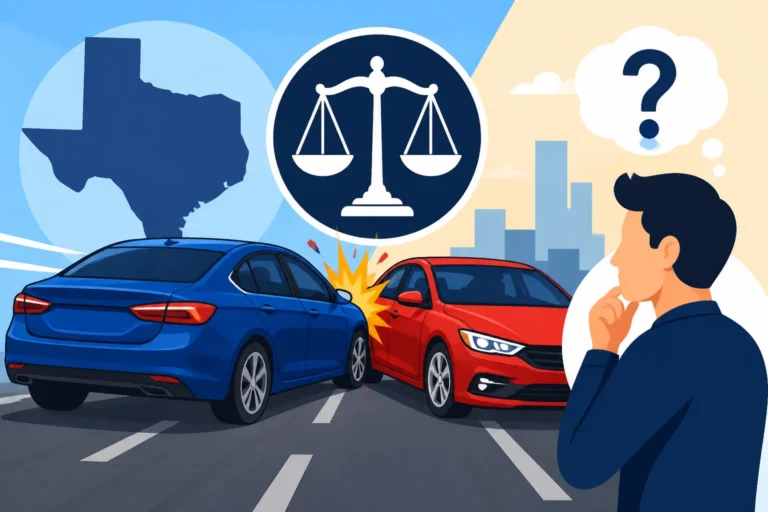
It's also important to remember that the rules for determining fault can vary significantly depending on where the accident happened. Some states operate under "at-fault" or "tort" systems, where the responsible party is liable for all damages. Other states, known as "no-fault" states, require drivers to first claim certain benefits from their own insurance company, regardless of who caused the accident. This doesn't mean fault is irrelevant in no-fault states, but it changes how and when you pursue a claim against the other driver.
For instance, if you're in a common "at-fault" state like Texas, proving the other driver was 100% at fault is critical for a smooth claim. However, in a "no-fault" state like Florida, you'd initially turn to your Personal Injury Protection (PIP) coverage. If your injuries meet a certain threshold, you might then be able to step outside the no-fault system and pursue a claim against the at-fault driver. Understanding these nuances, especially concepts like comparative vs contributory negligence explained, is vital because your ability to recover compensation depends on your state's specific laws regarding liability. Many states, including California and Arizona, follow some form of comparative negligence, which means your own percentage of fault can reduce your settlement.
Immediate Actions at the Accident Scene
The moments right after a collision are chaotic, but they are also crucial for gathering evidence. What you do (or don't do) at the scene can significantly impact your ability to prove the other driver was at fault later on.
Documenting the Collision Visually
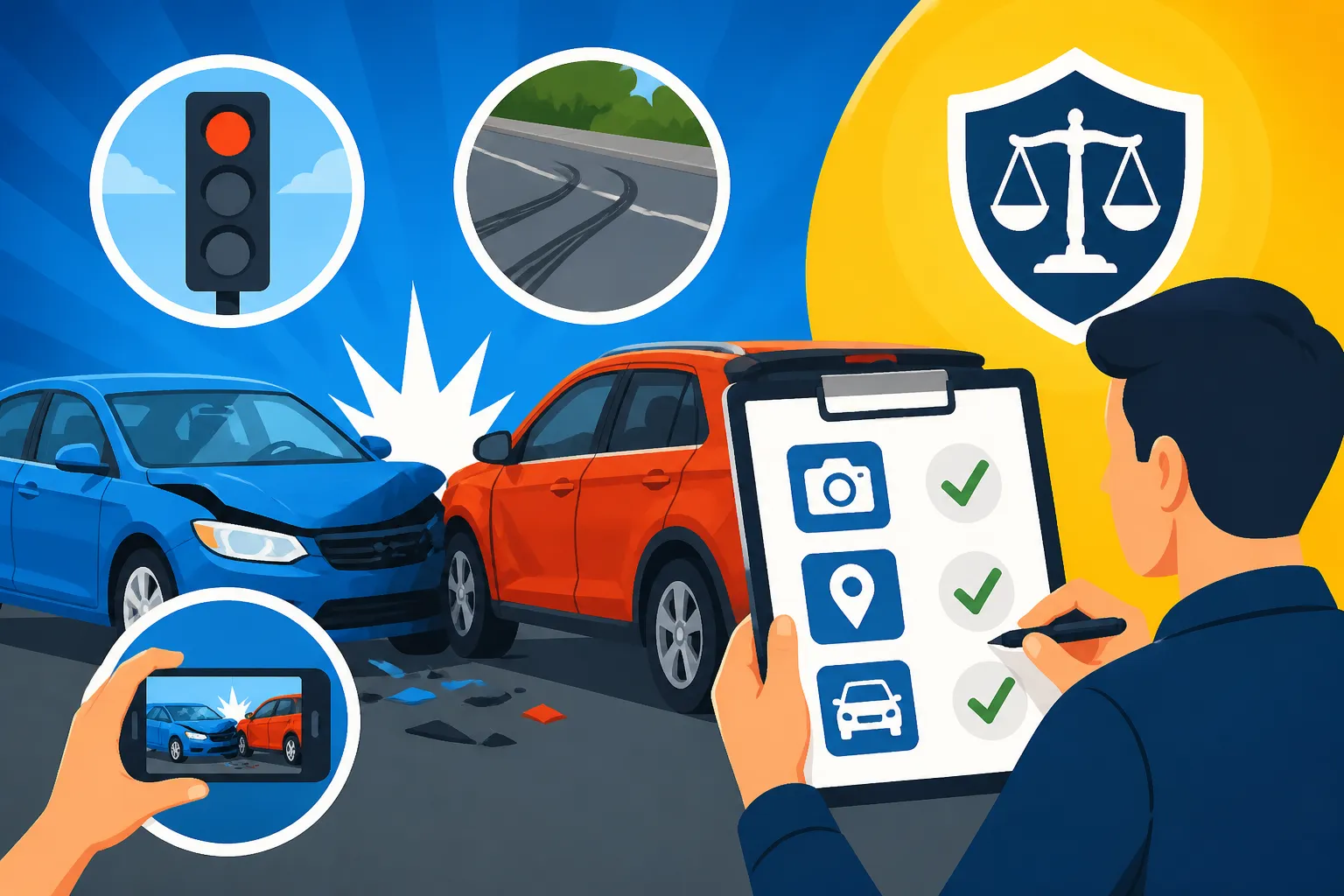
In today's world, your smartphone is one of your most powerful tools after an accident. As soon as you're in a safe location (if possible, move your vehicle to the shoulder or a nearby parking lot if it's a minor collision), start taking pictures and videos. And when I say pictures, I mean lots of them, from every possible angle. Don't just focus on the damage to your car. Photograph the damage to the other vehicle, the position of both cars on the road, skid marks, broken glass or debris, traffic signs, and any surrounding landmarks like street signs or businesses.
Capture wide shots to show the overall scene and close-ups of specific details. A video walk-through can also be incredibly helpful, narrating what you're seeing. These visual records serve as irrefutable evidence of the accident's immediate aftermath. They can contradict a driver's false claims about how the accident occurred or where their vehicle was positioned. This comprehensive visual documentation is a cornerstone of proving your case, and it’s a key part of what to do after a car accident: step-by-step (2026).
Gathering Contact and Insurance Information
Exchanging information with the other driver might seem basic, but it's often done poorly in the rush and stress of the moment. Make sure you get their full name, contact number, address, driver's license number, vehicle make and model, license plate number, and, most importantly, their insurance company name and policy number. Don't rely solely on their verbal assurance; take a picture of their driver's license and insurance card if they permit it. This ensures accuracy and gives you a visual record.
It’s also wise to get contact information for any passengers in their vehicle, as they might have a different perspective on the incident. While exchanging details, try to remain calm and objective. Avoid making statements that could be interpreted as an admission of fault (even if you feel slightly responsible, let the investigation determine that). Remember, the information you collect here is vital for how to file a car accident insurance claim and for your insurance company to initiate their investigation into who is at fault.
Official Documentation and Third-Party Information
Beyond what you collect at the scene, official reports and third-party records play a critical role in establishing fault. These objective sources often carry more weight than personal accounts alone.
The Critical Role of Police Reports
Even for seemingly minor fender-benders, calling the police is almost always a good idea. A police report provides an official, unbiased account of the accident, usually including details like the date, time, location, involved parties, vehicle information, and often, an initial assessment of who the investigating officer believes was at fault. While not always the final word on liability, police reports and car accident fault are a powerful piece of evidence that insurance companies and legal teams heavily rely on.
The report might contain diagrams, witness statements, and citations issued to one of the drivers. For example, if the other driver was cited for failure to yield or running a stop sign, that citation is strong evidence of their negligence. If you don't call the police at the scene, proving fault becomes significantly harder later on, especially if the other driver suddenly changes their story. The police report documents facts that are easy to forget or distort over time, making it an indispensable asset.
Insurance Company Investigations
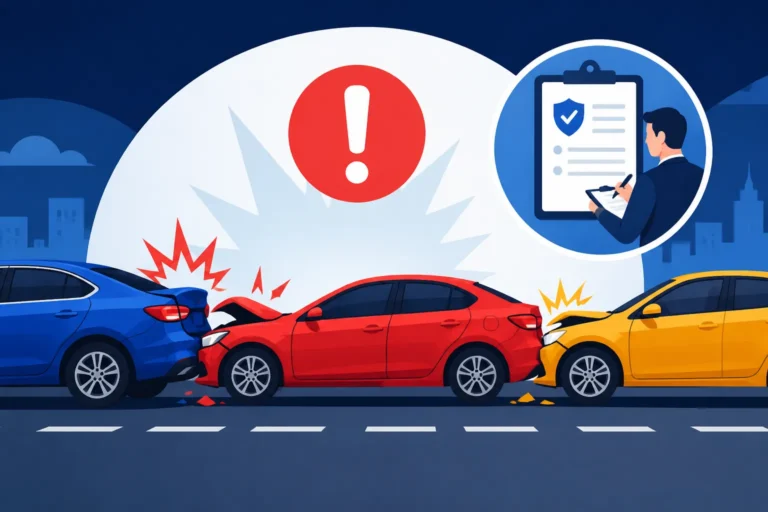
Once you've reported the accident to your insurance company, their adjusters will begin their own investigation into how insurance companies determine who is at fault. This process involves collecting information from all parties, reviewing police reports, examining photographs, and sometimes even visiting the accident scene. They will look for inconsistencies in statements and evidence that supports or refutes fault.
It's crucial to cooperate fully with your own insurance company, providing them with all the information you've gathered. However, be cautious when dealing with the other driver's insurance company. While you must provide basic facts, you are not obligated to give them a recorded statement. Do you have to give a recorded statement? Generally, it's best to consult with your own insurer or a legal professional before doing so, as these statements can sometimes be used against you. Your insurance company will act as your advocate in these interactions, helping to ensure your side of the story is accurately represented.
Medical Records as Proof of Injury
While not directly proving who was at fault, your medical records are indispensable for demonstrating the extent and nature of the damages caused by the at-fault driver. After an accident, always seek medical attention, even if you feel fine initially. Many injuries, such as whiplash or concussions, have delayed injury symptoms after a car accident and may not manifest for hours or even days. Comprehensive medical records link your injuries directly to the accident, providing a clear timeline of treatment, diagnoses, and prognoses.
These records become vital evidence when you're seeking compensation for medical expenses, pain and suffering, and lost wages. Without them, it’s much harder to prove the connection between the accident and your physical harm. Think of it this way: the other driver's negligence caused the crash, and your medical records document the direct, tangible harm that resulted from that negligence. This helps establish the financial liability of the at-fault party.
Leveraging Eyewitnesses and Expert Opinions
Sometimes, the evidence from the scene and official reports isn't enough, or there's a dispute over the facts. In these situations, turning to independent witnesses and specialized experts can be a game-changer.
The Power of Independent Witnesses
An eyewitness is someone who saw the accident happen but wasn't involved in it. Their objective perspective can be incredibly valuable, especially if the other driver is trying to shift blame. If there are any bystanders at the scene, approach them politely and ask if they witnessed the collision. If they did, get their full name, phone number, and email address. They might be hesitant to get involved, but explain that their unbiased account could be crucial in resolving the dispute.
For example, if you were hit by a driver who claimed they had a green light, but an independent witness tells the police and your insurer that they clearly saw the other driver run a red light, that testimony can be incredibly powerful. Memories fade quickly, so encourage witnesses to jot down what they saw as soon as possible, or ask them to give a statement to the police. While not all accidents have witnesses, their presence can often be the single most convincing piece of evidence.
When Accident Reconstruction Experts Step In
For complex accidents, especially those involving significant damage, serious injuries, or conflicting accounts, an accident reconstruction expert might be necessary. These professionals are like real-life detectives for car crashes. They use scientific principles, physics, and engineering to analyze skid marks, vehicle damage, debris fields, traffic camera footage, and even black box data from vehicles to determine exactly how an accident occurred.
An accident reconstruction expert can recreate the collision sequence, determine vehicle speeds, points of impact, and driver actions leading up to the crash. Their findings are often presented in detailed reports and can be instrumental in court. For example, if a driver claims they were driving slowly, but the expert's analysis of skid marks and vehicle deformation shows they were speeding, that testimony can definitively prove fault. Hiring such an expert is typically done through your legal counsel, especially if you need a lawyer for a car accident, and it’s a significant investment, but it can be indispensable for breaking through stalemates in liability disputes.
Navigating Challenges and Disputed Fault
Even with clear evidence, proving fault isn't always straightforward. The other driver or their insurance company might still try to minimize their responsibility or even blame you. Knowing how to handle these situations is key.
Dealing with a Blaming Driver
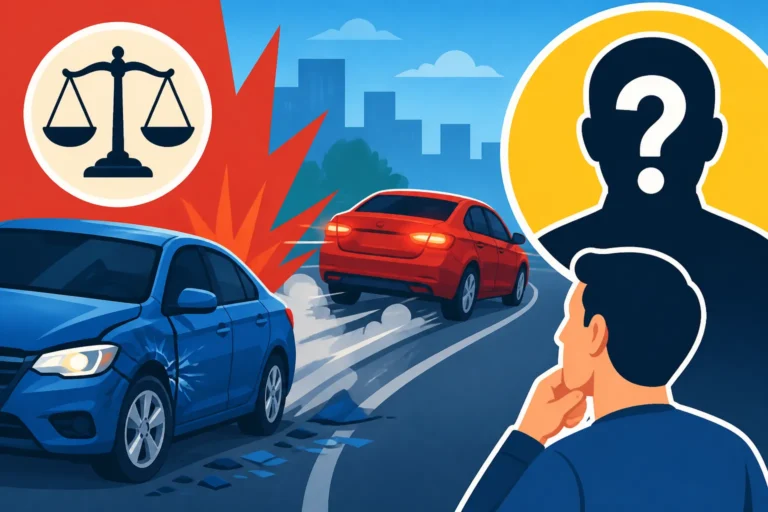
It's an unfortunate reality that after an accident, some drivers will immediately try to blame you, even if they know they were at fault. This can be incredibly frustrating and even intimidating. Remember, what happens if the other driver blames you? Stay calm and avoid arguing at the scene. Do not engage in a heated debate or try to convince them of their fault. Stick to the facts you’ve observed, exchange information, and let the authorities and insurance companies sort out the specifics.
Later, if their insurance company tries to deny your claim based on the other driver's false accusations, you'll need to present all your gathered evidence—photos, videos, witness statements, police report—to counter their claims. If the situation becomes contentious, it’s often wise to consult with a personal injury attorney. They are experienced in dealing with dishonest drivers and aggressive insurance adjusters and can guide you on how to proceed without inadvertently harming your own claim.
The Importance of Legal Counsel
While you might be tempted to handle a car accident claim on your own, especially if you think fault is clear-cut, the reality is that insurance companies are businesses designed to minimize payouts. They have adjusters and lawyers whose job it is to challenge claims, and they are very good at it. If you're facing a situation where the other driver is disputing fault, if you've suffered significant injuries, or if the insurance company is offering a lowball settlement, then it's time to seriously consider hiring an attorney.
An experienced car accident lawyer knows how to investigate accidents, gather robust evidence, negotiate with insurance companies, and if necessary, represent you in court. They can help navigate complex legal procedures, challenge biased reports, and present a compelling case for the other driver's fault. They understand how comparative negligence laws in California or other states might affect your case and can work to protect your right to full compensation. Often, their involvement can lead to a significantly better outcome than if you tried to manage the claim alone.
Here's a quick reference table outlining key types of evidence and their value in proving fault:
| Type of Evidence | Description | Value in Proving Fault |
|---|---|---|
| Photos & Videos | Visual records of vehicle positions, damage, road conditions, skid marks, debris, traffic signals. | High: Undeniable objective record of the scene's immediate aftermath. |
| Police Report | Official document by law enforcement detailing accident facts, witness info, and often initial fault. | High: Unbiased third-party account, often includes citations for violations. |
| Witness Statements | Accounts from independent individuals who saw the accident unfold. | High: Objective perspective, can corroborate or contradict driver accounts. |
| Driver's Information | Contact, license, and insurance details of the other party. | Moderate: Essential for claim processing, but doesn't prove fault on its own. |
| Medical Records | Documentation of injuries, diagnoses, treatments, and costs. | High (for damages): Connects injuries directly to the accident, proving impact. |
| Traffic Camera Footage | Recordings from nearby intersections or businesses that captured the incident. | Very High: Irrefutable visual proof of how the accident happened. |
| Vehicle Black Box Data | Data recorders in modern cars that capture pre-crash information (speed, braking, steering). | Very High (for complex cases): Provides objective data on vehicle operation. |
| Accident Reconstruction | Expert analysis to determine collision dynamics, speeds, and forces. | Very High (for disputed/complex cases): Scientific proof of causation and driver action. |
Disclaimer
Please remember that this article provides general information and guidance regarding car accident claims and proving fault. It is not intended as legal advice. Every car accident case is unique, and the information presented here may not apply to your specific situation. For personalized advice regarding your accident and legal rights, you should always consult with a qualified attorney in your jurisdiction.