Comparative Negligence Laws in Oregon
Getting into a car accident is incredibly stressful, and navigating the aftermath can feel like trying to solve a complex puzzle while dealing with pain and vehicle damage. One of the biggest pieces of that puzzle, especially here in Oregon, is understanding how fault is assigned and how it impacts your ability to recover compensation. This guide will walk you through Oregon's specific comparative negligence laws, helping you understand how shared fault can affect your claim and what steps you can take to protect your rights.
Understanding Comparative Negligence in Oregon
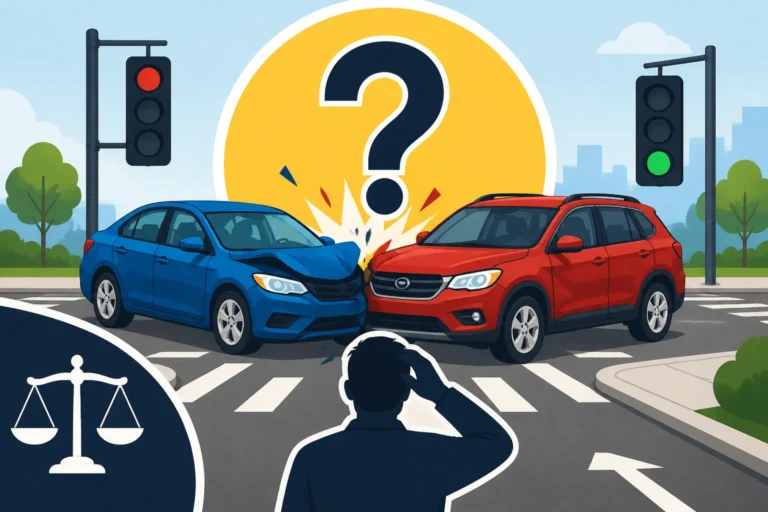
It’s a common misconception that in a car accident, one person is always 100% at fault and the other is 0%. The reality is often far more nuanced, especially in states like Oregon. Sometimes, multiple parties contribute to an accident, even if one person's actions were clearly the primary cause. This is where the concept of comparative negligence comes into play, acknowledging that fault can be shared.
Pure vs. Modified Comparative Negligence
Across the United States, states generally follow one of two main types of comparative negligence: pure or modified. In a pure comparative negligence system, you can recover damages even if you are 99% at fault for an accident, though your compensation will be reduced by your percentage of fault. For example, if you sustained $10,000 in damages but were found 90% at fault, you could still recover $1,000.
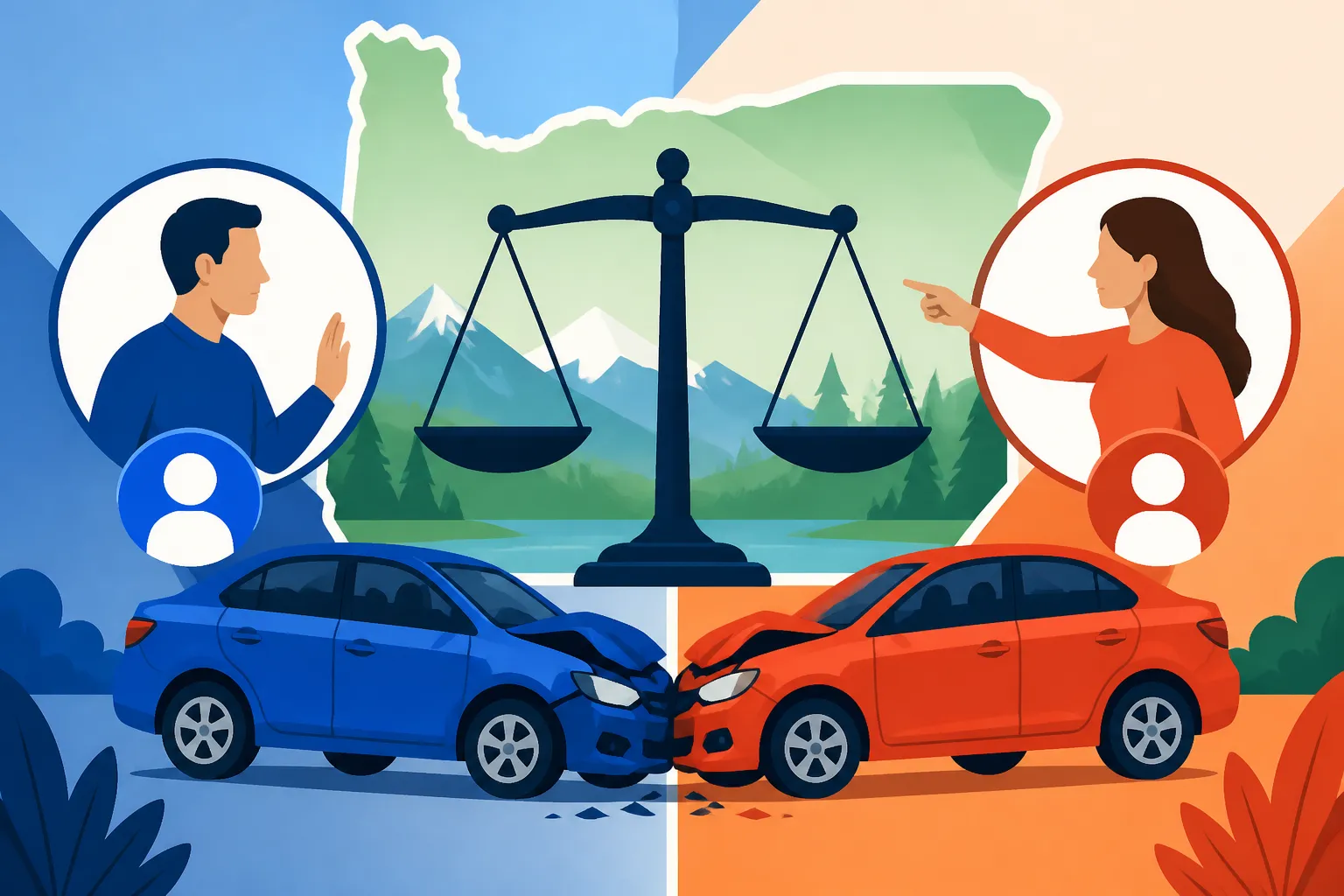
However, Oregon operates under a modified comparative negligence system, specifically one with a 51% bar rule. This means there's a critical threshold you need to be aware of. If you are found to be 50% or less at fault for an accident, you can still recover damages from the other driver, but your compensation will be reduced by your percentage of fault. If, however, you are found to be 51% or more at fault, you are completely barred from recovering any damages from the other party. This "51% bar" is a game-changer and a crucial detail that impacts how you approach your claim in Oregon. Understanding the nuances of Modified Comparative Negligence (50% vs 51% Bar) can make a significant difference in your recovery.
How Oregon's 51% Bar Rule Works
Let's break down exactly what Oregon's 51% bar rule means in practical terms. Imagine you're involved in a collision on I-5 just south of Portland. The other driver ran a red light, which seems like an open-and-shut case. But let's say an investigation reveals you were driving slightly over the speed limit, or perhaps you didn't react as quickly as a reasonably prudent driver might have because you were briefly adjusting your radio. The insurance company, or eventually a jury, might determine that while the other driver was primarily at fault (say, 80%), your actions contributed 20% to the incident.
In this scenario, because your fault is 20% (which is 50% or less), you would still be able to recover damages. However, if your total damages were $20,000, your 20% fault would reduce your payout by $4,000, meaning you would receive $16,000. Now, let's flip that. What if the circumstances led to a finding that you were 51% at fault? Perhaps you made an illegal turn, and the other driver was also speeding, but their speeding was deemed less impactful than your turn. If your fault hits that 51% mark, under Oregon law, you would recover absolutely nothing from the other driver, regardless of how severe your injuries or vehicle damage might be. This rule is designed to ensure that those who are primarily responsible for an accident do not benefit from suing another party. This is a complex area, and it's essential to understand What Happens If You're Partially at Fault? in your specific situation.
How Comparative Negligence Impacts Your Car Accident Claim
The percentage of fault assigned in an accident has a direct and often significant impact on the amount of compensation you can receive. This isn't just a theoretical number; it's a practical calculation that can drastically alter your settlement or court award. Navigating this aspect of a claim requires a clear understanding of how these percentages are determined and applied.
Calculating Damages with Shared Fault
When shared fault comes into play, the calculation of your total recovery becomes a two-step process. First, you determine the full value of your damages, which includes everything from medical bills, lost wages, and property damage to pain and suffering. Let's say, after a thorough review, your total damages are assessed at $50,000. This is the amount you would theoretically receive if the other driver was 100% at fault.
Second, your fault percentage is applied as a reduction. If you were found 25% at fault for an accident that occurred on a busy street in Eugene, your $50,000 in damages would be reduced by 25%. This means you would only receive $37,500. This reduction applies to all categories of damages, both economic (like medical expenses and lost income) and non-economic (like emotional distress and physical pain). It’s a direct financial consequence of shared responsibility. Learning How Comparative Fault Reduces Your Settlement can help you set realistic expectations for your claim.
| Scenario | Total Damages | Your Fault Percentage | Recoverable Damages (Oregon) |
|---|---|---|---|
| Driver A | $50,000 | 0% | $50,000 |
| Driver B | $50,000 | 25% | $37,500 |
| Driver C | $50,000 | 50% | $25,000 |
| Driver D | $50,000 | 51% | $0 |
| Driver E | $50,000 | 75% | $0 |
This table illustrates how Oregon's 51% bar rule drastically impacts recoverable damages.
The Role of Insurance Companies in Fault Determination
Insurance companies play a central role in determining fault percentages. When you file a claim, the adjusters for both your insurance company and the other driver's company will launch their own investigations. They'll collect evidence such as police reports, witness statements, photographs of the accident scene and vehicle damage, and even traffic camera footage if available. They might also review statements from both drivers, although it's crucial to be careful about what you say, as What Is an Admission of Fault (and How to Avoid It)? can significantly hurt your claim.
Based on their findings, they will make an initial determination of fault percentages. It’s not uncommon for these determinations to differ between insurance companies, especially if liability is not clear-cut. For instance, your insurance company might argue you were only 10% at fault, while the other driver's insurer might assert you were 40% at fault. These disagreements are a common part of the claims process and often lead to negotiations or, in some cases, litigation. The process by which How Insurance Companies Determine Who Is at Fault is often opaque and can feel unfair, making independent representation valuable.
Steps to Protect Your Claim Under Oregon's Laws
Being involved in a car accident is disorienting, but the actions you take immediately afterward, and in the following days and weeks, are absolutely critical to protecting your rights and maximizing your potential recovery, especially under Oregon's comparative negligence system. Every piece of information, every decision, can impact the outcome.
Gathering Evidence at the Scene
After ensuring everyone's safety and contacting emergency services if necessary, gathering evidence at the accident scene is paramount. This is your first line of defense against unfavorable fault assignments. Start by taking extensive photographs and videos of everything: the damage to all vehicles involved, the position of the cars, skid marks on the road, traffic signs or signals, road conditions, and any relevant surroundings like construction zones or adverse weather. Get contact information from any witnesses, as their unbiased accounts can be invaluable. Exchange insurance and contact information with the other driver, but refrain from discussing fault or apologizing, even out of politeness.
If a police officer responds, cooperate fully and ensure a police report is filed, as Police Reports and Car Accident Fault often carry significant weight in insurance investigations. Document everything you observe, even minor details, because memories fade, and these details can become crucial later when insurance adjusters or attorneys are trying to piece together what happened. The more thorough you are, the stronger your position will be when liability is being assessed. Knowing What to Do After a Car Accident: Step-by-Step (2027) can truly guide you through this critical initial phase.
Seeking Medical Attention Promptly
One of the biggest mistakes you can make after an accident is delaying medical attention. Even if you feel fine, or only have minor aches and pains, certain injuries like whiplash, concussions, or internal issues can have delayed symptoms that don't manifest for hours or even days. Seeking immediate medical evaluation at an urgent care clinic or your primary care physician in Portland, Salem, or wherever you are located, establishes an official record that directly links your injuries to the accident.
This medical documentation is crucial for your claim. Without it, insurance companies might argue that your injuries were pre-existing or caused by something else that happened after the accident, severely undermining your ability to claim compensation for your medical expenses and pain and suffering. Follow through with all recommended treatments, therapies, and appointments. Consistent medical care not only aids your recovery but also builds a strong foundation of evidence for your personal injury claim, proving the extent and duration of your injuries. This continuous documentation helps explain How to Prove Injuries in a Car Accident Claim.
Understanding the Statute of Limitations
Oregon, like every state, has a strict deadline for filing a personal injury lawsuit after a car accident, known as the statute of limitations. For most car accident injury claims in Oregon, you generally have two years from the date of the accident to file a lawsuit. If you miss this deadline, you will almost certainly lose your right to pursue compensation, regardless of how strong your case might be. While two years might seem like a long time, the legal process can be lengthy, and gathering all necessary evidence and negotiating with insurance companies can take considerable time.
It's important to note that this deadline specifically applies to filing a lawsuit, not just an insurance claim. You should initiate your insurance claim much sooner. However, if negotiations with the insurance company don't lead to a fair settlement, you must be prepared to file a lawsuit before the statute of limitations expires. There are some exceptions to this rule, such as cases involving minors or government entities, but these are rare. Therefore, it's always wise to consult with an attorney as soon as possible after an accident to ensure you meet all critical deadlines and understand the full scope of your options. Knowing the Statute of Limitations for Car Accidents by State is vital, and for Oregon, it's a firm two-year window that demands prompt action.
Common Scenarios and Oregon's Approach
While every car accident is unique, certain types of collisions frequently lead to disputes over fault, making Oregon's comparative negligence laws particularly relevant. Understanding how these common scenarios might be viewed can help you anticipate challenges and prepare your claim.
Rear-End Collisions
You might think that if you're rear-ended, the other driver is always 100% at fault. After all, drivers are supposed to maintain a safe following distance. And in many cases, this is true; Rear-End Collision Fault: Who Is Responsible? often points to the trailing driver. However, under Oregon's comparative negligence laws, there can be exceptions. For instance, if you slammed on your brakes unnecessarily, had non-functional brake lights, or were backing up illegally, an argument could be made that you contributed to the collision.
Imagine you're driving on Highway 26 near Beaverton, and the car behind you hits you. While they were undoubtedly too close, if it's found that your brake lights were out, or you abruptly stopped in the middle of a freeway with no legitimate reason, an insurance adjuster might assign you a small percentage of fault. Even a 10% or 20% assignment of fault would reduce your total compensation. This is why thorough documentation of the accident scene, including photos of your vehicle's lights and any relevant road signs, is so important.
Left-Turn Accidents
Left-turn accidents are another common scenario where fault often becomes a contentious issue. Generally, a driver making a left turn must yield to oncoming traffic. If they fail to do so and cause a collision, they are typically found at fault. However, if the oncoming driver was speeding excessively, ran a red light, or was otherwise negligent, they could be assigned a percentage of fault as well. Left-Turn Accident Fault Rules dictate that the turning driver has a high burden, but it's not absolute.
Consider a situation at an intersection in downtown Portland. You're making a left turn on a green light, and you thought you had enough time, but an oncoming car hits you. If that oncoming car was going 20 mph over the speed limit, a jury might decide that while you failed to yield properly (say, 70% at fault), the excessive speed of the other driver also contributed (30% at fault). In this case, because your fault is 70%, under Oregon's 51% bar, you would be unable to recover damages from the other driver. This is a clear illustration of how shared fault can completely bar recovery for an injured party.
Merging or Lane-Change Accidents
Merging onto a busy highway like I-84 or changing lanes can also lead to complicated fault determinations. The general rule is that the merging or lane-changing driver is responsible for doing so safely and yielding to traffic already in the lane. However, if the driver in the adjacent lane speeds up to prevent the merge, fails to use their horn or take evasive action when reasonable, or was driving erratically, they might share some of the fault.
For example, you're attempting to merge onto a freeway, indicating with your turn signal. Another driver, who was not paying full attention, fails to slow down or move over, resulting in a collision. While you, as the merging driver, have a primary responsibility to ensure safety, the other driver's inattention could lead to a shared fault scenario. An insurance adjuster might determine you were 60% at fault for failing to merge safely and the other driver was 40% at fault for distracted driving. Again, because your fault exceeds the 50% threshold, Oregon's comparative negligence law would prevent you from recovering any damages from the other driver. This kind of complex situation often requires an in-depth investigation to determine Who Is at Fault in a Lane-Change Accident? accurately.
Disclaimer
Please remember that this information is intended for general guidance and informational purposes only, and does not constitute legal advice. Car accident laws, including comparative negligence rules, can be complex and are subject to change. Every accident scenario is unique, and the specific facts of your case will dictate the application of these laws. For personalized advice regarding your car accident claim in Oregon, it is strongly recommended to consult with a qualified personal injury attorney.