Who Is at Fault in a Rollover Accident in Texas?
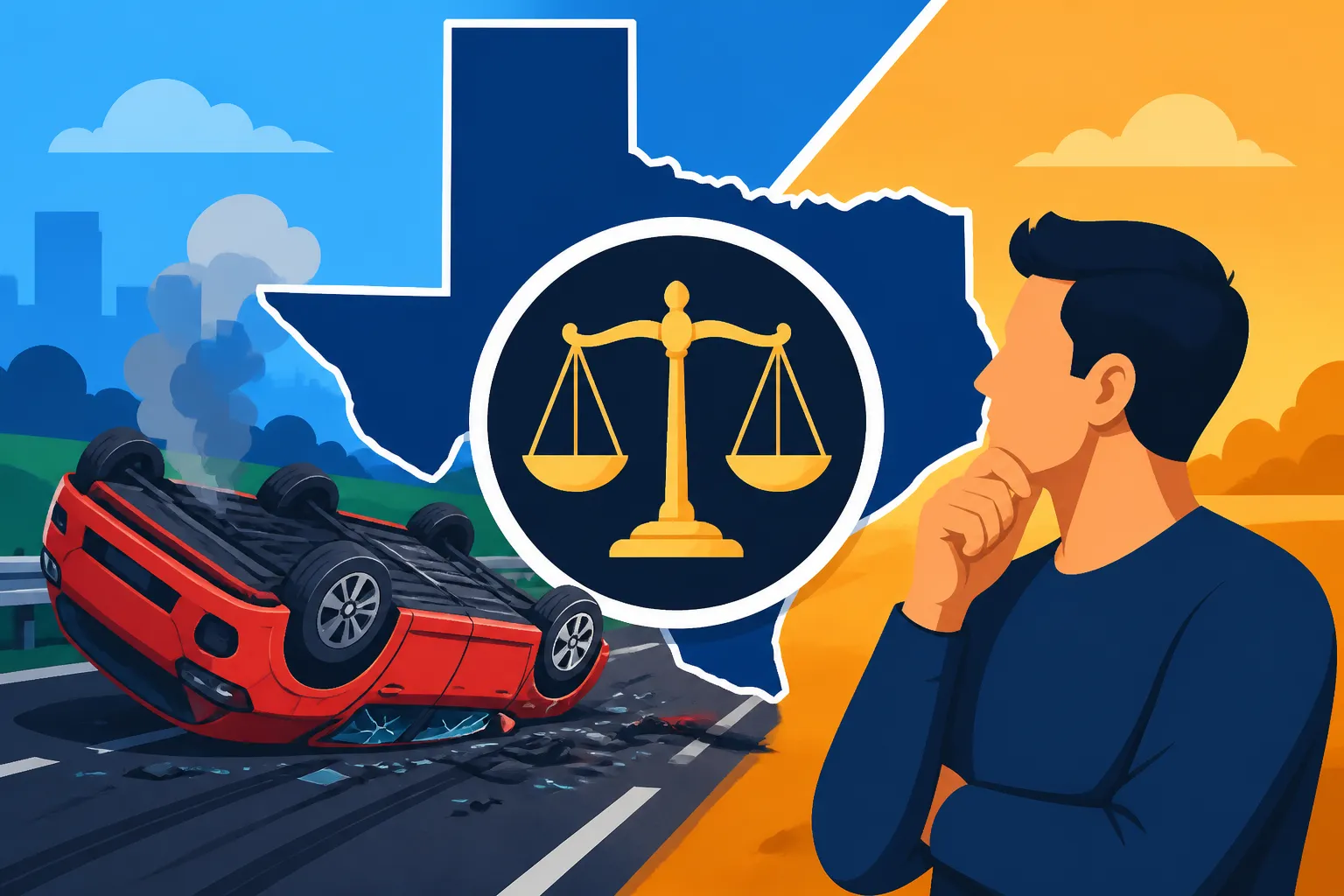
A rollover accident is one of the most terrifying and devastating types of collisions you can experience, often leading to severe injuries and extensive vehicle damage. When your world is literally turned upside down, the question of "who is at fault?" can feel incredibly complex and overwhelming, especially here in Texas. This guide is here to untangle the intricacies of fault determination specifically for rollover accidents on Texas roads, helping you understand how liability is typically assigned and what that means for your potential car accident claim.
Understanding Rollover Accidents and Their Causes
Rollover accidents are distinct from other types of collisions because they involve a vehicle tipping onto its side or roof, often after an initial impact or sudden maneuver. These events can be incredibly violent, and while they might seem random, there's almost always a combination of factors at play that leads to a vehicle rolling over. Understanding these underlying causes is the first step in figuring out who might be responsible.
How Rollovers Happen in Texas
In Texas, like anywhere else, rollovers don't just happen out of the blue. They typically involve a series of events that cause a vehicle to lose stability. For instance, imagine you're driving down a highway like I-35 outside Austin, and another driver suddenly swerves into your lane without warning. Your instinct is to react quickly, perhaps sharply turning the steering wheel. This sudden change in direction, especially at higher speeds or in a vehicle with a high center of gravity (like an SUV or truck), can transfer the vehicle's weight to one side, causing the tires to lose grip and the vehicle to roll. This is often called a "trip rollover" because something "trips" the vehicle. Even a minor collision, such as a sideswipe, can initiate a sequence of events that results in a vehicle rolling over if the conditions are right and the impact forces the tires off the road onto a curb or soft shoulder.
Another common scenario involves striking an object in the road, like debris, a pothole, or even a guardrail. If your vehicle hits such an obstruction at an angle, particularly at speed, it can create enough upward force on one side to lift the vehicle and initiate a roll. The energy of the impact, combined with the vehicle's momentum, can quickly lead to a loss of control and the vehicle overturning.
Common Contributing Factors Beyond Driver Error
While driver error is a frequent cause, it's not always the sole culprit in a rollover. Several other factors can contribute to a vehicle losing its stability and rolling over, making the fault determination process much more intricate. For example, the design of the vehicle itself plays a significant role. Vehicles with a higher center of gravity, like pickup trucks, SUVs, and vans, are inherently more susceptible to rollovers than lower-slung sedans. This doesn't mean the vehicle manufacturer is always at fault, but it can be a factor if the vehicle's design is found to be negligently unstable or defective.
Furthermore, tire issues can be a major contributor. If tires are improperly inflated, worn out, or defective, they can fail during a critical maneuver or impact, leading to a loss of control that results in a rollover. A blowout at highway speeds on a busy road like Beltway 8 in Houston could easily trigger a rollover accident, even if the driver was operating the vehicle safely otherwise. In such cases, the tire manufacturer, a service shop that recently worked on the tires, or even the vehicle manufacturer could share some degree of fault. It's crucial to examine all possible contributing factors when trying to understand how fault is determined in a car accident.
Texas's At-Fault Insurance System and Comparative Negligence
Navigating a car accident claim in Texas, especially after a serious incident like a rollover, requires a clear understanding of the state's unique legal framework. Texas operates under an "at-fault" insurance system, which means that the person determined to be responsible for causing the accident is generally liable for the damages. However, it's rarely as simple as one person being 100% at fault, especially with complex accidents like rollovers. This is where Texas's modified comparative negligence rule comes into play.
The Role of Texas's Modified Comparative Negligence Rule
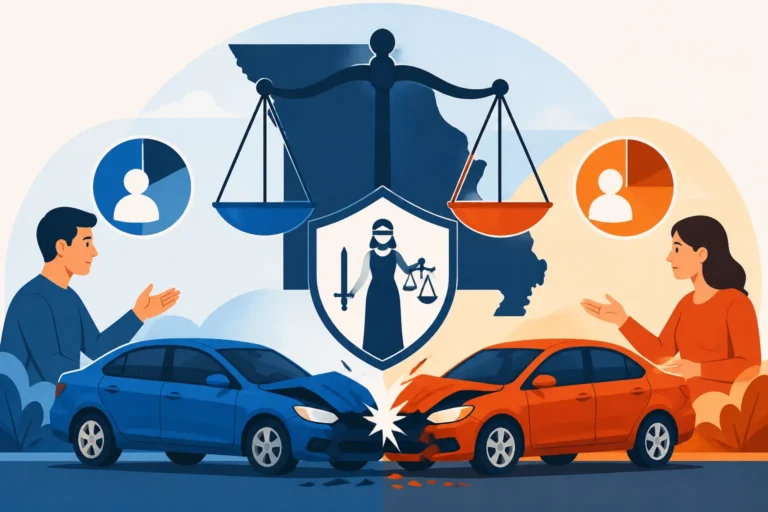
Texas employs what's known as "modified comparative negligence" with a 51% bar. What this means in plain English is that you can still recover damages even if you were partially responsible for the rollover accident, as long as your share of the fault is not greater than the other driver's. Specifically, if a jury or insurance adjuster determines that you are 50% or less at fault for the accident, you can still recover compensation for your injuries and damages. However, your total settlement or award will be reduced by your percentage of fault. For example, if your damages total $100,000, but you were found to be 20% at fault, you would only be able to recover $80,000.
This system is a critical consideration in rollover accidents because multiple factors and parties can contribute to the event. A driver might have been speeding, but the road conditions were poor, or their vehicle had a defective tire. Each of these elements needs to be carefully evaluated to assign a percentage of fault to each contributing party. Understanding this rule is vital because if your fault is determined to be 51% or higher, you are barred from recovering any damages from the other party involved in the crash. This is a significant threshold, and it emphasizes the importance of thoroughly investigating all aspects of a rollover accident. If you're wondering, "What happens if you're partially at fault?", this rule directly impacts your ability to receive compensation.
Impact of Shared Fault on Your Claim
The concept of shared fault can significantly impact the outcome of your car accident claim after a rollover. It's not uncommon for insurance companies, especially those representing the other driver, to try and shift as much blame as possible onto you. They understand that every percentage point of fault assigned to you directly reduces their payout. This means that even if you believe the other driver was primarily responsible for the rollover, their insurance company might argue that you contributed by, say, driving slightly over the speed limit, not reacting quickly enough, or even having a vehicle that was more prone to rolling.
For instance, consider a scenario where another car abruptly cuts you off on the Dallas North Tollway, forcing you to swerve violently, which leads to your SUV rolling over. While the other driver's aggressive lane change is a major factor, the insurance adjuster might investigate if you were exceeding the speed limit, if your tires were underinflated, or if there was anything else that could be attributed to your actions or vehicle condition. It’s a common tactic to minimize their client’s liability. This is why accurately assessing fault in a multi-faceted incident like a rollover is so crucial and often requires detailed accident reconstruction. Understanding these dynamics can help you better prepare for dealing with insurance adjusters after a car accident.
Key Factors in Determining Fault in a Texas Rollover Accident
Determining fault in a rollover accident is rarely straightforward, as there are many layers to peel back. Unlike a simple rear-end collision where fault is often clear, rollovers can involve a confluence of factors, each potentially contributing to the vehicle overturning. Identifying these factors is essential for establishing liability.
Driver Actions and Negligence
Most commonly, driver actions play a significant role in rollover accidents. Negligent driving behaviors that can lead to a rollover include:
- Speeding: Driving too fast for conditions, or exceeding the posted speed limit, drastically reduces a vehicle's stability, especially when making sharp turns or sudden evasive maneuvers. Imagine taking a sharp curve on a rural Texas road at 70 mph – the centrifugal force alone could be enough to lift a vehicle's wheels.
- Aggressive Driving: This encompasses sudden lane changes, tailgating, or cutting other drivers off. If a driver forces another vehicle to make an abrupt evasive maneuver, and that maneuver results in a rollover, the aggressive driver can be held primarily at fault.
- Distracted Driving: Someone texting or talking on the phone might drift out of their lane, overcorrect, and cause their vehicle to roll. In Texas, distracted driving, like using a cell phone in a school zone, is illegal and clear evidence of negligence.
- Drunk or Drugged Driving: Impaired drivers have severely reduced reaction times and impaired judgment, making them highly susceptible to losing control, especially in an emergency situation. A drunk driving accident leading to a rollover almost certainly places significant fault on the impaired driver.
- Fatigue: Similar to impaired driving, driver fatigue can lead to delayed reactions, micro-sleeps, and poor decision-making, increasing the risk of a rollover.
In these situations, proving driver negligence often involves collecting witness statements, police reports, dashcam footage, and potentially black box data from the vehicles involved.
Vehicle Defects or Malfunctions
Sometimes, a rollover accident has little to do with how the driver was operating the vehicle and everything to do with the vehicle itself. A manufacturing defect can make a vehicle inherently unstable or cause critical components to fail. Common issues include:
- Tire Defects: A defective tire that blows out at highway speed can instantly cause a driver to lose control, resulting in a rollover. This might be due to a manufacturing flaw, improper installation, or a design defect.
- Brake Malfunctions: If brakes fail unexpectedly or pull sharply to one side due to a defect, the driver might be unable to stop or steer effectively, leading to a collision that culminates in a rollover.
- Suspension or Steering System Failures: Problems with these critical systems can compromise a vehicle's ability to maintain stability and respond to driver input, increasing the likelihood of a rollover during evasive maneuvers.
- Roof Crush Issues: While not a cause of the rollover itself, a vehicle's roof integrity is crucial for protecting occupants during a rollover. If the roof is defectively designed and crushes excessively, it can worsen injuries, potentially making the manufacturer liable for some of the damages.
In cases of vehicle defects, the fault may lie with the vehicle manufacturer, the component manufacturer, or even the dealership or mechanic who performed recent maintenance. Proving a vehicle defect usually requires expert analysis and mechanical inspection of the vehicle post-accident.
Road Conditions and Environmental Factors
Even the most cautious driver in a perfectly maintained vehicle can be involved in a rollover if road conditions are hazardous. These factors can act alone or in conjunction with driver error or vehicle issues:
- Poor Road Design or Maintenance: A poorly designed curve, a sudden drop-off on a shoulder, or large potholes can create hazards that cause vehicles to lose control and roll over. For example, if a vehicle hits an unmarked, excessively deep pothole on a highway and subsequently rolls, the government entity responsible for road maintenance (e.g., Texas Department of Transportation) could share some blame.
- Weather Conditions: Rain, ice, snow, or even strong crosswinds can significantly reduce tire traction and vehicle stability. While drivers are expected to adjust to bad weather, exceptionally severe and unforeseen conditions, or conditions worsened by poor road maintenance (e.g., standing water due to clogged drains), can be contributing factors.
- Lack of Proper Signage: If a dangerous curve or road hazard is not adequately marked with warning signs, the responsible road authority might be held partially liable if a driver, unaware of the danger, loses control and rolls over.
These types of cases can be particularly challenging as they involve governmental entities, which often have specific legal protections and shorter claim deadlines.
Third-Party Liability
Sometimes, the fault doesn't lie solely with the drivers, the vehicle, or the road conditions, but with other third parties.
- Cargo Loaders: For commercial trucks, improper loading of cargo can drastically alter the vehicle's center of gravity, making it much more susceptible to rollovers, especially on curves or during evasive actions. If a trucking company or a third-party cargo loading company improperly secured a load, leading to a rollover, they could be held responsible.
- Repair Shops: If a mechanic performs faulty repairs on critical components like brakes, steering, or suspension, and that failure leads to a rollover, the repair shop could be liable.
- Other Drivers (Indirectly): As mentioned earlier, if another driver’s aggressive or negligent actions force you to take evasive action, even if they don't directly collide with your vehicle, they could still be found at fault for your rollover. This is a common aspect of how fault works when changing lanes on the highway.
Investigating third-party liability requires extensive fact-finding and understanding of various regulations and industry standards.
Gathering Evidence After a Texas Rollover Accident
After a rollover accident, the scene can be chaotic and incredibly traumatic. However, the moments immediately following the crash are critical for gathering evidence that will support your claim and help determine fault. The more information you can collect, the stronger your position will be when dealing with insurance companies and, if necessary, in court. This process is a key part of what to do after a car accident.
Immediate Steps to Take at the Scene
Even in the shock and distress of a rollover, if you are physically able, there are crucial steps you should take to protect your interests:
- Ensure Safety: First and foremost, check for injuries to yourself and others. If possible, move to a safe location away from traffic. Turn on your hazard lights.
- Call 911: Report the accident to the police immediately. A police report is an invaluable piece of evidence that officially documents the incident, the parties involved, and initial observations regarding fault. Remember, police reports and car accident fault often go hand-in-hand. Even if it seems minor, it's always better to have an official record.
- Do Not Admit Fault: This is absolutely critical. Even a casual apology can be misconstrued as an admission of fault by insurance companies. Stick to the facts.
- Exchange Information: Get the names, contact information, insurance details, and vehicle license plate numbers from all drivers involved. Also, gather contact information from any witnesses.
- Document the Scene Extensively: Use your phone to take as many photos and videos as possible. Capture:
- The position of all vehicles involved, especially your rolled vehicle, from multiple angles.
- Damage to all vehicles.
- Any skid marks, debris, or fluid trails on the road.
- Road conditions (potholes, faded lane markings, signage).
- Weather conditions (rain, fog, ice).
- Surrounding area (traffic signals, construction zones).
- Any visible injuries on yourself or passengers.
- Seek Medical Attention: Even if you don't feel injured immediately, it's vital to see a doctor as soon as possible. Some serious injuries, like whiplash or concussions, have delayed injury symptoms after a car accident. A medical professional can diagnose injuries and create a record that links them directly to the accident, which is crucial for your claim.
Documenting Your Injuries and Damages
Beyond the accident scene itself, meticulous documentation of your injuries and all resulting damages is paramount. This will directly influence how much your car accident settlement is worth.
- Medical Records: Keep detailed records of all medical appointments, treatments, diagnoses, medications, and physical therapy sessions. This includes emergency room visits, specialist consultations, and follow-up care. The clearer the paper trail of your medical journey, the harder it is for insurance companies to deny the severity or causation of your injuries.
- Lost Wages Documentation: If your injuries prevent you from working, collect pay stubs, employment contracts, and a letter from your employer verifying your lost time and income. This helps in calculating lost wages in a settlement.
- Vehicle Damage Assessments: Obtain official estimates for repairs to your vehicle. If your car is totaled, get documentation of its fair market value.
- Other Expenses: Keep receipts for all accident-related expenses, such as rental car costs, towing fees, prescription medications, over-the-counter pain relievers, and even transportation to medical appointments.
All this documentation serves as irrefutable evidence of the physical and financial toll the rollover accident has taken on your life, strengthening your position when it comes to proving fault and negotiating a fair settlement.
Here's a quick overview of potential contributing factors and who might be at fault in a Texas rollover accident:
| Contributing Factor | Potential At-Fault Parties | Evidence Needed |
|---|---|---|
| Driver Negligence | Driver of your vehicle, other vehicle(s) | Police report, witness statements, dashcam, event data recorder |
| Vehicle Defects | Vehicle manufacturer, tire manufacturer, parts supplier | Expert mechanical inspection, recall history, accident reconstruction |
| Poor Road Conditions | State (TxDOT), city, county | Photos of road, maintenance records, expert engineering report |
| Improper Cargo Loading | Trucking company, cargo loader | Bill of lading, inspection reports, expert testimony |
| Faulty Repairs | Mechanic, repair shop | Repair records, expert mechanical inspection |
| Hazardous Weather | N/A (but drivers must adjust) | Weather reports, police report |
Navigating Insurance Claims After a Rollover
Dealing with the aftermath of a rollover accident, especially in Texas's at-fault system, means you'll be spending a lot of time interacting with insurance companies. This can be a daunting process, particularly when you're still recovering from injuries and trying to get your life back to normal. Understanding how to approach these interactions is crucial for protecting your rights and ensuring you receive fair compensation.
Dealing with Insurance Adjusters
After a rollover accident, both your insurance company and the other driver's insurance company (if applicable) will assign an adjuster to your case. It's important to remember that these adjusters, while seemingly helpful, are primarily focused on protecting their company's bottom line. Their job is to minimize payouts, not necessarily to ensure you get the maximum possible compensation.
When you speak with an adjuster, especially one from the other driver's insurance company, be very cautious. They might ask for a recorded statement, but you are generally not obligated to provide one. Providing a recorded statement can inadvertently provide them with information they can later use against you to reduce your claim. If you do choose to provide a statement, stick to the objective facts. Do not speculate about fault, minimize your injuries, or discuss how you are feeling emotionally. It's always best to consult with legal counsel before giving any recorded statements. They might also pressure you to accept a quick settlement offer. Remember, this first offer is often a "lowball" offer and likely doesn't cover the full extent of your current and future damages, especially given the severity often associated with rollover accident injuries. Take your time, assess all your damages, and remember that you can always counter a low settlement offer.
Even with your own insurance company, be transparent about the facts but still be mindful of your statements. They are there to cover you according to your policy, but they might also be interested in subrogation, recovering their costs from the at-fault party's insurer. Always keep thorough records of every communication you have with insurance companies, including dates, times, names of adjusters, and summaries of conversations.
When to Seek Legal Counsel
For a complex and severe accident like a rollover in Texas, knowing when to hire a car accident lawyer isn't just a good idea – it's often essential. While you might feel you can handle a minor fender bender on your own, a rollover typically involves significant property damage, serious injuries, and intricate fault determinations that benefit greatly from professional legal expertise.
You should seriously consider retaining legal counsel if:
- You've sustained serious injuries: Rollover accidents frequently cause severe injuries like traumatic brain injuries, spinal cord damage, or multiple fractures. These types of injuries require extensive medical care, rehabilitation, and often result in long-term consequences that are difficult to quantify without legal expertise.
- Fault is disputed: Given the multiple contributing factors in rollovers, it's very common for fault to be heavily contested. If the insurance companies are trying to place an unfair amount of blame on you, a lawyer can investigate, gather evidence, and present a compelling case to prove the other party's negligence.
- The insurance company is offering a low settlement: If an adjuster makes an offer that seems too low or doesn't cover all your medical bills, lost wages, and pain and suffering, an attorney can negotiate on your behalf to secure a fair settlement.
- There are multiple parties potentially at fault: If vehicle defects, road conditions, or third-party actions contributed to the rollover, identifying and holding all responsible parties accountable requires specific legal knowledge and resources.
- You're dealing with a government entity: If poor road maintenance contributed to your rollover, suing a government entity comes with its own set of rules, immunities, and strict deadlines that a personal injury attorney will understand.
- You feel overwhelmed: The emotional and physical toll of a rollover, combined with the stress of dealing with insurance paperwork and legal jargon, can be immense. A lawyer can take on this burden, allowing you to focus on your recovery.
A seasoned Texas car accident attorney understands the complexities of modified comparative negligence laws, knows how to gather the necessary evidence, and has experience negotiating with insurance companies. They can help you navigate the entire claims process, from initial investigation to settlement or, if necessary, litigation, ensuring your rights are protected every step of the way.
Disclaimer
Please remember that this article provides general information and is not a substitute for professional legal advice. Every car accident case is unique, and the specific facts and circumstances of your rollover accident in Texas will determine the best course of action. It is highly recommended to consult with a qualified personal injury attorney in Texas to discuss your individual situation and receive tailored advice.