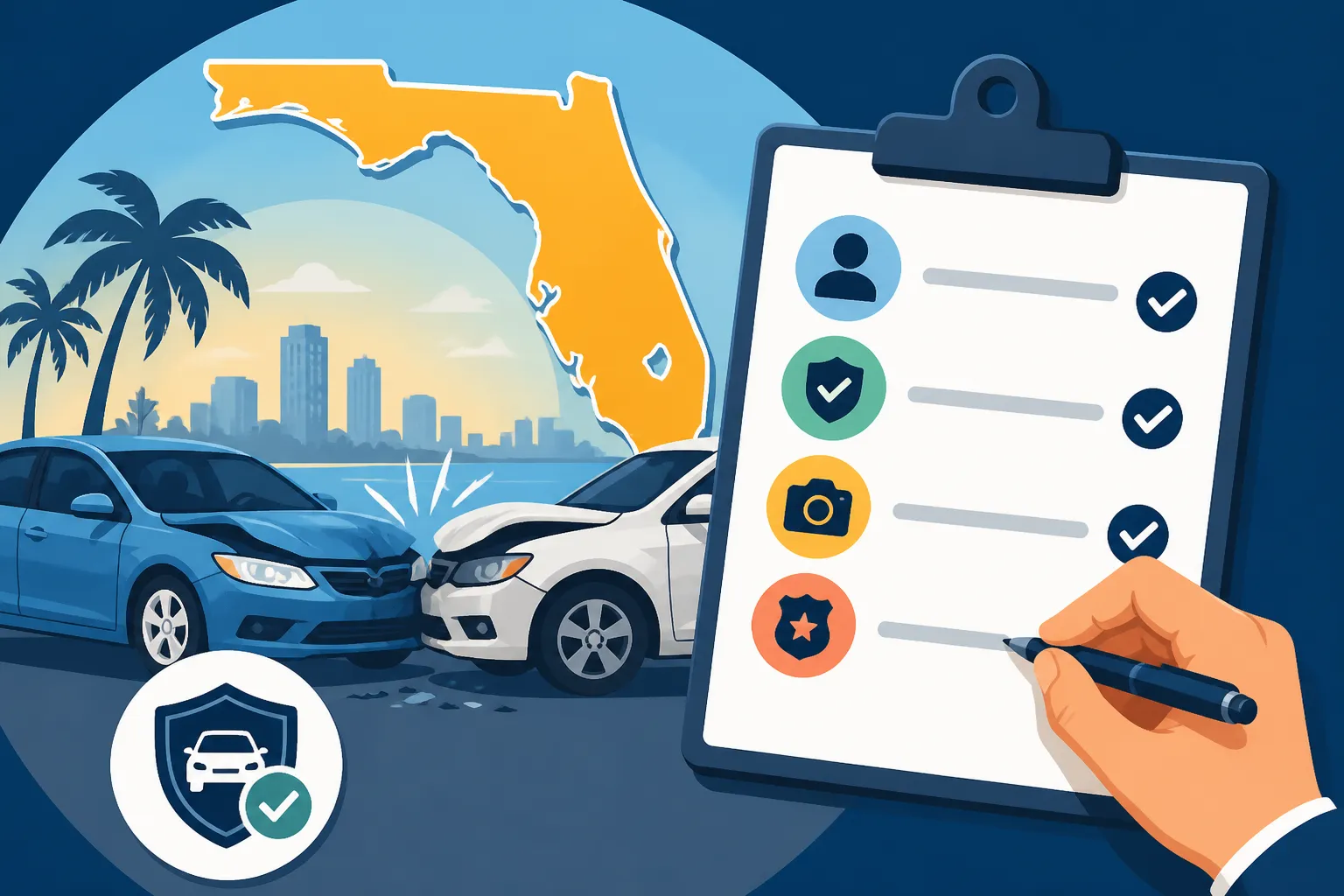
Car Accident Reporting Requirements in Florida
Dealing with a car accident is incredibly jarring and stressful, often leaving you shaken and unsure of what to do next. Amidst the chaos, one of the most pressing concerns is understanding your legal obligations, especially when it comes to reporting the incident to the authorities. This guide aims to clear up the confusion surrounding car accident reporting requirements in Florida, outlining exactly when and how you need to report a crash to ensure you're in compliance with state law and protect your interests.
The Core Florida Reporting Requirements You Need to Know
When you're involved in a car accident in Florida, it's not always immediately clear whether you have to call the police or if it's something you can handle privately. Many drivers assume minor fender benders don't warrant official attention, but Florida law, specifically Florida Statute § 316.065, has precise requirements that dictate when a formal crash report is absolutely necessary. Understanding these triggers is paramount, not just for legal compliance, but also for protecting your rights and facilitating any future insurance claims.
When a Report is Absolutely Required by Law
Florida law specifies several critical situations that mandate reporting a car accident to law enforcement. It's not just about the severity of the damage; it's about a combination of factors that could have long-term implications for all parties involved. If any of these conditions are met, you must contact law enforcement to have an official report filed.
Firstly, if the accident results in injury or death to any person, reporting is non-negotiable. This isn't just about obvious, severe injuries; even a seemingly minor bump that causes someone to later complain of neck pain or dizziness warrants immediate reporting. Imagine you're in a low-speed rear-end collision on a busy street in Orlando. The other driver seems fine, says they're okay, and just wants to exchange information. However, they might develop whiplash symptoms hours or days later. If you didn't report it, proving the incident occurred and was the cause of their injury becomes significantly harder. This is why it's always safer to err on the side of caution if there's any indication of injury.
Secondly, if the crash involves property damage to an apparent extent of at least $500, a report is required. This threshold can be tricky because $500 might seem like a lot for a minor ding, but modern car repairs, even for superficial damage like a scratched bumper or a cracked taillight assembly, can easily exceed this amount. Think about backing out of a parking spot at a Publix in Tampa and lightly scraping another vehicle. What seems like a small scratch to the naked eye could require repainting an entire panel, which can quickly run into hundreds, if not thousands, of dollars. It's not about the cost of the damage you see, but the estimated cost of repairs. If you're unsure if the damage meets the $500 threshold, it's always best to call.
Thirdly, specific types of incidents automatically trigger the reporting requirement, regardless of the apparent damage. These include hit-and-run accidents, where a driver leaves the scene without providing information, and incidents involving driving under the influence (DUI). If you suspect the other driver is impaired or if they flee the scene, reporting to the police immediately is not just a legal obligation but also crucial for public safety and justice. Additionally, if the accident involves a commercial vehicle, a semi-truck, or government property, the reporting requirements might be even stricter.
Understanding Florida's No-Fault System and Reporting
Florida operates under a "no-fault" insurance system, which can often confuse people about their reporting duties. It's easy to assume that if fault isn't immediately assigned, then maybe reporting isn't as critical. However, this is a common misconception. The "no-fault" designation primarily impacts how your insurance claim works, not your initial obligation to report the accident to the authorities. If you're wondering What Is a No-Fault State? (And Which States Are No-Fault), Florida is indeed one of them, meaning your own Personal Injury Protection (PIP) insurance typically covers a portion of your medical expenses and lost wages, regardless of who caused the accident.
While Florida's no-fault system streamlines the process for minor injuries by requiring each driver to seek initial compensation from their own insurer, it does not negate the statutory requirement to report accidents meeting the criteria discussed above (injury/death, $500+ damage, etc.). Even in a no-fault state, a police report serves as an objective record of the incident. This official documentation is vital for your insurance company to process your PIP claim, document any property damage, and potentially pursue claims against an at-fault driver for damages beyond your PIP limits (such as pain and suffering or extensive medical bills if your injuries are severe enough to meet Florida's serious injury threshold). Without a police report, proving the accident even happened can become a significant hurdle for your insurance claim down the line.
Step-by-Step: How to Report a Car Accident in Florida
Once you've determined that your accident falls under Florida's mandatory reporting requirements, knowing the correct steps to take is crucial. The moments immediately following a crash can be disorienting, but a clear action plan will help ensure you meet your legal obligations and protect your rights. This involves knowing who to call, what to expect when they arrive, and the role of the official crash report.
Calling Law Enforcement When and Who to Call
The first and most critical step after ensuring everyone's immediate safety is to contact law enforcement. For any accident involving injuries, significant damage, or other serious circumstances, dial 911 immediately. This is the fastest way to get emergency services, including police, fire, and paramedics, to the scene. Be prepared to provide your exact location, a brief description of the accident, and whether anyone is injured.
If the accident is less severe but still meets the reporting thresholds (e.g., property damage clearly over $500, but no apparent injuries), you might still call 911, or in some areas, a non-emergency police line. The appropriate agency to call depends on where the accident occurred:
- City Police Department: If the accident happened within city limits (e.g., downtown Jacksonville, South Beach Miami).
- County Sheriff's Office: If the accident happened in an unincorporated area of a county.
- Florida Highway Patrol (FHP): If the accident occurred on a state highway, interstate (like I-75 or I-4), or a turnpike.
When speaking with the dispatcher, remain calm and provide clear, concise information. Tell them exactly where you are, which direction you were traveling, and a quick summary of what happened. It's always better to call and let the professionals assess the situation. Even if you're not sure if it meets the threshold, a brief call to the non-emergency line can clarify whether an officer needs to be dispatched. Remember, being proactive is key to protecting yourself later. For a complete guide on immediate actions, check out What to Do After a Car Accident: Step-by-Step (2027).
What Happens at the Scene with the Officer
Once law enforcement arrives, their primary role is to secure the scene, ensure safety, and gather information to complete an official Florida Traffic Crash Report (HSMV 90010S). This report is a crucial piece of documentation that will be used by insurance companies and potentially by attorneys later on.
The officer will typically:
- Assess Injuries: They will coordinate with paramedics if anyone is injured.
- Secure the Scene: This might involve directing traffic or setting up flares to prevent further incidents.
- Interview Drivers and Witnesses: They'll ask for your account of what happened. Be factual and stick to what you know. Do not guess or speculate. While you should cooperate, you are not obligated to admit fault or provide a recorded statement without consulting legal counsel.
- Gather Evidence: This includes taking photographs, noting vehicle positions, road conditions, and any relevant signage.
- Exchange Information: The officer will facilitate the exchange of driver's license, registration, and insurance information between all involved parties. This is essential, and you should make sure you get all the necessary details, as outlined in What Information to Exchange After a Car Accident.
- Issue Citations (if applicable): If the officer determines a traffic violation contributed to the accident, they may issue citations.
- Complete the Crash Report: This is the official document detailing the officer's findings. It includes information about the drivers, vehicles, location, road conditions, and a narrative of the accident. There are two main types of reports:
- Long Form (HSMV 90010S): This is filed for accidents involving injury, death, or damage severe enough to require a tow truck, or if a citation is issued. These are the reports that are typically mandated by law.
- Short Form (HSMV 90010S, often referred to as "driver report of traffic crash"): This is often a simplified version, sometimes used for minor incidents where an officer simply documents the scene but doesn't issue a full investigative report. However, if the statutory thresholds are met, a full "long form" report is what you should expect.
The officer's determination of fault in the crash report is often highly influential. While not always the final word in an insurance claim or lawsuit, it carries significant weight. Understanding how Police Reports and Car Accident Fault interact is critical, as this document will form a basis for How Fault Is Determined in a Car Accident by insurance adjusters.
Navigating Reporting Challenges and Consequences
Even with clear guidelines, reporting a car accident isn't always straightforward. Sometimes, an officer might not file a report, or you might be tempted to forgo reporting altogether. However, these choices can lead to significant complications and legal repercussions down the road. It's essential to understand the potential pitfalls and how to protect yourself if an official report isn't immediately available.
What Happens if There's No Police Report?
It's a common scenario: you have a minor bump in a parking lot, or a fender bender on a residential street. An officer arrives, takes a look, and decides that because there are no visible injuries and the damage appears minimal, they won't file a formal report. Or perhaps they simply provide you with a crash exchange form. In these situations, even if law enforcement doesn't generate a "long form" crash report, it does not absolve you of your responsibility to protect your interests.
If an officer declines to file a report, or if you were involved in an accident that doesn't legally require one, you still have crucial steps to take. Firstly, ensure you've exchanged full contact, vehicle, and insurance information with the other driver. Get names, phone numbers, addresses, license plate numbers, driver's license numbers, and insurance policy details. Secondly, thoroughly document the accident scene yourself. This means taking abundant photographs from various angles, capturing vehicle damage, road conditions, traffic signs, and any skid marks. If there were witnesses, get their contact information. For more detailed instructions on this, refer to How to Document a Car Accident Scene.
You must then immediately contact your insurance company. Even if no police report was filed, your insurer needs to be aware of the incident. They will open a claim based on the information you provide and your documentation. While a police report makes the claims process smoother, its absence doesn't mean you can't file a claim. However, it does mean the burden of proof for the incident's details and causation will fall more heavily on you. This is especially important for situations like What If There Was No Police Report?, where the lack of official documentation can complicate things significantly.
The Ramifications of Not Reporting an Accident
Choosing not to report a car accident when legally required can lead to a host of negative consequences, ranging from legal penalties to severe difficulties with insurance claims. This is why it's always better to ensure compliance with Florida's reporting requirements, even if it feels inconvenient at the time.
One immediate concern is legal penalties. Florida Statute § 316.066(1) states that "Every law enforcement officer who investigates at the scene of a motor vehicle crash resulting in injury or death to any person or total damage to all property to an apparent extent of $500 or more shall forward a written report of such crash to the department within 10 days after completion of the investigation." While the statute primarily refers to the officer's duty, if you, as a driver, fail to notify authorities when required, you could face fines, points on your driver's license, or even the suspension of your license. In cases involving hit-and-run, the penalties are far more severe, including potential felony charges.
Beyond legal troubles, not reporting an accident can create significant insurance claim difficulties. If you don't file a police report and later try to file an insurance claim, your insurer might be skeptical. They may argue that without official documentation, there's insufficient proof the accident occurred as you describe, or that your injuries or damages aren't directly related to the alleged incident. This could lead to delays, reduced payouts, or even a denial of your claim. Imagine sustaining Delayed Injury Symptoms After a Car Accident like lingering back pain weeks after a minor collision you didn't report. Without an official record, it becomes incredibly challenging to link that pain to the unreported accident. This is a common frustration, and one of the biggest reasons to always make sure an incident is documented correctly. For detailed information on filing claims, see How to File a Car Accident Insurance Claim.
Ultimately, avoiding your reporting obligations can undermine your ability to recover damages for vehicle repair, medical bills, lost wages, and pain and suffering. It's a risk that almost always outweighs any perceived benefit of keeping the accident "private."
Common Questions About Florida Accident Reporting
Even after understanding the core requirements and the process, lingering questions often arise. Navigating the aftermath of an accident can be a maze of details, and knowing the answers to common inquiries can help you feel more prepared and in control.
How Long Do I Have to Report the Accident?
This is a critical question with a two-part answer, depending on whether we're talking about reporting to law enforcement or your insurance company.
For reporting to law enforcement, Florida law generally implies that an accident meeting the statutory criteria (injury, death, $500+ damage) should be reported immediately or as soon as reasonably possible after ensuring safety. While the statute mandates that the investigating officer forward the report to the Department of Highway Safety and Motor Vehicles within 10 days of completing their investigation, this doesn't mean you have 10 days to call them. You should call 911 or the appropriate non-emergency line from the scene of the accident if it's safe to do so, or as soon as you can afterward if circumstances prevented immediate contact (e.g., you were taken to the hospital). Delays in reporting to law enforcement can lead to questions about the veracity of your account and make it harder for officers to gather accurate information or find witnesses.
For reporting to your insurance company, the timeline can vary. Most insurance policies require you to report an accident "promptly" or "as soon as practicable." While this isn't a hard-and-fast number like 24 or 48 hours, waiting too long can be detrimental. Many insurance companies prefer notification within a few days. Exceeding this period without a valid reason could be a breach of your policy terms, potentially impacting your claim. It's distinct from the legal deadline for suing after an accident, which in Florida, for personal injury, is generally two years from the date of the crash. For more on this, you can look into How Long Do You Have to File a Car Accident Claim in Florida?. Always notify your insurer as soon as you've dealt with the immediate aftermath and are safe.
Who Can Obtain a Crash Report in Florida?
Florida law places certain restrictions on who can access a crash report, especially in the initial period after an accident, to protect the privacy of those involved. For accidents involving injury or death, the crash report is confidential for 60 days from the date the report is filed.
During this 60-day confidentiality period, only specific parties are legally allowed to obtain a copy of the report. These typically include:
- Involved parties: The drivers, passengers, and vehicle owners involved in the crash.
- Their legal representatives: Attorneys acting on behalf of the involved parties.
- Their insurance companies: Insurers representing the involved parties.
- Law enforcement agencies: For official use in investigations.
- Prosecutors: For criminal investigations.
- News media: Under specific conditions, usually with redactions.
After the 60-day period expires, the crash report generally becomes public record, and anyone can obtain a copy from the Florida Highway Safety and Motor Vehicles (FLHSMV) website, typically for a small fee, or from the local law enforcement agency that filed the report. You'll usually need to provide details like the date of the accident, the county, and the names of the involved parties. This confidentiality period is designed to prevent unsolicited contact from third parties and ensure that those directly affected have time to manage their situation without additional pressure.
Knowing these rules helps you understand why access might be restricted initially and how to navigate obtaining this crucial document when you need it.
Florida Car Accident Reporting Requirements at a Glance
To make things a bit clearer, here's a quick summary of the key reporting triggers in Florida. Remember, if you're ever in doubt, it's always safer to contact law enforcement.
| Condition for Reporting (Any One Met) | Action Required | Who to Contact |
|---|---|---|
| Injury or Death to Any Person | Immediate Report | 911 (Emergency Services) |
| Property Damage ≥ $500 | Immediate Report | 911 (Emergency) or Non-Emergency Police Line |
| Hit-and-Run Incident | Immediate Report | 911 (Emergency Services) |
| Suspected DUI/Impairment | Immediate Report | 911 (Emergency Services) |
| Commercial Vehicle Involved | Immediate Report | 911 (Emergency) or Non-Emergency Police Line |
| Vehicle Requires Towing | Immediate Report | 911 (Emergency) or Non-Emergency Police Line |
This table provides a quick reference, but the details in the sections above elaborate on why these conditions are important and what specific actions to take. Understanding these requirements is not just about avoiding fines; it's about protecting yourself and your family when unexpected accidents occur on Florida roads.
Disclaimer
Please remember that this article provides general information and should not be considered legal advice. Car accident laws are complex and can vary based on specific circumstances. If you have been involved in a car accident, it is highly recommended to consult with a qualified legal professional to discuss your individual situation and rights.