What to Do If Hit by an Uninsured Driver in Georgia
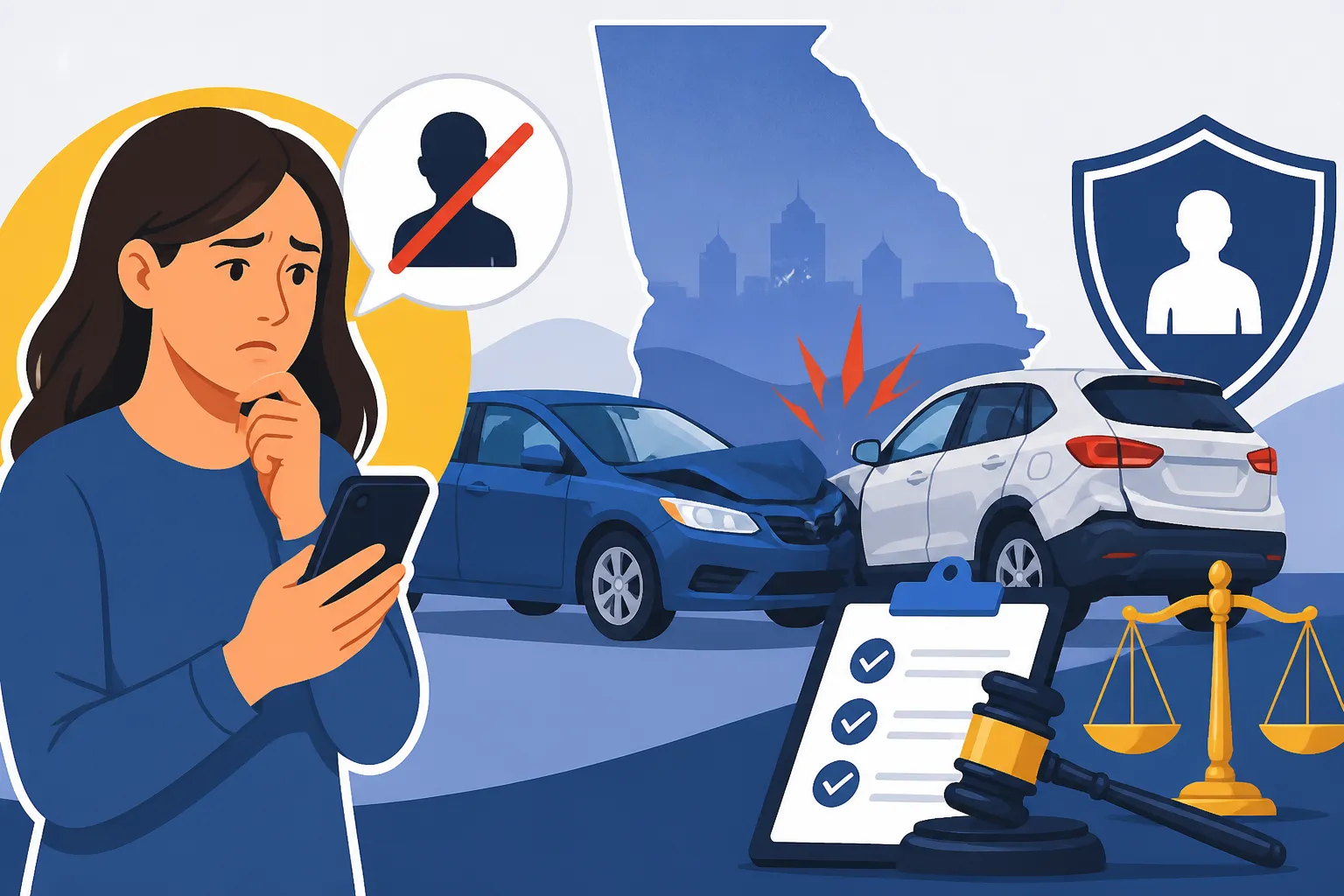
Getting into a car accident is a jarring experience on its own, but discovering the other driver doesn't have insurance can turn a bad situation into a full-blown nightmare. The confusion, the immediate worry about how you'll cover damages and medical bills, it's all completely overwhelming. If you've been hit by an uninsured driver in Georgia, you're likely feeling a mix of frustration and anxiety, wondering what your next steps should be. This guide is here to walk you through exactly what to do, focusing on your rights and options right here in the Peach State.
Understanding Georgia's Uninsured Motorist Laws
Dealing with an uninsured driver in Georgia throws a wrench into the typical car accident claims process. It's not just about what they didn't have, but about what you might have to protect yourself. Georgia has specific laws and coverages designed to help in these challenging situations, and understanding them is your first line of defense.
Minimum Insurance Requirements in Georgia
In Georgia, every driver is legally required to carry a minimum amount of liability insurance. This isn't just a suggestion; it's the law. Specifically, drivers must have:
- $25,000 for bodily injury liability per person
- $50,000 for bodily injury liability per accident
- $25,000 for property damage liability per accident
This "25/50/25" rule is what's supposed to ensure that if a driver causes an accident, there's a financial safety net to cover the damages they inflict on others. When a driver doesn't carry this basic coverage, or carries less than required, they are considered uninsured (or underinsured if they carry some but not enough to cover the actual damages). This is why having your own robust policy is so incredibly important, especially in a state like Georgia where uninsured drivers are, unfortunately, a reality on the roads.
What is Uninsured Motorist UIM Coverage?
This is where your own insurance policy becomes your hero. Uninsured Motorist (UM) or Underinsured Motorist (UIM) coverage is an optional but highly recommended addition to your auto insurance policy in Georgia. Think of it as a protective shield for you and your passengers when the at-fault driver fails to hold up their end of the bargain. If you're hit by someone with no insurance, your UM coverage steps in to pay for your medical expenses, lost wages, and property damage, up to your policy limits.
Similarly, if the other driver has some insurance, but it's not enough to cover all your damages (for example, they have the minimum $25,000 bodily injury, but your medical bills alone are $75,000), your UIM coverage can kick in to cover the difference. In Georgia, when you purchase liability coverage, your insurance company is required to offer you UM/UIM coverage. While you can decline it in writing, it's a decision that often comes back to haunt people if they ever find themselves in this exact scenario. It's often bundled with your standard coverage, and the cost is usually quite reasonable for the immense peace of mind it provides.
The Importance of UM Coverage in Georgia
Given the reality of uninsured drivers on Georgia's roads, having UM/UIM coverage isn't just a smart move, it's almost essential. Without it, if an uninsured driver hits you, you could be left to pay for everything out of your own pocket. This includes emergency room visits, follow-up doctor appointments, physical therapy, lost income from missing work, and even the cost to repair or replace your vehicle. The financial burden can be crushing.
Georgia is an "at-fault" state, meaning the driver who causes the accident is responsible for the damages. This system works well when the at-fault driver has insurance. However, when they don't, the responsibility to pay for your losses doesn't magically disappear, but the source of funds certainly does. Your UM/UIM coverage essentially acts as the "insurance" for the uninsured driver, allowing you to seek compensation from your own policy without increasing your liability premiums, since you were not at fault. This coverage is absolutely vital for anyone driving in Georgia to protect against the significant financial risks posed by uninsured motorists.
Immediate Steps After an Accident with an Uninsured Driver
Being involved in an accident is chaotic enough, but discovering the other driver is uninsured adds a layer of stress. Despite the added frustration, it's crucial to follow a clear set of steps immediately after the crash. These actions will not only protect your safety but also lay the groundwork for any potential claim you'll need to make with your own insurance company. For a general overview of what to do after a car accident, you might find this guide helpful: What to Do After a Car Accident: Step-by-Step (2027).
Prioritize Safety and Seek Medical Attention
Your health and safety are paramount. The very first thing you should do after any accident, regardless of who is at fault or their insurance status, is to check yourself and your passengers for injuries. If anyone is injured, call 911 immediately. Even if you feel fine, it's always wise to get checked out by a medical professional as soon as possible. Adrenaline can mask pain, and some injuries, like whiplash or a concussion, might not show symptoms until hours or even days later. Ignoring potential injuries can not only jeopardize your health but also complicate any future insurance claims, as delays in treatment can make it harder to prove your injuries were a direct result of the accident. You can learn more about common injuries here: Common Car Accident Injuries: Complete Guide (2027).
Once everyone's immediate safety is addressed, if your vehicle is creating a hazard, move it to a safer location if it's safe and possible to do so. If not, turn on your hazard lights. The moments immediately following an accident are critical, and ensuring no further harm comes to anyone at the scene should be your top priority.
Document the Scene Thoroughly
Documentation is king when it comes to car accident claims, and it becomes even more critical when an uninsured driver is involved. You need to gather as much evidence as possible to support your claim with your own insurance company. Start by exchanging information with the other driver, even if they claim they don't have insurance. Get their name, contact information, driver's license number, and license plate number. Do not let them leave without this information if you can help it.
Next, use your smartphone to take pictures and videos. Document the damage to both vehicles, the position of the cars, skid marks on the road, traffic signs, and any relevant road conditions. Take photos from different angles and distances. If there are any witnesses, ask for their names and contact information. Their impartial testimony can be invaluable later on. The more details you can capture, the stronger your case will be when you file your claim. This evidence will be key to proving your injuries and damages, especially if the other driver tries to dispute anything later.
Report the Accident to Law Enforcement
Calling the police after an accident is always a good idea, but it's absolutely non-negotiable when dealing with an uninsured driver in Georgia. A police report serves as an official, unbiased record of the incident. It will document the time, date, location, parties involved, and sometimes even the officer's initial assessment of fault. Most importantly, it will officially record that the other driver was uninsured, which is crucial for your UM/UIM claim.
When the police arrive, be calm and factual in your description of what happened. Do not admit fault or speculate. Simply state the facts. If the other driver admits to having no insurance, make sure that information is conveyed to the officer and, ideally, noted in the report. In some cases, if the other driver is found to be uninsured, they may face citations or penalties, especially if they are found to be at fault. While a police report doesn't always determine who pays, it's a vital piece of evidence that your insurance company will require. For more on the role of police reports, read: Police Reports and Car Accident Fault.
Navigating Your Insurance Claim in Georgia
After the immediate aftermath, the next phase involves dealing with insurance. When the at-fault driver is uninsured, your focus shifts entirely to your own insurance policy, specifically your Uninsured Motorist (UM) coverage. This can feel daunting, but knowing the process can help alleviate some of the stress.
Notifying Your Own Insurance Company
As soon as you are safe and have gathered initial information, you need to notify your own insurance company about the accident. This is a critical step, especially when the other driver is uninsured. Delaying this notification could potentially jeopardize your claim. Be prepared to provide them with all the details you collected at the scene, including the other driver's information (or lack thereof), witness contacts, and the photos you took.
When you call, specifically mention that the other driver was uninsured. Your insurer will likely open a claim under your UM/UIM policy if you have it. They will guide you through the next steps, which typically involve assigning an adjuster to your case. Remember, even though you're working with your own company, their goal is still to pay out as little as possible, so always be clear, factual, and thorough in your communications. This is a crucial first step in How to File a Car Accident Insurance Claim.
Understanding Your UM/UIM Policy Limits
It's absolutely essential to understand the specifics of your Uninsured Motorist coverage. Just like liability insurance, UM/UIM coverage has limits. These limits dictate the maximum amount your insurance company will pay out for your medical bills, lost wages, and property damage in an accident involving an uninsured driver. For example, if you have UM bodily injury coverage of $50,000 per person and $100,000 per accident, that means your insurer will pay up to $50,000 for your injuries, and a maximum of $100,000 if multiple people in your vehicle were injured.
Knowing these limits upfront will give you a realistic expectation of what you can recover. If your damages exceed your UM/UIM policy limits, you might still be responsible for the remaining balance. While your insurer is there to help, they are also bound by the terms of your policy. It's a good time to review your policy documents or speak directly with your agent to confirm your exact UM/UIM coverage amounts. This knowledge empowers you when discussing your claim and potential settlement.
Dealing with Your Insurance Adjuster
Even though you're dealing with your own insurance company, navigating the claims process can still be complex. Your insurance adjuster will be the primary point of contact and will investigate your claim. Their job is to assess the damages, review the evidence, and ultimately determine what your policy will cover. Be polite but firm, and provide all requested documentation promptly. This includes medical records, bills, proof of lost wages, and repair estimates for your vehicle.
It's generally a good idea to limit your discussions with the adjuster to the facts of the accident and the damages. Avoid speculating about fault or downplaying your injuries, even minor ones. Every statement you make can potentially be used in the claims process. If you're unsure about how to answer a question or if you feel pressured, it's perfectly acceptable to state that you need to consult with a professional before providing further information. Handling these conversations effectively is key to ensuring you receive fair compensation under your policy. More tips can be found here: Dealing With Insurance Adjusters After a Car Accident.
Here's a quick overview of what your UM/UIM coverage might cover:
| Coverage Type | What It Covers | Common Examples |
|---|---|---|
| Bodily Injury (UMBI) | Medical expenses, lost wages, pain and suffering for you and your passengers | Doctor visits, hospital stays, physical therapy, prescription medications |
| Property Damage (UMPD) | Repair or replacement of your vehicle | Vehicle repairs, rental car costs (if applicable under your policy) |
Potential Challenges and How to Overcome Them
Even with UM/UIM coverage, dealing with an uninsured motorist accident in Georgia isn't always smooth sailing. There can be roadblocks and complications that make the process even more stressful. Being prepared for these challenges can make a significant difference in the outcome of your claim.
When the Other Driver Disappears or Refuses to Cooperate
One of the most frustrating scenarios is when the uninsured driver either flees the scene in a hit-and-run, or simply refuses to provide information or cooperate after the accident. In Georgia, if the other driver disappears, your UM coverage can still apply, but proving the accident occurred and that the other driver was at fault can be more difficult. This is why thorough documentation, as mentioned earlier, is so critical. Any identifying information you managed to get – vehicle make, model, color, license plate number, or even a detailed description of the driver – becomes incredibly important.
If you have dashcam footage, witness statements, or even surveillance video from nearby businesses, those can be invaluable. Without a police report detailing the other driver's uninsured status and identity, your insurance company might be hesitant to process the claim efficiently. If you find yourself in a situation where the at-fault driver is completely uncooperative or missing, immediately inform your insurance company and discuss how to proceed. In some cases, your insurer may even try to locate the at-fault driver themselves. If you face a hit-and-run, specific steps apply: What to Do After a Hit-and-Run.
Submitting Medical Bills and Lost Wages
Proving your damages is a cornerstone of any car accident claim, and it's no different when dealing with your own UM/UIM coverage. You'll need to meticulously document all your medical expenses, including hospital bills, doctor visits, physical therapy, prescriptions, and any ongoing treatment. Keep a detailed log of all appointments and follow-ups. It's not enough to simply say you're injured; your insurance company will require concrete proof. Learn more about how to prove your injuries here: How to Prove Injuries in a Car Accident Claim.
Similarly, if your injuries prevent you from working, you'll need to provide clear documentation of your lost wages. This typically includes a letter from your employer confirming your time off and salary, along with pay stubs or tax documents. Remember, your UM/UIM coverage is designed to make you whole again, but you have the burden of proving every penny of your losses. Keeping an organized file of all receipts, bills, and communications is key to a successful claim. Understanding how lost wages are calculated is important: How Lost Wages Are Calculated in a Settlement.
Seeking Legal Counsel
While you might hope to handle the claim directly with your own insurance company, there are situations where hiring a car accident lawyer in Georgia becomes highly advisable, even with UM/UIM coverage. If your injuries are severe, leading to substantial medical bills and lost wages that approach or exceed your policy limits, or if your insurance company is denying your claim or offering a settlement that seems unfairly low, a lawyer can be a crucial advocate.
An attorney can help you navigate the complexities of Georgia's insurance laws, negotiate with your own insurer on your behalf, and ensure all your damages are properly accounted for. They can also explore other avenues for compensation if your UM/UIM coverage isn't enough, such as seeking assets directly from the uninsured driver (though this is often difficult). Knowing when to seek legal help can significantly impact the amount of compensation you receive and relieve much of the burden of the claims process. If you're wondering if you need a lawyer, this might help: Do You Need a Lawyer for a Car Accident? (2027).
Disclaimer
Please remember that this guide provides general information and is not a substitute for professional legal advice. Car accident laws and insurance policies can be complex and vary based on specific circumstances. It is always recommended to consult with a qualified attorney in Georgia to discuss the specifics of your situation and understand your legal rights and options.