What to Do If Hit by an Uninsured Driver in New Jersey
Being involved in a car accident is stressful enough, but the situation can feel downright hopeless when you realize the other driver doesn't have insurance. It's a frustrating, all-too-common scenario that leaves many people wondering if they're simply out of luck, especially here in New Jersey. This guide is designed to walk you through exactly what to do if you find yourself hit by an uninsured driver, helping you understand your rights and the steps to take to protect yourself.
The Harsh Reality of Uninsured Drivers in New Jersey
Discovering the driver who just hit you is uninsured can send a chill down your spine. You might immediately envision mounting repair bills, medical costs, and lost wages with no recourse. While it's a tough spot to be in, it's crucial to understand that having adequate preparation through your own insurance policy can make all the difference. New Jersey, like many states, grapples with a persistent issue of uninsured motorists, making it vital for every driver to be proactive about their coverage.
Understanding New Jersey's Insurance Requirements and Realities
New Jersey operates under a "no-fault" insurance system, which means your own insurance company generally pays for your medical expenses and certain other economic losses, regardless of who caused the accident. This is often a source of confusion, as many believe it negates the need for concern about the other driver's insurance. However, the no-fault system primarily applies to personal injury protection (PIP) benefits. When it comes to property damage or seeking compensation for pain and suffering, fault still very much matters.
Every driver in New Jersey is legally required to carry certain minimum insurance coverages. This typically includes Personal Injury Protection (PIP), Bodily Injury Liability, and Property Damage Liability. However, despite these laws, a significant number of drivers still take to the roads without any insurance at all, or with bare minimum policies that offer little protection. When you're hit by one of these drivers, your ability to recover damages beyond your immediate medical bills depends heavily on your own policy. For a deeper dive into how this system works, you might want to read our guide on What Is a No-Fault State? (And Which States Are No-Fault).
Why Uninsured Motorist (UM) Coverage is Your Lifeline
This is where Uninsured Motorist (UM) coverage becomes your absolute best friend. Think of it as your own personal safety net, designed precisely for this kind of unfortunate event. UM coverage is a component of your own auto insurance policy that steps in to pay for damages if you or your passengers are injured by a driver who doesn't have insurance. It can also cover property damage in some instances, depending on your specific policy and state regulations.
In New Jersey, insurance companies are required to offer UM coverage, and it's generally a wise choice to accept it, often matching your bodily injury liability limits. Without this coverage, if an uninsured driver injures you and totals your car, you could be left with astronomical medical bills and no way to repair or replace your vehicle, unless you plan to pursue a direct claim against the at-fault driver, which can be incredibly difficult if they have no assets. This coverage essentially acts as if the uninsured driver had an insurance policy, covering your medical expenses, lost wages, and pain and suffering up to your policy limits. It’s an investment in your peace of mind and financial security on the unpredictable roads of the Garden State.
Immediate Steps After the Accident
The moments immediately following a car accident are often chaotic and stressful, but they are also incredibly critical for your future claim, especially if the other driver is uninsured. What you do (or don't do) in this initial aftermath can significantly impact your ability to recover compensation later. Don't let the shock paralyze you; taking swift, decisive action is paramount.
Prioritizing Safety and Documentation
First and foremost, ensure your safety and the safety of anyone else involved. Move to a safe location if possible, and assess yourself and others for injuries. Even if you feel fine, it's always recommended to seek medical attention promptly. Some serious injuries, like whiplash or concussions, might have delayed symptoms that don't appear until hours or even days later. For more information on common post-accident injuries, check out our resource on Common Car Accident Injuries: Complete Guide (2027).
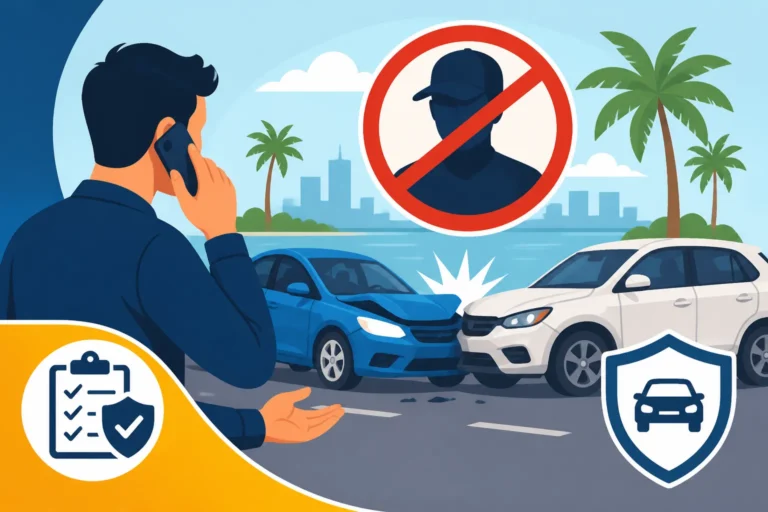
After safety, documentation is your next priority. Call the police, regardless of how minor the accident seems. A police report creates an official record of the incident, which is invaluable when dealing with insurance companies. In New Jersey, you generally have an obligation to report accidents involving injury or significant property damage to the police. Even if the police don't issue citations, their report will document the scene, gather witness statements, and, crucially, note that the other driver was uninsured if that information comes to light. Our guide on Police Reports and Car Accident Fault elaborates on the importance of this document.
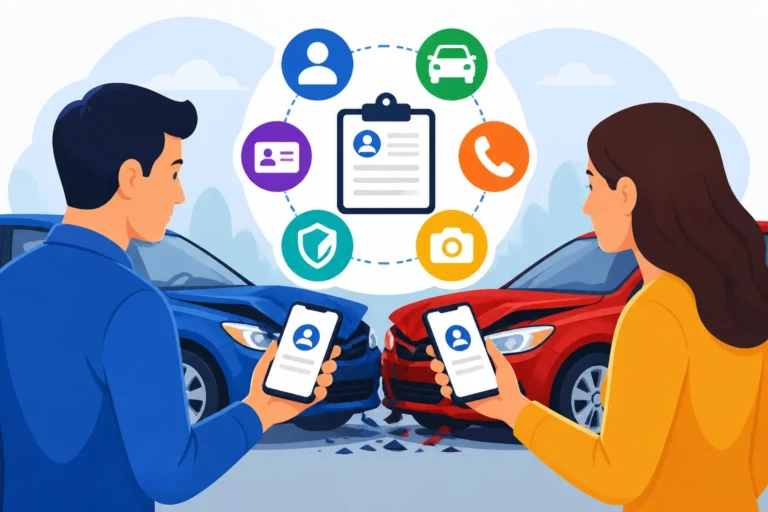
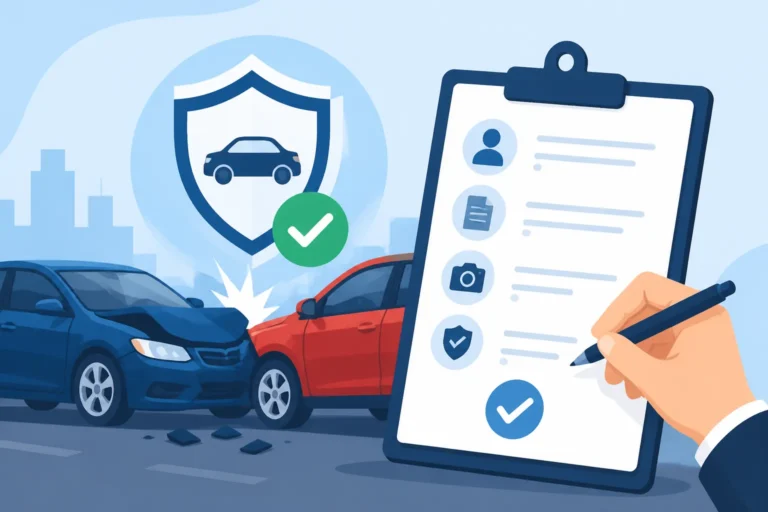
Take photographs and videos of everything: damage to all vehicles, the accident scene from various angles, road conditions, traffic signs, and any visible injuries. Exchange information with the other driver, even if they claim they don't have insurance. Get their name, contact information, driver's license number, and vehicle information (make, model, license plate). If there are witnesses, get their contact details too. This meticulous collection of evidence forms the bedrock of your claim.
Information to Collect Even from an Uninsured Driver
It might feel pointless to collect information from someone who admits to having no insurance, but it's absolutely vital. This isn't just about their hypothetical insurance policy; it's about identifying the person responsible and their vehicle. Here’s a detailed breakdown of what to gather:
- Driver’s Personal Information:
- Full Name
- Current Address
- Phone Number
- Email Address (if they provide it)
- Driver's License Number and Issuing State
- Date of Birth
- Vehicle Information:
- Make, Model, and Year of Vehicle
- License Plate Number and State
- Vehicle Identification Number (VIN) – often found on the dashboard or driver's side door jamb.
- Color of the Vehicle
- Accident Details:
- Date and Time of the Accident
- Exact Location (street names, nearest intersection, landmarks)
- Description of the Accident (how it happened)
- Weather Conditions
- Road Conditions
- Witness Information:
- Names and Contact Information of any independent witnesses.
- Photographic Evidence:
- As mentioned, photos of damage, the scene, road signs, skid marks, and anything else relevant.
Why is all this information necessary? Even if they're uninsured, your own insurance company (specifically your UM coverage) will want to verify the identity of the at-fault driver and confirm their uninsured status. The police report, which should ideally include this information, also serves as an official verification. Without it, you might face an uphill battle proving who was involved and what exactly happened. Remember, your goal is to make your own insurance company’s job as easy as possible so they can process your claim smoothly. You can learn more about the complete process in our guide What to Do After a Car Accident: Step-by-Step (2027).
Navigating Your Insurance Claim with UM Coverage
Once the immediate aftermath is handled and you've collected all available information, the next crucial step is to engage with your own insurance company. This is where your Uninsured Motorist (UM) coverage truly comes into play, acting as the primary avenue for recovering your losses. It's a process that requires diligence and careful attention to detail.
Notifying Your Insurance Company
As soon as reasonably possible, notify your own insurance company about the accident. Many policies have clauses requiring prompt notification, often within a specific timeframe. Delaying could jeopardize your claim. When you call, clearly state that you were hit by an uninsured driver and wish to file a claim under your Uninsured Motorist (UM) coverage. Be prepared to provide all the information you collected at the scene: the other driver's details, vehicle information, police report number, photos, and witness contacts.
Your insurer will assign a claims adjuster to your case. This adjuster will investigate the accident, verify the uninsured status of the other driver, and evaluate your damages. Be honest and thorough in your communication, but remember that anything you say can be used during the claim process. It's often advisable to stick to the facts and avoid speculating about fault or the extent of your injuries until you've been thoroughly checked out by a medical professional. If the other driver tries to blame you, understand that your insurance company will also consider How Insurance Companies Determine Who Is at Fault.
The Claim Process and Potential Challenges
The process of filing an uninsured motorist claim typically mirrors that of a standard third-party claim, but with your own insurer effectively stepping into the shoes of the at-fault driver’s insurance. Your adjuster will assess your medical bills, lost wages, and potentially pain and suffering, up to the limits of your UM policy.
Here’s a table outlining a typical UM claim process:
| Step | Action | Description |
|---|---|---|
| 1. Report Accident | Contact your insurance company | Notify your insurer immediately, stating it's an uninsured motorist claim. |
| 2. Gather Evidence | Compile all documentation | Police report, photos, witness statements, medical records, lost wage documentation. |
| 3. UM Claim Review | Insurer investigates | Your adjuster confirms uninsured status, reviews evidence, and assesses damages. |
| 4. Medical Treatment | Seek and follow medical advice | Continue treatment for injuries; keep all medical bills and records. |
| 5. Damage Assessment | Vehicle appraisal | For property damage (if covered by UM/UIM), your insurer will assess repair costs or total loss. |
| 6. Negotiation | Discuss settlement with adjuster | Your adjuster offers a settlement based on damages and policy limits. |
| 7. Resolution | Accept settlement or pursue arbitration | If agreeable, claim closes; if not, dispute resolution (e.g., arbitration) may be pursued. |
One of the challenges you might face is proving the extent of your injuries and their direct link to the accident. This is why consistent medical treatment and thorough documentation from healthcare providers are vital. Keep all receipts for medical expenses, prescription medications, and any other out-of-pocket costs. If you missed work, gather wage statements to prove lost income.
Another potential hurdle is disagreement over the value of your claim. Even though it's your own insurance company, they still have an interest in minimizing payouts. You might find yourself having to negotiate with them, similar to dealing with a third-party insurer. Sometimes, claims can take longer than expected, leading to frustration. If you feel like your claim is dragging on, our guide on What to Do If Your Claim Is Taking Too Long might offer some useful insights. Be prepared to advocate for yourself, or consider seeking professional help if the process becomes overwhelming.
When Legal Guidance Becomes Essential
While having Uninsured Motorist (UM) coverage is a huge relief, it doesn't always guarantee a smooth, hassle-free resolution. The complexities of car accident claims, combined with the fact that you're dealing with your own insurance company's interests (which don't always align perfectly with yours), can sometimes necessitate expert legal guidance. Knowing when to bring in a car accident lawyer can be the difference between a fair settlement and an insufficient one.
Recognizing When You Need a Car Accident Lawyer
Even with UM coverage, there are several scenarios where consulting an attorney is highly advisable:
- Serious Injuries: If you've sustained significant injuries requiring extensive medical treatment, surgery, or resulting in long-term disability, a lawyer can help ensure all future medical expenses, lost earning capacity, and pain and suffering are accurately accounted for in your claim. This becomes especially important if your medical bills are substantial, potentially nearing or exceeding your UM policy limits.
- Disputed Fault: While the other driver is uninsured, your own insurance company might try to argue that you were partially at fault for the accident, which could reduce your payout in states with comparative negligence laws. A lawyer can defend your position and challenge any unfair assessments of fault. You can learn more about this in What Happens If You're Partially at Fault?.
- Low Settlement Offers: If your insurance company makes an initial settlement offer that doesn't seem to adequately cover your medical bills, lost wages, and pain and suffering, a lawyer can negotiate on your behalf. They understand how How Much Is My Car Accident Settlement Worth? (2026) is calculated and can effectively argue for a more just amount.
- Complex Policy Issues: Sometimes, policies can have tricky clauses or exclusions, or there might be disputes over the extent of coverage available. An attorney can interpret these complex documents and advocate for your rights.
- Multiple Vehicles/Injured Parties: If the accident involved more than two vehicles or if there were multiple injured parties in your car, navigating the UM claim can become significantly more complicated.
- Difficulty Proving Damages: If you're struggling to gather necessary medical records or prove lost wages, an attorney's team can assist in obtaining this crucial documentation.
It's a common misconception that lawyers are only for lawsuits. In many UM claims, a lawyer works to achieve a fair settlement without going to court, leveraging their expertise to negotiate effectively with your insurance company. Our comprehensive guide on Do You Need a Lawyer for a Car Accident? offers more insights into this decision.
The Role of a Lawyer in Uninsured Motorist Claims
A car accident lawyer can provide invaluable assistance throughout your uninsured motorist claim in New Jersey. They act as your advocate, protecting your interests against both the at-fault driver and, sometimes, your own insurance company.
Here’s how a lawyer can help:
- Investigation: Your lawyer will conduct their own thorough investigation, gathering all necessary evidence, including police reports, witness statements, accident reconstruction reports, and medical records. They can also work to confirm the other driver's uninsured status definitively.
- Valuation of Damages: Accurately calculating the full extent of your damages, including current and future medical costs, lost wages, diminished earning capacity, and non-economic damages like pain and suffering, is complex. A lawyer has the expertise to ensure no potential damages are overlooked, maximizing your potential recovery.
- Negotiation with Your Insurer: Lawyers are skilled negotiators. They can challenge lowball offers from your insurance company, present compelling arguments backed by evidence, and push for a settlement that fairly compensates you for all your losses.
- Understanding Legal Recourse: If a satisfactory settlement cannot be reached with your insurer, your attorney can advise you on other legal avenues, such as arbitration (often a requirement in UM claims) or even litigation, if necessary. They will guide you through every step of a potential lawsuit, if it comes to that.
- Handling Liens: If you have health insurance or other parties that paid for your medical treatment, they might have a lien on your settlement. A lawyer can negotiate these liens to ensure you retain as much of your settlement as possible.
- Peace of Mind: Perhaps most importantly, having an experienced attorney handle your claim allows you to focus on your physical recovery without the added stress of battling insurance adjusters and navigating legal complexities. Understanding How Much Does a Car Accident Lawyer Cost? is also something they can explain in detail during an initial consultation.
While it’s an extra step, involving a legal professional for your uninsured motorist claim in New Jersey can significantly improve your chances of securing a just and comprehensive settlement, allowing you to move forward after a challenging accident.
Disclaimer
Please remember that this article provides general informational guidance and is not a substitute for professional legal advice. Car accident claims, especially those involving uninsured motorists, can be complex and are highly dependent on the specific facts of your case and current New Jersey laws. We strongly recommend consulting with a qualified car accident attorney or insurance professional to discuss your individual situation and ensure your rights are fully protected.