Car Accident Reporting Requirements in Massachusetts
Getting into a car accident is a jarring experience, and the aftermath can feel like a confusing whirlwind of emotions and paperwork. Many drivers in Massachusetts, after the initial shock, find themselves wondering, "What exactly do I need to report? And to whom?" It’s a common frustration, especially when you're dealing with potential injuries or vehicle damage. This comprehensive guide will walk you through the specific car accident reporting requirements in Massachusetts, ensuring you understand your obligations and can navigate the process with confidence.
Understanding When You Must Report a Car Accident in Massachusetts
It’s easy to assume that if an accident seems minor, you can just exchange information and go on your way. However, Massachusetts law is quite specific about when you must file a formal report, and overlooking these details can lead to complications down the road. This isn't just about insurance; it's about legal compliance.
The Threshold for Reporting
In Massachusetts, you are legally required to report a motor vehicle crash if it results in certain outcomes. This isn't optional, even if you feel the other driver was clearly at fault, or even if you think the damage is minimal. The key thresholds are:
- Property Damage Exceeding $1,000: This is perhaps the most common trigger. If, in your best judgment, the damage to any vehicle or property involved in the crash (including your own) appears to be more than $1,000, you must file a report. This can be tricky to estimate on the spot. A dent that looks minor can easily conceal frame damage or issues with sensors, pushing costs well past this figure. It's almost always better to err on the side of caution.
- Any Personal Injury: Even if it's a minor bruise, a sore neck, or someone just complains of pain, the law considers this a personal injury. If anyone involved in the accident, including drivers, passengers, pedestrians, or cyclists, suffers any bodily injury, you are required to file a report. This includes injuries that might not be immediately apparent, which is why it's always wise to seek medical attention after an accident, even a seemingly minor one. Checking out a guide like Why You Should See a Doctor After a Car Accident can offer more insights into this critical step.
- Death: While thankfully rare, any accident resulting in a fatality obviously requires immediate and thorough reporting.
If your accident doesn't meet these criteria – for example, a tiny fender-bender with no injuries and only a scuff that clearly costs less than $1,000 to repair – then a formal report might not be strictly necessary from your end. However, it's still good practice to follow other steps, like exchanging information, which you can learn more about in What Information to Exchange After a Car Accident.
Police Involvement and Your Reporting Duty
You might think that if the police come to the scene, they handle everything, and your job is done. While police often do file their own reports, known as police reports, your personal reporting duty might still stand. Police reports are crucial for documenting the accident from an official perspective and are often used by insurance companies to determine How Fault Is Determined in a Car Accident.
In Massachusetts, even if the police respond to the scene, you (as the operator of a vehicle involved in a reportable crash) are generally still responsible for filing your own "Motor Vehicle Crash Operator Report" (Form RMV-10) if the accident meets the thresholds mentioned above. The police report is separate from your personal filing requirement. Don't rely solely on their presence to absolve you of your responsibility. If a police officer tells you they are filing a report, it's still a good idea to clarify if you also need to file the RMV-10. Always ask for the police report number so you can track it.
The Massachusetts Motor Vehicle Crash Operator Report Form RMV-10
This is the cornerstone of accident reporting for individuals in Massachusetts. The official form you need to complete is the Massachusetts Motor Vehicle Crash Operator Report, also known as Form RMV-10. It’s a detailed document that collects vital information about the crash, and filling it out accurately is extremely important.
What the Form Requires
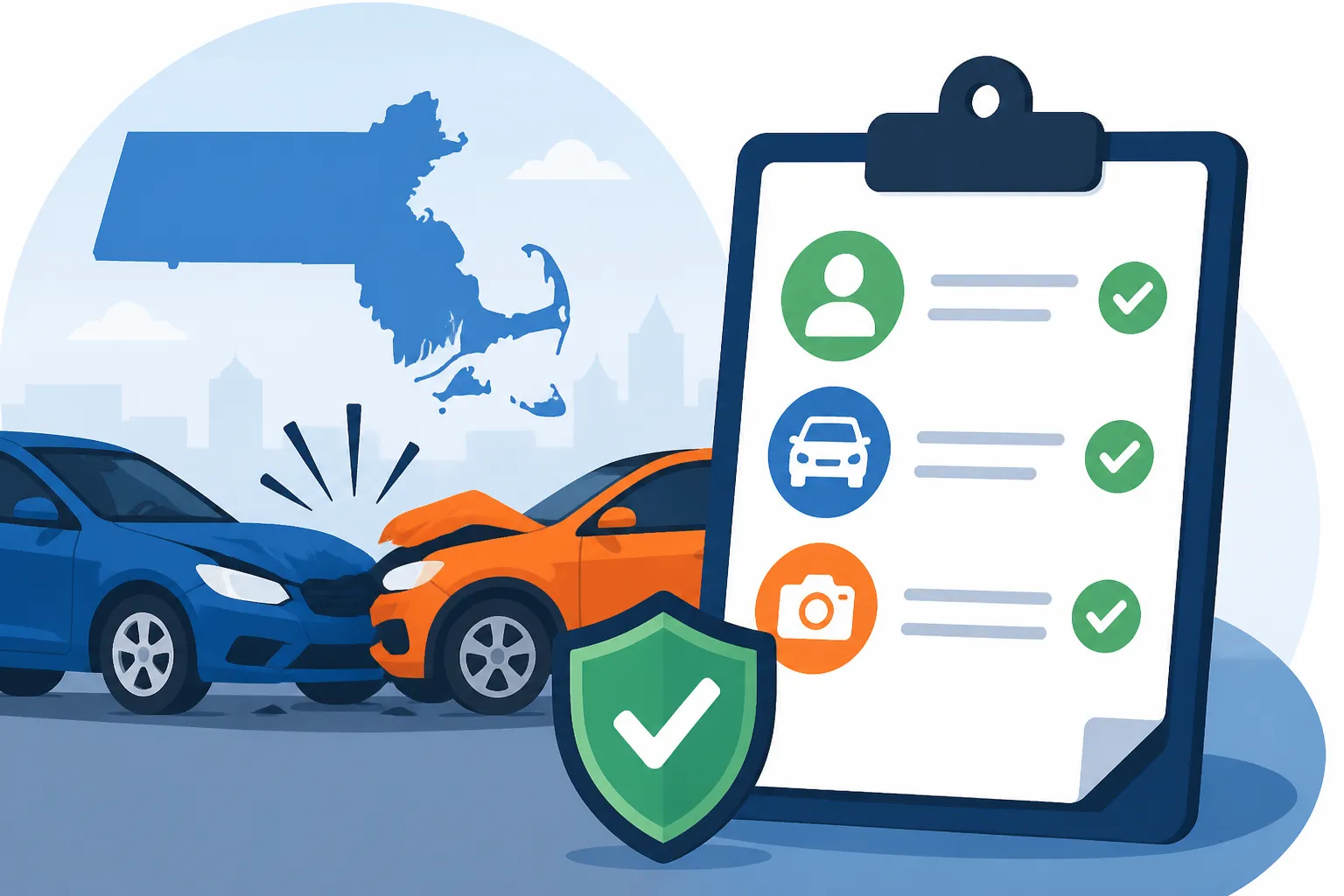
The RMV-10 form is designed to gather comprehensive details about the crash, allowing the Registry of Motor Vehicles (RMV) to log the incident and for insurance companies to get a clear picture. Here’s a breakdown of the typical information you’ll need to provide:
- Personal Information: Your name, address, driver's license number, and contact details.
- Vehicle Information: Make, model, year, license plate number, Vehicle Identification Number (VIN), and insurance company details for your vehicle and any other vehicles involved.
- Accident Details: Date, time, and exact location of the crash. This includes the street name, intersection, and nearest landmarks. You'll also need to describe the road conditions (wet, dry, icy), lighting, and weather at the time of the crash.
- Description of the Accident: This is where you explain, in your own words, how the crash occurred. It's critical to be factual and avoid making assumptions or admitting fault. Stick to what you observed.
- Injuries and Damage: Document any apparent personal injuries to drivers, passengers, or pedestrians, and describe the damage to all vehicles and other property. It’s helpful to attach photos if you have them, though the form itself is primarily text.
- Witness Information: If there were any independent witnesses, their names and contact information should be included.
- Police Information: If the police responded, you'll need to include the responding police department and the police report number, if available. For more on the significance of police documentation, read about Police Reports and Car Accident Fault.
Remember, consistency is key. Ensure the details on your RMV-10 match any notes you took at the scene and any information you provided to your insurance company. This attention to detail can prevent delays in your How Car Accident Insurance Claims Work.
How and When to File the RMV-10
Once you've gathered all the necessary information, which ideally should be done at the scene, you need to complete and submit the RMV-10 form. The process and timeline are strict:
- When to File: You must complete and file the Motor Vehicle Crash Operator Report within 5 days of the accident. This is a very short window, especially if you're dealing with injuries or vehicle repairs. Do not delay. Weekends and holidays count towards this 5-day period, so if your accident happens on a Friday evening, you'll need to act quickly.
- Where to File: You need to send copies of the completed RMV-10 form to three different entities:
- The Registry of Motor Vehicles (RMV): Send one copy to the Boston address provided on the form.
- The Police Department: Send one copy to the police department in the city or town where the accident occurred. This is crucial even if police were at the scene, as it fulfills your individual reporting obligation.
- Your Insurance Company: Send one copy to your own auto insurance provider. This ensures they have your official account of the crash and can begin processing your claim.
It's highly recommended to keep a copy of the completed form for your own records, along with proof of mailing (e.g., certified mail receipt). This can be invaluable if there's ever a dispute about whether you filed the report.
Key Considerations When Filling Out the Form
- Be Objective, Not Emotional: Stick to the facts. Describe what happened without assigning blame or speculating. For instance, instead of writing, "The other driver stupidly cut me off," write, "Vehicle B moved into my lane without signaling, striking the front passenger side of my vehicle."
- Avoid Admitting Fault: Never admit fault, verbally or in writing, at the scene or on the report. Even an innocent "I'm so sorry!" can be misconstrued as an admission. You can learn more about What Is an Admission of Fault and How to Avoid It to protect yourself.
- Draw a Diagram: The form includes a section for a diagram. Use it to clearly illustrate the positions of the vehicles before, during, and after the impact, along with the direction of travel. This visual aid can be incredibly helpful for understanding the crash dynamics.
- Accuracy is Paramount: Double-check all spellings, dates, times, and numbers. Inaccuracies, however small, can be used by insurance adjusters to question your credibility.
Here’s a simplified table outlining the reporting requirements:
| Condition for Reporting (Massachusetts) | Action Required | Filing Deadline | Where to File (3 copies) |
|---|---|---|---|
| Property Damage > $1,000 | Complete & Submit RMV-10 Form | Within 5 Days | RMV, Local Police Dept., Your Insurer |
| Any Personal Injury | Complete & Submit RMV-10 Form | Within 5 Days | RMV, Local Police Dept., Your Insurer |
| Any Fatality | Complete & Submit RMV-10 Form | Within 5 Days | RMV, Local Police Dept., Your Insurer |
| No Injuries & Damage < $1,000 | No formal RMV-10 report required (but recommended to inform insurer) | N/A | N/A (unless insurer requests otherwise) |
The Consequences of Not Reporting a Car Accident
Ignoring the reporting requirements in Massachusetts can lead to a host of headaches, ranging from legal penalties to significant challenges with your insurance claim. It's truly not worth the risk, even for what seems like a minor incident at first.
Legal Penalties and Fines
Failing to file the required RMV-10 form within the 5-day deadline, when an accident meets the reporting criteria (over $1,000 in damage or any injury), is a violation of Massachusetts law. While the immediate consequences might not be severe in every case, you could face:
- Fines: The state can impose fines for non-compliance.
- Suspension of Driver's License: In more serious instances or repeat offenses, your driver's license could be suspended.
- Criminal Charges: If a death or severe injury occurs and you fail to report, especially if you leave the scene, you could face very serious criminal charges, including a felony. This is why a guide like What Happens If You Don't Report an Accident? is so important.
These legal consequences are distinct from any civil liability you might have for the accident itself. The reporting requirement is an administrative obligation designed to ensure accurate record-keeping and public safety data.
Impact on Your Insurance Claim
Beyond the legal ramifications, failing to report an accident promptly and correctly can severely jeopardize your ability to make a successful insurance claim. Insurance companies rely heavily on official reports to verify the details of an accident.
- Claim Denial: Your insurance company could deny your claim, arguing that you failed to meet policy conditions by not reporting the accident to the state and/or local police as required. Most insurance policies have clauses that mandate prompt reporting of accidents.
- Delayed Settlements: Even if your claim isn't denied outright, the absence of a proper RMV-10 report can cause significant delays. Insurance adjusters will need to conduct their own investigations, which might be harder without official documentation. This can impact How Long Does a Car Accident Settlement Take?.
- Difficulty Proving Damages: Without a formal report and the immediate documentation of the scene, it can become incredibly difficult to prove the extent of your vehicle damage or personal injuries. Memories fade, evidence disappears, and the credibility of your account can be questioned. This is especially true when dealing with Delayed Injury Symptoms After a Car Accident, which might not show up until days after the crash.
- Subrogation Issues: If another driver was at fault, their insurance company might use your failure to file a report against you during the subrogation process, potentially reducing the amount you can recover.
It’s always in your best interest to file the RMV-10 form if there's any doubt, even if you’ve already contacted your insurance provider directly. The more documentation, the better.
What to Expect After Filing Your Report
Once you’ve diligently completed and submitted your Massachusetts Motor Vehicle Crash Operator Report, you might wonder what happens next. The process doesn’t just end with hitting "send" or dropping it in the mailbox.
The Role of the RMV and Police Departments
The copies you send to the RMV and the local police department serve different but equally important functions:
- RMV Records: The Registry of Motor Vehicles maintains official records of all reportable crashes in the state. This data is used for various purposes, including tracking accident statistics, identifying high-risk areas, and informing policy decisions regarding driver safety. Your report becomes part of this official state record, often cross-referenced with any police report filed.
- Police Investigation: While the police may have completed their on-scene investigation, your report provides additional context from your perspective. It ensures that your account is officially on file with the local authorities. If there was no police response to a minor accident, your report is the primary official document the police will have, allowing them to follow up if necessary. Learning What If There Was No Police Report? can help clarify the importance of your individual filing.
Neither the RMV nor the police will generally contact you to confirm receipt or review the details of your RMV-10 unless there's a discrepancy or further investigation is needed. That’s why keeping proof of mailing is so vital.
Working With Your Insurance Company
Your insurance company will be the primary entity you interact with after filing your report. Their claims department will use your RMV-10, along with their own investigation, to process your claim.
- Claims Investigation: Once your insurance company receives your report and you officially file a claim (which is a separate step from submitting the RMV-10), they will assign a claims adjuster. The adjuster will review your report, any police report, witness statements, photographs, and vehicle damage estimates. They will likely contact you for a recorded statement and may inspect your vehicle. This whole process is detailed in guides like How to File a Car Accident Insurance Claim.
- Determining Fault and Damages: The information provided in all reports helps the insurance company determine who was at fault in the accident. Massachusetts operates under a modified comparative negligence system, meaning that if you are found to be more than 50% at fault, you may be barred from recovering damages. If you're partially at fault, your settlement could be reduced. Understanding What Happens If You're Partially at Fault? is critical here.
- Negotiating a Settlement: Based on their investigation, the insurance company will eventually make a settlement offer for property damage and, if applicable, bodily injuries. This is often where things can get complicated, and you might need to consider Do You Need a Lawyer for a Car Accident? to assist with negotiation, especially for serious injuries or if the other driver's insurance company blames you unfairly.
The initial RMV-10 report is just one piece of the puzzle, but it’s a foundational one. It sets the official record for your involvement in the crash and forms the basis for all subsequent actions by state authorities and insurance providers. Be thorough, be timely, and keep meticulous records throughout the entire post-accident process.
Disclaimer
This article is for general informational purposes only and does not constitute professional advice. Laws and regulations vary by location and change over time. Consult a qualified professional for guidance on your specific situation.