Soft Tissue Injuries Explained
It’s a scenario we hear far too often: you’re involved in a car accident, the initial shock wears off, and you think you’re "fine." Maybe there's a little soreness, but nothing seems overtly broken. You might even go to the emergency room, get an X-ray, and be told everything looks "normal." But days later, or even weeks, that "little soreness" blossoms into debilitating pain, stiffness, and a host of other confusing symptoms. This guide is here to shed light on exactly what's happening when those invisible, yet agonizing, soft tissue injuries make their presence known after a car crash, and how to navigate the complex road to recovery and a fair claim.
What Exactly Are Soft Tissue Injuries?
The term "soft tissue injury" gets thrown around a lot after car accidents, often with a dismissive tone from insurance companies. But for those experiencing them, they are anything but "soft" or insignificant. Understanding what these injuries entail is the first step toward advocating for yourself and your recovery.
Defining Soft Tissue
Our bodies are intricate machines, a complex network of bones, organs, and, of course, soft tissues. When we talk about soft tissue, we're referring to anything that isn't bone or an organ. This includes a broad category of bodily components like muscles, ligaments, tendons, fascia, and even the nervous system that weaves through it all. These tissues are vital for movement, stability, and protecting our internal structures.
Muscles are the powerhouses, contracting to allow us to move, lift, and even breathe. They are designed to stretch and compress, but only up to a point. Ligaments are tough, fibrous bands of connective tissue that connect bones to other bones, providing stability to joints. Think of them like sturdy ropes holding your skeleton together. Tendons, on the other hand, connect muscles to bones, acting as the transmission system for muscular force. Fascia is a web-like connective tissue that surrounds and interpenetrates muscles, bones, nerves, and organs, providing support and allowing tissues to slide smoothly past each other. When any of these crucial components are subjected to sudden, violent forces—like those experienced in a car accident—they can be stretched, torn, bruised, or otherwise damaged, leading to the pain and dysfunction associated with soft tissue injuries.
How Car Accidents Cause Soft Tissue Damage
You might wonder how a relatively minor fender-bender, or even a low-impact collision, can cause such significant internal damage when your car doesn't even look that bad. The answer lies in the intense, sudden forces at play during a car accident, especially in an abrupt stop or change in direction. This is where the physics of impact meets the fragile biology of the human body.
In a collision, even at seemingly low speeds, your body doesn't stop with the car. Instead, it continues to move forward or sideways due to inertia, until it's abruptly stopped by a seatbelt, airbag, or the car's interior. This rapid acceleration-deceleration force is particularly devastating to soft tissues. For example, in a rear-end collision, your body is first pushed forward (acceleration), then suddenly thrown back against the seat (deceleration), causing your head and neck to "whip" back and forth beyond their normal range of motion. This whiplash motion can stretch and tear muscles, ligaments, and tendons in the neck, shoulders, and upper back. Similarly, in a T-bone accident, the force comes from the side, pushing your torso violently in one direction while your head and limbs try to keep up, leading to strains and sprains in the torso, hips, and limbs. These forces can cause microscopic tears in muscle fibers (strains) or ligaments (sprains), bruise deep muscle tissue (contusions), and even contribute to more severe issues like disc injuries in the spine, which involve the soft, jelly-like center (nucleus pulposus) pushing through the outer fibrous ring (annulus fibrosus).
Why They're Often Misunderstood or Downplayed
One of the most frustrating aspects of soft tissue injuries is how frequently they are misunderstood, dismissed, or even entirely downplayed, both by those outside the medical field and, unfortunately, sometimes even by insurance adjusters. This leads to a lot of emotional distress on top of the physical pain. When you visit the emergency room after an accident, the primary concern is to rule out life-threatening injuries like fractures, internal bleeding, or major head trauma. An X-ray, while excellent for showing bone breaks, won't typically reveal stretched ligaments, torn muscles, or inflamed tendons. This often leads to the exasperating diagnosis of "everything looks normal" or "just soft tissue injury," which can feel incredibly invalidating when you're experiencing severe pain.
Because there's no visible cast or obvious external wound, and because standard imaging like X-rays don't show the damage, many people—including claims adjusters—struggle to grasp the severity. They might assume that if nothing is broken, you can't be that hurt. This dismissive attitude often comes from a lack of understanding of biomechanics and the intricate nature of soft tissue healing. The truth is, soft tissue injuries can be far more debilitating and long-lasting than many simple fractures, sometimes leading to chronic pain, restricted movement, and a significant impact on daily life. This "invisible injury" aspect is a huge source of frustration for accident victims, who are left trying to prove their pain to skeptical parties.
Common Types of Soft Tissue Injuries from Car Accidents
While the general term "soft tissue injury" covers a lot of ground, car accidents tend to produce a few specific types of these injuries with alarming frequency. Understanding these categories can help you recognize your symptoms and communicate effectively with medical and legal professionals.
Whiplash Associated Disorders WAD
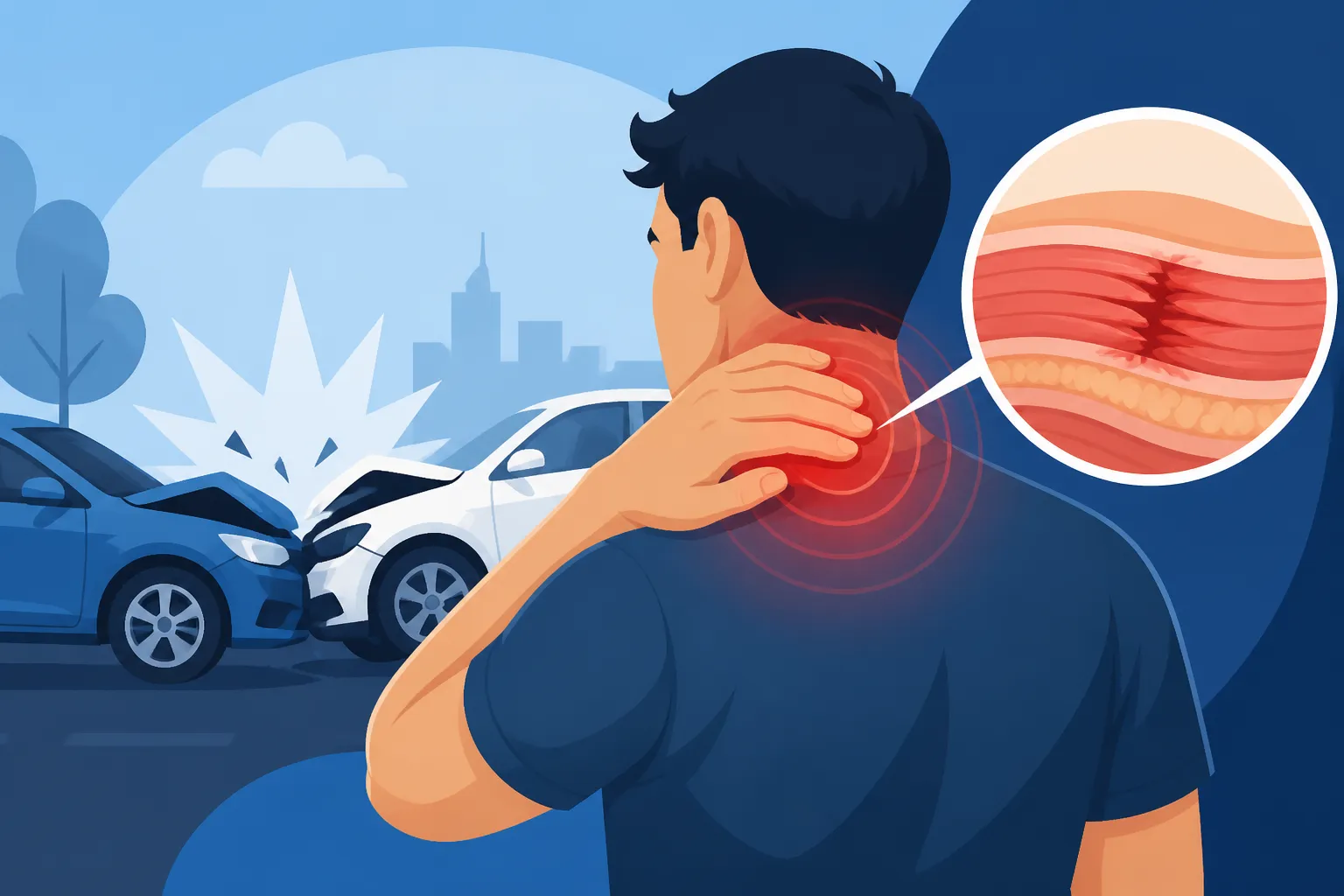
Perhaps the most infamous soft tissue injury linked to car accidents, especially rear-end collisions, is whiplash. The medical community often refers to it as Whiplash Associated Disorder (WAD) to encompass the full spectrum of symptoms and severities. Whiplash occurs when the head and neck are suddenly and violently forced backward and then forward, much like the crack of a whip. This extreme motion causes an overstretching and tearing of the muscles, ligaments, and tendons in the neck and upper back.
The symptoms of whiplash can range from mild discomfort to severe, debilitating pain, and importantly, they often don't appear immediately. Many people feel a surge of adrenaline right after a crash, masking any immediate pain, only for stiffness and soreness to creep in hours or even days later. Common symptoms include neck pain and stiffness, reduced range of motion in the neck, headaches (especially at the base of the skull), dizziness, fatigue, shoulder pain, and sometimes even pain or numbness radiating into the arms. It's not just a "little soreness"; whiplash can significantly impact your ability to turn your head, sleep comfortably, or perform daily activities. For a deeper dive into what to look for, you might find our guide on Whiplash Symptoms After a Car Accident particularly helpful.
Sprains and Strains
These two terms are often used interchangeably, but they refer to damage to different types of soft tissue. A sprain involves the stretching or tearing of a ligament, which connects bones to bones. A strain, on the other hand, involves the stretching or tearing of a muscle or tendon, which connects muscle to bone. Both can be incredibly painful and are common after car accidents.
Think about the lower back (lumbar region). A sudden jerk or twist in a collision can cause a lumbar strain, where the muscles in your lower back are overstretched or torn, leading to sharp pain, muscle spasms, and difficulty standing or bending. Similarly, if your arm or leg is twisted or braced against something during impact, you could sustain an ankle sprain or a wrist strain. Sprains and strains are graded based on their severity: Grade 1 (mild stretching), Grade 2 (partial tearing), and Grade 3 (complete rupture). A Grade 3 sprain or strain can be as debilitating, or even more so, than a broken bone, often requiring extensive recovery and sometimes even surgery. The location and severity of these injuries will dictate the pain level and recovery period, with many finding it difficult to even perform basic tasks like walking or lifting groceries.
Contusions and Bruises
While often visible externally, contusions (more commonly known as bruises) are definitely soft tissue injuries that occur internally. They result from direct impact, where blood vessels beneath the skin are ruptured, leading to bleeding into the surrounding tissues. This internal bleeding manifests as the familiar discoloration—purple, blue, or black—and is often accompanied by swelling, tenderness, and pain.
In a car accident, contusions can happen anywhere the body strikes the vehicle's interior or the seatbelt restrains you. For instance, if your knee hits the dashboard, you could sustain a deep contusion to the quadriceps muscle or around the kneecap. A seatbelt, while crucial for safety, can sometimes cause significant contusions across the chest, abdomen, or shoulder where it cinches tightly during impact. While many bruises fade relatively quickly, deep contusions can cause significant pain, limit movement, and sometimes lead to complications like a hematoma (a collection of blood outside the blood vessels) that may require medical drainage. In some cases, repeated or severe contusions can even lead to heterotopic ossification, where bone forms in soft tissue, further complicating recovery.
Herniated and Bulging Discs
Though the spine is made of bones (vertebrae), the intervertebral discs that cushion them are very much soft tissue, and their injury is a frequent and often severe consequence of car accidents. These discs act as shock absorbers between your vertebrae, allowing for flexibility and protecting your spinal cord. Each disc has a tough outer ring (annulus fibrosus) and a soft, gel-like center (nucleus pulposus).
In an accident, the sudden force can cause the disc to either bulge—where the soft center pushes against the outer ring, causing it to protrude—or herniate (also called a ruptured or slipped disc)—where the inner gel actually pushes through a tear in the outer ring. Both can put pressure on nearby spinal nerves, leading to symptoms far from the actual injury site. This nerve compression can cause intense pain, numbness, tingling, and weakness that radiates down the arms (from a cervical or neck disc injury) or legs (from a lumbar or lower back disc injury). Imagine a sharp, shooting pain down your leg that makes walking unbearable. This is often the result of a herniated disc pressing on the sciatic nerve. These types of injuries are not always immediately apparent and can take time to manifest, but they often require significant medical intervention, including physical therapy, injections, or even surgery. For more detailed information, our article on Herniated Disc From a Car Accident offers a comprehensive look.
Recognizing the Symptoms and Delayed Onset
One of the trickiest aspects of soft tissue injuries, and a point of constant contention with insurance companies, is that symptoms don't always appear immediately after an accident. This delayed onset can be incredibly confusing and frustrating, making it difficult to connect your pain directly to the collision.
Immediate vs. Delayed Symptoms
It's a common story: you're in a car crash, adrenaline surges, and in the chaos, you feel shaken but generally "okay." You might exchange information, call for help, and even drive home, thinking you dodged a bullet. However, the body's natural response to trauma includes a rush of endorphins, our body's natural painkillers, which can effectively mask injuries in the immediate aftermath. This means that while you might feel fine at the scene, the underlying soft tissue damage is already there, silently brewing.
Then, hours or even days later, sometimes even a week or two, the real pain sets in. You might wake up with a stiff neck, throbbing headaches, a persistent ache in your lower back, or an inability to move a limb without sharp pain. This delayed onset is absolutely normal for soft tissue injuries. The inflammation, swelling, and muscle spasms often take time to develop as the body reacts to the trauma. For example, a driver in a minor rear-end collision might walk away feeling only mildly sore, only to experience severe whiplash symptoms, including crushing headaches and neck stiffness, two days later. This delay can make people doubt themselves and can unfortunately be used by insurance companies to argue that your injuries aren't related to the accident. Understanding that delayed symptoms are common is crucial, and our guide on Delayed Injury Symptoms After a Car Accident offers more insight into this phenomenon.
Common Symptom Clusters
While every individual's experience with soft tissue injuries is unique, there are common symptom clusters that tend to arise depending on the affected body part. Recognizing these patterns can help you describe your pain accurately to medical professionals.
For injuries in the neck and upper back, which are very common in whiplash scenarios, you might experience persistent pain, often described as dull, aching, or throbbing. Stiffness is a hallmark symptom, making it difficult to turn your head side-to-side, look over your shoulder, or even nod. Muscle spasms can occur, feeling like tight knots or involuntary twitching. Headaches, particularly those starting at the base of the skull and radiating forward, are also frequently reported. You might also notice reduced range of motion, making simple tasks like driving or sleeping difficult. For extremity injuries (arms, legs, hands, feet), you'll often see swelling around the affected joint or muscle group, visible bruising (contusions), and pain that worsens with movement or weight-bearing. There might be a feeling of instability in the joint, as if it could "give out," which is a sign of ligament damage. If neurological symptoms like numbness, tingling, burning sensations, or shooting pains (known as radiculopathy) appear, this often suggests nerve impingement, particularly if a herniated disc is pressing on a nerve root in the spine. These sensations can travel far from the injury site, like numbness in your fingers caused by a neck injury.
Red Flags You Should Never Ignore
While many soft tissue injuries resolve with conservative treatment, there are certain "red flags" that indicate a potentially more serious underlying issue. Ignoring these symptoms could lead to long-term complications or even permanent damage. If you experience any of these, seek immediate medical attention.
One critical red flag is progressive weakness in a limb or sudden loss of motor control. For example, if you initially had some tingling in your arm but now find you can't lift objects, or your grip is significantly weakened, it could indicate severe nerve damage or spinal cord compression. Another serious sign related to spinal injuries is loss of bowel or bladder control, or new onset of difficulty urinating. These could point to cauda equina syndrome, a rare but severe neurological condition requiring emergency surgery. Similarly, severe, persistent headaches accompanied by vision changes, confusion, difficulty speaking, or loss of consciousness could signal a concussion or more serious traumatic brain injury. While common in car accidents, these symptoms warrant immediate evaluation. Any signs of infection, such as redness, warmth, increasing pain, or pus around a wound or even a deep contusion, also require urgent medical care. These aren't exhaustive lists, but they highlight the importance of listening to your body and not dismissing changes as "just part of the recovery." Always err on the side of caution and consult a healthcare professional if you're concerned.
Diagnosis and Medical Treatment for Soft Tissue Injuries
Getting a proper diagnosis and consistent medical treatment is not only vital for your physical recovery but also absolutely essential for building a strong car accident claim. Without thorough medical documentation, proving your injuries can be incredibly challenging.
The Diagnostic Process
When you report soft tissue pain after an accident, your doctor will usually start with a thorough physical examination. This is often more informative than initial X-rays for these types of injuries. They will assess your range of motion in the affected areas, checking for limitations, stiffness, and pain. They'll palpate (feel) your muscles and joints for tenderness, swelling, and muscle spasms. They might perform specific orthopedic and neurological tests to check reflexes, sensation, and muscle strength, which can help pinpoint nerve involvement or specific ligament damage.
While X-rays are excellent for detecting fractures, they generally don't show soft tissue damage directly. This is why you might be told your X-rays are "normal" even when you're in significant pain. To get a clearer picture of muscles, ligaments, tendons, and discs, doctors often order more advanced imaging. A Magnetic Resonance Imaging (MRI) scan is considered the gold standard for soft tissue, as it can reveal tears in ligaments or tendons, muscle bruising, and crucially, herniated or bulging discs that might be pressing on nerves. A Computed Tomography (CT) scan can also provide detailed cross-sectional images, sometimes used to assess bony structures and disc integrity. In cases of suspected nerve damage, Electromyography (EMG) and Nerve Conduction Studies (NCS) might be performed to evaluate nerve function and identify nerve compression. These detailed diagnostic tools provide objective evidence of your injuries, which is invaluable both for treatment planning and for your legal case.
Initial Treatment Approaches
Once soft tissue injuries are diagnosed, the initial treatment phase typically focuses on reducing pain and inflammation, promoting healing, and restoring function. The approach often starts conservatively.
One of the most widely recommended initial strategies is the RICE method: Rest, Ice, Compression, and Elevation. Rest helps prevent further injury and allows the healing process to begin. Applying ice reduces swelling and numbs pain. Compression (like a bandage or brace) helps minimize swelling, and elevation also aids in reducing fluid accumulation. Alongside RICE, doctors often prescribe pain management medications. Over-the-counter non-steroidal anti-inflammatory drugs (NSAIDs) like ibuprofen or naproxen are common for reducing inflammation and pain. For more severe muscle spasms, prescription muscle relaxants might be used. However, these are usually prescribed for short durations due to potential side effects. Critically, physical therapy is often initiated early in the recovery process. A physical therapist will design a personalized program of exercises and stretches aimed at restoring range of motion, strengthening weakened muscles, and improving flexibility. They might also use modalities like heat, ultrasound, or electrical stimulation to aid healing and pain relief. Sticking to this initial treatment plan is crucial; it not only helps your body heal but also demonstrates to insurance companies that you are actively seeking and following medical advice for your injuries.
Advanced and Ongoing Treatments
If initial conservative treatments don't provide sufficient relief or if the injury is more severe, your healthcare provider might recommend more advanced or ongoing therapeutic interventions. The goal remains the same: to alleviate pain, improve function, and facilitate a full recovery.
Chiropractic care can be a beneficial option for many soft tissue injuries, especially those involving the spine like whiplash or lumbar strains. Chiropractors use manual adjustments and manipulations to restore proper alignment and reduce nerve irritation, often working in conjunction with physical therapy. Massage therapy can help release muscle tension, improve circulation, and reduce pain, particularly in areas with muscle spasms or tightness. Some patients find relief through acupuncture, an ancient Chinese practice involving the insertion of thin needles into specific points on the body, which can help manage pain and promote healing. For persistent or severe pain, doctors might consider injections. These can include corticosteroid injections to reduce inflammation in specific joints or around nerves, or nerve blocks to temporarily alleviate severe pain. In rare but severe cases, particularly with significant disc herniations that are causing progressive neurological deficits or unbearable pain unresponsive to other treatments, surgery might become a necessary option. For example, a discectomy or spinal fusion could be performed to relieve pressure on the spinal cord or nerves. These advanced treatments are usually considered after a period of conservative care and underscore the severity and long-term nature that some soft tissue injuries can take, proving they are far from "minor."
The Impact of Soft Tissue Injuries on Your Car Accident Claim
Navigating a car accident claim with soft tissue injuries can feel like an uphill battle. Because these injuries aren't always immediately visible or easily confirmed by basic imaging, insurance companies often try to minimize their impact. This makes proving your case even more critical.
Proving Soft Tissue Injuries
One of the biggest hurdles in a claim involving soft tissue injuries is proving their existence and their direct link to the car accident. Since X-rays often come back "normal," adjusters might suggest your pain is exaggerated or unrelated. This is why meticulous documentation and consistent medical care are absolutely non-negotiable.
Your medical records are the backbone of your claim. This includes detailed notes from your primary care physician, specialists (like orthopedists, neurologists, or chiropractors), physical therapists, and any other healthcare providers you see. These records should clearly document your symptoms, the diagnosis of your specific soft tissue injuries (e.g., cervical sprain, lumbar strain, herniated disc), the treatment plan, and your progress (or lack thereof). Imaging reports from MRIs or CT scans that show disc herniations, ligament tears, or significant muscle inflammation provide objective evidence that can refute an adjuster's skepticism. Consistent follow-up care is also critical; gaps in treatment can be used by insurance companies to argue that your injuries weren't severe or that you weren't truly committed to your recovery. Our comprehensive guide on How to Prove Injuries in a Car Accident Claim offers further strategies to strengthen your case.
Dealing with Skeptical Insurance Adjusters
It’s an unfortunate reality that insurance adjusters, whose primary goal is to minimize payouts, often approach soft tissue injury claims with a degree of skepticism. They are trained to look for reasons to reduce the value of your claim, and "invisible" injuries like whiplash are frequent targets.
You might hear an adjuster say things like, "It's just whiplash, everyone gets that after a crash," or "Your X-rays were clear, so it can't be that bad." They might imply that your pain is psychological, pre-existing, or not truly related to the accident because of delayed symptom onset. They might even offer a lowball settlement early on, hoping you'll accept it before fully understanding the extent of your injuries and the costs of long-term treatment. It's incredibly frustrating to have your legitimate pain and suffering dismissed. This is precisely why early legal advice is so important. An experienced car accident lawyer understands these tactics and knows how to counter them with strong medical evidence and legal arguments. They can also protect you from making statements that could inadvertently harm your claim, like downplaying your symptoms or agreeing to a recorded statement without legal counsel.
Types of Damages You Can Claim
When you've sustained soft tissue injuries in a car accident, your claim can encompass various types of "damages," which essentially refer to the losses you've suffered due to the accident. These typically fall into two main categories: economic and non-economic damages.
Economic damages are those with a clear, quantifiable monetary value. This includes all your medical bills, from emergency room visits and diagnostic imaging (like those crucial MRIs) to physical therapy, chiropractic care, specialist consultations, prescriptions, and any future medical treatments your doctor anticipates you'll need. Lost wages are another significant component—if your soft tissue injuries prevent you from working, or if you have to take time off for appointments, you can claim compensation for that lost income. This also extends to lost earning capacity if your injuries have permanently affected your ability to work at your previous level. Additionally, property damage to your vehicle, rental car expenses, and even mileage to and from medical appointments can be included. For a more detailed understanding of these tangible losses, you can refer to our guide on Economic vs Non-Economic Damages Explained.
Non-economic damages are less tangible but often constitute a significant portion of a settlement, particularly with painful and persistent soft tissue injuries. The most common of these is "pain and suffering," which accounts for the physical pain and discomfort you've endured. But it also includes emotional distress, such as anxiety, depression, and PTSD that can arise after a traumatic event. Furthermore, non-economic damages cover the loss of enjoyment of life—if your injuries prevent you from engaging in hobbies, sports, or family activities you once loved, that loss is compensable. The impact on your quality of life, your ability to sleep comfortably, or your general well-being falls under this category. Proving these damages requires detailed accounts of your daily struggles and the impact the injury has had on your life. Our article on Pain and Suffering Damages What They Cover delves deeper into how these subjective losses are valued.
Building a Strong Claim for Soft Tissue Injuries
Building a robust car accident claim, especially when dealing with often-dismissed soft tissue injuries, requires diligence, organization, and sometimes, expert assistance. It's about creating a clear, undeniable narrative of how the accident impacted your health and life.
Documenting Everything from Day One
The importance of thorough documentation cannot be overstated when it comes to soft tissue injury claims. From the moment the accident occurs, every detail you collect contributes to the strength of your case. Don't wait until you're feeling worse; start immediately.
At the scene of the accident, take as many photos as possible, not just of vehicle damage but also of the surroundings, road conditions, and any visible injuries, however minor they seem. Get contact information from witnesses. If police respond, ensure a police report is filed, as it provides an objective account of the incident. Once you seek medical attention, keep meticulous records of every doctor's visit, specialist consultation, physical therapy session, and prescription. Request copies of all medical reports, diagnostic imaging results (MRIs, CT scans), and bills. Beyond medical records, maintain a detailed personal journal documenting your pain levels, how your injuries affect your daily activities (e.g., difficulty sleeping, showering, playing with children, working), and any emotional distress you experience. Keep receipts for all related expenses, including over-the-counter pain relievers, transportation costs to appointments, and lost wages. This comprehensive paper trail is your best defense against skeptical insurance adjusters. Our guide What to Do After a Car Accident Step-by-Step 2026 provides an excellent checklist for immediate actions to take.
The Role of Medical Professionals
Your team of medical professionals plays an indispensable role not only in your recovery but also in the success of your car accident claim. Their expertise and documentation form the very foundation upon which your claim is built.
From your initial visit to the emergency room or urgent care, to ongoing care with your primary physician, and referrals to specialists like orthopedists, neurologists, pain management doctors, or physical therapists—each professional contributes critical pieces of evidence. Their diagnoses, treatment plans, prognoses, and notes detailing your symptoms and limitations are crucial. For example, a physical therapist's report outlining your decreased range of motion due to whiplash or a neurologist's findings on nerve impingement from a herniated disc provide objective medical opinions. These professionals can also explain how your injuries are consistent with the forces involved in your specific car accident. It is vital to consistently follow your doctor's orders, attend all scheduled appointments, and communicate openly about your pain and progress. Any gaps in treatment or non-compliance can be used by insurance companies to suggest your injuries are not as severe as claimed or that you are not dedicated to your recovery.
When to Consider Legal Representation
While it might seem daunting to think about hiring a lawyer, especially when you're already dealing with pain and recovery, there are many situations where legal representation becomes not just helpful, but essential for protecting your rights and maximizing your claim.
If your soft tissue injuries are more than just minor aches and pains—if they're significantly impacting your daily life, causing chronic pain, or requiring extensive medical treatment (like physical therapy, injections, or potential surgery)—it's probably time to talk to a lawyer. You'll definitely want legal counsel if the insurance company is downplaying your injuries, questioning their relation to the accident, or offering a settlement that feels insultingly low. Dealing with complex medical jargon, negotiating with experienced adjusters, and understanding the nuances of personal injury law can be overwhelming when you're trying to heal. A skilled car accident lawyer can take on these burdens, gather necessary evidence, secure expert medical opinions, negotiate fiercely on your behalf, and even take your case to court if a fair settlement cannot be reached. They know how to effectively counter the tactics used by insurance companies and ensure you are justly compensated for all your damages, both economic and non-economic. If you're wondering about the best time to bring in professional help, our article When to Hire a Car Accident Lawyer offers excellent guidance.
Understanding the Settlement Value of Soft Tissue Injuries
One of the most common questions people have after a car accident is, "How much is my claim worth?" For soft tissue injuries, answering this isn't straightforward because their value can fluctuate wildly based on numerous factors. It's not a one-size-fits-all calculation.
Factors Influencing Settlement Amounts
The potential settlement amount for a soft tissue injury claim is influenced by a complex interplay of variables, making each case unique. It's not just about the diagnosis, but the entire ripple effect of that injury on your life.
First and foremost is the severity and nature of the injury. A minor Grade 1 muscle strain that resolves in a few weeks will be valued differently than a Grade 3 ligament tear requiring surgery or a herniated disc causing chronic nerve pain. The duration and extent of medical treatment are also critical. A claim involving ongoing physical therapy, pain management specialists, injections, and perhaps future medical procedures will naturally have a higher value due to increased economic damages. Lost wages and earning capacity are directly compensable; if your injuries prevent you from working or force you into a lower-paying job, this significantly impacts your settlement. Furthermore, the impact on your daily life and quality of life (non-economic damages) plays a huge role. Can you no longer participate in your favorite hobbies? Are you struggling to care for your family? Does chronic pain prevent you from sleeping? These personal tolls contribute substantially to the claim's value. Finally, factors like the clarity of fault, the state's laws regarding comparative negligence, and the insurance policy limits of the at-fault driver can all affect the final settlement amount. For instance, in a state with modified comparative negligence, if you are found to be 51% or more at fault, you might recover nothing.
The "Multiplier" for Pain and Suffering
Calculating non-economic damages like pain and suffering can feel subjective, but personal injury claims often use a method called the "multiplier" to arrive at a fair figure. This helps quantify the intangible aspects of your injury.
The multiplier method typically starts with your total economic damages (medical bills, lost wages, etc.). This sum is then multiplied by a number, usually between 1.5 and 5, to determine the value of your pain and suffering. The specific multiplier used depends heavily on the severity and impact of your soft tissue injuries. For a minor whiplash injury that resolves quickly with minimal treatment, a lower multiplier (e.g., 1.5x or 2x) might be applied. However, for a severe herniated disc causing chronic radiculopathy, requiring extensive and long-term medical care, significantly impacting your ability to work and enjoy life, a higher multiplier (e.g., 4x or 5x) would be more appropriate. Factors that influence the multiplier include the intensity of your pain, the duration of your recovery, the permanence of your injuries, the level of disruption to your daily life, and the emotional distress you've experienced. Documenting all these aspects through medical records, journals, and personal statements helps justify a higher multiplier. Our detailed explanation of How the Pain and Suffering Multiplier Works 1.5x–5x provides a deeper understanding of this crucial calculation.
Average Settlements for Specific Soft Tissue Injuries
It's natural to wonder about "average" settlement amounts for specific injuries, like whiplash or a herniated disc. While these figures can provide a general idea, it's crucial to understand that every car accident case is unique, and averages should be viewed with extreme caution. Your specific circumstances will dictate your actual settlement.
For instance, a minor whiplash injury that resolves in a few weeks with conservative treatment and no lost wages might settle for a few thousand dollars, covering medical bills and some pain and suffering. However, a more severe whiplash associated disorder (WAD) that leads to chronic neck pain, migraines, and requires months of physical therapy, injections, and impacts work, could easily command a settlement in the tens of thousands of dollars, or even higher in complex cases. Similarly, while an average settlement for a herniated disc might be in a certain range, a case where a herniated disc causes persistent nerve damage requiring surgery and leading to permanent limitations could result in a six-figure settlement. Factors like the state you're in (e.g., no-fault vs. at-fault states), the clarity of liability, the policy limits of the at-fault driver, and the quality of your legal representation all play a massive role. So, while you might hear about typical figures, remember these are merely statistics; your focus should always be on documenting your specific injury, its impact on your life, and securing the medical care you need. Our articles on Average Settlement for Whiplash and Average Settlement for a Herniated Disc offer more specific insights, but always consult with a legal professional for an evaluation of your unique case.
Common Soft Tissue Injuries and Their Characteristics
To give you a clearer picture, here's a table summarizing some of the most common soft tissue injuries sustained in car accidents, along with their typical symptoms and treatment approaches.
| Injury Type | Description | Common Symptoms | Typical Treatment Approaches |
|---|---|---|---|
| Whiplash (Cervical Strain/Sprain) | Stretching/tearing of ligaments, muscles, tendons in the neck and upper back. | Neck pain, stiffness, reduced range of motion, headaches (base of skull), dizziness, shoulder pain, fatigue. | Rest, ice/heat, NSAIDs, muscle relaxants, physical therapy, chiropractic care, massage, acupuncture. |
| Lumbar Strain/Sprain | Stretching/tearing of muscles or ligaments in the lower back. | Lower back pain, stiffness, muscle spasms, difficulty bending or standing, pain radiating into buttocks. | Rest, ice/heat, NSAIDs, muscle relaxants, physical therapy, chiropractic care, core strengthening exercises. |
| Shoulder Strain/Sprain | Stretching/tearing of shoulder muscles (e.g., rotator cuff) or ligaments. | Shoulder pain, reduced arm mobility, weakness, tenderness, difficulty lifting arm or carrying objects. | Rest, immobilization (sling), ice, NSAIDs, physical therapy, possibly corticosteroid injections, surgery for severe tears. |
| Knee Contusion/Sprain | Bruising of knee muscles or stretching/tearing of knee ligaments (e.g., MCL, LCL). | Knee pain, swelling, bruising, tenderness, instability (sprain), difficulty bearing weight. | RICE protocol, pain relievers, physical therapy for strengthening and stability, bracing, possibly surgery for severe ligament tears. |
| Herniated/Bulging Disc (Cervical/Lumbar) | Inner gel of disc pushes through outer ring, potentially compressing nerves. | Sharp, radiating pain (arms or legs), numbness, tingling, weakness, muscle spasms, pain worsening with specific movements. | Rest, NSAIDs, physical therapy, epidural steroid injections, nerve blocks, surgery (discectomy, fusion) in severe, unresponsive cases. |
| Contusions (Deep Bruising) | Impact injury causing bleeding into muscle and soft tissues. | Localized pain, tenderness, swelling, discoloration (blue/purple), limited range of motion if severe. | RICE protocol, pain relievers, gentle stretching once initial pain subsides, watchful waiting; drainage if hematoma is large. |
| Wrist/Ankle Sprain | Stretching/tearing of ligaments in the wrist or ankle. | Pain, swelling, bruising, tenderness to touch, instability, difficulty moving joint or bearing weight. | RICE protocol, immobilization (brace/splint), NSAIDs, physical therapy to restore strength and range of motion. |
Remember, this table provides general information. Always consult with a medical professional for an accurate diagnosis and personalized treatment plan for your specific injuries.
Disclaimer
Please remember that the information provided in this article is intended for general informational purposes only and does not constitute legal or medical advice. Every car accident and personal injury claim is unique, and the outcome depends on a multitude of factors, including specific state laws, individual circumstances, and the evidence available. It is crucial to consult with a qualified medical professional for diagnosis and treatment of any injuries and to seek advice from an experienced car accident attorney for guidance regarding your specific legal situation. Do not delay in seeking medical attention or legal counsel, as time limits may apply to your claim.