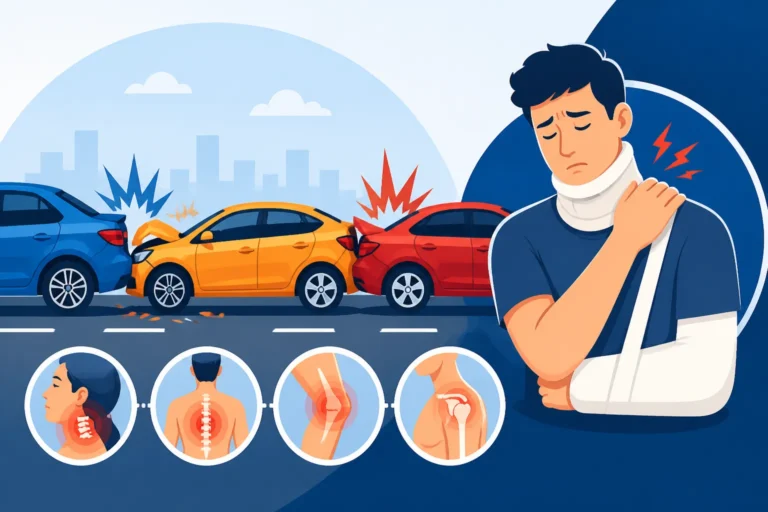
What Are Damages in a Car Accident Claim?
After a crash, the adjuster keeps using the word “damages,” and you are left wondering whether that means your bumper, your hospital bills or the weeks you could not sleep. It means all of those, and more. This guide explains what damages are in a car accident claim, the main types, how each is proved and what can shrink the amount you recover.
What Damages Mean in a Car Accident Claim
In legal terms, damages are the money a person can recover for losses caused by someone else’s wrongdoing. In a car accident claim, they are the dollar value placed on everything the crash took from you, from repair bills to the pain of a broken wrist.
Damages Versus the Damage to Your Car
People often use “damage” to mean the dent in the door and “damages” to mean the claim as a whole. The difference matters. Damage to your vehicle is one category of loss. Damages, plural, is the full list of losses you are asking the at fault driver or their insurer to pay for.
That is why a single crash can produce two separate tracks: a property damage claim for the car and a bodily injury claim for your health. The site’s article Property Damage vs Bodily Injury Claims explains how those two tracks are handled differently by insurers.
Why Damages Are the Heart of the Claim
Proving that the other driver was at fault gets you through the door. Proving your damages decides what you actually receive. A clear liability case with poorly documented losses can settle for far less than it should, while well documented damages give you leverage in negotiation.
Picture two drivers hit in identical rear end crashes. One keeps every receipt, follows medical advice and writes down how the injury affects daily life. The other throws away paperwork and skips follow up visits. Even with the same injuries, the first driver will usually be in a much stronger position.
Who Actually Pays Damages
In most car accident claims, damages are paid by the at fault driver’s liability insurer rather than by the driver personally. The insurer investigates, decides how much it believes your losses are worth and makes an offer. If you do not agree, you can negotiate, and if that fails, the claim may move to a lawsuit where a court or jury decides.
Your own policy may also play a part. Depending on your state and coverage, medical payments coverage, personal injury protection, collision coverage or uninsured and underinsured motorist coverage can pay some losses directly. In no fault states, your own personal injury protection usually pays certain economic losses first, and claims against the other driver for pain and suffering may be limited unless your injuries meet a legal threshold. The insurer paying a given loss does not change what counts as damages, but it does change who you send each bill to.
The Main Types of Damages
Most car accident damages fall into two broad groups, economic and non economic, with punitive damages as a rare third category. The site’s guide Economic vs Non-Economic Damages in Injury Claims goes deeper on the distinction.
| Type | What It Covers | How It Is Proved |
|---|---|---|
| Economic damages | Medical bills, lost wages, repairs, rental cars, out of pocket costs | Bills, receipts, pay records, repair estimates |
| Non economic damages | Pain, suffering, emotional distress, loss of enjoyment of life | Medical records, journals, testimony from you and people close to you |
| Punitive damages | Punishment for especially reckless or intentional conduct | Evidence of conduct such as drunk driving, subject to state rules |
Economic Damages
Economic damages are losses with a clear dollar figure. They typically include:
- Past medical expenses, such as ambulance, emergency room, imaging, surgery and therapy.
- Future medical expenses for care you are likely to need later.
- Lost wages for time missed from work.
- Lost earning capacity if the injury limits what you can earn going forward.
- Vehicle repair or replacement and diminished value where allowed.
- Rental car costs and other out of pocket expenses, like mileage to appointments.
You may also see these called special damages. The article What Are Special Damages vs General Damages? explains the older terminology some adjusters still use. For future care in particular, see Can You Claim Future Medical Expenses?.
Non Economic Damages
Non economic damages compensate for losses that do not come with a receipt: physical pain, emotional distress, anxiety, sleep problems, scarring and the loss of activities you used to enjoy. They are often the largest part of a serious injury claim and also the most disputed.
Because there is no bill to point to, these damages are proved through the story your records tell. Consistent medical visits, notes about pain levels and accounts from family and coworkers all help. The site’s guide Pain and Suffering Damages: What They Cover explains what this category includes, and How to Document Pain and Suffering gives practical steps.
Punitive Damages
Punitive damages are not designed to compensate you. They are meant to punish particularly bad conduct and deter others. They are uncommon in ordinary car accident cases and usually require proof of something like drunk driving or extreme recklessness. Many states limit them, and insurance policies may not cover them. See What Are Punitive Damages in a Car Accident? for more.
How Damages Are Valued
There is no single formula that every insurer uses, but most valuations start the same way: add up the economic losses, then estimate a figure for the non economic ones.
Adding Up Economic Losses
The economic side is mostly arithmetic. Medical bills, wage records, repair invoices and receipts are totaled. Future costs are estimated with help from doctors, and in larger cases, from specialists who project care needs or lost earnings.
Timing matters here. Many attorneys advise waiting until you reach maximum medical improvement before settling, because until then nobody knows the full cost of your care. The article What Is Maximum Medical Improvement (MMI)? explains why.
Estimating Non Economic Losses
Insurers and attorneys often use rough methods to put a number on pain and suffering, such as a multiplier applied to economic losses or a daily rate for each day you were affected. These are starting points for negotiation, not rules. Injury severity, recovery time, permanent effects and how clearly the records support your account all shape the final figure. The site’s guide How Car Accident Settlements Are Calculated walks through these methods.
What Can Reduce the Damages You Recover
Even a strong claim can be reduced by a few common factors. Knowing them early helps you protect the value of your case.
Shared Fault
If you are found partly responsible for the crash, many states reduce your recovery by your share of fault. A few states bar recovery entirely if you were even slightly at fault, while others cut you off only above a set threshold. The rules vary widely, so check your own state’s approach. The site’s article How Fault Affects Your Insurance Claim covers the basics.
Gaps in Treatment and Policy Limits
Insurers watch for gaps in care. Waiting weeks to see a doctor, or stopping treatment early, gives them room to argue that your injuries were minor or caused by something else. Following medical advice protects both your health and your claim.
Policy limits are another ceiling. If the at fault driver carries low coverage, the practical amount available may be less than your damages, unless other sources such as your own underinsured motorist coverage apply. Deadlines matter too: every state sets a statute of limitations for filing, and missing it can end the claim no matter how large your damages are.
Protecting Your Damages From Day One
Start a folder on the day of the crash. Keep medical bills, pay stubs, repair estimates, rental receipts and photos of injuries and vehicles. Write short notes about pain, sleep and activities you missed. Save every letter from insurers.
If your injuries are significant, or the insurer disputes fault or the value of your losses, speaking with a personal injury attorney can help you understand what your damages may realistically be worth in your state. Many offer free consultations, so you can learn your options before deciding anything.
Disclaimer
This article is for general informational purposes only and does not constitute professional advice. Laws and regulations vary by location and change over time. Consult a qualified professional for guidance on your specific situation.