How Medical Records Prove Your Injuries
Medical records provide the objective proof required to connect car accident injuries directly to the collision for insurance claims.
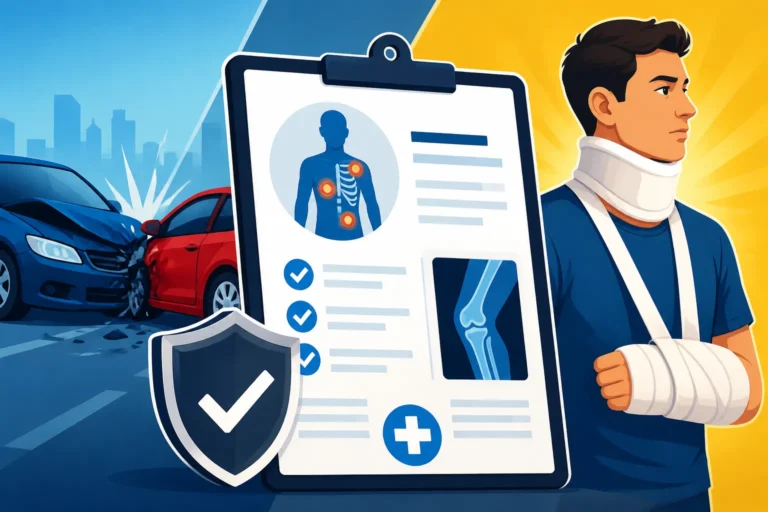
Medical records provide the objective proof required to connect car accident injuries directly to the collision for insurance claims.

Maximum Medical Improvement marks the recovery plateau where doctors determine permanent injury extent for your accident claim settlement.

Delayed car accident symptoms and their impacts on insurance claims, plus steps to protect health and financial recovery.

Medical evaluation after a car accident prevents hidden health risks and protects claims from delayed whiplash and soft tissue injuries.
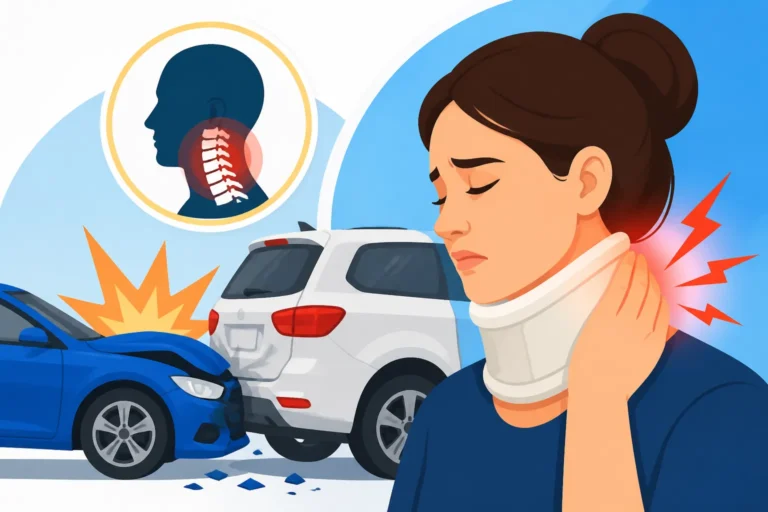
Whiplash treatment methods and common symptoms help car accident victims navigate recovery and understand neck injuries.

Facial injuries and scarring from car accidents involve soft tissue damage, bone fractures, and dental trauma requiring medical recovery.
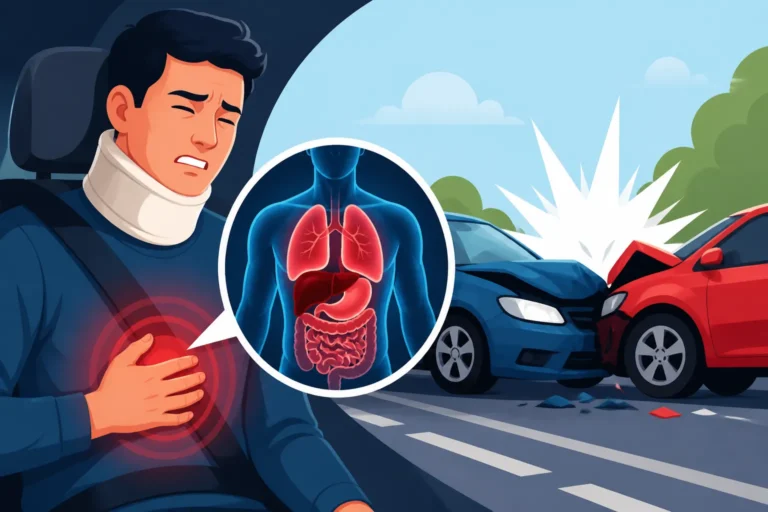
Internal injuries after a car accident often hide behind adrenaline. This text details hidden dangers and critical signs.
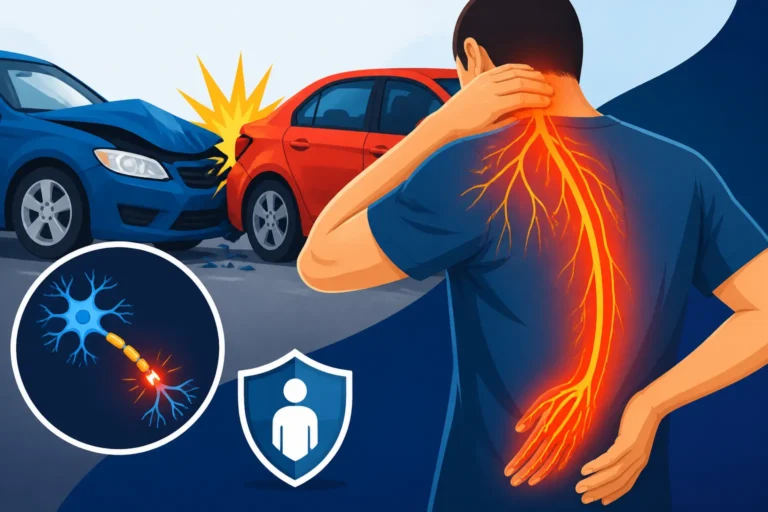
Nerve damage from a car accident causes pain, numbness, and weakness by disrupting sensory, motor, and autonomic nerves.

Chronic pain lasting beyond three to six months after a car accident impairs sleep, requiring proper diagnosis, treatment, and injury claims.

Car accident emotional distress and PTSD symptoms, recovery steps, and ways to include psychological trauma in accident claims.