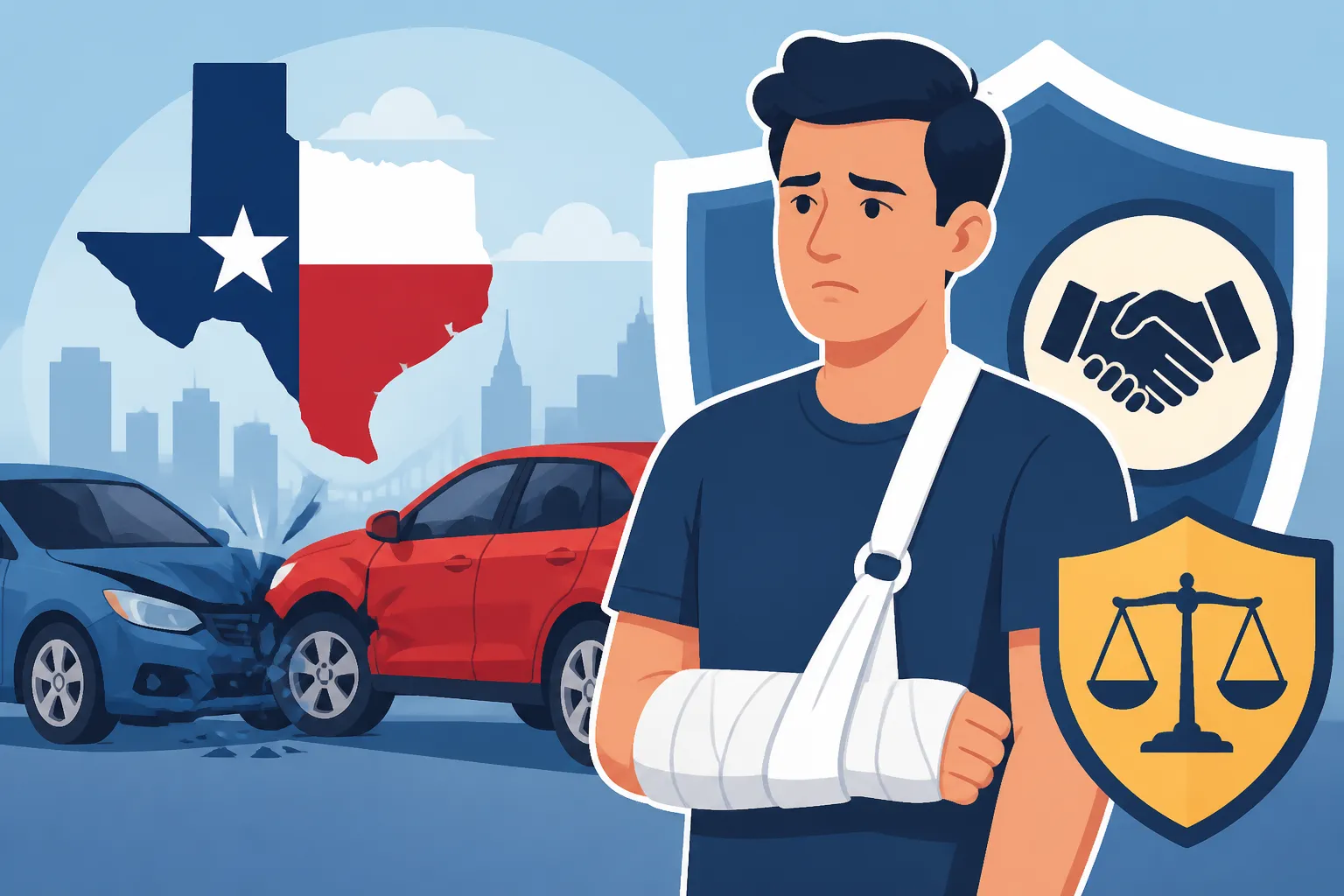
Claiming Compensation for Broken Arm in Texas
Getting into a car accident is jarring enough, but discovering you've suffered a broken arm on top of everything else can feel like a devastating blow. The immediate pain, the disruption to your daily life, and the worry about medical bills and missed work can be overwhelming. This guide will walk you through the specifics of claiming compensation for a broken arm after a car accident in Texas, helping you understand your rights and the steps you need to take to protect your recovery.
Understanding Broken Arm Injuries from Car Accidents in Texas
A broken arm isn't just a minor inconvenience; it's a significant injury that can have a profound impact on your life. When you're involved in a car accident, the force of impact can easily lead to various types of arm fractures, from the wrist to the shoulder. Understanding the nature of your injury and its potential consequences is the first step in building a strong compensation claim.
Common Types of Arm Fractures Sustained in Collisions
The human arm is a complex structure made up of three main bones: the humerus (upper arm), radius, and ulna (forearm). Any of these bones, or even smaller bones in the wrist and hand, can fracture during a car accident. The way an accident happens often dictates the type of fracture. For instance, if you brace for impact with your hands on the steering wheel, you might suffer a distal radius fracture (a break near the wrist). If your arm is flung against the door or dashboard, you could experience a mid-shaft fracture of the humerus.
Some common types of arm fractures include:
- Closed (Simple) Fractures: The bone breaks, but the skin remains intact. While "simple," these can still be very painful and require extensive healing.
- Open (Compound) Fractures: The broken bone pierces through the skin, or a deep wound exposes the bone. These are severe, carry a high risk of infection, and often require immediate surgery.
- Comminuted Fractures: The bone shatters into three or more pieces. These complex fractures are often the result of high-impact collisions and can be challenging to treat, potentially leading to long-term issues.
- Greenstick Fractures: A partial fracture where the bone bends and breaks only on one side. More common in children, whose bones are more flexible, but can occur in adults too.
- Spiral Fractures: The break spirals around the bone, often caused by a twisting injury. This can happen if your arm is twisted violently during the force of impact.
- Avulsion Fractures: A small piece of bone attached to a tendon or ligament is pulled away from the main bone. This is particularly painful and can affect joint stability.
Each type of fracture comes with its own set of challenges, treatment protocols, and recovery timelines, all of which influence the potential value of your claim.
Immediate and Long-Term Impact on Your Life
Beyond the initial shock and pain, a broken arm can severely limit your ability to perform daily tasks, work, and even enjoy hobbies. The recovery journey can be lengthy and fraught with complications. Immediately after the accident, you might face emergency room visits, setting of the bone (reduction), casting or splinting, and potentially surgery to insert pins, plates, or screws.
In the long term, the impact can be even more substantial:
- Pain and Discomfort: Even after the bone heals, many individuals experience lingering pain, stiffness, or discomfort, especially in colder weather or during certain activities. Chronic pain after a car accident is a real concern for many.
- Loss of Function and Mobility: Depending on the severity and location of the break, you might experience reduced range of motion, weakness, or even permanent disability in the affected arm. Physical therapy will be crucial, but full recovery isn't always guaranteed.
- Emotional and Psychological Distress: The inability to perform basic tasks, reliance on others, and the frustration of a slow recovery can lead to anxiety, depression, and even post-traumatic stress disorder (PTSD and Emotional Distress After a Car Accident).
- Financial Strain: Medical bills pile up quickly, from doctor visits and physical therapy to prescription medications and potentially multiple surgeries. Add to that the lost wages from being unable to work, and the financial burden can become immense.
- Impact on Hobbies and Daily Life: Imagine trying to cook, clean, drive, dress yourself, or even pick up your child with a broken arm. Hobbies like gardening, sports, or playing an instrument become impossible. This loss of enjoyment of life is a significant non-economic damage in a personal injury claim.
It's critical to document every aspect of how your broken arm impacts your life, both big and small, as this evidence will be vital for your compensation claim.
The Road to Compensation: Texas Specifics for a Broken Arm Claim
Texas operates under an "at-fault" insurance system, which means that the person responsible for causing the car accident is also responsible for the damages, including your medical bills and other losses from a broken arm. However, proving fault and navigating the legal landscape can be complex, especially with Texas's specific rules on shared responsibility.
Establishing Fault in an At-Fault State
In Texas, to receive compensation, you generally need to prove that the other driver's negligence caused your accident and subsequent broken arm. This isn't always straightforward. Insurance companies will often try to minimize their payout by shifting some or all of the blame to you.
Key elements in establishing fault include:
- Police Reports: A police report is often one of the first pieces of evidence gathered. While not always definitive, it can provide an objective account of the accident scene, witness statements, and the responding officer's initial assessment of who was at fault. Does a Police Report Determine Who Pays? This article delves into the nuances.
- Witness Statements: Independent witnesses who saw the accident can offer crucial testimony to support your claim. Their unbiased accounts can counteract any attempts by the other driver or their insurance company to dispute fault.
- Accident Reconstruction: In severe or complex cases, accident reconstruction specialists might be brought in to analyze skid marks, vehicle damage, debris patterns, and other physical evidence to determine the precise sequence of events leading to the collision. This scientific analysis can be invaluable for proving fault.
- Photos and Videos: Any photos or videos you or witnesses took at the accident scene – of vehicle positions, damage, road conditions, and visible injuries – can be powerful evidence. Dashcam footage or surveillance video from nearby businesses can also be game-changers.
Texas uses a modified comparative negligence rule, sometimes referred to as the "51% bar" rule. This means that if you are found to be 51% or more at fault for the accident, you cannot recover any damages from the other driver. If you are found to be less than 51% at fault, your compensation will be reduced by your percentage of fault. For example, if you're awarded $100,000 for your broken arm but are found 20% at fault, you would only receive $80,000. Understanding Modified Comparative Negligence (50% vs 51% Bar) is crucial here.
Gathering and Documenting Critical Evidence
Immediately after the accident, your priority is your health. However, as soon as you are able, it's vital to begin gathering evidence. The stronger your evidence, the more difficult it will be for insurance companies to dispute your claim.
Here's a breakdown of critical evidence for a broken arm claim:
- Medical Records and Bills: This is paramount. Every doctor's visit, X-ray, MRI, surgery report, physical therapy session, and prescription related to your broken arm needs to be documented. These records not only prove your injury but also establish the necessity and cost of your treatment. Be diligent about attending all appointments and following your doctor's orders.
- Proof of Lost Wages: If your broken arm prevents you from working, you'll need documentation of lost income. This includes pay stubs, employment contracts, a letter from your employer confirming your inability to work and your missed hours/wages, and tax returns for self-employed individuals. Remember to also consider Lost Earning Capacity vs Lost Wages if your injury has long-term effects on your ability to earn.
- Property Damage Estimates: While not directly related to your broken arm, documentation of the damage to your vehicle, including repair estimates or total loss statements, can help establish the severity of the impact, which in turn supports the likelihood of a serious injury.
- Personal Journal/Pain Log: Keeping a detailed journal where you document your daily pain levels, limitations, emotional distress, and how the injury affects your ability to perform daily tasks and hobbies can be incredibly powerful. This personal account can put a human face on your suffering and help quantify non-economic damages.
- Photos and Videos: As mentioned, photos of the accident scene, vehicle damage, and importantly, photos of your broken arm at various stages of recovery (e.g., in a cast, after surgery, during therapy) provide visual proof of your injury and its impact.
The more thoroughly you document everything, the better positioned you will be to claim the full compensation you deserve.
Calculating Your Broken Arm Compensation
When it comes to a car accident settlement, there isn't a simple "average" for a broken arm because every case is unique. The compensation you can claim for a broken arm in Texas will depend on the severity of your injury, the extent of your losses, and the specifics of your accident. Generally, your claim will seek to recover both economic and non-economic damages.
Economic Damages: The Tangible Costs
Economic damages are the calculable, out-of-pocket expenses you incur due to your broken arm. These are often easier to quantify as they come with receipts, bills, and pay stubs.
- Medical Expenses: This is usually the largest component of economic damages for a broken arm. It includes everything from emergency room visits, ambulance rides, doctor consultations, X-rays, MRIs, surgeries, hospitalization, physical therapy, prescription medications, medical devices (slings, braces), and even future medical care if your injury requires ongoing treatment.
- Lost Wages and Earning Capacity: If your broken arm sidelined you from work, you can claim the income you lost during your recovery. For those with jobs requiring significant arm use (e.g., construction workers, nurses, hairdressers), a broken arm can mean months of lost income. If your injury results in permanent limitations that reduce your ability to earn money in the future, you can also claim for lost earning capacity.
- Property Damage: While distinct from your personal injury, the cost to repair or replace your vehicle is also an economic damage you can recover through the same claim process.
- Other Out-of-Pocket Expenses: This category can include a wide range of costs: transportation to medical appointments, hiring help for household tasks you can no longer perform (cleaning, childcare, yard work), assistive devices, and even modifications to your home if your injury creates a long-term disability.
A detailed record of all these expenses is absolutely essential. Keeping a spreadsheet or a dedicated folder for all bills and receipts will make this process much smoother.
Non-Economic Damages: The Intangible Toll
Non-economic damages are harder to put a dollar amount on because they relate to the subjective impact of your injury on your quality of life. However, they are a very real and significant part of any personal injury claim, especially for a painful and debilitating injury like a broken arm.
- Pain and Suffering: This is the physical pain and discomfort you experience from the moment of the accident through your recovery and potentially long-term. A broken arm can be excruciating, and the recovery process, including physical therapy, can also be painful. How the Pain and Suffering Multiplier Works (1.5x–5x) explains how these are often calculated.
- Emotional Distress: Dealing with a broken arm can cause significant emotional anguish, including anxiety, fear, frustration, depression, and even anger. The stress of medical procedures, financial worries, and the inability to live life as you once did can take a severe emotional toll.
- Loss of Enjoyment of Life: This compensates you for the inability to participate in activities, hobbies, and social engagements that you enjoyed before the accident. If you can no longer play sports, garden, knit, or even hold your child comfortably due to your broken arm, that is a loss of enjoyment.
- Disfigurement and Impairment: If your broken arm leaves you with visible scarring from surgery, a noticeable deformity, or a permanent loss of function, you can claim compensation for disfigurement and permanent impairment.
Insurance companies often use formulas, like the multiplier method, to estimate non-economic damages based on the severity of your economic damages. However, your personal story, detailed in a pain journal, and testimony from family and friends can significantly strengthen this aspect of your claim.
Here's a simplified table illustrating potential damages for a broken arm claim:
| Damage Category | Description | Documentation Needed |
|---|---|---|
| Economic Damages | ||
| Medical Expenses | ER, doctors, surgery, therapy, prescriptions | Bills, receipts, medical records |
| Lost Wages | Income lost due to inability to work | Pay stubs, employer letter, tax returns |
| Future Medical Care | Anticipated ongoing treatment (therapy, follow-ups) | Doctor's prognosis, treatment plans, expert testimony |
| Property Damage | Vehicle repair/replacement | Repair estimates, photos, total loss statement |
| Other Expenses | Transportation, home care, assistive devices | Receipts, mileage logs, invoices |
| Non-Economic Damages | ||
| Pain & Suffering | Physical pain, discomfort | Medical records, pain journal, doctor's notes |
| Emotional Distress | Anxiety, depression, fear, frustration | Therapy records, personal journal, witness statements |
| Loss of Enjoyment | Inability to participate in hobbies/activities | Personal journal, statements from family/friends |
| Disfigurement | Scarring, visible deformity, permanent impairment | Photos, medical records, expert testimony |
Remember, the value of your claim will be heavily influenced by how thoroughly you document these damages and how well you can present your case.
Navigating the Claims Process for a Broken Arm
Dealing with a broken arm is enough of a challenge without adding the stress of an insurance claim. The process can be confusing, time-consuming, and emotionally draining. Knowing what to expect and how to protect your rights is essential for a successful outcome.
Dealing with Insurance Companies After a Broken Arm
After a car accident in Texas, you'll likely be dealing with your own insurance company and the at-fault driver's insurance company. It's crucial to approach these interactions with caution and an understanding of their objectives. Insurance companies are businesses, and their primary goal is often to pay out as little as possible.
Here are some key considerations:
- Initial Contact: Report the accident to your own insurance company promptly. However, when the other driver's insurance adjuster calls, be very careful. You are not obligated to give them a recorded statement. Do You Have to Give a Recorded Statement? Generally, it's best to consult with a lawyer before providing any detailed accounts, as adjusters are trained to ask questions that might elicit responses damaging to your claim.
- Avoid Admitting Fault: Never admit fault, apologize, or make statements that could be misconstrued as taking responsibility for the accident, even if you think you might have been partly to blame. Let the evidence speak for itself. What Is an Admission of Fault (and How to Avoid It)?
- Don't Rush Settlement: Adjusters might try to offer a quick, lowball settlement, especially if they know you're dealing with immediate medical bills and financial stress. This initial offer is almost always far less than your claim is truly worth, especially for a serious injury like a broken arm, whose full impact might not be known for months. Do not accept the first offer. You can learn more about How to Deal With a Lowball Insurance Offer.
- Be Mindful of Medical Records: Insurance companies will ask for access to your medical records. While they are entitled to records related to the accident, they might try to access your entire medical history to find pre-existing conditions they can blame for your pain. Be cautious and ensure only relevant records are shared.
It's common for adjusters to seem friendly and helpful, but always remember they represent the insurance company's interests, not yours.
When to Consider Hiring a Car Accident Lawyer in Texas
While you can technically try to handle a car accident claim yourself, for a broken arm injury, it's almost always in your best interest to hire an experienced car accident lawyer. A broken arm is not a "minor" injury; it typically involves significant medical treatment, potential lost wages, and considerable pain and suffering.
Here are strong indicators that you should seek legal counsel:
- Serious Injuries: A broken arm definitely falls into this category. The more severe your injuries, the more complex your claim will be to value and negotiate.
- Disputed Fault: If the other driver's insurance company is trying to shift blame to you or deny fault altogether, a lawyer can fight on your behalf to establish clear liability. This is especially true in Texas, with its modified comparative negligence rules.
- Complex Medical Treatment: If your broken arm required surgery, involves extensive physical therapy, or has long-term complications, a lawyer can ensure all future medical costs are properly accounted for in your claim.
- Significant Lost Wages: If your injury has prevented you from working for an extended period or threatens your future earning capacity, a lawyer can help calculate and prove these substantial losses.
- Lowball Settlement Offers: If the insurance company makes an inadequate offer, a lawyer has the negotiation skills and legal leverage to demand a fair settlement.
- Dealing with Adjusters: Lawyers are experts at navigating the tactics used by insurance adjusters and protecting you from saying or doing anything that could hurt your claim.
- Statute of Limitations: Texas has a two-year statute of limitations for most personal injury claims. This means you generally have two years from the date of the accident to file a lawsuit. A lawyer ensures all deadlines are met. You can find out more by reading Statute of Limitations for Car Accidents in Texas.
A lawyer will handle all communications with insurance companies, gather necessary evidence, negotiate on your behalf, and, if necessary, represent you in court. They work on a contingency fee basis, meaning they only get paid if you win your case, so there are no upfront costs to you. This makes legal representation accessible even if you're facing financial hardship due to your injury. Choosing a lawyer means you can focus on your recovery while someone else fights for your rights.
Disclaimer
Please remember that this article provides general information and guidance regarding car accident claims for a broken arm in Texas. It is not a substitute for professional legal advice. Every car accident case is unique, and the information presented here may not apply to your specific situation. It is highly recommended to consult with a qualified personal injury attorney in Texas to discuss the details of your case and receive personalized legal counsel.