Claiming Compensation for Herniated Disc in California
Dealing with the aftermath of a car accident is already incredibly stressful, but discovering you've sustained a herniated disc can throw your life into complete disarray. The persistent pain, numbness, and weakness can make everyday tasks feel impossible, leaving you worried about your health, your job, and how you're going to cover all the medical bills. This comprehensive guide will walk you through everything you need to know about claiming compensation for a herniated disc in California, helping you understand your rights and the steps to take to secure the financial support you need.
Understanding Herniated Discs After a Car Accident
It's common for people to feel overwhelmed after a car accident, especially when the initial shock wears off and new pains begin to surface. A herniated disc is one of those injuries that can be sneaky, sometimes not fully revealing itself until days or even weeks after the incident. Understanding what it is and how it manifests is the first step toward building a strong claim.
What Exactly is a Herniated Disc?
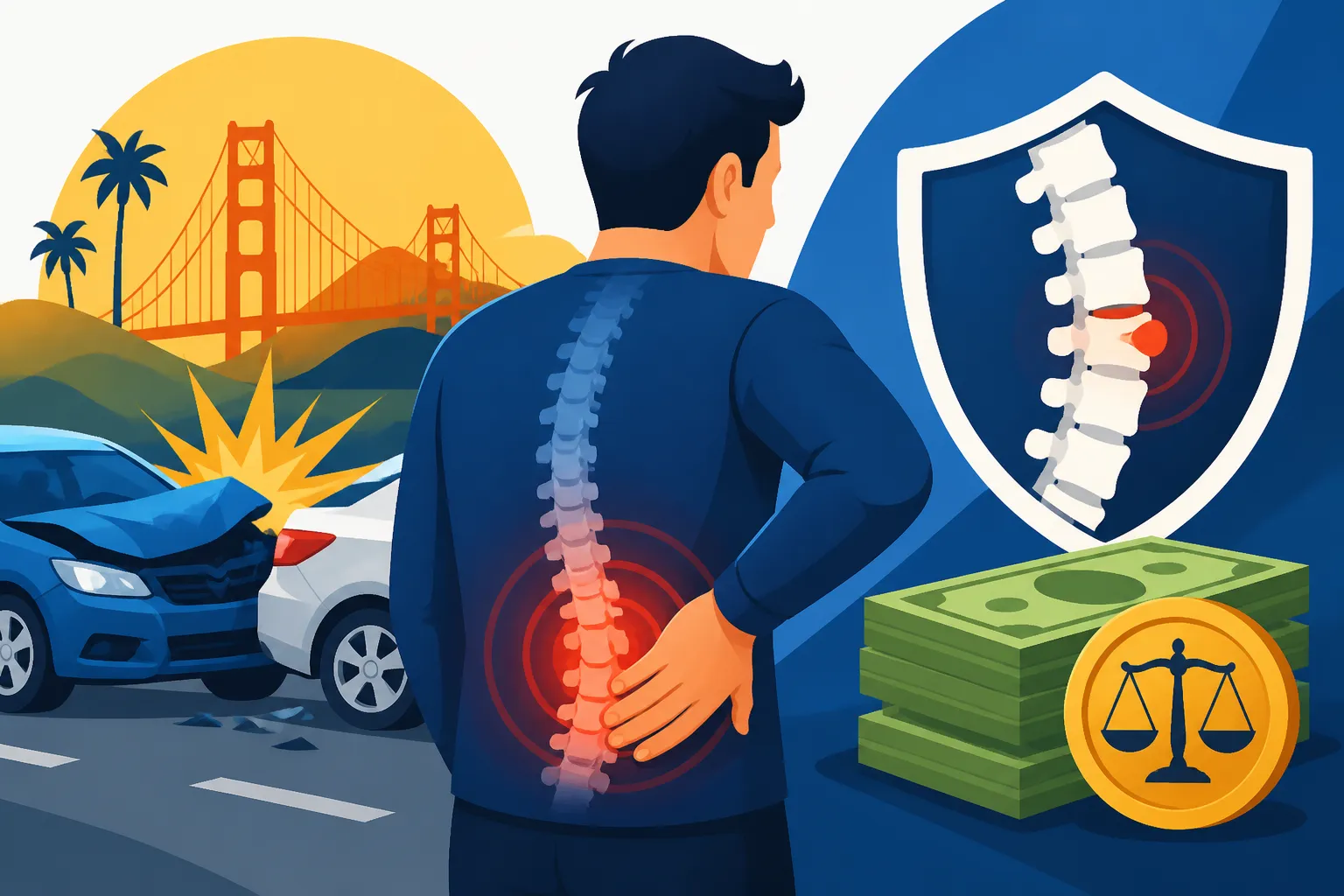
Imagine your spine as a stack of bony vertebrae, and between each one, there's a soft, rubbery disc acting as a cushion. These discs have a tough outer layer and a gel-like center. A herniated disc, often called a slipped or ruptured disc, occurs when some of that softer, jelly-like material pushes out through a tear in the tougher outer layer. This can happen in any part of your spine, but it's most common in the lower back (lumbar spine) and the neck (cervical spine) – areas particularly vulnerable in the jarring impact of a car accident.
When a car accident happens, the sudden, forceful impact can twist your body violently or cause a whiplash effect, placing immense pressure on your spinal discs. This rapid, uncontrolled movement can be enough to cause the outer wall of a disc to tear, allowing the inner material to bulge or protrude. Think of it like a jelly donut being squeezed too hard, and the jelly starts to ooze out. This escaped material can then press on nearby nerves, leading to a cascade of painful and debilitating symptoms. The mechanism of injury is usually a direct result of the kinetic energy transfer during a collision, particularly in rear-end or side-impact accidents where the body is violently propelled or twisted.
Common Symptoms and Delayed Onset
One of the most frustrating aspects of a herniated disc, and a common concern for people after an accident, is that the symptoms aren't always immediate. You might feel a little stiff or sore right after the crash, but the truly debilitating nerve pain, numbness, or weakness might not appear until hours or even days later. This "delayed onset" can make you question if the injury is truly related to the accident, and it's a tactic insurance companies often try to exploit. They might argue that if you weren't screaming in pain at the scene, the injury isn't severe or wasn't caused by the crash. This is simply not true.
Common symptoms of a herniated disc, especially when the disc material presses on a nerve, include:
- Sharp, shooting pain: Often radiating down an arm or leg, depending on the location of the herniation. In the lower back, this can manifest as sciatica, with pain extending into the buttock, thigh, and calf. In the neck, it might shoot down to the shoulder, arm, and hand.
- Numbness or tingling: A "pins and needles" sensation in the affected limb, often accompanying the pain.
- Muscle weakness: Difficulty lifting or holding objects, or stumbling due to weakness in the leg.
- Loss of reflexes: A doctor might note diminished reflexes during an examination.
- Burning sensation: A persistent, uncomfortable feeling in the affected area.
Because of this potential for delayed symptoms, it's absolutely vital to seek medical attention as soon as possible after any car accident, even if you feel fine. A doctor can perform initial assessments and recommend monitoring, establishing a crucial link between the accident and any subsequent injuries. You can learn more about why seeking prompt medical care is so important in our guide, "Why You Should See a Doctor After a Car Accident".
Diagnosing a Herniated Disc
If you suspect you have a herniated disc, getting a proper diagnosis is crucial, not just for your health but for your compensation claim. This isn't an injury that can be seen from the outside, so a doctor needs to employ specific diagnostic tools.
The diagnostic process typically begins with a thorough physical examination. Your doctor will assess your reflexes, muscle strength, and sensation, and will ask you to perform certain movements to identify the source of your pain. They'll also review your medical history and discuss the circumstances of your car accident in detail.
While a physical exam can point to a herniated disc, definitive diagnosis usually requires imaging. The gold standard for identifying disc herniations is a Magnetic Resonance Imaging (MRI) scan. An MRI uses powerful magnets and radio waves to create detailed images of your soft tissues, including your spinal discs and nerves. It can clearly show if a disc has bulged or ruptured and if it's compressing any nerves. In some cases, a Computed Tomography (CT) scan might be used, though it's less effective than an MRI for soft tissue injuries. Occasionally, nerve conduction studies or electromyography (EMG) might be ordered to assess nerve damage and determine which specific nerves are being affected. Documenting these diagnostic findings is paramount to proving your injuries in a car accident claim. Without clear medical evidence, it becomes much harder to link your condition directly to the crash.
The Impact of a Herniated Disc on Your Life and Claim
A herniated disc isn't just about pain; it can profoundly alter your daily life and incur significant costs. When you're seeking compensation, it's essential to understand and document the full scope of this impact.
Medical Treatments and Recovery Journey
The treatment path for a herniated disc can be long, costly, and vary greatly depending on the severity of the herniation and nerve compression. Most doctors will start with conservative, non-surgical approaches. This typically includes a combination of:
- Rest: Limiting activities that aggravate the pain.
- Medication: Over-the-counter pain relievers, muscle relaxers, anti-inflammatories, or prescription painkillers for more severe pain.
- Physical Therapy: This is often a cornerstone of recovery. A physical therapist will guide you through exercises to strengthen your back and core muscles, improve flexibility, and reduce pressure on the nerve. They might also use techniques like heat, ice, ultrasound, or electrical stimulation.
- Epidural Steroid Injections: These injections deliver powerful anti-inflammatory medication directly to the area around the affected nerve, providing temporary pain relief and reducing swelling.
If conservative treatments don't provide sufficient relief after several weeks or months, or if you experience progressive neurological deficits (like increasing weakness or numbness), surgery might become an option. Common surgical procedures include:
- Microdiscectomy: This is a minimally invasive procedure where a small portion of the disc that is pressing on the nerve is removed. Recovery typically involves a few weeks to a few months of physical therapy.
- Laminectomy: This involves removing a part of the vertebral bone (the lamina) to create more space for the nerves.
- Spinal Fusion: In more severe or chronic cases, especially if there's instability, two or more vertebrae might be fused together. This is a major surgery with a much longer recovery period, often involving months of limited activity and intensive rehabilitation.
The costs associated with these treatments can be astronomical, from doctor visits and physical therapy sessions to expensive MRI scans and potentially life-altering surgeries. All of these medical expenses become a crucial part of your claim for damages.
Long-Term Consequences and Lifestyle Changes
Unfortunately, a herniated disc can have far-reaching effects beyond the initial pain and treatment. Many individuals experience chronic pain, which can become a constant, debilitating presence in their lives. This can lead to:
- Reduced Mobility: Simple movements like bending, lifting, or twisting can become excruciating, severely limiting your ability to perform daily tasks, hobbies, and even care for yourself. Imagine struggling to pick up your child, carry groceries, or even sit comfortably at a desk.
- Work Limitations: Depending on your job, a herniated disc can make it impossible to continue your previous work. If your job involves physical labor, prolonged sitting, or heavy lifting, you might face significant time off work, reduced earning capacity, or even the need to retrain for a different profession. This loss of income, both present and future, is a critical component of your compensation claim. You can read more about how "Lost Wages Are Calculated in a Settlement" in our detailed guide.
- Impact on Mental Health: Living with chronic pain and the inability to enjoy activities you once loved can take a serious toll on your mental and emotional well-being. It's not uncommon for individuals with herniated discs to experience depression, anxiety, and feelings of isolation. These non-economic damages, often categorized as "pain and suffering," are very real and compensable.
- Loss of Enjoyment of Life: From playing sports to gardening, from going for walks to simply having a restful night's sleep, a herniated disc can strip away many of the simple pleasures that make life enjoyable. This loss is a tangible impact that needs to be communicated clearly in your claim.
Proving the Connection to Your Car Accident
Establishing a clear link between your herniated disc and the car accident is perhaps the most critical aspect of your compensation claim. Insurance companies are notorious for trying to downplay injuries or argue they're pre-existing. This is why meticulous documentation and consistent medical care are so vital.
Here's how to build a strong connection:
- Immediate Medical Attention: As mentioned, seeing a doctor immediately after the accident creates an undeniable timeline. Even if your symptoms are delayed, the initial visit establishes that you sought care due to the crash. Our guide "What to Do After a Car Accident: Step-by-Step (2027)" offers comprehensive advice on this.
- Consistent Treatment: Following your doctor's recommendations, attending all physical therapy appointments, taking prescribed medications, and undergoing necessary diagnostic tests (like MRIs) shows a commitment to your recovery and strengthens the link between the injury and the accident. Gaps in treatment can be used by the insurance company to argue your injury wasn't severe or wasn't related to the accident.
- Detailed Medical Records: Every single doctor's note, physical therapy record, diagnostic report, and bill is a piece of evidence. These records should consistently show your diagnosis, symptoms, and the progression of your treatment. Your doctor's opinion, documented in these records, is key to proving causation.
- Expert Testimony: In complex cases, especially those involving significant or long-term herniated disc injuries, your attorney might bring in medical experts. These experts can provide professional opinions on how the car accident directly caused or aggravated your herniated disc, explaining the biomechanics of the injury and the prognosis for your recovery. They can also counter any arguments from the defense's medical examiners.
Navigating a Herniated Disc Claim in California
California has specific laws and regulations that will impact your herniated disc claim. Understanding these is crucial for a successful outcome.
California's Fault System and Your Claim
Unlike some "no-fault" states, California operates under a pure comparative negligence system. What does this mean for your herniated disc claim? It means that if you are found to be partially at fault for the accident, your compensation will be reduced by your percentage of fault. For instance, if a jury determines your herniated disc damages are $100,000, but you were 20% at fault for the collision, you would only receive $80,000.
This system is important because insurance companies will almost always try to assign some degree of fault to you, even if it's minor, to reduce their payout. For example, they might argue you were driving too fast for conditions, or that your brake lights weren't working properly, even in a clear-cut rear-end collision. Understanding "Comparative vs Contributory Negligence Explained" can shed more light on how different states handle fault. This is also where having strong evidence to prove the other driver's fault becomes essential. Our guide on "How Fault Is Determined in a Car Accident" can provide further insight.
Key Elements of Your Compensation Claim
When you're claiming compensation for a herniated disc in California, you're essentially seeking to recover for all the losses and harms you've suffered due to the other driver's negligence. These damages typically fall into two main categories: economic and non-economic.
-
Economic Damages (Special Damages): These are quantifiable financial losses that have a clear monetary value. For a herniated disc, these can include:
- Medical Bills: Past and future costs for doctor visits, specialists (orthopedists, neurologists), physical therapy, medications, injections, diagnostic tests (MRI, CT scans), and any potential surgeries. This can also include assistive devices like braces or canes.
- Lost Wages: Income you've lost due to time off work for appointments, recovery, or inability to perform your job. This also includes lost bonuses, commissions, and other employment benefits.
- Loss of Earning Capacity: If your herniated disc permanently impacts your ability to work at your previous capacity or requires you to take a lower-paying job, you can claim for future lost income.
- Out-of-Pocket Expenses: Travel costs to medical appointments, childcare if you're unable to care for your children due to your injury, household help you needed to hire, and other accident-related expenses.
- Property Damage: The cost to repair or replace your vehicle.
-
Non-Economic Damages (General Damages): These are more subjective and compensate you for the intangible harms of your injury. While harder to quantify, they are often a significant portion of a herniated disc settlement.
- Pain and Suffering: This is compensation for the physical pain and discomfort you've endured and will continue to endure. It's a broad category that covers acute pain, chronic pain, and the general discomfort of living with an injury.
- Emotional Distress: The psychological impact of the injury, including anxiety, depression, fear, frustration, and sleep disturbances.
- Loss of Enjoyment of Life: As discussed earlier, this compensates you for your inability to participate in hobbies, recreational activities, or social events that you enjoyed before the accident.
- Loss of Consortium: In some cases, your spouse might be able to claim for the loss of companionship, affection, and services due to your injuries.
Understanding "Economic vs Non-Economic Damages Explained" is fundamental to building a comprehensive claim. The severity of your herniated disc, the extent of nerve compression, and the long-term prognosis will all heavily influence the value of your non-economic damages. Our guide "How Car Accident Settlements Are Calculated" provides more details on the valuation process.
The Role of Documentation and Medical Records
If you take one thing away from this guide, let it be this: document everything. For a herniated disc claim in California, your medical records are your strongest allies. They are the objective proof of your injury, its severity, the treatment you've received, and the associated costs.
Here's a checklist of documentation you should be meticulously keeping:
- Medical Records: This includes every single doctor's visit note, specialist consultations (chiropractor, physical therapist, orthopedist, neurologist), hospital records, emergency room reports, surgical reports, and rehabilitation notes. Make sure these records clearly state the diagnosis of a herniated disc and explicitly link it to the car accident, if possible.
- Diagnostic Imaging Reports: The official reports from your MRI, CT scans, or X-rays, along with the actual images themselves.
- Bills and Receipts: Keep every bill related to your medical treatment, including co-pays, prescription costs, and any out-of-pocket expenses for medical supplies or equipment.
- Medication Logs: A list of all medications you've been prescribed or taken for your pain, along with their costs.
- Lost Wage Documentation: Pay stubs, employer statements confirming missed workdays, and tax returns to prove your income. If you're self-employed, profit and loss statements.
- Personal Journal: While not a "medical record," a detailed journal describing your daily pain levels, limitations, emotional struggles, and how the injury impacts your life can be incredibly powerful in illustrating your pain and suffering.
- Accident Report: The official police report, which will document the accident details and often assign initial fault. Our article, "Police Reports and Car Accident Fault," explains its significance.
- Photographs and Videos: Pictures of the accident scene, vehicle damage, and any visible injuries.
The more comprehensive and organized your documentation, the harder it will be for the insurance company to dispute the legitimacy or severity of your herniated disc. This meticulous approach is how you effectively "Prove Injuries in a Car Accident Claim".
Building a Strong Claim for a Herniated Disc
Successfully claiming compensation for a herniated disc in California requires a proactive and strategic approach. It's not just about waiting for things to happen; it's about making informed choices every step of the way.
Immediate Steps After the Accident
While some of these steps might seem obvious, they are absolutely critical, especially when a serious injury like a herniated disc is involved.
- Ensure Safety and Call 911: First and foremost, get yourself and others to a safe location if possible. Call emergency services to report the accident and request medical assistance if anyone is injured. Even if you feel okay, reporting the accident creates an official record.
- Exchange Information: Get the other driver's name, contact information, insurance details, and vehicle information.
- Document the Scene: Take photos and videos of everything: vehicle damage from multiple angles, the accident scene, road conditions, traffic signs, and any visible injuries. This visual evidence can be invaluable.
- Seek Medical Attention Immediately: As we've emphasized, this is paramount. Go to the emergency room, an urgent care clinic, or your family doctor. Explain all your symptoms, no matter how minor they seem, and clearly state that they resulted from the car accident. This establishes a direct causal link and initiates your medical record-keeping. Remember, some injuries, like a herniated disc, can have "Delayed Injury Symptoms After a Car Accident".
- Report the Accident to Your Insurance Company: Even if you believe the other driver is at fault, you should notify your own insurance company promptly. You don't need to give a detailed statement or admit fault; simply report that an accident occurred.
Dealing with Insurance Companies
Navigating insurance companies after an accident, especially with a significant injury like a herniated disc, can feel like a daunting battle. They are businesses, and their primary goal is to minimize payouts.
- Be Cautious with Statements: The other driver's insurance adjuster will likely contact you quickly. Be polite, but remember, anything you say can and will be used against you. Do not give a recorded statement without consulting a lawyer. Adjusters are trained to ask leading questions that might trick you into admitting partial fault or downplaying your injuries.
- Avoid Admitting Fault: Never admit fault or apologize at the scene of the accident or to insurance adjusters. Fault determination is a complex legal issue, and your perception of the accident might not align with the legal reality. Our article "What Is an Admission of Fault (and How to Avoid It)?" offers critical advice here.
- Don't Settle Prematurely: Insurance companies often offer quick, lowball settlements, especially if they know you have mounting medical bills. For a herniated disc, the full extent of your injury and future medical needs might not be clear for months, or even longer. Accepting an early offer means you waive your right to seek further compensation, even if your condition worsens or requires surgery down the line. It's rare for the first settlement offer to be fair.
- Know Your Rights: An insurance adjuster doesn't have your best interests at heart. They will scrutinize your medical records, looking for pre-existing conditions or gaps in treatment to deny or reduce your claim. They might also try to argue that your pain is exaggerated or that your injury isn't severe enough to warrant extensive compensation.
When to Consider Legal Representation
For a herniated disc injury in California, the decision of whether to hire an attorney is often less a question of "if" and more a question of "when." Given the complexity, the potential for high medical costs, and the long-term impact on your life, having experienced legal representation is almost always beneficial.
Here's why a car accident lawyer specializing in personal injury claims can make a significant difference for your herniated disc case:
- Expert Navigation of California Law: An attorney understands California's pure comparative negligence rules and how to argue against unwarranted fault assignments. They know the ins and outs of personal injury law and how to apply it to your specific situation.
- Proving Negligence and Causation: Lawyers have the resources to investigate the accident, gather evidence (police reports, witness statements, accident reconstruction), and build a compelling case that clearly demonstrates the other driver's negligence and how it directly caused your herniated disc.
- Valuing Your Claim Accurately: This is where a lawyer truly shines. They can accurately assess both your economic damages (current and future medical bills, lost wages, loss of earning capacity) and your non-economic damages (pain and suffering, emotional distress, loss of enjoyment of life). They work with medical professionals and financial experts to ensure every aspect of your loss is accounted for, preventing you from accepting a settlement that undervalues your suffering.
- Dealing with Insurance Companies: An attorney will handle all communication, negotiation, and paperwork with the insurance adjusters. This protects you from saying anything that could harm your claim and ensures that all legal deadlines are met. They know how to counter lowball offers and fight for the maximum possible compensation.
- Trial Experience: While most car accident claims settle out of court, if the insurance company refuses to offer a fair settlement, your lawyer can prepare your case for trial. Their willingness and ability to go to court can often push insurance companies to make a better offer.
For a serious injury like a herniated disc, the question is not "Do You Need a Lawyer for a Car Accident? (2027)" but rather, when is the best time to engage one. Given the complexities, the sooner you involve an attorney, the better equipped you'll be to protect your rights and maximize your recovery. They can advise you from the very beginning, ensuring you take the correct steps to build a strong claim. Our guide on "When to Hire a Car Accident Lawyer" further explores this crucial decision.
Typical Damages in a Herniated Disc Claim
When evaluating a herniated disc claim in California, various factors contribute to the overall compensation. This table provides a general overview of common types of damages:
| Damage Category | Description | Examples for Herniated Disc |
|---|---|---|
| Economic Damages | Tangible financial losses with calculable values. | Emergency room visits, diagnostic MRI/CT scans, physical therapy, chiropractic care, prescription medications, epidural injections, microdiscectomy surgery, spinal fusion surgery, ongoing rehabilitation. |
| Medical Expenses | Costs for medical treatment, past and future. | Wages lost from missed work, reduced income due to limitations, long-term impact on career progression, need for retraining. |
| Lost Wages & Earning | Current and future income loss due to injury. | Copayments for treatments, travel to appointments, cost of braces or assistive devices, hiring household help or childcare. |
| Out-of-Pocket Expenses | Other verifiable costs incurred due to the injury. | |
| Non-Economic Damages | Intangible losses related to physical and emotional suffering. | Chronic back/neck pain, radiating nerve pain, numbness, stiffness, inability to sleep, constant discomfort. |
| Pain and Suffering | Physical pain and discomfort experienced. | Anxiety, depression, PTSD, frustration, fear of future injury or surgery. |
| Emotional Distress | Psychological impact of the injury and its consequences. | Inability to play sports, enjoy hobbies, care for children, participate in social events, travel. |
| Loss of Enjoyment | Reduction in quality of life due to inability to engage in activities. | Strain on marital relations, loss of intimacy, loss of companionship. |
| Loss of Consortium | Impact on relationship with spouse (claimed by spouse). |
This table provides a general framework; the specific value of a claim for "Claiming Compensation for Herniated Disc in California" will depend on the unique circumstances and severity of each individual's injury and impact.
Disclaimer
Please remember that this article provides general information and insights into car accident claims and herniated disc injuries in California. It is not intended as legal advice, and reading it does not create an attorney-client relationship. Every car accident case is unique, and the information presented here may not apply to your specific situation. For personalized legal guidance regarding your car accident and injury claim, it is essential to consult with a qualified personal injury attorney in California.