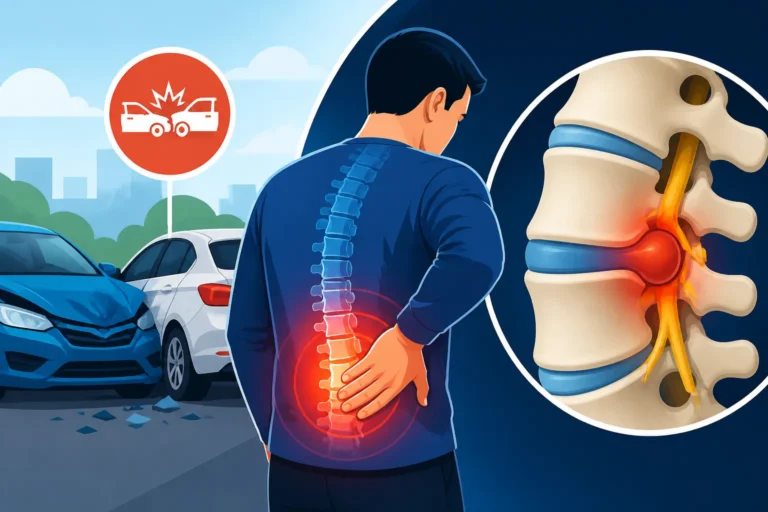
Claiming Compensation for Knee Injury in Texas
Getting into a car accident is jarring enough, but discovering you’ve sustained a knee injury can turn your world upside down. Suddenly, simple tasks like walking, standing, or even driving become excruciatingly painful and difficult. If you're grappling with a knee injury after a collision in Texas, you're likely wondering how you can possibly claim compensation for your medical bills, lost income, and the sheer discomfort you're enduring. This guide is here to walk you through the process, explaining what to expect when pursuing a claim for a knee injury in the Lone Star State.
Understanding Knee Injuries After a Car Accident
A car accident can cause a wide range of injuries, but knee injuries are particularly nasty because they impact your mobility so significantly. It's not just a bruise that will fade; it's often a complex issue that can sideline you from work, hobbies, and even basic daily activities. The frustration of losing your independence, even temporarily, is something many people underestimate until they're living it.
Common Types of Knee Injuries from Collisions
Your knees are pretty complex joints, and unfortunately, they're highly vulnerable in a car crash. The forces involved in a collision can twist, bend, or directly impact your knee in ways it's not designed to handle.
- Meniscus Tears: This is probably one of the most common knee injuries from car accidents. The meniscus is a C-shaped piece of cartilage that acts as a shock absorber between your shinbone and thighbone. A sudden twisting motion, often from your foot being planted while your body moves, can tear it. You might feel a popping sensation, pain, swelling, and difficulty straightening your knee.
- Ligament Sprains and Tears (ACL, PCL, MCL, LCL): Your knee has four major ligaments that provide stability. The anterior cruciate ligament (ACL) and posterior cruciate ligament (PCL) are inside the joint, controlling back-and-forth motion. The medial collateral ligament (MCL) and lateral collateral ligament (LCL) are on the sides, preventing excessive sideways movement. Direct impact, such as your knee hitting the dashboard, or extreme twisting can stretch or tear these ligaments. An ACL tear, for instance, often requires surgery and a long, arduous recovery.
- Patellar Fractures: The patella, or kneecap, can fracture from a direct blow, like hitting the dashboard. This can be incredibly painful and usually means you can't straighten your leg or walk. Healing can take a long time, sometimes involving plates or screws to stabilize the bone.
- Knee Dislocation: While rare, a severe car accident can cause your kneecap to dislocate, or even worse, the tibia and femur can separate at the knee joint. This is a medical emergency and requires immediate attention, often with significant long-term complications.
- Other Injuries: Beyond these, you might experience tendonitis, bursitis, or deep bone bruises, all of which can cause substantial pain and restrict your movement.
The Immediate and Long-Term Impact on Your Life
A knee injury isn't just about the physical pain you feel right after the crash. It ripples through every aspect of your life, from your ability to earn a living to your mental well-being.
Immediately, you're looking at severe pain, swelling, and drastically limited mobility. Getting out of bed, walking to the bathroom, climbing stairs – tasks you never thought twice about – become monumental challenges. Driving might be impossible, leaving you reliant on others for transportation. If your job requires standing, walking, or any physical activity, you could be out of work for an extended period, leading to significant financial stress on top of everything else. It's not uncommon for people to experience difficulty sleeping, increased anxiety, and even depression when facing such an impactful injury.
Looking further down the road, many knee injuries, especially those requiring surgery, can lead to chronic pain, stiffness, and even premature arthritis. You might need ongoing physical therapy for months, or even years, and face the possibility of future surgeries. Imagine being unable to play with your kids, enjoy your favorite sports, or even take a long walk with your partner because your knee just won't cooperate. This loss of enjoyment of life, the permanent changes to your capabilities, and the mental toll are all very real consequences that deserve consideration in your claim.
Navigating the Texas Car Accident Claim Process with a Knee Injury
Texas operates under an "at-fault" insurance system, meaning the driver responsible for the accident is liable for the damages they cause. This is a critical detail, especially when you're dealing with a serious injury like a torn meniscus or a fractured kneecap. Proving who is at fault in a car accident is paramount, and it impacts everything from how you file your claim to how much compensation you might ultimately receive.
Initial Steps After a Texas Car Accident
What you do in the moments and days following a car accident can significantly impact your ability to claim compensation for your knee injury. These aren't just suggestions; they're crucial steps to protect your rights.
First and foremost, prioritize your safety and the safety of others. If you can, move your vehicle to a safe location out of traffic. Then, immediately call 911 to report the accident to the police. Even if you think the accident is minor, a police report is invaluable documentation. When the officers arrive, they will create a report that details their observations, statements from drivers and witnesses, and often, an initial assessment of fault. While not legally binding, this report carries significant weight with insurance companies.
While waiting for the police, if your pain allows and it's safe to do so, begin gathering evidence. Take photos of the accident scene from multiple angles, including vehicle damage, road conditions, traffic signs, and any visible injuries. Exchange information with the other driver(s), including names, insurance details, and contact numbers. Don't forget to get contact information from any witnesses, as their statements can corroborate your account.
Most importantly, seek medical attention immediately. Even if your knee pain doesn't feel severe right after the crash, adrenaline can mask injuries. Many people feel fine at the scene, only to wake up the next day with excruciating pain. Delaying medical treatment, especially for an injury as serious as a knee injury, can hurt your claim. Insurance companies might argue that your injury wasn't severe or wasn't caused by the accident if you waited too long to see a doctor. This initial visit will establish a medical record connecting your injury directly to the car accident.
Documenting Your Knee Injury and Treatment
When you're dealing with a knee injury, thorough medical documentation isn't just helpful; it's absolutely essential for proving your damages. Without a clear paper trail, the insurance company will have an easier time downplaying your injuries and your claim.
Every single medical appointment, diagnostic test, and treatment session related to your knee injury needs to be meticulously recorded. This includes visits to the emergency room, urgent care centers, your primary care physician, orthopedic specialists, physical therapists, and any other healthcare providers. Diagnostic imaging, such as X-rays, MRIs, and CT scans, provides objective evidence of the damage to your knee, whether it's a torn meniscus, a fractured patella, or ligament damage. Keep a detailed log of all your medications, assistive devices (like crutches or braces), and therapies.
Your medical records will serve as the backbone of your claim, demonstrating the severity of your injury, the necessary course of treatment, and the prognosis for your recovery. They help to establish the causal link between the car accident and your knee injury. These records also inform the concept of "Maximum Medical Improvement" (MMI), which is when your doctor determines that your condition has stabilized and is unlikely to improve further, even with continued treatment. Reaching MMI is often a key point in determining the full extent of your damages, including future medical needs and any permanent impairment.
Calculating Compensation for Your Knee Injury in Texas
Determining how much your car accident settlement is worth with a knee injury is a complex process. It involves more than just adding up your medical bills; it takes into account all the ways your life has been affected, both financially and personally. In Texas, your ability to recover compensation depends heavily on proving the other driver's fault and understanding the state's comparative negligence laws.
Economic Damages: Covering Your Tangible Losses
These are the calculable, out-of-pocket expenses directly attributable to your knee injury and the accident itself. They represent the financial impact the incident has had on your life.
- Medical Expenses: This is often the largest component of economic damages for a significant knee injury. It covers everything from the moment you received emergency care at places like Baylor Scott & White Medical Center or Houston Methodist Hospital, through any surgeries you may have undergone (such as an arthroscopy for a meniscus tear or an ACL reconstruction), hospital stays, specialist consultations (orthopedists, pain management doctors), physical therapy, rehabilitation, prescription medications, and durable medical equipment like crutches, walkers, or knee braces. It's crucial to also account for future medical care that your doctor anticipates you'll need, such as ongoing therapy, pain management, or even eventual knee replacement surgery down the line due to post-traumatic arthritis.
- Lost Wages: If your knee injury prevents you from working, you can claim compensation for your lost income. This isn't just the wages you've already missed; it also includes any future lost earning capacity. For example, if your knee injury permanently limits your ability to perform your job duties or forces you into a lower-paying position, that long-term financial impact can be included. This might involve an economic expert to calculate the present value of these future losses.
- Property Damage: While your knee injury is the primary focus, any damage to your vehicle from the accident is also an economic loss. This covers repair costs or the actual cash value of your car if it's totaled.
Non-Economic Damages: Addressing Your Intangible Suffering
These damages are much harder to quantify because they don't come with a bill. They represent the subjective, personal impact of your knee injury on your quality of life. This is where the empathetic aspect of your claim truly comes into play.
- Pain and Suffering: This encompasses the physical pain you've endured, from the initial impact and immediate injury to ongoing pain during recovery and potentially chronic pain for years to come. It also includes the emotional distress, anxiety, and depression that often accompany a serious injury. The constant discomfort, the difficulty sleeping, the feeling of helplessness – these are all legitimate components of your suffering.
- Mental Anguish: This often overlaps with pain and suffering but specifically refers to the psychological and emotional trauma resulting from the accident and injury. This could include fear, grief, embarrassment, or severe anxiety related to the incident or your changed physical state.
- Loss of Enjoyment of Life: If your knee injury prevents you from engaging in hobbies, sports, social activities, or daily routines you once enjoyed, you can claim compensation for this loss. Imagine being an avid runner who can no longer hit the trails in Zilker Park or a gardener who can no longer tend their plants. These losses, though not monetary, profoundly diminish your quality of life.
- Impairment or Disfigurement: If your knee injury results in a permanent physical impairment or leaves visible scars, these factors also contribute to non-economic damages.
Valuing non-economic damages is challenging. Often, insurance companies and courts use a "multiplier method," where your total economic damages are multiplied by a number (typically 1.5 to 5, depending on the severity of the injury and impact on your life) to arrive at a figure for pain and suffering. This process is highly subjective, and the insurance company will always try to minimize this figure, which can be incredibly frustrating when you're the one living with the pain.
Understanding Texas's Modified Comparative Negligence
Here's where things get particularly important in Texas. Unlike some states that have different rules, Texas follows a "modified comparative negligence" rule, specifically the 51% bar rule. This means two crucial things for your knee injury claim:
- Your Compensation is Reduced by Your Percentage of Fault: If you are found to be partially at fault for the accident, your total compensation award will be reduced by your percentage of fault. For example, if your total damages (economic + non-economic) are assessed at $100,000, but you are found to be 20% at fault, your recoverable compensation will be reduced by 20% to $80,000.
- The 51% Bar Rule: This is the big one. If you are found to be 51% or more at fault for the car accident, you are legally barred from recovering any compensation from the other driver. Zero. This rule is a major reason why proving the other driver was at fault is so critical, especially when facing severe injuries.
Insurance companies will often try to pin some percentage of fault on you, even if it feels unfair, simply to reduce their payout or disqualify your claim entirely. This makes gathering strong evidence, establishing the other driver's liability, and being prepared to argue against accusations of your own fault absolutely vital. Navigating the nuances of What Happens If You're Partially at Fault? can be tricky, but understanding this rule is fundamental to your claim.
Dealing with Insurance Companies and Protecting Your Claim
After a car accident and a significant knee injury, the last thing you want to do is fight with insurance companies. However, this is often an unavoidable part of the process. It's a frustrating reality that even when you're clearly the injured party, getting fair compensation can feel like an uphill battle.
Insurance Adjusters and Their Tactics
It’s crucial to remember that insurance adjusters, whether they work for your insurance company or the at-fault driver's, are trained professionals whose primary goal is to minimize the payout for claims. They are not on your side, no matter how friendly or empathetic they sound. Their job is to protect their company's bottom line.
One common tactic is to call you very soon after the accident, sometimes even while you're still in the hospital or reeling from the shock. They might ask for a recorded statement, which they can then use to find inconsistencies or details to undermine your claim later. For instance, if you say "I feel okay" in the immediate aftermath, before your knee pain fully sets in or before you receive a proper diagnosis, they might later argue that your injuries weren't severe or weren't directly caused by the accident. It's generally advisable to avoid giving a recorded statement without first consulting with an attorney.
Another tactic is offering a quick, lowball settlement. They might present a small sum, knowing you're under financial pressure from lost wages and medical bills, hoping you'll accept it before you fully understand the extent of your knee injury and its long-term costs. This initial offer almost never covers the full scope of your damages, especially for a complex injury like a torn ACL or patellar fracture that might require surgery and extensive rehabilitation. Always remember that once you accept a settlement, you typically waive your right to seek further compensation for that accident. You need to know Should You Accept the First Settlement Offer?.
They might also try to downplay the severity of your knee injury, suggesting it's just a sprain when you have a torn ligament, or imply that a pre-existing condition is the real cause, even if the accident exacerbated it significantly. You need to be prepared for these conversations and firmly assert the facts of your injury.
The Benefit of Professional Legal Guidance
Given the complexities of Texas's at-fault system, comparative negligence rules, and the tactics employed by insurance companies, trying to navigate a serious knee injury claim on your own can be overwhelming and detrimental to your recovery. This is precisely why many people find it beneficial to consult with a car accident lawyer.
A qualified personal injury attorney, especially one experienced in car accident claims in Texas, can be an invaluable advocate. They understand the intricacies of How Car Accident Insurance Claims Work, the local laws, and how to effectively negotiate with insurance adjusters. They can gather essential evidence, including medical records, accident reports, and witness statements, to build a strong case proving the other driver's fault and the full extent of your damages.
Beyond negotiation, a lawyer can ensure that all your potential damages, both economic and non-economic, are properly accounted for. They will help you understand your rights and the true value of your claim, ensuring you don't accept a lowball offer. For example, if your knee injury is severe enough to require surgery and long-term physical therapy, a lawyer can help ensure your settlement reflects not just immediate costs but also future medical expenses and lost earning capacity.
Many personal injury lawyers work on a contingency fee basis, meaning you don't pay any upfront legal fees. Their fee is a percentage of the final settlement or award, so if they don't win, you typically don't pay them. This arrangement makes quality legal representation accessible, even if you're struggling financially after the accident. Ultimately, a lawyer allows you to focus on your physical recovery while they handle the stressful and complex legal battles, aiming to maximize your compensation for your knee injury.
| Type of Damage | Description | Examples for Knee Injury Claim | How It's Valued |
|---|---|---|---|
| Economic Damages | Quantifiable financial losses with specific monetary values. | Emergency room visits, orthopedic surgery, MRI scans, physical therapy, crutches, prescription pain relievers, lost wages from work, future medical care estimates. | Sum of all bills, receipts, wage statements, and expert projections. |
| Non-Economic Damages | Subjective, non-monetary losses that impact quality of life. | Constant throbbing knee pain, inability to walk, anxiety about future mobility, frustration from missing hobbies, emotional distress from permanent limp. | Often calculated using a multiplier method on economic damages, or a per diem method; highly subjective. |
Disclaimer
Please remember that this information is for educational purposes only and not legal advice. Every car accident claim is unique, and the specifics of your situation will determine the best course of action. It's always wise to consult with a qualified personal injury attorney in Texas to discuss your individual case and understand your legal options.