Long-Term Effects of PTSD From a Car Accident
Experiencing a car accident can be a truly jarring and life-altering event. Beyond the immediate physical injuries and vehicle damage, the emotional and psychological toll can linger long after the wreckage is cleared. For many, the invisible wounds of a crash manifest as Post-Traumatic Stress Disorder (PTSD), leading to a challenging journey of recovery that impacts every facet of their lives. This comprehensive guide will explore the often-overlooked long-term effects of PTSD stemming from a car accident, offering insight into its various forms and strategies for coping.
Understanding PTSD in the Context of Car Accidents
The term "PTSD" gets thrown around a lot, but what does it really mean, especially when it comes to something as sudden and violent as a car accident? It's more than just feeling a bit shaken up; it's a profound psychological response to a traumatic event, and its grip can be incredibly tenacious.
Defining Post-Traumatic Stress Disorder
At its core, Post-Traumatic Stress Disorder is a mental health condition that can develop after experiencing or witnessing a terrifying event. While many people think of combat veterans when they hear "PTSD," it can affect anyone who has gone through significant trauma, and car accidents are a surprisingly common trigger. The diagnostic criteria generally include experiencing the event, intrusive thoughts or memories, avoidance behaviors, negative changes in thinking and mood, and changes in arousal and reactivity. It's not just a momentary shock; these symptoms must persist for more than a month and cause significant distress or impairment in daily life to be considered PTSD. When those symptoms stretch out over months or even years, that's when we're truly talking about the long-term effects.
Why Car Accidents Trigger PTSD
You might wonder why a car accident, even a severe one, can lead to such a deep psychological scar. The truth is, the nature of a car accident combines several elements that are highly conducive to trauma. There's the sudden, unexpected impact, often accompanied by loud noises, shattering glass, and the feeling of being completely out of control. Your brain, in that moment, perceives an immediate threat to your life or bodily integrity. This primal fear response, the "fight or flight" mechanism, goes into overdrive.
For example, imagine you're driving down a familiar stretch of I-5 in California, perhaps near Sacramento, on your way to work. Suddenly, a distracted driver swerves into your lane, and in an instant, you're spinning, metal screeching, airbags deploying. Even if you walk away with only minor physical injuries, your brain has registered an extreme threat. This intense, acute stress can overwhelm your brain's ability to process the event normally, leading to the development of PTSD. It's this violation of your sense of safety in an everyday situation that makes car accident trauma particularly insidious. People often feel like their sense of security in the world has been shattered.
Common Initial Symptoms vs. Lingering Issues
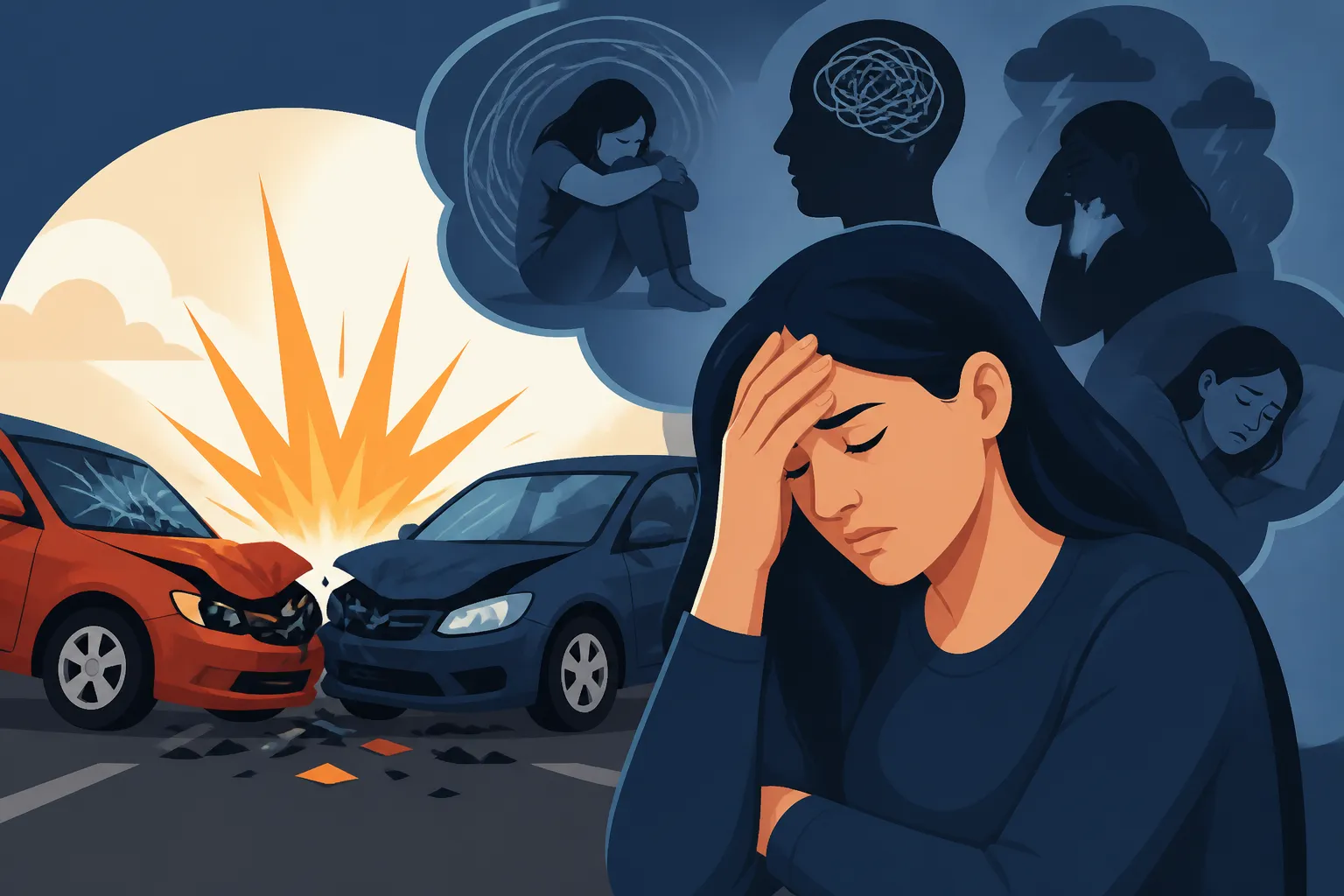
Initially, after a car accident, it's completely normal to experience a range of emotions: shock, fear, anxiety, guilt, or even anger. You might have trouble sleeping, replay the accident in your mind, or feel on edge. These are often considered acute stress reactions. For many, these feelings gradually subside as they process the event and heal.
However, for those who develop PTSD, these symptoms don't fade. Instead, they dig in and evolve into chronic, debilitating issues. What starts as occasional intrusive thoughts can become constant, vivid flashbacks. What was temporary hyper-vigilance can morph into a persistent state of being on high alert, making it difficult to relax or feel safe anywhere. This progression from short-term distress to long-term chronic PTSD is a critical distinction and highlights why early intervention and support are so important. Understanding these common symptoms is crucial, and you can learn more about specific presentations in our guide on PTSD and Emotional Distress After a Car Accident
Disclaimer
This article is for general informational purposes only and does not constitute professional advice. Laws and regulations vary by location and change over time. Consult a qualified professional for guidance on your specific situation.