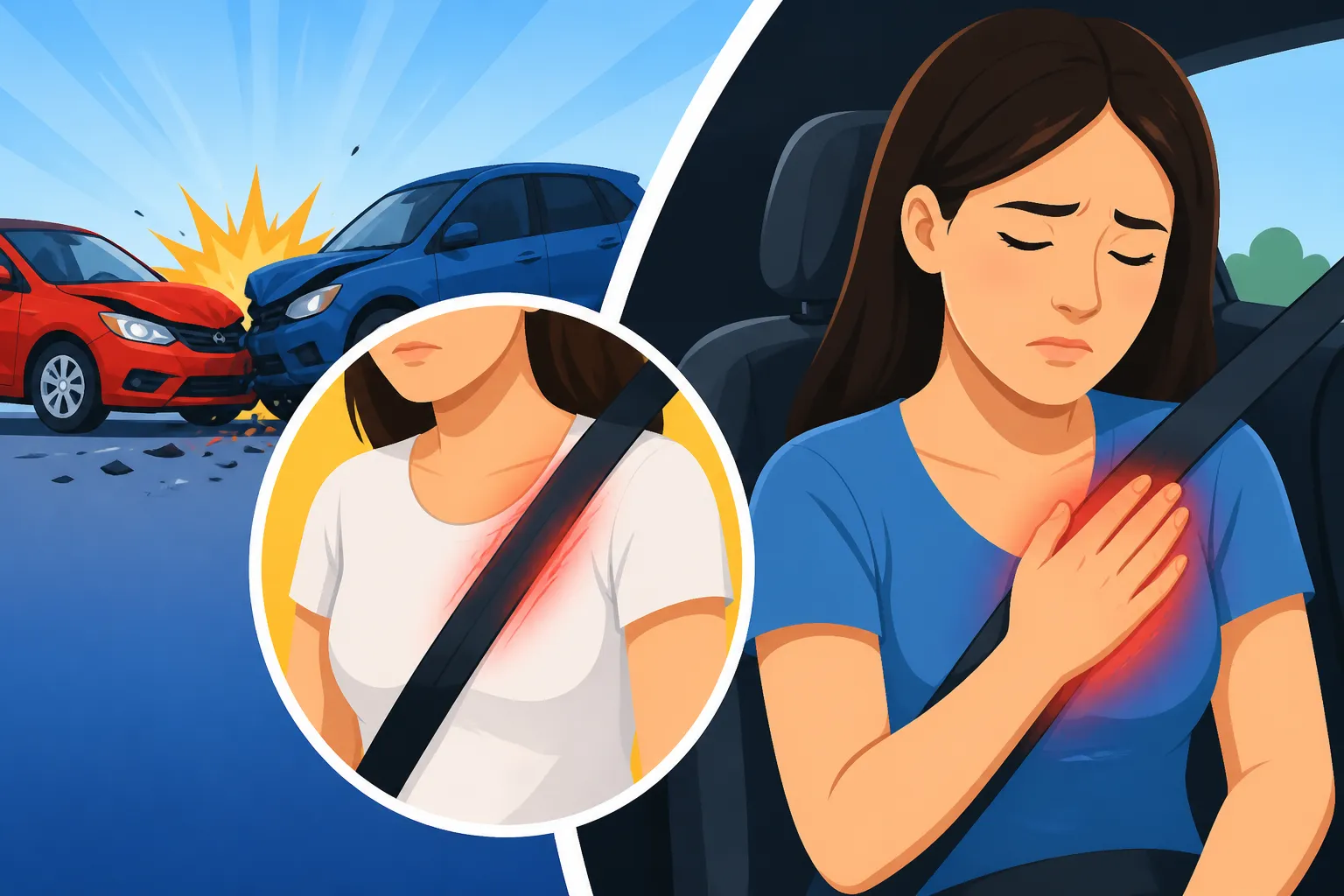
Seatbelt Injuries After a Crash
You’ve just been in a car accident, and while you might be grateful your seatbelt did its job, you could also be feeling a whole new kind of pain. It’s a strange paradox: the very device designed to save your life often leaves its own mark, sometimes causing significant injuries that can be just as debilitating as those from the impact itself. This guide will walk you through everything you need to know about seatbelt injuries after a crash, from how they happen to what symptoms to watch for and how to handle them as part of your car accident claim.
Understanding the Mechanism of Seatbelt Injuries
It's easy to think of a seatbelt as just a simple strap, but it's a sophisticated safety device that works by distributing the immense forces of a collision across the strongest parts of your body. However, even with this ingenious design, the sudden, violent stop can still cause injuries. The irony is that while the seatbelt prevents you from being ejected or hitting the dashboard, the pressure it exerts can be substantial, leading to what we commonly refer to as "seatbelt syndrome" or specific trauma.
The Physics Behind the Force
When your vehicle comes to an abrupt halt, your body, due to inertia, continues to move forward at the speed the car was traveling just before the impact. A seatbelt's primary job is to counteract this forward motion. It applies a considerable amount of force over a concentrated area to bring your body to a stop. Imagine a quick tug on a rope; the tighter the rope and faster the tug, the more pressure you feel. In a crash, this "tug" is instantaneous and incredibly powerful.
This rapid deceleration often causes your body to bend and twist against the restraint. The lap belt pushes against your hips and abdomen, while the shoulder harness crosses your chest and clavicle. This action, while preventing more severe outcomes, can compress internal organs, hyperextend joints, and strain muscles and ligaments. The severity of these forces is directly related to the speed of the collision and the suddenness of the stop. Even in what seems like a minor fender bender, the G-forces involved can be much higher than you'd expect, leading to injuries that aren't immediately apparent.
Common Types of Seatbelts and Their Impact
Most modern vehicles come equipped with three-point seatbelts, which include both a lap belt and a shoulder harness. This design is superior to older lap-belt-only systems because it distributes impact forces across a broader and more resilient area of the body, specifically the pelvis, chest, and shoulder. This significantly reduces the risk of head and facial injuries compared to unrestrained occupants.
However, even these advanced systems have limitations. The shoulder strap, if not properly adjusted, can ride up onto the neck, increasing the risk of neck injuries. The lap belt, if too high on the abdomen instead of low across the hips, can cause internal organ damage or spinal fractures. Improper use, like tucking the shoulder strap under the arm, completely negates the protective benefits and drastically increases the risk of severe chest and head injuries. It's a stark reminder that proper seatbelt use is just as critical as wearing one in the first place.
Common Seatbelt Injuries and Their Symptoms
While a seatbelt is a lifesaver, it's also capable of inflicting a range of injuries due to the intense pressure and sudden movement it imposes on your body. These injuries can sometimes be subtle, making it difficult to immediately recognize their full extent, which is why understanding the common types and their symptoms is so important.
Chest and Abdominal Injuries
The shoulder harness stretches diagonally across your chest, protecting your upper torso and preventing your head from violently striking the steering wheel or dashboard. However, this protective action can come at a cost. Common chest injuries include sternum fractures, broken ribs, and bruising across the breastbone or ribcage, often appearing as a distinctive "seatbelt sign" bruise. These injuries can be incredibly painful, making it difficult to breathe deeply, cough, or move without discomfort.
Abdominal injuries are often caused by the lap belt. If the lap belt is positioned too high, it can compress the abdomen, leading to what’s known as "seatbelt syndrome." This can result in injuries to internal organs like the intestines, liver, or spleen, potentially causing internal bleeding. Symptoms might include abdominal pain, tenderness, swelling, nausea, or even a noticeable seatbelt-shaped bruise across the lower abdomen. In severe cases, these internal injuries can be life-threatening and require immediate medical intervention. Always be vigilant about abdominal pain after a crash, even if it seems minor initially.
Shoulder, Neck, and Spinal Cord Injuries
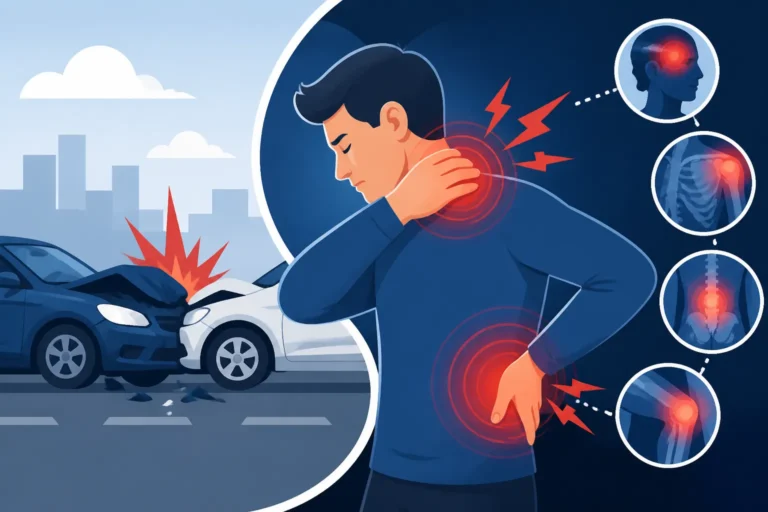
The shoulder strap, while preventing forward momentum, can apply significant pressure to the shoulder, clavicle (collarbone), and upper spine. This can lead to injuries such as a fractured clavicle, dislocated shoulder, or soft tissue damage like sprains and strains in the rotator cuff. These injuries can limit your range of motion and cause persistent pain, making everyday tasks challenging.
Neck injuries, especially whiplash, are incredibly common in car accidents, and seatbelts can sometimes exacerbate them. While the seatbelt holds your torso back, your head continues its motion, snapping forward and then backward. This sudden, violent motion can strain the muscles, ligaments, and discs in your neck. Symptoms of whiplash can include neck pain, stiffness, headaches, dizziness, and even radiating pain down the arms. For a more comprehensive understanding, you might want to read our guide on What Is Whiplash? Symptoms, Treatment & Claims.
More severe, though less common, are spinal cord injuries. The compression and twisting forces exerted by the seatbelt can sometimes lead to vertebral fractures or herniated discs, particularly in the thoracic (mid-back) or lumbar (lower back) regions. A Herniated Disc From a Car Accident can cause severe pain, numbness, tingling, and weakness in the limbs, depending on the location of the injury. These are extremely serious and often require extensive treatment.
Internal Injuries and Soft Tissue Damage
Beyond the immediate fractures and sprains, seatbelt pressure can cause significant internal trauma that isn't always visible. We touched on internal abdominal injuries, but the rapid deceleration can also cause blood vessels to tear or organs to rupture. This can lead to internal bleeding, which can be insidious and life-threatening if not diagnosed promptly. Symptoms might not appear for hours or even days, making immediate medical evaluation crucial.
Soft tissue damage is another pervasive category. This includes injuries to muscles, ligaments, and tendons throughout the body, not just the neck and shoulders. The sudden jolt and unnatural movements restricted by the seatbelt can stretch or tear these tissues. While less dramatic than a broken bone, soft tissue injuries can cause chronic pain, inflammation, and reduced mobility. They can take a long time to heal and often require physical therapy. These types of injuries are a major component of overall damages in a car accident claim and should never be underestimated. You can find more details in our guide about Soft Tissue Injuries Explained.
Delayed Symptoms and Why Medical Attention is Crucial
One of the most insidious aspects of car accident injuries, including those caused by seatbelts, is the phenomenon of delayed symptoms. Many people walk away from a crash feeling relatively okay, only to have debilitating pain and other issues emerge hours, days, or even weeks later. This delay can lead to serious complications and can significantly impact any potential car accident claim.
The Hidden Dangers of Adrenaline
Immediately after a traumatic event like a car accident, your body's natural "fight or flight" response kicks in, flooding your system with adrenaline. This powerful hormone can temporarily mask pain and other injury symptoms. You might feel a surge of energy, a heightened sense of awareness, and a reduced perception of discomfort. This is why many people can survey the damage, exchange information, and even drive home before the full impact of their injuries hits them.
While adrenaline is a survival mechanism, it can also be incredibly misleading when it comes to assessing your physical well-being. What might feel like a minor ache in your chest from the seatbelt could actually be a fractured rib, or a subtle stomach cramp could indicate internal bleeding. By the time the adrenaline wears off, often hours later, the pain and other symptoms can emerge with surprising intensity. Relying on how you feel immediately after an accident can be a dangerous mistake.
When to Seek Medical Help
Given the potential for delayed symptoms and internal injuries, it is absolutely paramount to seek medical attention as soon as possible after any car accident, regardless of how minor the collision might seem or if you think you're "fine." Even if you only have a slight bruise from the seatbelt, a doctor can perform a thorough examination, including imaging like X-rays or CT scans if necessary, to rule out more serious underlying issues. This proactive approach can catch problems like internal bleeding or subtle fractures before they become critical.
For instance, a seemingly innocuous seatbelt bruise might be hiding a serious injury to your spleen or intestines. A nagging headache could be a sign of a concussion, something that might not be obvious right away. Consulting a medical professional not only ensures your health and safety but also creates an official record of your injuries. This documentation is crucial for any future insurance claims, as insurance companies often look for a direct link between the accident and your injuries. Without prompt medical attention, it can be challenging to prove that your later-appearing symptoms were directly caused by the crash. Our article, Why You Should See a Doctor After a Car Accident, goes into more detail about this critical step.
Here's a quick reference for common seatbelt injury symptoms and when they might appear:
| Body Area Affected | Common Injuries | Immediate Symptoms (0-24 hrs) | Delayed Symptoms (Days/Weeks) |
|---|---|---|---|
| Chest/Ribs | Bruising, Rib Fractures, Sternum Fracture | Pain with deep breaths, Tenderness, Redness/bruising | Persistent pain, Difficulty breathing, Clicking sensation |
| Abdomen | Internal Organ Damage (spleen, liver, intestines), Internal Bleeding, Bruising | Abdominal pain, Tenderness, Nausea/vomiting | Increasing pain, Swelling, Fever, Dark stools, Dizziness |
| Shoulder | Clavicle Fracture, Rotator Cuff Strain/Tear, Dislocation | Sharp pain, Limited arm movement, Swelling | Chronic pain, Weakness, Stiffness, Instability |
| Neck | Whiplash, Muscle Strain, Ligament Sprain | Neck stiffness, Headaches, Dizziness | Persistent headaches, Restricted neck motion, Radiating pain, Tingling/numbness in arms |
| Spine/Back | Herniated Disc, Vertebral Fracture, Sprains | Localized back pain, Muscle spasms | Sciatica, Numbness/tingling in legs, Weakness, Bladder/bowel issues |
Documenting Your Seatbelt Injuries for a Claim
Dealing with the aftermath of an accident is stressful enough without having to worry about insurance claims. However, if you've suffered seatbelt injuries, proper documentation is absolutely vital. This isn't just about getting compensated; it's about ensuring your medical needs are met and your recovery is supported. Without clear evidence, even legitimate injuries can be challenging to prove.
Gathering Medical Evidence
The first and most critical step in documenting your seatbelt injuries is comprehensive medical care. Every visit to a doctor, specialist, physical therapist, or chiropractor should generate detailed medical records. These records are the backbone of your claim, proving the existence and severity of your injuries. Make sure your medical providers document the cause of your injuries (e.g., "consistent with seatbelt trauma"), the specific symptoms you're experiencing, the diagnosis, and the treatment plan.
It's also essential to keep a personal record of your symptoms, pain levels, and how your injuries affect your daily life. A pain journal can be incredibly helpful, noting when your pain is worse, what activities aggravate it, and any limitations you experience. Take photographs of any visible injuries, like bruising or cuts, as soon as they appear and track their healing process. These visual records, combined with your medical charts, create a powerful narrative of your injury and recovery journey. Remember, How Medical Records Prove Your Injuries is a topic worth understanding in depth.
Linking Injuries to the Accident
Insurance companies, by their very nature, are looking to minimize payouts. They will scrutinize your claim to ensure that your injuries are directly related to the car accident and not a pre-existing condition or something else entirely. This is where the timeline of your medical care becomes crucial. Seeking immediate medical attention establishes a clear link between the crash and the onset of your symptoms.
If you waited days or weeks to see a doctor, the insurance company might argue that your injuries weren't serious enough to warrant immediate care, or that they could have been caused by something else in the interim. This is why our previous discussion about delayed symptoms is so vital – you need to be able to explain why there might have been a delay in symptom manifestation, even if you still sought care promptly after symptoms appeared. Expert medical opinions from your treating physicians, clearly stating the causal link between the accident and your seatbelt injuries, are invaluable here. They act as expert witnesses, verifying that the mechanics of the crash align with the injuries sustained. Understanding How to Prove Injuries in a Car Accident Claim is essential for any successful outcome.
The Impact of Seatbelt Injuries on Your Car Accident Claim
Seatbelt injuries, though they stem from a safety device, are a legitimate component of your overall damages after a car accident. They can lead to significant medical expenses, lost income, and considerable pain and suffering. How these injuries are presented and valued can greatly impact the outcome of your claim.
Understanding Damages for Seatbelt Injuries
When you file a car accident claim, you're seeking compensation for various "damages" you've incurred due to the other driver's negligence. Seatbelt injuries directly contribute to both economic and non-economic damages. Economic damages are quantifiable financial losses, such as medical bills (hospital stays, doctor visits, physical therapy, medications, future medical care), lost wages (time off work due to injury or recovery), and transportation costs to medical appointments. Every dollar spent on treating your seatbelt-related chest pain or shoulder injury should be meticulously documented.
Non-economic damages are more subjective but equally real. This includes your pain and suffering, emotional distress, loss of enjoyment of life, and inconvenience caused by the seatbelt injuries. For example, if your fractured sternum makes it impossible to pick up your child or engage in hobbies you once loved, that's a significant impact on your quality of life. Even deep bruising can cause substantial discomfort and limit daily activities. It's important to keep a detailed journal of your pain and limitations to help quantify these subjective losses. Our guide on Economic vs Non-Economic Damages in Injury Claims provides a deeper dive into these categories.
Addressing "Failure to Mitigate" Arguments
One common tactic insurance companies use to reduce payouts for seatbelt injuries is the "failure to mitigate" argument. This essentially means they might try to argue that your injuries would have been less severe, or perhaps non-existent, if you had used your seatbelt correctly or if you had sought medical attention sooner. For instance, if you didn't seek immediate medical care for abdominal pain and later developed a severe internal infection, the insurance company might claim you "failed to mitigate" your damages by delaying treatment.
This argument can also manifest if the defense tries to claim your seatbelt was faulty or improperly worn, even if it wasn't. It's important to be prepared to counter such assertions with evidence of proper seatbelt usage and timely medical care. If there were any delays, having a clear explanation (e.g., initial adrenaline masking symptoms) supported by medical professionals is crucial. An experienced car accident lawyer can help you navigate these complex arguments and protect your right to full compensation. They can also explain How a Settlement Changes If You're Partly at Fault and how such factors might influence your overall recovery.
Prevention and Proper Seatbelt Usage
While seatbelts are the primary defense against severe injury or ejection in a crash, their effectiveness, and inversely, their potential to cause certain injuries, are heavily dependent on proper use. Taking a few moments to ensure your seatbelt is correctly positioned can significantly reduce the risk of seatbelt-related trauma.
Ensuring Correct Fit and Adjustment
Many people just "click and go" without thinking about how their seatbelt actually fits. However, a properly adjusted seatbelt is paramount for both safety and injury prevention. The lap belt should always sit low across your hips and pelvis, not across your stomach or abdomen. The pelvis is much stronger than your abdomen and can absorb impact forces more effectively, protecting your internal organs. If the lap belt is too high, especially for shorter individuals or children, it drastically increases the risk of severe abdominal injuries and spinal fractures in a crash.
The shoulder harness should rest snugly across the middle of your chest and collarbone, away from your neck. It should never be tucked under your arm or behind your back, as this eliminates its ability to restrain your upper torso and can lead to severe head, neck, and internal chest injuries. Most vehicles have adjustable shoulder belt anchors on the B-pillar (the column between the front and back doors) that allow you to raise or lower the shoulder strap to achieve the correct fit. Always ensure there are no slack or twists in either portion of the belt. A snug, flat fit is critical for distributing force evenly across your body's strongest points.
Child Safety Seats and Boosters
When it comes to our most vulnerable passengers, children, proper restraint is even more critical. Child safety seats and booster seats are specifically designed to ensure that the vehicle's seatbelt system fits a child's smaller body correctly. Infants and toddlers should always be in a rear-facing car seat for as long as possible, up to the maximum weight or height allowed by the manufacturer. This position provides superior head and neck protection.
Once a child outgrows a rear-facing seat, they transition to a forward-facing car seat with a harness, followed by a booster seat. A booster seat elevates the child so that the vehicle's lap and shoulder belts fit them properly—lap belt low on the hips and shoulder belt across the chest and shoulder, not the neck. Children typically need a booster seat until they are around 8-12 years old and at least 4 feet 9 inches tall. Using the wrong type of seat or an improperly installed seat significantly increases the risk of severe injuries, including seatbelt syndrome, for children in a crash. Always follow manufacturer guidelines and consider having your child's car seat inspected by a certified technician.
Disclaimer
Please remember that this article provides general informational guidance and is not a substitute for professional legal or medical advice. Every car accident case is unique, and you should consult with a qualified attorney regarding your specific situation and seek immediate medical attention if you've been involved in a crash.