How Long Does Wrist Injury Take to Heal After a Car Accident?
Being involved in a car accident is a truly jarring experience, and the aftermath can be incredibly frustrating, especially when you're dealing with an injury like a damaged wrist. Suddenly, everyday tasks that you took for granted – opening a jar, typing, even simply holding a cup of coffee – become painful hurdles. It’s not just the physical pain; it's the disruption to your life and the uncertainty of how long you’ll be sidelined. This comprehensive guide is here to shed light on what you can generally expect regarding the healing timeline for various wrist injuries sustained in a car accident, helping you understand your recovery journey and what that might mean for your car accident claim.
Understanding Different Types of Wrist Injuries from Car Accidents
When a car accident occurs, the forces involved can be immense and unpredictable, often leading to a wide array of injuries. Your wrist, being a complex structure of bones, ligaments, tendons, and nerves, is particularly vulnerable. It’s not just one type of wrist injury; the severity and specific type will dictate so much about your recovery.
Sprains and Strains
One of the most common wrist injuries after a car accident is a sprain or a strain. People often use these terms interchangeably, but there's a key difference. A sprain involves the ligaments – the tough, fibrous tissues that connect bones to other bones and stabilize your joints. A strain, on the other hand, affects muscles or tendons, which connect muscles to bones.
- Mild Sprains (Grade I): These are often the result of minor hyperextension or twisting during a sudden impact. You might feel a dull ache, tenderness, and slight swelling. While uncomfortable, a Grade I sprain doesn't usually involve a complete tear of the ligament. Many people try to "tough it out" with these, but getting it checked out is always a good idea, especially in the context of a car accident claim. The initial pain might subside relatively quickly, but without proper care, it can linger.
- Moderate Sprains (Grade II): Here, some of the ligament fibers are torn, but the ligament isn't completely ruptured. The pain is more significant, as is the swelling and bruising. You'll likely experience some loss of motion or strength in your wrist. Things like turning a doorknob or carrying a grocery bag might feel incredibly difficult. These injuries absolutely require medical attention and proper immobilization to heal correctly.
- Severe Sprains (Grade III): This is a complete tear of the ligament. It’s incredibly painful, often accompanied by significant swelling, bruising, and noticeable instability in the joint. You might even hear a popping sound at the time of the injury. A Grade III sprain can sometimes be as debilitating as a fracture and may even require surgical intervention to repair the torn ligaments, especially if critical stabilizing ligaments are involved.
Fractures and Dislocations
Beyond sprains, the sheer force of a car accident can lead to more serious structural damage like fractures or dislocations. These are generally much more severe and carry a longer, more intensive recovery period.
- Distal Radius Fractures: This is arguably the most common wrist fracture, often occurring when you instinctively brace yourself for impact with an outstretched hand. The distal radius is the larger of the two bones in your forearm, located near the wrist. These fractures can range from a clean break that's relatively easy to set to complex comminuted fractures where the bone shatters into multiple pieces, potentially involving the joint surface. Surgical intervention with plates, screws, or external fixators is often necessary for more complex breaks.
- Scaphoid Fractures: The scaphoid is one of the small carpal bones in your wrist, located on the thumb side. Fractures to this bone are notorious for their slow healing due to a peculiar blood supply that makes it difficult for nutrients to reach the bone during the repair process. People often mistake a scaphoid fracture for a severe sprain because the initial pain might not be as intense as other fractures, leading to delayed diagnosis. However, if left untreated, it can lead to long-term problems like non-union (where the bone doesn't heal) and arthritis.
- Other Carpal Bone Fractures and Dislocations: While less common than distal radius or scaphoid fractures, any of the eight small carpal bones in your wrist can fracture or become dislocated. Dislocation means the bones in your wrist are forced out of their normal alignment, often causing severe pain and immediate deformity. These injuries typically require immediate medical reduction (realigning the bones) and sometimes surgery to stabilize the joint if ligaments are also torn. The impact of a significant collision can be enough to tear the strong ligaments that hold these small bones together, leading to instability.
It’s crucial to understand that even seemingly minor pain after an accident should be evaluated by a medical professional. What feels like a simple ache could be a fracture that needs specific treatment to prevent long-term complications. Delaying treatment can not only worsen your injury but also complicate your ability to prove your injuries in a car accident claim later on. For more detailed information, you might want to read our guide on Common Car Accident Injuries: Complete Guide (2027).
Factors Influencing Wrist Injury Recovery Time
The question of "how long will this take to heal?" is one of the first things on anyone's mind after a car accident wrist injury. Unfortunately, there's no single answer, as so many variables come into play. It's a complex equation with both the injury itself and your personal circumstances influencing the timeline.
Injury Severity and Type
Naturally, the more severe and complex your wrist injury, the longer it's likely to take to heal. A minor Grade I sprain will typically resolve much faster than a comminuted distal radius fracture requiring surgery.
- Ligament Damage: With sprains, the extent of the ligament tear is key. A partial tear (Grade II) will heal faster than a complete rupture (Grade III), which may involve weeks of immobilization followed by extensive physical therapy, and potentially surgery if the joint is unstable. Ligaments don't have the same blood supply as bones, so their healing can sometimes be slower and more prone to scar tissue formation.
- Bone Fractures: The type of fracture plays a huge role. A non-displaced fracture (where the bone parts are still in alignment) generally heals faster than a displaced fracture (where the bones have moved out of alignment), which might need reduction or surgery. Scaphoid fractures, as mentioned, are notorious for their slow healing, sometimes taking 3-6 months or even longer in a cast, and often requiring surgery for non-union. Fractures that extend into the joint (intra-articular fractures) can also lead to long-term issues like arthritis if not perfectly healed, prolonging functional recovery.
- Nerve or Tendon Involvement: If the accident caused damage to nerves or tendons in addition to bones or ligaments, the recovery becomes significantly more complicated and prolonged. Nerve damage can lead to numbness, tingling, weakness, or even loss of function, and nerve healing is incredibly slow and often incomplete. Tendon repairs also require strict immobilization and a gradual return to activity to prevent re-injury.
Individual Health and Lifestyle Factors
Your personal health profile and daily habits are not small details; they can profoundly impact how quickly and completely you recover. This isn't about judgment; it's about realistic expectations.
- Age: Younger individuals generally have a more robust healing capacity. Their bones knit faster, and their tissues repair more efficiently than older adults. Older adults, especially those with conditions like osteoporosis, may experience slower healing times and a higher risk of complications or less complete recovery of strength and range of motion.
- Overall Health and Pre-Existing Conditions: If you have underlying health issues like diabetes, circulatory problems, or autoimmune diseases, your body's ability to heal can be compromised. Smoking, for instance, significantly impairs bone and tissue healing by reducing blood flow and oxygen to the injury site. Nutritional deficiencies can also play a role. A general state of good health, with a balanced diet and regular exercise (where appropriate for other injuries), can aid in a more efficient recovery.
- Adherence to Treatment Plan: This is a big one that people sometimes underestimate. Following your doctor's instructions meticulously – keeping your cast dry, attending all physical therapy sessions, doing your home exercises, and not returning to strenuous activities too soon – is paramount. Skipping steps or trying to rush things often leads to setbacks, re-injury, or incomplete recovery. Your physical therapist in places like downtown Los Angeles or Phoenix might give you specific exercises to regain strength and flexibility; doing them consistently is crucial.
- Complications: Unfortunately, not all recoveries are straightforward. Complications like infection, non-union (where a fracture doesn't heal), malunion (where it heals incorrectly), chronic pain, stiffness, or the development of arthritis can significantly extend recovery time and may even necessitate further medical or surgical interventions. Sometimes, delayed injury symptoms after a car accident can also emerge, impacting your initial recovery assessment.
The Typical Healing Process for Car Accident Wrist Injuries
Understanding the general stages of healing can help manage expectations, although every individual's journey is unique. It’s not just about the bones or ligaments knitting back together; it's about restoring full function.
Initial Acute Phase (Days to Weeks)
Right after the accident and diagnosis, your body goes into overdrive to protect and begin repairing the injured wrist. This phase is characterized by pain, swelling, and inflammation.
- Pain Management and Immobilization: The immediate priority is often pain control, which might involve medication, and ensuring the injured wrist is properly immobilized. For sprains, this could be a brace or splint. For fractures, it's typically a cast, which could be for several weeks. This immobilization is critical to allow the initial repair processes to occur without disruption. For instance, a simple Grade I wrist sprain might mean a few days to a week of rest and a brace, with pain starting to subside significantly within a couple of weeks. A moderate sprain might require 2-4 weeks of immobilization.
- Swelling and Bruising: Expect swelling and bruising to be prominent during this time. Applying ice packs, elevating your hand, and following any instructions from your doctor can help manage these symptoms. It's a sign your body is sending healing cells to the area, but too much swelling can hinder circulation and recovery.
Repair and Rehabilitation Phase (Weeks to Months)
Once the initial acute symptoms subside, and if a cast is removed, the focus shifts dramatically to regaining strength, flexibility, and function. This is often the longest and most challenging part of recovery.
- Physical Therapy: This is where the real work begins. If you've had a fracture, your wrist will likely be stiff and weak after immobilization. A physical therapist will guide you through exercises designed to improve your range of motion, strengthen the muscles around the wrist, and restore fine motor skills. This could involve gentle stretches, grip strengthening exercises, and exercises to improve dexterity. In cities like Houston, Texas, or Sacramento, California, there are numerous rehabilitation clinics that specialize in accident injuries. The intensity and duration of physical therapy vary widely. For a moderate sprain or simple fracture, therapy might last 4-8 weeks. For severe fractures or surgical repairs, it could be 3-6 months or even longer. Your consistency with these exercises, both in therapy and at home, is paramount for a successful outcome.
- Gradual Return to Activity: Your therapist will help you gradually return to normal activities, starting with light tasks and slowly progressing to more demanding ones. Pushing too hard, too fast, is a common mistake that can lead to re-injury or chronic pain. It's a delicate balance of challenging the wrist without overstressing it.
- Timeline Variations:
- Mild Sprain: You might feel mostly recovered in 2-4 weeks, with full strength returning within 1-2 months.
- Moderate Sprain: Expect 4-8 weeks for initial healing, with full strength and flexibility taking 2-4 months with dedicated physical therapy.
- Severe Sprain/Dislocation (non-surgical): This could be 2-3 months in a brace/cast, followed by another 2-4 months of intense physical therapy. Full recovery can easily stretch to 6 months to a year.
- Distal Radius Fracture (non-surgical): Typically 6-8 weeks in a cast, then 2-4 months of physical therapy. Full recovery of strength and motion might take 6 months to a year.
- Distal Radius Fracture (surgical): Similar to non-surgical, but the initial recovery from surgery adds time. Expect 6-12 months for full recovery, with some residual stiffness or aches common.
- Scaphoid Fracture: As noted, this is the slowest. Expect 3-6 months in a cast, potentially longer, and often surgery. Full recovery could be 9-12 months or more, and there's a higher risk of non-union even with proper treatment.
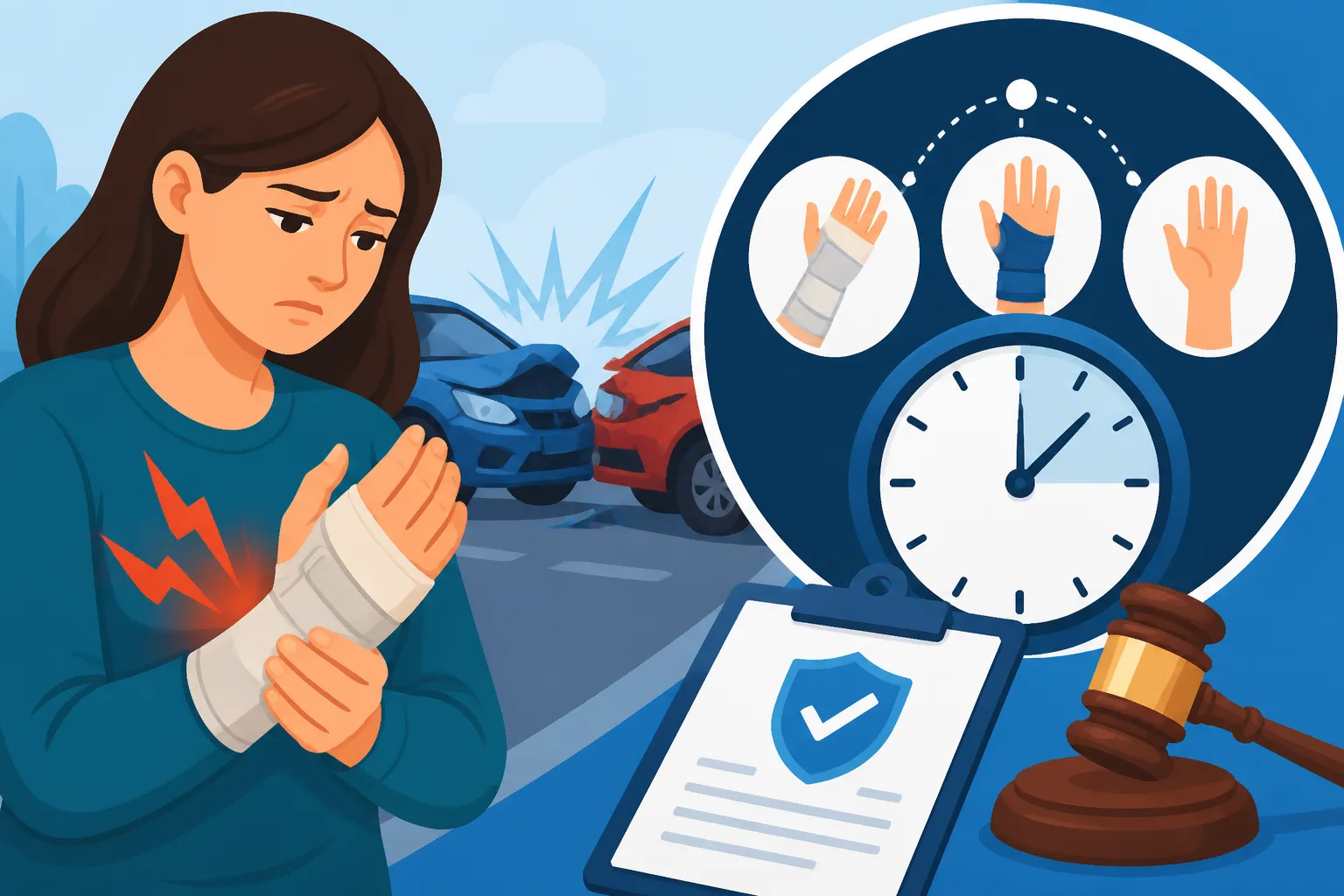
Here’s a general overview of typical wrist injury healing times:
| Injury Type | Initial Immobilization | Active Rehabilitation | Full Recovery Range | Potential Complications |
|---|---|---|---|---|
| Mild Wrist Sprain (Grade I) | 1-2 weeks (brace/rest) | 2-4 weeks | 1-2 months | Minor stiffness, re-injury if not careful |
| Moderate Wrist Sprain (Grade II) | 2-4 weeks (brace/splint) | 4-8 weeks | 2-4 months | Residual weakness, chronic pain, instability |
| Severe Wrist Sprain (Grade III) | 4-8 weeks (cast/brace) | 3-6 months | 6-12 months (or more) | Chronic instability, arthritis, surgery often needed |
| Distal Radius Fracture (non-displaced) | 6-8 weeks (cast) | 2-4 months | 6-9 months | Stiffness, weakness, mild deformity |
| Distal Radius Fracture (displaced/surgical) | 6-12 weeks (cast/post-op) | 3-6 months | 9-12 months (or more) | Stiffness, arthritis, nerve damage, implant issues |
| Scaphoid Fracture | 3-6 months (cast/surgery) | 3-6 months | 9-18 months (or more) | Non-union, avascular necrosis, arthritis, chronic pain |
| Wrist Dislocation | 4-6 weeks (post-reduction) | 3-6 months | 6-12 months (or more) | Chronic instability, stiffness, early onset arthritis |
Note: These are general timelines. Individual recovery can vary significantly based on the factors discussed above, including age, overall health, and adherence to treatment.
Long-Term Recovery and Maximum Medical Improvement
Full recovery means not just healing, but regaining your pre-accident strength and range of motion. For many people, this phase can take many months, sometimes even a year or more. For some, especially with severe injuries, full pre-injury function may never be completely restored, leading to some residual pain or stiffness.
- Maximum Medical Improvement (MMI): This is a critical concept in car accident claims. MMI is the point when your treating doctors determine that your condition has stabilized and further medical treatment isn't expected to significantly improve your health. It doesn't necessarily mean you're 100% back to normal, but rather that you've recovered as much as you're going to. Reaching MMI is a significant milestone for your car accident claim, as it allows for a more accurate assessment of your long-term damages, including any permanent impairment. You can learn more about this by reading our article What Is Maximum Medical Improvement (MMI)?.
- Documentation is Key: Throughout this entire healing process, it is absolutely vital to document everything. Every doctor's visit, every physical therapy session, every prescription, and every expense related to your injury needs to be recorded. This detailed documentation is how you prove your injuries in a car accident claim and ensure that the full extent of your damages is recognized. If you’re ever wondering, "how to prove the other driver was at fault," documentation is a huge part of proving your damages.
Navigating Your Recovery and Car Accident Claim
Dealing with a painful wrist injury is tough enough, but then you have to contend with the complexities of a car accident claim. It can feel like two full-time jobs, and the good news is you don’t have to do it alone.
Seeking Prompt Medical Attention
We can’t stress this enough: see a doctor immediately after a car accident, even if your wrist pain seems minor at first. Adrenaline can mask symptoms, and some injuries, like scaphoid fractures, might not present with immediate severe pain. Waiting to get checked out can not only jeopardize your health but also your ability to link the injury directly to the accident for your claim. Insurance companies are often quick to argue that if you didn't seek immediate treatment, your injury must not have been severe or wasn't caused by the accident. This is why our guide Why You Should See a Doctor After a Car Accident is so important.
The Role of Physical Therapy and Specialists
Your journey to recovery will likely involve more than just your primary care doctor. Orthopedic specialists, hand surgeons, and physical therapists will be key players. Following their recommendations, especially concerning physical therapy, isn’t just good for your wrist; it's crucial for your car accident claim. Insurance companies scrutinize treatment records and look for gaps in care or non-compliance, which they might use to devalue your claim. Consistency in therapy demonstrates your commitment to recovery and the necessity of the treatment.
Documenting Everything for Your Claim
Every step of your recovery needs to be thoroughly documented. This includes:
- Medical Records: All doctor's notes, diagnostic imaging reports (X-rays, MRIs, CT scans), specialist referrals, and physical therapy progress notes. These are the backbone of proving your injuries in a car accident claim.
- Prescriptions and Receipts: Keep track of all medications, medical devices (braces, splints), and any other out-ofpocket expenses related to your wrist injury.
- Lost Wages Documentation: If your wrist injury prevents you from working, collect documentation from your employer regarding lost wages. This is a significant part of your economic damages.
- Pain and Suffering Journal: While not a medical document, a daily journal detailing your pain levels, limitations, and how the injury affects your daily life can be invaluable when it comes to claiming non-economic damages like pain and suffering. This helps quantify the real-life impact beyond just medical bills. You can find more insights on this in How Medical Records Prove Your Injuries and Pain and Suffering: How It's Calculated.
Understanding Your Settlement and What to Expect
The duration and severity of your wrist injury will directly impact the potential value of your car accident settlement. A longer recovery, more intensive medical treatment, surgical interventions, and any permanent impairment all contribute to a higher claim value.
- Medical Expenses: These include everything from emergency room visits, doctor consultations, physical therapy, medications, and any necessary surgeries or medical devices.
- Lost Wages: Compensation for any income you lost because your injury prevented you from working.
- Pain and Suffering: This accounts for the physical pain, emotional distress, loss of enjoyment of life, and inconvenience caused by your injury. This is often the most subjective part of a claim but can be substantial, especially with severe, long-lasting wrist injuries.
- Property Damage: This covers the cost of repairing or replacing your vehicle.
The claims process itself can take time, often stretching out while you are still recovering and before you reach Maximum Medical Improvement. Insurance companies typically won't finalize a settlement until they have a clear picture of your total damages and long-term prognosis. This is why it's often wise to consult with a personal injury attorney who can help you understand your rights, negotiate with insurance companies, and ensure you receive fair compensation. You might want to refer to How Much Is My Car Accident Settlement Worth? (2026) for a broader understanding.
When to Consider Legal Counsel
Navigating insurance companies, medical bills, and lost wages while simultaneously trying to heal from a painful wrist injury is incredibly stressful. Insurance adjusters, while seemingly friendly, are ultimately working for the insurance company, not for you. They may try to minimize your injuries or offer a lowball settlement, especially if you're unrepresented.
If you've sustained anything more than a very minor sprain, particularly if it involves a fracture, surgery, or prolonged recovery, consulting with an attorney can be incredibly beneficial. An experienced car accident attorney can:
- Handle all communication with the insurance companies.
- Gather all necessary medical records and documentation.
- Help you understand Economic vs Non-Economic Damages Explained.
- Negotiate for a fair settlement that accounts for all your past, present, and future damages.
- Guide you through the entire claims process, from initial filing to potential settlement or even litigation if necessary.
They understand how to quantify damages for injuries like severe wrist fractures and the impact on your daily life, ensuring that you don't accept an offer that undervalues your suffering and expenses. You should never feel pressured to accept the first settlement offer, especially if you are still recovering and unsure of your long-term prognosis.
Disclaimer
Please remember that the information provided in this article is for general informational purposes only and does not constitute legal or medical advice. Every car accident and injury claim is unique. You should consult with a qualified medical professional for diagnosis and treatment of any injury, and with an experienced personal injury attorney for advice regarding your specific car accident claim.