Is Wrist Injury Common After a Rear-End Collision?
That jarring, sudden impact of a rear-end collision can be utterly disorienting, and sometimes, the immediate shock distracts you from the more subtle aches and pains that creep in later. Many people wonder if the sudden stop and force are enough to injure something as seemingly protected as a wrist. You might be experiencing throbbing pain, stiffness, or numbness in your hand and wrist and asking yourself, "Is this normal?" This guide aims to thoroughly explore whether wrist injuries are common after a rear-end collision, the various types you might encounter, and what steps you should take if you suspect you've sustained one.
The Mechanics Behind Wrist Injuries in Rear-End Collisions
When your vehicle is struck from behind, even at what seems like a low speed, the forces at play can be surprisingly complex and impactful on your body. While your head and neck often bear the brunt, your upper extremities, particularly your wrists, are also highly vulnerable. It's not just about the direct hit; it's about the rapid acceleration and deceleration, and your body's instinctive reactions.
Bracing for Impact: The Natural Reflex
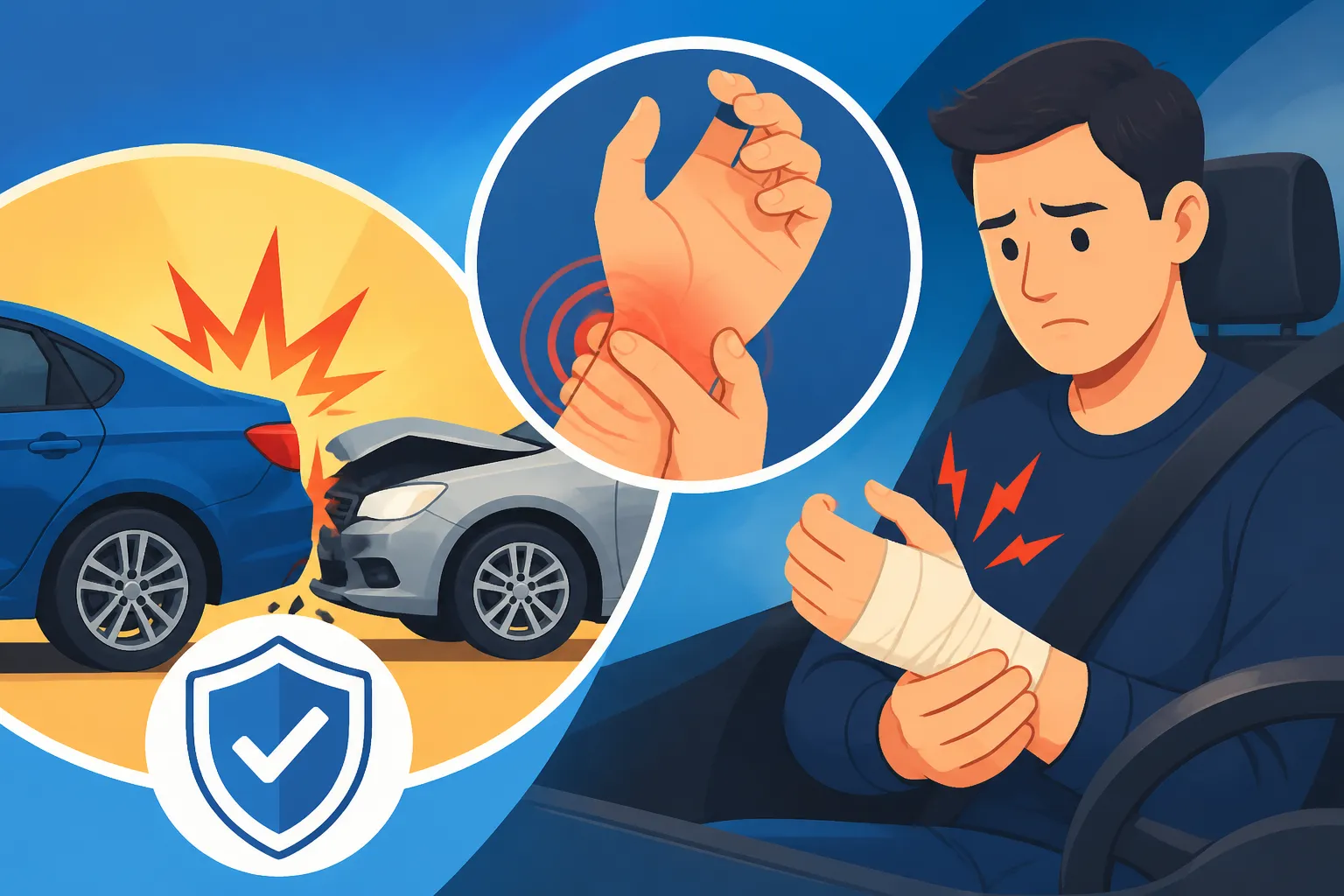
It's a primal, almost unconscious reflex: when danger strikes, we often brace ourselves. In a car accident, this usually means extending your arms, hands gripping the steering wheel, or pushing against the dashboard or seat in front of you. This isn't a conscious choice; it's your body's split-second attempt to protect itself. Imagine you're driving down a busy street in downtown Los Angeles, focused on the traffic ahead, when suddenly you hear a screech and feel a shove from behind. Your hands instinctively tighten on the wheel, and your arms lock up. This bracing can transform your hands and wrists into a rigid connection point between your body and the vehicle, directly transferring the impact forces into these delicate joints. The sudden, intense pressure and twisting motions can easily overextend ligaments, strain muscles, or even fracture bones within the wrist.
Steering Wheel and Dashboard Impacts
Beyond the bracing reflex, direct impact with the steering wheel or dashboard is another significant cause of wrist injuries. If your hands are on the wheel at the moment of impact, the force of your body being thrown forward can slam your wrists into the steering column or spokes. Even if your hands aren't directly on the wheel, they might strike the dashboard if your body surges forward with enough momentum. For instance, in a chain-reaction rear-end crash on I-5 during rush hour, if you're hit from behind and then propelled into the car ahead, your hands might brace against the dashboard, or your wrists could strike hard surfaces inside the cabin. These types of impacts can lead to crushing injuries, severe sprains, dislocations, or complex fractures that might not be immediately apparent due to the adrenaline of the moment.
Seatbelt Dynamics and Wrist Strain
While seatbelts are life-saving devices designed to keep you safely restrained, the forces they exert during a collision can indirectly contribute to wrist injuries. As your seatbelt engages and locks, it prevents your torso from flying forward, but your arms and hands can still be propelled. This can cause your wrists to hyperextend, twist unnaturally, or suffer significant strain as they are suddenly stopped or pulled in a direction opposite to your body's forward momentum. For example, if you're holding a coffee cup or fiddling with the radio at the time of impact, the sudden stop against the seatbelt could cause your hands to jerk violently, twisting your wrists against their natural range of motion. Understanding the full range of common injuries from a rear-end accident helps paint a clearer picture of how forces distribute throughout the body during such an event.
Common Types of Wrist Injuries from Rear-End Accidents
The wrist is a complex joint, made up of eight small carpal bones, the two long forearm bones (radius and ulna), and numerous ligaments and tendons. This intricate structure allows for a wide range of motion but also makes it susceptible to various types of injuries under sudden stress.
Sprains and Strains: The Most Frequent Offenders
By far, wrist sprains and strains are among the most common wrist injuries sustained in car accidents, especially rear-end collisions. A sprain occurs when the ligaments—the tough, fibrous tissues that connect bones to other bones—are stretched or torn. A strain, on the other hand, involves the muscles or tendons (which connect muscles to bones). When your wrist is forced into an unnatural position or subjected to sudden, violent movement, like bracing against a steering wheel, these tissues can be easily damaged. You might experience a mild sprain that causes tenderness and swelling, or a severe one where ligaments are completely torn, leading to instability and intense pain. These soft tissue injuries explained can be particularly tricky because they might not show up immediately, sometimes taking hours or even a full day to present with significant symptoms like pain, bruising, or limited movement.
Fractures: When Bones Bear the Brunt
While perhaps less common than sprains, fractures are certainly a serious possibility. The most common type of wrist fracture is a distal radius fracture, which occurs at the end of the larger forearm bone where it meets the hand. This often happens when people fall onto an outstretched hand, but the same mechanism can occur in a car accident when a person braces for impact. Other bones in the wrist, like the scaphoid (a small carpal bone), can also be fractured. Scaphoid fractures are notorious because they can be difficult to diagnose on initial X-rays and, if left untreated, can lead to long-term complications like avascular necrosis (death of bone tissue due to lack of blood supply). Imagine a heavy impact where your hand is firmly planted on the steering wheel, and the force of the collision drives your body weight directly into that fixed point. The bone can simply give way.
Carpal Tunnel Syndrome and Other Nerve Damage
Nerve damage, including the development or exacerbation of carpal tunnel syndrome, is another potential consequence of a wrist injury from a rear-end collision. Carpal tunnel syndrome occurs when the median nerve, which runs through a narrow passage in your wrist called the carpal tunnel, becomes compressed. Trauma from an accident, swelling, or repetitive strain from the impact can inflame tissues in the carpal tunnel, putting pressure on the nerve. Symptoms typically include numbness, tingling, weakness, or pain in the hand and fingers, often worse at night. Beyond carpal tunnel, other nerves in the wrist and hand can be bruised, stretched, or pinched, leading to various degrees of sensory loss or motor weakness. This can be a particularly debilitating injury, affecting your ability to perform everyday tasks.
Tendonitis and Soft Tissue Damage
Beyond sprains, a rear-end collision can also trigger other forms of soft tissue damage, such as tendonitis. Tendonitis is the inflammation of a tendon, often resulting from sudden, forceful movements or repetitive strain. The impact from an accident can cause the tendons in your wrist to rub against bone or adjacent tissues with abnormal force, leading to irritation and inflammation. For example, if your wrist is twisted or hyperextended, the tendons responsible for moving your fingers and hand can become acutely inflamed. Other less common but equally serious soft tissue issues might include damage to the triangular fibrocartilage complex (TFCC), a critical structure that helps stabilize the wrist joint. These injuries can lead to chronic pain, instability, and long-term functional limitations if not properly diagnosed and treated.
To help visualize the range of possible wrist injuries, here’s a quick overview:
| Injury Type | Description | Common Symptoms | Potential Severity |
|---|---|---|---|
| Sprain | Stretching or tearing of ligaments connecting wrist bones. | Pain, swelling, bruising, limited range of motion. | Mild to Severe |
| Strain | Stretching or tearing of muscles or tendons in the wrist. | Pain, muscle spasms, weakness, tenderness. | Mild to Moderate |
| Fracture | A break in one of the bones of the wrist (e.g., distal radius, scaphoid). | Severe pain, swelling, deformity, inability to move wrist/hand, numbness/tingling (if nerve affected). | Moderate to Severe |
| Carpal Tunnel Syndrome | Compression of the median nerve in the carpal tunnel. | Numbness, tingling, pain, and weakness in thumb, index, middle, and half of ring finger; worse at night. | Moderate to Severe |
| Tendonitis | Inflammation of tendons in the wrist. | Aching pain, tenderness, swelling, stiffness, pain with movement. | Mild to Moderate |
| TFCC Tear | Damage to the triangular fibrocartilage complex, a cushioning structure. | Ulnar-sided wrist pain (pinky finger side), clicking/popping, weakness, instability. | Moderate to Severe |
Recognizing Symptoms and Seeking Proper Diagnosis
One of the most insidious aspects of car accident injuries, including those to the wrist, is that they don't always announce themselves immediately. The adrenaline rush following a crash can mask pain, leading many to believe they are fine when, in fact, serious injuries may be lurking.
Immediate vs. Delayed Symptoms: What to Watch For
While some wrist injuries will present with immediate, sharp pain, swelling, or an obvious deformity, many others have delayed symptoms. It's not uncommon for pain, stiffness, or numbness to emerge hours or even days after the collision. This delay can make it harder to connect the injury directly to the accident if you don't keep careful track. For instance, you might feel a dull ache the evening of the crash, which blossoms into significant throbbing pain and limited mobility by the next morning. Delayed injury symptoms after a car accident are a critical reason why you should always err on the side of caution. Watch out for:
- Persistent Pain: Any pain that doesn't subside or worsens over time.
- Swelling and Bruising: Inflammation or discoloration around the wrist joint.
- Limited Range of Motion: Difficulty moving your wrist up, down, or side to side.
- Numbness or Tingling: Sensations often associated with nerve compression.
- Weakness: Difficulty gripping objects or performing fine motor tasks.
- Clicking or Popping: Sounds or sensations within the joint during movement.
The Importance of Medical Evaluation
Given the potential for delayed or subtle symptoms, seeking a professional medical evaluation as soon as possible after a car accident is paramount. Even if you feel "okay," a doctor can assess for hidden injuries that might not be immediately obvious to you. A medical professional, whether it's an emergency room doctor, your primary care physician, or an orthopedist, has the expertise to thoroughly examine your wrist, test its range of motion, and identify any signs of underlying damage. They can also provide a crucial record of your injuries, which is essential if you decide to pursue a car accident claim. Knowing why you should see a doctor after a car accident is not just for your health but also for the integrity of any future legal or insurance proceedings.
Diagnostic Tools and Processes
To properly diagnose a wrist injury, doctors have several tools at their disposal. The initial evaluation will typically involve a physical examination, where the doctor checks for tenderness, swelling, and assesses your wrist's strength and range of motion. They might ask you to perform specific movements or apply pressure to different areas.
- X-rays: These are often the first diagnostic imaging tool used to check for fractures and dislocations. While X-rays are excellent for bone issues, they don't show soft tissue damage.
- MRI (Magnetic Resonance Imaging): If soft tissue injuries like torn ligaments, tendons, or cartilage (like the TFCC) are suspected, an MRI provides detailed images of these structures. This can be vital for diagnosing issues that X-rays would miss.
- CT (Computed Tomography) Scan: CT scans offer more detailed images of bone injuries than X-rays and can be particularly useful for complex fractures or to get a better understanding of the bone structure.
- Nerve Conduction Studies and Electromyography (NCS/EMG): If nerve damage, such as carpal tunnel syndrome, is suspected, these tests can measure how well electrical signals are traveling through your nerves and muscles.
A thorough diagnosis helps ensure you receive the correct treatment and that the extent of your injuries is fully documented for your future well-being and any potential claim.
Navigating Your Recovery and Claim for a Wrist Injury
A wrist injury can significantly impact your daily life, making simple tasks like typing, cooking, or even getting dressed a challenge. Beyond the physical recovery, there's also the often-stressful process of dealing with insurance companies and potentially a car accident claim.
Treatment Options and Rehabilitation
The treatment for your wrist injury will largely depend on the specific diagnosis and its severity.
- Rest and Immobilization: For sprains, strains, or minor fractures, rest, ice, compression, and elevation (RICE) are often recommended. A splint or cast may be used to immobilize the wrist and allow it to heal properly.
- Medication: Over-the-counter pain relievers or prescription medications may be used to manage pain and inflammation.
- Physical or Occupational Therapy: This is a crucial component of recovery for many wrist injuries. A therapist can guide you through exercises to restore strength, flexibility, and range of motion. They might also help you adapt daily activities to reduce strain on your healing wrist.
- Injections: In some cases, corticosteroid injections might be used to reduce inflammation in specific areas, such as for tendonitis or carpal tunnel syndrome.
- Surgery: For severe fractures, complete ligament tears, or persistent nerve compression (like advanced carpal tunnel syndrome), surgery may be necessary to repair the damage or decompress the nerve.
Following your medical professional's advice diligently throughout your treatment and rehabilitation is vital. This commitment not only aids your physical recovery but also strengthens your claim by demonstrating consistent effort in your recovery.
Documenting Your Injuries for Your Claim
When dealing with a car accident claim, thorough documentation is your best friend. Every medical visit, every diagnosis, every treatment plan, and every bill contributes to building a comprehensive picture of your injuries and their impact on your life. This includes documenting your pain and suffering, which is a significant component of what are damages in a car accident claim.
- Medical Records: Keep copies of all diagnostic reports (X-rays, MRIs), doctor's notes, prescriptions, and therapy records. These detailed records are essential to prove the other driver was at fault.
- Journaling: Maintain a daily journal detailing your pain levels, limitations, treatments received, and how your injury affects your daily activities, work, and personal life. This provides a personal, detailed account of your experience.
- Lost Wages Documentation: If your wrist injury prevents you from working, collect pay stubs, employment verification letters, and any other documentation proving lost income.
- Receipts: Keep receipts for all accident-related expenses, including medications, assistive devices (like braces or ergonomic keyboards), and transportation to appointments.
Your ability to present clear and concise evidence of your injuries and their financial impact will be crucial when determining how much is my car accident settlement worth? .
The Role of Medical Records in Your Settlement
Insurance companies rely heavily on objective evidence to evaluate a claim. How medical records prove your injuries is by providing verifiable proof of diagnosis, the severity of the injury, and the course of treatment. Without this documentation, it can be challenging to link your wrist injury directly to the accident or to justify the costs of your medical care and other damages. For example, if you claim to have developed carpal tunnel syndrome after a rear-end collision, your medical records should show an initial assessment shortly after the accident, followed by a diagnosis and a consistent treatment plan for that condition. Any gaps in treatment or delayed reporting could raise questions with the insurance adjuster.
Working with an attorney who understands how to file a car accident insurance claim can be invaluable. They can help you gather the necessary documentation, interpret medical jargon, and negotiate with insurance companies on your behalf, ensuring that the full extent of your wrist injury and its impact are properly communicated and compensated. While the average settlement for wrist injury from a car accident can vary wildly depending on the specifics, strong documentation always leads to a stronger position.
Disclaimer
Please remember that this article provides general information and should not be considered legal or medical advice. Every car accident and resulting injury is unique. It is crucial to consult with a qualified medical professional for diagnosis and treatment of any injuries and to speak with an experienced personal injury attorney for advice regarding your specific car accident claim.