Claiming Compensation for Herniated Disc in Florida
Getting into a car accident is disorienting enough, but discovering you've sustained a herniated disc can throw your entire life into chaos. The sudden onset of excruciating back or neck pain, the numbness radiating down your limbs, the limited mobility, and the endless doctor's visits – it's a lot to handle. On top of that, you're left wondering how you'll ever recover financially. Navigating the complexities of car accident claims, especially in a state like Florida with its unique insurance laws, can feel like an impossible maze. This comprehensive guide is here to demystify the process of claiming compensation for a herniated disc after a car accident in the Sunshine State, offering clarity and actionable steps to help you on your path to recovery.
Understanding Herniated Discs and Their Severe Impact After a Car Accident
When you're involved in a car accident, the forces at play can be immense, often leading to injuries that aren't immediately apparent. A herniated disc is one such injury that can have profound, long-lasting consequences, profoundly affecting your quality of life. Understanding exactly what a herniated disc is and how it occurs in a crash is the first step toward building a strong claim for compensation.
What Exactly is a Herniated Disc?
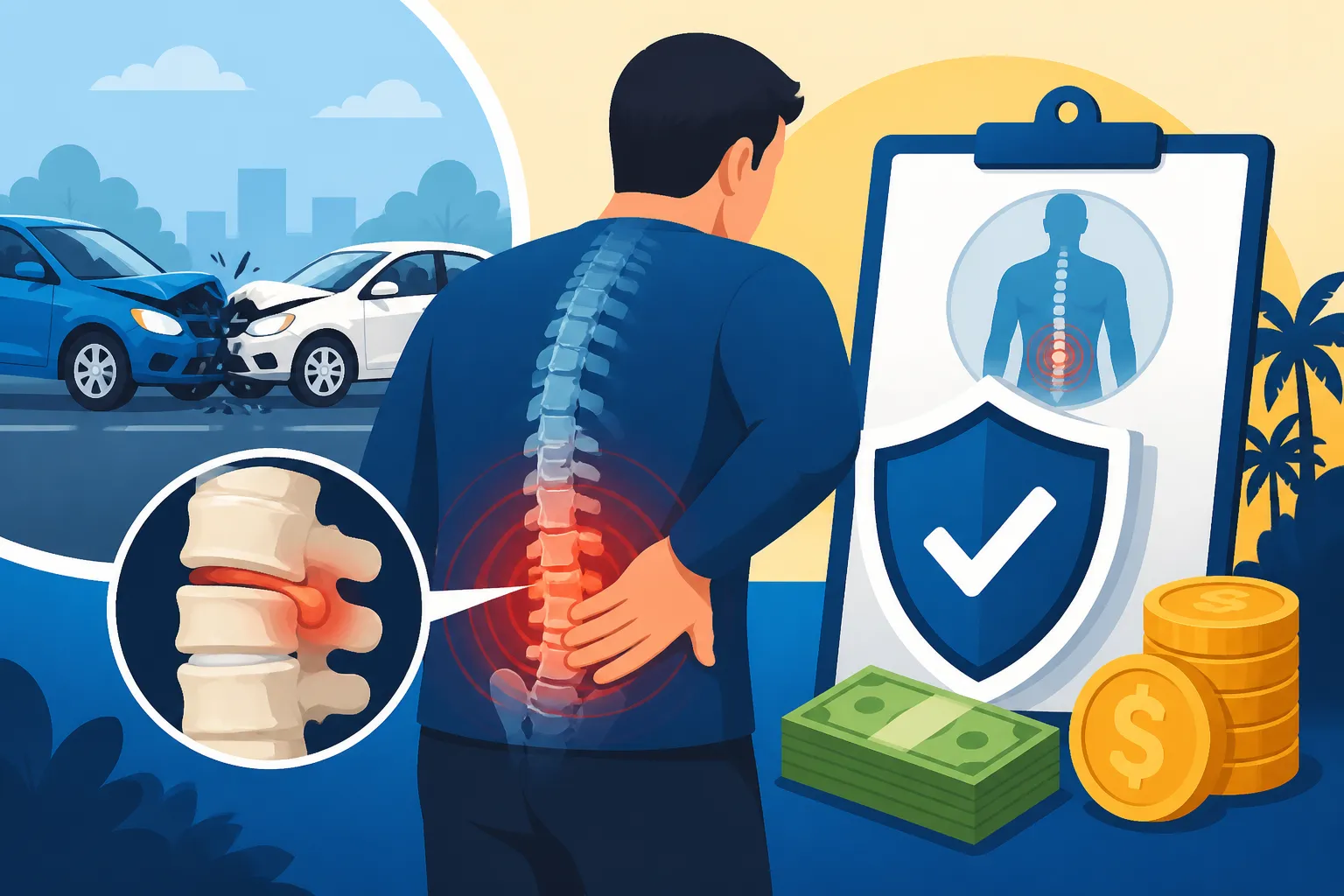
To put it simply, your spine is made up of individual bones called vertebrae, and between each vertebra (except the top two) is a soft, rubbery cushion known as an intervertebral disc. Think of these discs like jelly donuts: they have a tough outer ring (annulus fibrosus) and a soft, gel-like center (nucleus pulposus). These discs act as shock absorbers for your spine, allowing for flexibility and protecting your vertebrae. When a disc herniates, it means that the soft inner material pushes out through a tear in the tougher outer layer. This can happen in any part of your spine, but it's most common in the lumbar (lower back) and cervical (neck) regions.
The issue isn't just the disc material itself; it's what that material does when it escapes. The bulging or ruptured disc can press on nearby spinal nerves, leading to a cascade of painful and debilitating symptoms. This direct pressure on sensitive nerve roots is often the source of the intense pain, numbness, and weakness that define a herniated disc injury.
How Car Accidents Cause Herniated Discs
Car accidents are a prime culprit for herniated discs due to the sudden, violent forces exerted on the body. It’s not just high-speed, head-on collisions; even a seemingly minor fender-bender can generate enough G-force to cause significant spinal trauma.
For instance, a common scenario involves a rear-end collision. When your vehicle is struck from behind, your body is suddenly thrown forward and then snapped back, causing a whip-like motion in your neck and upper back, often leading to a Whiplash Symptoms After a Car Accident. This sudden acceleration and deceleration can put immense strain on your cervical and thoracic discs. Similarly, a side-impact or T-bone accident can cause your torso to twist violently, placing shearing forces on your lumbar discs. Even bracing for impact can cause muscles to tense, making the spine more rigid and thus more susceptible to disc injury when the force hits. The discs, designed to absorb vertical compression, are vulnerable to these sudden rotational and bending stresses that occur in a crash. It's truly a complex biomechanical event that can wreak havoc on your spine.
The Lingering Symptoms and Long-Term Implications
The symptoms of a herniated disc can be sneaky. Sometimes, you might feel a sharp, immediate pain at the site of the injury. Other times, the pain might be dull, aching, or even radiate to other parts of your body. For example, a herniated disc in your lower back can cause sciatica, a sharp pain, numbness, or tingling that travels down your leg. A disc injury in your neck might lead to pain, tingling, or weakness in your arm and hand. It's not uncommon for Delayed Injury Symptoms After a Car Accident to manifest days or even weeks after the crash, making it crucial to seek medical attention even if you feel okay initially.
The long-term implications are what truly make a herniated disc a serious injury. Many individuals experience chronic pain that can significantly interfere with daily activities, sleep, and overall well-being. Treatment can range from physical therapy and medication to injections and, in severe cases, surgery like a discectomy or spinal fusion. These treatments are costly, involve lengthy recovery periods, and don't always guarantee a full return to pre-injury function. The inability to work, engage in hobbies, or even perform simple household tasks can lead to emotional distress, depression, and a substantial reduction in your quality of life. This is why understanding Herniated Disc From a Car Accident and its full scope is so important for your compensation claim.
Navigating Florida’s No-Fault System with a Herniated Disc Injury
Florida stands out with its no-fault insurance system, which significantly influences how you claim compensation after a car accident, especially when dealing with severe injuries like a herniated disc. It's a system designed to streamline minor claims, but it presents unique challenges and opportunities for more serious injuries.
Florida's No-Fault Basics and Personal Injury Protection (PIP)
The first thing to understand is that Is Florida a No-Fault State? Yes, it is. This means that after an accident, regardless of who caused it, your own Personal Injury Protection (PIP) insurance typically covers a portion of your medical expenses and lost wages up to a certain limit. In Florida, the basic PIP coverage is $10,000. This coverage pays 80% of reasonable and necessary medical expenses and 60% of lost wages, up to that $10,000 limit. The idea is to get immediate medical care without having to wait for fault to be determined.
This system is great for bumps and bruises, but it often falls far short when you're facing something as debilitating as a herniated disc, which can quickly accrue tens of thousands of dollars in medical bills, let alone lost income. The $10,000 cap can seem laughably low when you consider the cost of MRIs, specialist consultations, physical therapy, pain management, and potentially surgery for a severe spinal injury.
The "Serious Injury" Threshold: Stepping Outside No-Fault
This is where things get critical for herniated disc sufferers. Florida's no-fault law has a "serious injury" threshold. If your injuries meet this threshold, you are allowed to step outside the no-fault system and pursue a claim directly against the at-fault driver for all your damages, including pain and suffering, beyond what your PIP covers.
So, what constitutes a "serious injury" in Florida? According to Florida Statutes, a "permanent injury within a reasonable degree of medical probability, other than scarring or disfigurement," is considered serious. A herniated disc, especially one that causes chronic pain, requires surgical intervention, or results in permanent nerve damage, very often meets this definition. Your treating physician will be crucial in making this determination by providing medical testimony or documentation that your herniated disc injury is, indeed, permanent. This medical assessment is the gateway to seeking full compensation. This is why understanding What Is a No-Fault State? And Which States Are No-Fault is so vital.
The Crucial 14-Day Rule for PIP Coverage
One of the most important aspects of Florida's PIP system is the 14-day rule. To be eligible for PIP benefits, you must seek initial medical treatment within 14 days of your car accident. If you wait longer than two weeks, your PIP coverage could be denied, leaving you on the hook for those initial medical bills.
Given that herniated disc symptoms can be delayed, this 14-day window is a significant trap for many accident victims. You might feel sore but believe it's just muscle strain, only for the debilitating nerve pain of a herniated disc to emerge a few weeks later. This underscores the importance of seeking medical attention immediately after an accident, even if you feel fine. A visit to an urgent care center, emergency room, or a primary care physician can document your accident-related complaints and establish the necessary link to PIP coverage. Don't gamble with your health or your claim; get checked out promptly.
Essential Steps to Document Your Herniated Disc Injuries for a Florida Claim
When pursuing compensation for a herniated disc in Florida, documentation is your most powerful tool. The insurance company for the at-fault driver isn't going to take your word for it, nor should you expect them to. They need concrete proof of your injury, its connection to the accident, and its impact on your life.
Comprehensive Medical Records and Diagnostic Imaging
The backbone of any personal injury claim, especially for something as complex as a herniated disc, is your medical record. This isn't just a collection of doctor's notes; it's a narrative of your injury, diagnosis, and treatment.
- Immediate Medical Attention: As mentioned, seeking care within 14 days is non-negotiable for PIP. Beyond that, consistent medical follow-up demonstrates the severity and ongoing nature of your injury.
- Diagnostic Imaging: This is critical for a herniated disc. While X-rays can show spinal alignment and rule out fractures, they often don't visualize soft tissues like discs. An MRI (Magnetic Resonance Imaging) is typically required to definitively diagnose a herniated disc, showing its location, size, and whether it's impinging on nerves. CT scans are another useful tool. These objective findings provide undeniable proof of your injury.
- Doctor's Notes and Treatment Plans: Every visit to a chiropractor, physical therapist, orthopedist, neurosurgeon, or pain management specialist should be meticulously documented. Their notes should detail your complaints, their findings on examination, your prognosis, and the rationale for recommended treatments. This includes prescriptions for medication, referrals for specialists, and recommendations for surgery. These records will be key in demonstrating How to Prove Injuries in a Car Accident Claim.
Beyond Medical Records: Supporting Evidence
While medical records are paramount, a strong claim uses a variety of evidence to paint a complete picture of your damages.
- Police Report: While a police report doesn't definitively assign fault, it provides an objective account of the accident, including details like location, time, parties involved, and sometimes initial observations of injuries. In Florida, police reports for accidents resulting in injury or significant property damage are generally mandatory. This can be helpful when navigating Police Reports and Car Accident Fault.
- Photos and Videos: Visual evidence from the accident scene can be incredibly powerful. Photos of vehicle damage can indicate the force of impact. More importantly, if you have any visible bruising, swelling, or even just document your physical limitations shortly after the crash (e.g., struggling to walk or move your neck), these can support your claim.
- Witness Statements: Independent witnesses to the accident or to your immediate post-accident condition can corroborate your account and the severity of the incident.
- Pain Journal/Daily Diary: This is an often-overlooked but invaluable piece of evidence. Keep a detailed journal of your daily pain levels (e.g., on a scale of 1-10), what activities you can't do, how your injury impacts your sleep, mood, and relationships, and any frustrations you experience. This personal narrative adds a human element to your claim and helps document your Pain and Suffering Damages: What They Cover.
Calculating and Claiming Compensation for a Herniated Disc in Florida
Once you've diligently documented your herniated disc injury and navigated Florida's no-fault system, the next crucial step is calculating and claiming the full compensation you deserve. This involves assessing both tangible financial losses and intangible impacts on your life.
Components of Your Herniated Disc Settlement
When determining How Much Is My Car Accident Settlement Worth? (2026), several categories of damages come into play. These fall broadly into two types: economic (special) damages and non-economic (general) damages.
Economic Damages: These are the calculable financial losses directly resulting from your injury.
- Medical Expenses: This is often the largest component for a herniated disc. It includes everything from emergency room visits, ambulance fees, diagnostic tests (MRIs, CTs), doctor consultations, specialist visits (neurologists, orthopedists, pain management), physical therapy, chiropractic care, prescription medications, and any surgical procedures. Future medical expenses, based on your doctor's prognosis for ongoing care or potential future surgeries, are also included.
- Lost Wages and Earning Capacity: If your herniated disc prevented you from working, you can claim compensation for lost income. If the injury affects your ability to perform your job in the long term or forces you into a lower-paying position, you can also seek damages for diminished earning capacity.
- Property Damage: While not directly related to your herniated disc, any damage to your vehicle from the accident is part of your overall claim.
- Other Out-of-Pocket Expenses: This could include mileage to medical appointments, rental car costs, necessary modifications to your home or vehicle due to disability, or even the cost of hiring help for household tasks you can no longer perform.
Non-Economic Damages: These are more subjective, non-financial losses that profoundly impact your quality of life.
- Pain and Suffering: This is compensation for the physical pain and emotional distress caused by your herniated disc. It accounts for the agony of the injury, the discomfort of treatment, and the persistent chronic pain.
- Mental Anguish: This covers the psychological impact, such as anxiety, depression, fear, frustration, and sleep disturbances directly related to your injury and the accident.
- Loss of Enjoyment of Life: If your herniated disc prevents you from participating in hobbies, sports, or family activities you once enjoyed, you can claim compensation for this loss. For instance, if you can no longer play golf or lift your child, that's a significant loss.
- Loss of Consortium: In some cases, your spouse might claim damages for the negative impact your injury has had on your marital relationship.
Here's a quick overview of these damage types:
| Damage Type | Description | Examples |
|---|---|---|
| Economic Damages | Tangible, quantifiable financial losses. | Medical bills, lost wages, vehicle repair, prescription costs. |
| Non-Economic Damages | Intangible losses that impact quality of life. | Physical pain, emotional distress, loss of enjoyment, mental anguish. |
Understanding Economic vs Non-Economic Damages Explained is crucial for a comprehensive claim.
The Role of Negotiation and Potential Litigation
Once your medical treatment reaches a point of "Maximum Medical Improvement" (MMI) – meaning your condition is as good as it's going to get – your attorney will typically compile all your damages into a demand letter sent to the at-fault driver's insurance company. This is where the negotiation process begins. Insurance companies are businesses, and their goal is to minimize payouts. They will often make a lowball offer initially, hoping you'll accept it.
Having an experienced personal injury attorney is invaluable at this stage. They understand How Car Accident Settlements Are Calculated and can effectively counter low offers by presenting strong evidence, projecting future costs, and arguing for the true value of your pain and suffering. They can also explain Florida's modified comparative negligence rule, which applies if you are found partially at fault. Under this rule, your compensation would be reduced by your percentage of fault. For example, if your herniated disc damages are valued at $100,000, but you are found 20% at fault, you would only receive $80,000.
If negotiations fail to reach a fair settlement, your attorney might advise filing a lawsuit to pursue your claim in court. While most car accident cases settle out of court, the threat of litigation often motivates insurance companies to offer a more reasonable amount. A Florida attorney specializing in car accidents knows the local legal landscape, the courts, and how to effectively present your case for a herniated disc injury. Knowing How to File a Car Accident Claim in Florida is a big step, but a lawyer can provide invaluable guidance throughout the complex process.
Disclaimer
Please remember that this guide provides general information and is not a substitute for professional legal advice. Every car accident and injury claim is unique, and the laws governing them can be complex. It is highly recommended to consult with a qualified personal injury attorney in Florida to discuss the specifics of your case and receive personalized guidance.