Comparative Negligence Laws in Illinois
Experiencing a car accident is never a walk in the park. Beyond the initial shock, potential injuries, and the hassle of vehicle damage, you’re often left grappling with a confusing insurance claims process. A major source of this confusion, especially here in Illinois, revolves around how fault is assigned and what that means for your ability to recover compensation. It can feel incredibly unfair when you're hurt, and someone tries to pin even a little bit of the blame on you. This comprehensive guide is here to unravel the complexities of comparative negligence laws in Illinois, helping you understand how they work and what impact they can have on your car accident claim.
Understanding Comparative Negligence in Illinois
When a car accident happens, it’s rarely as simple as one person being 100% at fault and the other being completely blameless. Often, both drivers might have contributed in some small way to the incident. That's where negligence laws come into play, and understanding them is crucial, especially in a state like Illinois.
What is Comparative Negligence?
At its heart, comparative negligence is a legal principle designed to ensure fairness when multiple parties share responsibility for an accident. Instead of completely barring you from recovery if you have even a sliver of fault (which is what "contributory negligence" states do), comparative negligence allows you to still seek damages, but your compensation will be reduced in proportion to your assigned share of fault. It’s a common-sense approach that recognizes that accidents are often complex events with shared responsibility, but the specifics can vary significantly from state to state. Illinois, for example, operates under a specific version of this law.
Illinois's 51% Bar Rule
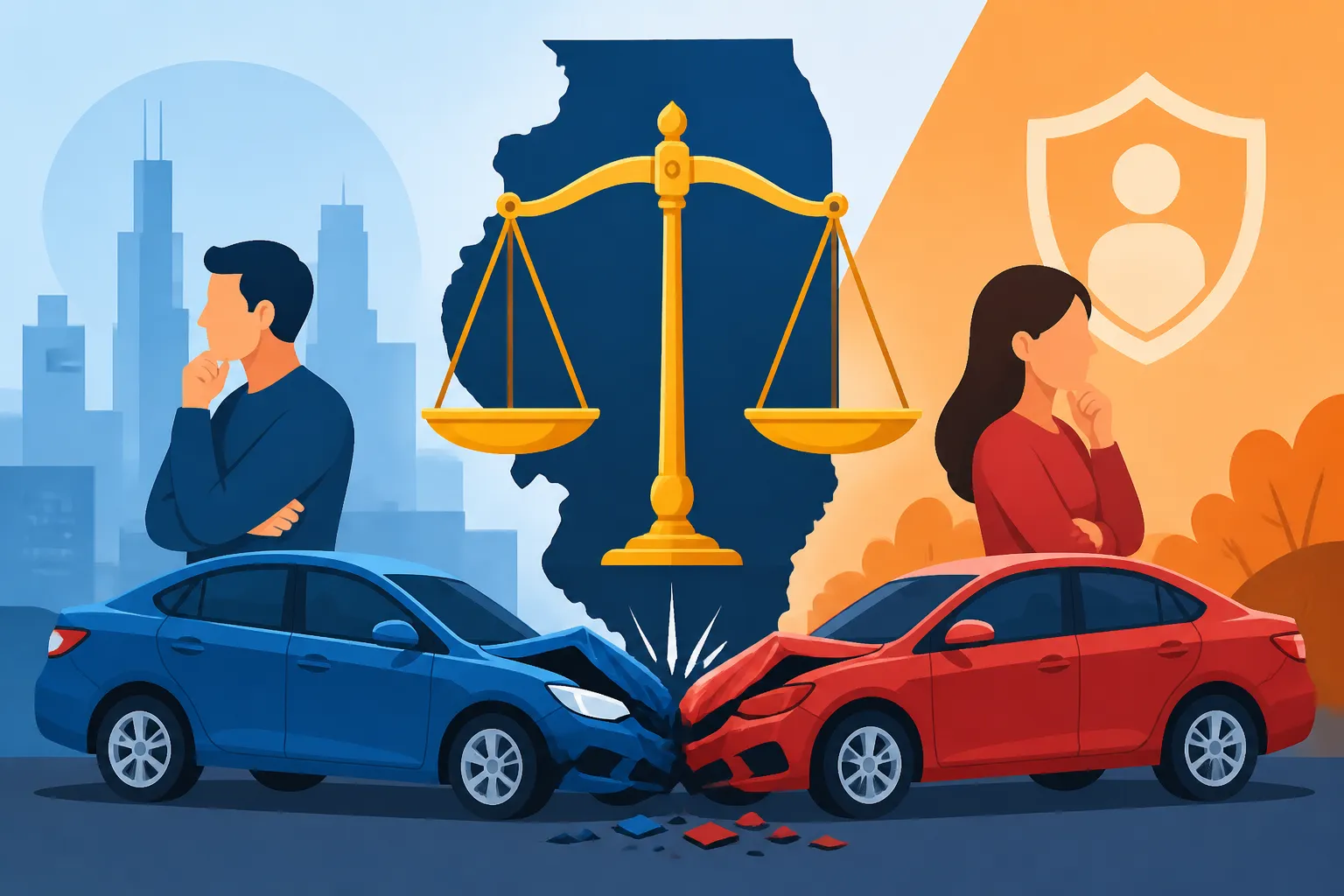
Illinois is what we call a "modified comparative negligence" state, specifically adopting the 51% bar rule. This particular nuance is incredibly important for anyone involved in a car accident here, as it sets a critical threshold for your ability to recover damages. Here’s how it works in practice:
If you are found to be 50% or less at fault for the accident, you can still recover compensation for your injuries and damages. However, the total amount of compensation you receive will be reduced by your percentage of fault. For example, let's say your total damages—including medical bills, lost wages, and pain and suffering—are determined to be $100,000. If the insurance company (or a jury) assigns you 20% of the blame for the accident, your recoverable damages would be reduced by 20%, meaning you would receive $80,000. This system attempts to be equitable, allowing you to recover for the portion of the accident that wasn't your fault.
However, the game changes drastically if your assigned fault exceeds that 50% mark. Under Illinois's 51% bar rule, if you are found to be 51% or more at fault for the accident, you are completely barred from recovering any damages from the other driver. Let's revisit our previous example: if your damages are $100,000, but you are found to be 51% at fault, you would receive nothing. Absolutely nothing. This is why the precise determination of fault percentage is often one of the most heavily contested aspects of a car accident claim in Illinois. It's not just about how much your settlement might be reduced; it's about whether you get a settlement at all. Understanding this rule is paramount, because a slight difference in fault assessment can mean the difference between getting compensated for your suffering and walking away with nothing.
How Fault is Determined in Illinois Car Accidents
Determining who is at fault in a car accident is rarely straightforward, and it's certainly not something left to guesswork. Both insurance companies and legal professionals employ a rigorous process to assign fault, which then directly impacts any potential settlement under Illinois's comparative negligence laws. If you've been in an accident, you know firsthand how stressful and confusing this part can be, especially when you feel the other driver was clearly to blame.
The Role of Evidence and Investigation
When it comes to assigning fault, evidence is king. Without solid proof, it's often your word against theirs, and that rarely ends well for either party. Insurance companies, and potentially a court, will look at every piece of available information to reconstruct the accident and determine what happened. This is why gathering detailed information at the scene, even if you’re shaken up, is so incredibly important.
Key pieces of evidence include the police report, which provides an objective account from law enforcement, often including diagrams and citations. Witness statements from anyone who saw the crash can be invaluable, as can photographs and videos you or others took at the scene. These can capture vehicle positions, damage, road conditions, traffic signals, and even skid marks before they're cleared away. Dashcam footage has also become a game-changer, offering undeniable visual proof. Beyond the immediate scene, medical records become crucial to prove your injuries, showing a direct link between the accident and your suffering. When insurance companies need to figure out How Fault Is Determined in a Car Accident, they often rely on these pieces of the puzzle, sometimes even hiring accident reconstructionists for complex cases. They're looking for concrete facts, not just assumptions.
Disputing Fault and Challenging Assessments
It's a frustrating reality that the initial assessment of fault isn't always fair or accurate. Sometimes, an insurance adjuster might try to place more blame on you than you deserve, often to reduce their company's payout. This can feel like a personal attack, making an already difficult situation even more infuriating. It’s crucial to remember that fault is often subjective, especially when different perspectives and limited evidence come into play.
If you find yourself in a situation where the other driver or their insurance company is trying to unfairly blame you, or even place a high percentage of fault on you, you absolutely have the right to dispute that assessment. Simply accepting their initial determination can have severe consequences for your compensation under Illinois’s 51% rule. This is often where experienced legal professionals come in. They can conduct their own thorough investigation, gather additional evidence that might have been overlooked, interview witnesses, and present a compelling argument on your behalf. They understand the tactics insurance companies use and can effectively challenge an unfair fault assignment. This process often involves strong negotiation and, if necessary, litigation to protect your rights and ensure that fault is appropriately distributed. Your ability to recover damages hinges on this critical determination, making it vital not to back down if you believe the fault assessment is unjust. For more detailed information on How Insurance Companies Determine Who Is at Fault, it's worth understanding their internal processes.
Impact on Your Car Accident Claim and Settlement
Navigating a car accident claim in Illinois means you absolutely must grasp how comparative negligence will directly affect your bottom line. It’s not just a legal term; it’s a financial reality that can dramatically alter the amount of compensation you receive.
Reduction of Damages
As we’ve discussed, Illinois follows the modified comparative negligence rule with a 51% bar. This means if you are found to be 50% or less at fault, your total damages will be reduced by your percentage of fault. This reduction isn't just a theoretical concept; it applies to every single dollar of your claim, covering everything from your emergency room visits and physical therapy to your lost income and the emotional toll the accident has taken.
Let's illustrate this with a concrete example. Imagine you were in a collision on Interstate 55 near Springfield, and your total damages, including medical expenses, vehicle repair, lost wages, and pain and suffering, are calculated to be $150,000. During the investigation, it's determined that you contributed 30% to the accident, perhaps because you were slightly exceeding the speed limit or failed to signal a lane change early enough. In this scenario, your $150,000 in damages would be reduced by 30%, resulting in a final settlement of $105,000. This deduction directly illustrates How Comparative Fault Reduces Your Settlement. This principle holds true for both economic damages (like medical bills and lost wages) and non-economic damages (like pain and suffering), meaning every aspect of your compensation is subject to this proportionate reduction. It highlights how every percentage point of fault assigned to you chip away at the money you desperately need to recover.
Strategic Considerations for Claims
Given the significant financial implications of comparative negligence, approaching your car accident claim with a clear strategy is essential. It’s common for the other party’s insurance company to immediately try to shift some, or even a lot, of the blame onto you. This isn't personal; it's a business tactic to minimize their payout. This is why it’s incredibly important to be careful about what you say and do immediately after an accident.
One of the most critical pieces of advice is to never admit fault at the scene of an accident. Even a casual apology like, "Oh, I'm so sorry!" can be misconstrued and used against you later as an What Is an Admission of Fault and How to Avoid It?. Stick to the facts when speaking with the police and exchanging information with the other driver. If the other driver or their insurance company tries to assign you a percentage of fault that you disagree with, do not accept it without careful consideration and, ideally, legal counsel. Even if you believe you might have played a minor role, remember that in Illinois, if your fault is 50% or less, you can still recover a significant portion of your damages. This means that even if What Happens If You're Partially at Fault?, you could still be eligible for compensation. You shouldn't automatically assume a minor contribution to the accident means you have no claim at all. The table below helps visualize how different fault percentages can impact your recovery under Illinois's modified comparative negligence rules.
| Your Percentage of Fault | Ability to Recover Damages | Example Recovery (from $100,000 in damages) |
|---|---|---|
| 0% | Full Recovery | $100,000 |
| 10% | Reduced by 10% | $90,000 |
| 25% | Reduced by 25% | $75,000 |
| 49% | Reduced by 49% | $51,000 |
| 50% | Reduced by 50% | $50,000 |
| 51% or more | Barred from Recovery | $0 |
This table clearly shows the stark difference once you cross that 50% threshold in Illinois. Therefore, understanding your potential fault and having a strong strategy to counter unfair accusations is essential to maximizing your settlement. For those who wonder, Can You Still Get Paid If You're Partly at Fault?, the answer in Illinois is yes, as long as your fault doesn't hit that 51% mark or higher.
Practical Advice for Illinois Drivers
Dealing with the aftermath of a car accident is undoubtedly one of the most stressful experiences a driver can face. Beyond the immediate chaos and potential injuries, the subsequent steps you take are critical, especially when navigating Illinois's unique comparative negligence laws. Knowing what to do and say can make a world of difference in your ability to secure the compensation you deserve.
What to Do Immediately After an Accident
The moments immediately following a car accident are often confusing and adrenaline-fueled, making it hard to think clearly. However, these initial actions are paramount for your safety and for building a strong foundation for your claim. First and foremost, check for injuries to yourself and any passengers. If anyone is hurt, call 911 immediately. Even if you feel fine, it's always wise to get checked out by medical professionals, as some injuries, like whiplash or concussions, can have Delayed Injury Symptoms After a Car Accident. If possible and safe, move your vehicle to the side of the road to prevent further accidents.
Next, contact the police, even for what seems like a minor fender bender. A police report, which documents the scene and often includes an initial assessment of fault, is an invaluable piece of evidence for your claim. Exchange information with the other driver(s), including names, contact details, insurance information, and vehicle details. Crucially, take as many photos and videos as you can of the accident scene, vehicle damage, road conditions, traffic signs, and any visible injuries. These visual records are incredibly powerful. Remember, these steps are fundamental to What to Do After a Car Accident: Step-by-Step (2027) and provide critical evidence that can later prove How to Prove Injuries in a Car Accident Claim.
Working with Insurance Companies
Interacting with insurance companies after an accident can feel like walking through a minefield. While your own insurance company is generally there to assist you, the other driver's insurance company is certainly not on your side. Their primary objective is to protect their client and minimize their payout, which often involves trying to shift blame onto you or reduce the value of your claim. They might push you to give a recorded statement quickly, or offer a lowball settlement early on.
It is absolutely vital to exercise caution and consult with an attorney before giving any recorded statements to the other party's insurance adjuster. Anything you say can and will be used against you, potentially harming your claim under Illinois's comparative negligence rules. An adjuster might ask leading questions designed to elicit responses that can be interpreted as an admission of fault, even if that wasn't your intention. This is why many experienced legal professionals advise that Should You Talk to a Lawyer Before the Insurance Company?. Let your legal representative handle communications with the other insurance company, ensuring that your rights are protected and that all information shared is strategically beneficial to your case. Navigating the tactics employed by insurance adjusters is a skill in itself, and having an advocate who understands Dealing With Insurance Adjusters After a Car Accident can be a significant advantage. Remember, in Illinois, every percentage point of fault matters, so don't let an insurance company trick you into accepting more blame than you truly deserve.
Disclaimer
Please remember that this article provides general informational guidance based on Illinois law and is not a substitute for professional legal advice. Car accident cases are complex, and the outcome depends heavily on specific facts, circumstances, and ongoing legal interpretations. You should consult with a qualified attorney to discuss your individual situation and ensure your rights are fully protected.